
Is a 20mm coarse safety tapered nail bit safe near the cuticle?
Is a 20mm coarse safety tapered nail bit safe near the cuticle?
Is a 20mm Coarse Safety Tapered Nail Bit Safe Near the Cuticle?
A 20mm coarse safety tapered nail bit can be used near the cuticle area, but it is not automatically the safest choice for every part of that area. The word “safety” usually refers to a rounded or non-sharp tip that reduces the chance of puncturing surrounding skin. It does not mean the bit can be pressed against the proximal nail fold, used aggressively on the natural nail, or operated without attention to speed and angle.
For experienced nail technicians, a coarse tapered carbide bit is mainly a bulk-removal tool. It can remove hard gel, acrylic, builder gel, thick base layers, or old enhancement product efficiently. Near the cuticle, its useful role is usually to reduce product carefully while leaving a thin protective layer for a finer bit or a hand file to finish. Trying to complete every detail with one coarse bit is where many avoidable problems begin.
The practical answer is: yes, a 20mm coarse safety tapered nail bit may be safe near the cuticle when it is used on enhancement material, in trained hands, with low pressure and steady movement. It is generally not the preferred tool for direct cuticle work, natural-nail refinement, or precise cleaning along delicate skin edges.
What the Bit Design Actually Changes
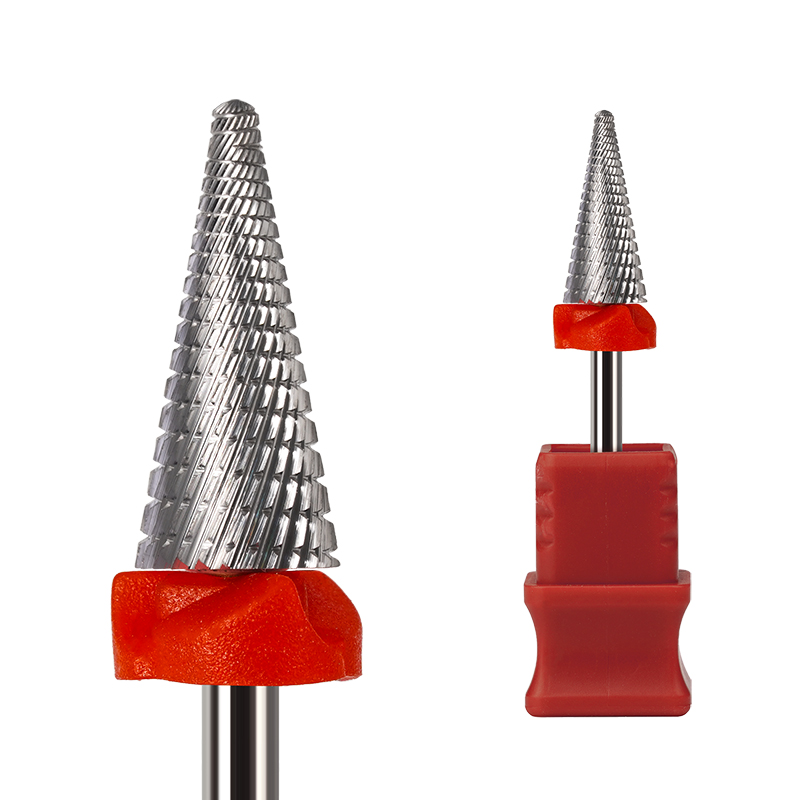
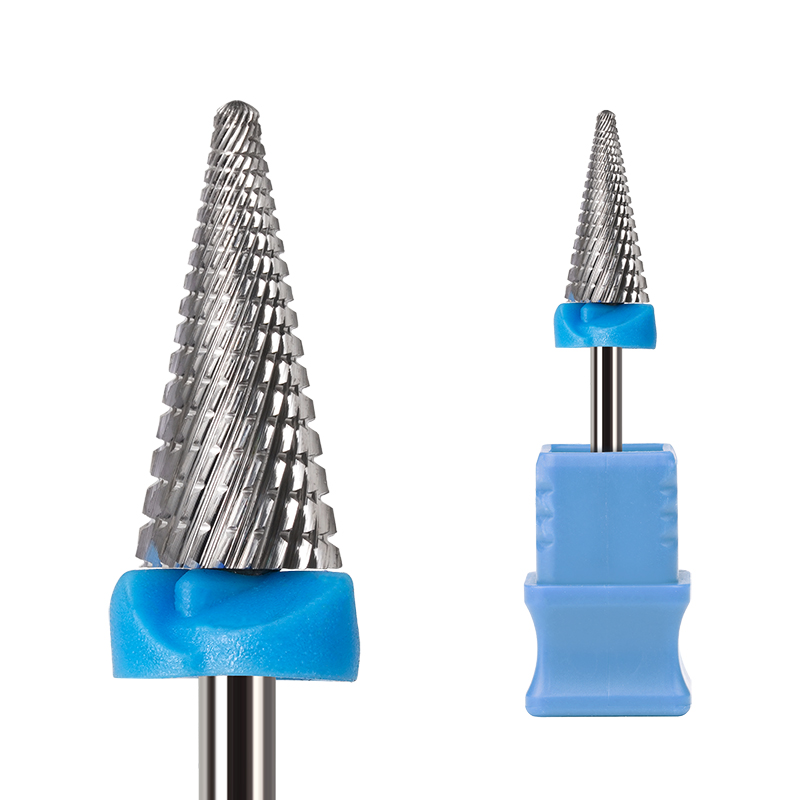
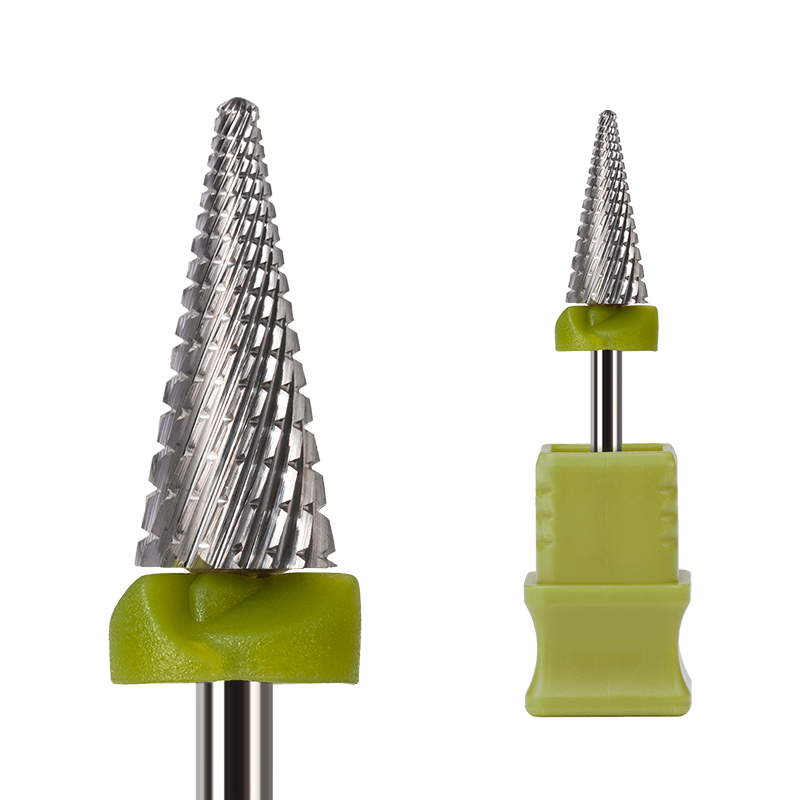
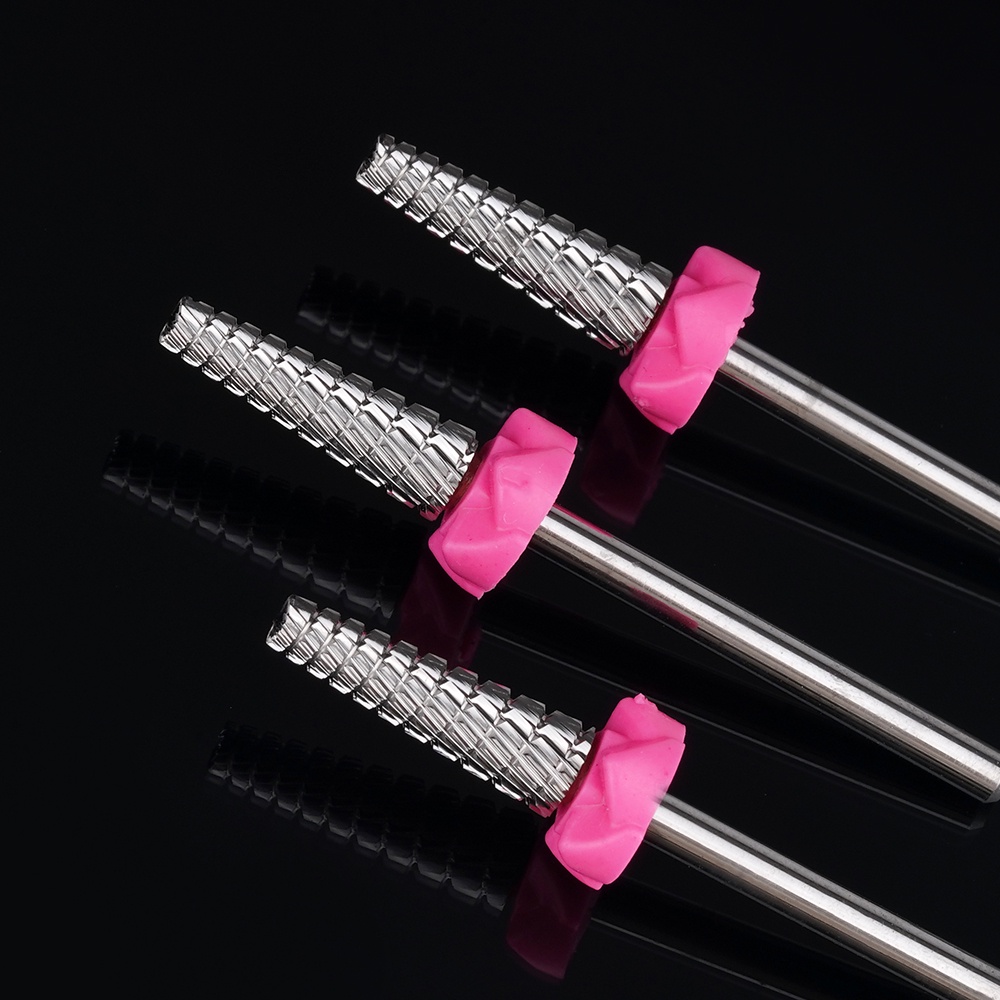
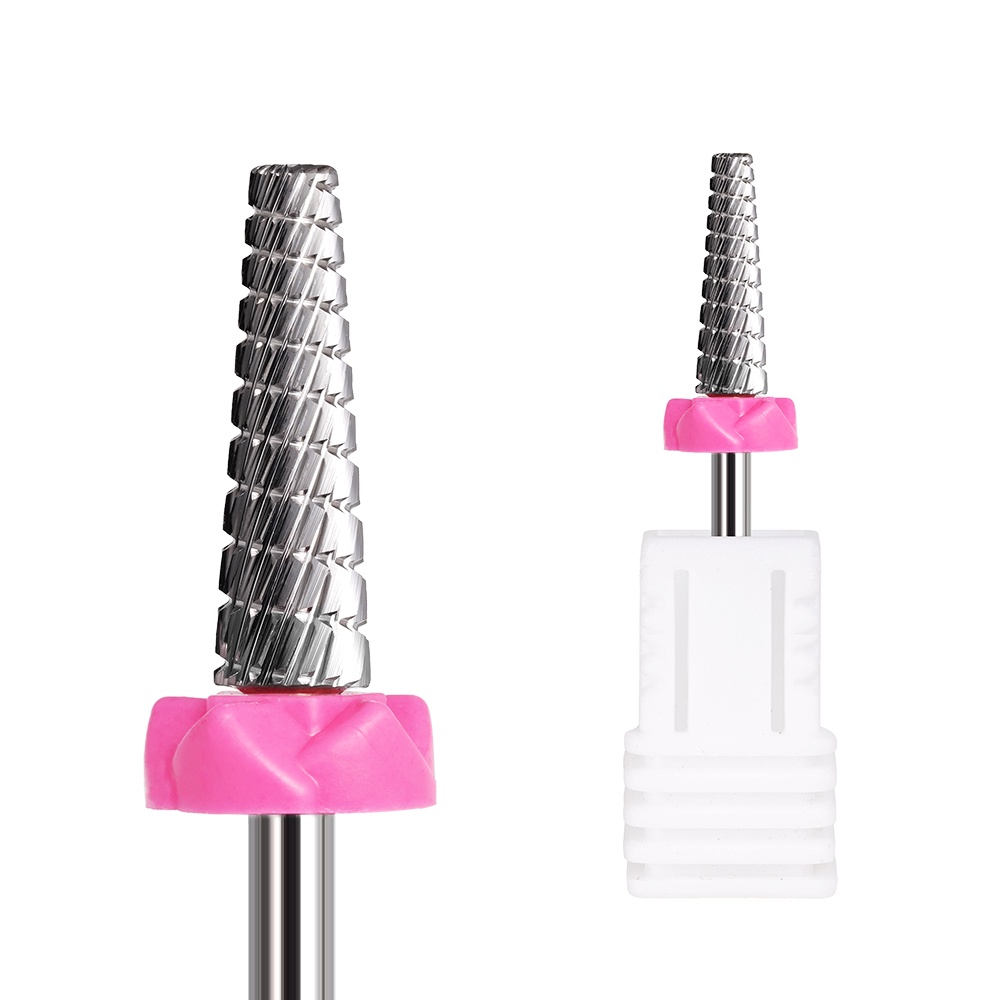
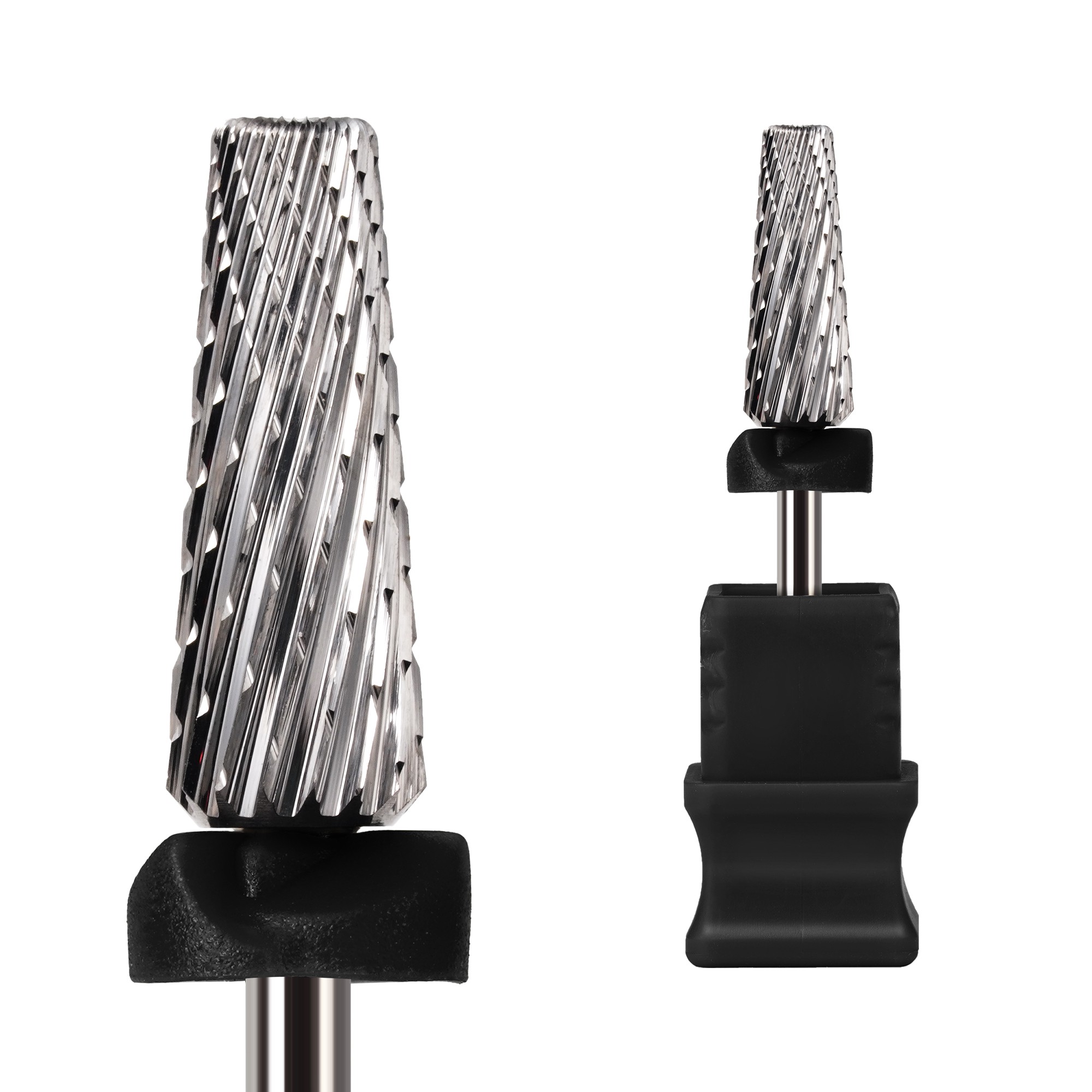
A tapered shape gives the operator more access around the upper nail plate than a wide barrel bit. The narrower end can follow the curve of the product close to the cuticle line, while the wider body removes material from the center and sidewalls. A 20mm working length can also provide useful reach across longer extensions or thicker overlays.
However, length alone does not define safety. A 20mm head gives more cutting surface, but it also requires better control. If the operator tilts the handpiece too sharply, the side of the bit may catch an edge of product or come too close to living tissue. On short natural nails, curved nail plates, or narrow nail beds, a long working surface may feel less forgiving than a shorter bit.
Grit is equally important. A coarse carbide bit removes material quickly because its cutting teeth are designed to take larger amounts of product with each pass. That is useful on thick hard gel or acrylic, but it leaves little margin for hesitation. The closer the operator gets to the natural nail or the cuticle pocket, the more sensible it becomes to change to a finer abrasive or a dedicated cuticle bit.
The safety tip is helpful, especially when working near the sidewalls and the upper nail plate. Still, the cutting action comes from the flutes along the bit body. A rounded end cannot prevent over-filing if the operator holds the bit in one place, applies pressure, or works at an unstable angle.
Where a Coarse Tapered Bit Works Well—and Where It Does Not
The safest use of a coarse safety tapered bit is generally controlled debulking. It is especially practical when a client has a thick enhancement that must be reduced before a rebalance, removal, or redesign. The operator can work from the center outward, gradually thinning the product and maintaining visual awareness of where the artificial layer ends.
Near the cuticle zone, the goal should not be to “dig out” product. Instead, feather the enhancement toward the upper third of the nail, keeping the bit moving and using the side rather than driving the end toward the skin. Leave a fine layer of product if the boundary is unclear. It is far easier to refine a remaining film with a fine bit than to repair an over-filed natural nail.
This distinction matters in both salon and home settings. DIY users often assume that a safety top permits use on any surface around the nail. In reality, a bit intended for fast removal should be treated as a removal tool. Cuticle preparation, skin lifting, and natural-nail smoothing are separate tasks that call for different abrasives and a different touch.
Technique Determines More Than the Label on the Bit
An electric file should glide rather than grind. When approaching the cuticle area, stabilize the client’s finger, support the operator’s working hand, and keep the handpiece moving in short, controlled passes. The bit should make contact with the enhancement, not with the surrounding skin. If the client feels heat, sharp discomfort, or a pulling sensation, stop and reassess before continuing.
Pressure is a common source of heat. A coarse bit does not need force to cut efficiently. Pushing it into product can generate friction, reduce control, and create an uncomfortable heat spike. A dull or clogged bit can make the same problem worse because the operator may compensate by pressing harder. Clean bits correctly between services, inspect the cutting edges, and remove damaged tools from use.
Speed should be selected according to the material, the drill’s stability, the bit design, and the operator’s training. There is no single speed setting that makes every coarse bit safe. A speed that is manageable for bulk reduction on a flat acrylic surface may be excessive near a thin cuticle-area overlay. The right setting is one that allows the bit to cut smoothly without bouncing, dragging, overheating, or forcing the operator to rush.
Direction also deserves attention. Carbide bits may be designed for right-handed, left-handed, or dual-direction use. Using a direction-specific bit in the wrong rotation can increase vibration or produce a less predictable cut. Before starting, check the bit’s intended rotation and ensure that it is fully seated in a compatible handpiece.
Signs That You Should Switch to a Finer Tool
A useful rule is to switch tools before the work becomes uncertain. If the enhancement is already thin, if the natural nail is becoming visible through a translucent product, or if product meets the cuticle line unevenly, a coarse bit has completed its main job. Continuing with it may save a few seconds, but it increases the chance of rings of fire, thinning, and uneven preparation.
Choose a finer abrasive when refining the last layer of gel, smoothing the regrowth area, or preparing the natural nail for a new application. A fine carbide, ceramic bit, sanding band used with appropriate care, or hand file may be more suitable depending on the material and service method. For true cuticle work, use a purpose-designed diamond or fine preparation bit only if trained to do so.
The best bit assortment is not the one with the most aggressive tools. It is the one that lets the operator move from removal to refinement without asking a single bit to perform outside its intended role.
Choosing a Bit for Consistent Professional Use
For salons, distributors, and operators purchasing bits in volume, consistency matters as much as cutting speed. Variations in shank fit, flute geometry, coating quality, or tip finishing can change the way a bit feels in the hand. A bit that performs predictably helps technicians develop repeatable technique; inconsistent tooling encourages unnecessary pressure and makes close work harder to control.
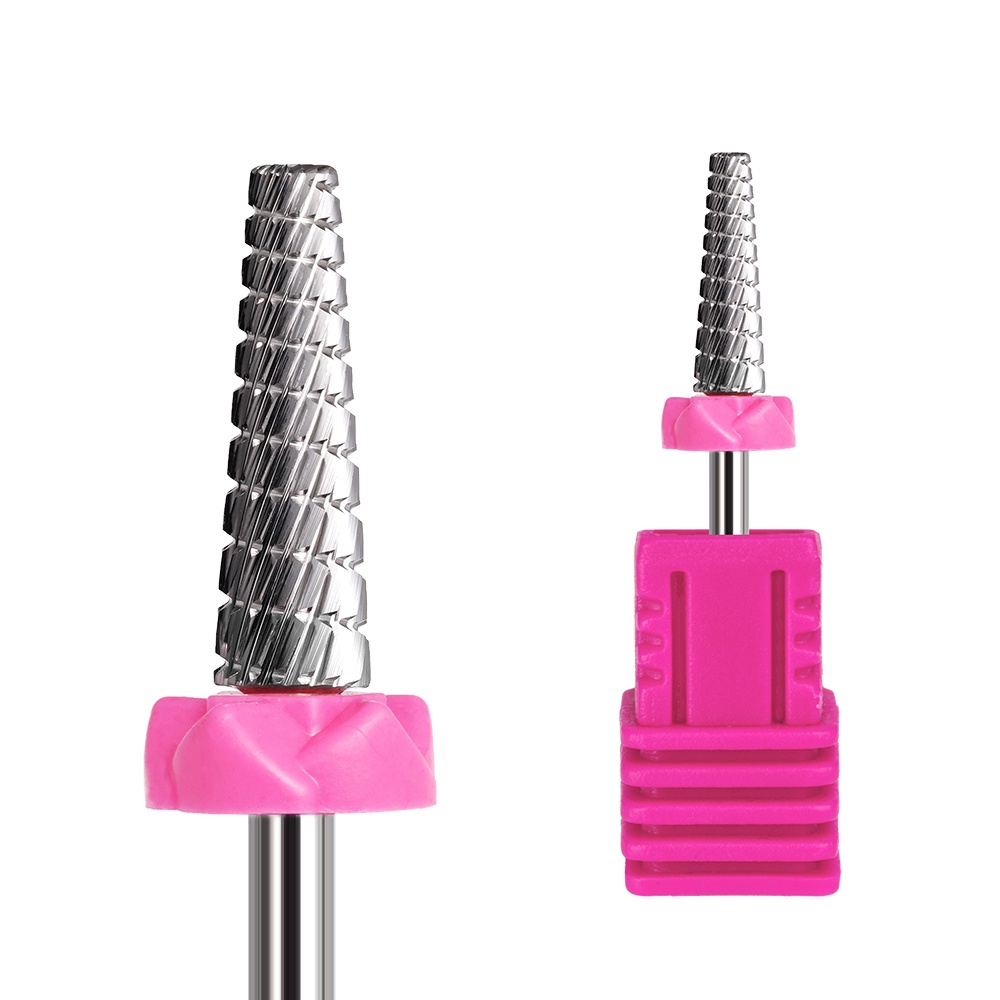
Material selection affects durability and cutting behavior. Tungsten carbide is widely used for removing hard enhancement products because it offers high hardness and can retain a sharp cutting profile with proper care. A flat-tip carbide option can be useful where operators want a stable grinding surface and reduced risk from a pointed end. For example, the Golden Flat Tip Carbide 4XC Nail Drill Bit Gel Remover Skewed Tooth is designed for removal work involving hard gels, soft gels, base coats, tips, and other tough product layers. Its flat safety-oriented profile addresses a different handling preference from a tapered bit, particularly for technicians who prioritize broad, controlled product reduction.
The choice between a tapered safety bit and a flat-tip remover is not about one being universally better. A tapered profile can help reach curved areas and sidewalls. A flat-tip design may feel more stable for broad surface removal. Both still require correct grit selection, a compatible electric handpiece, and a clear separation between enhancement removal and delicate cuticle preparation.
Quality Control Is Part of Safe Operation
A nail drill bit is a small consumable tool, yet small manufacturing differences can be noticeable during a service. Poorly finished edges, imbalance, inadequate shank tolerances, or inconsistent abrasive surfaces may lead to vibration and reduced precision. Those issues become more significant when working close to the cuticle, where the operator has little room to correct a sudden movement.
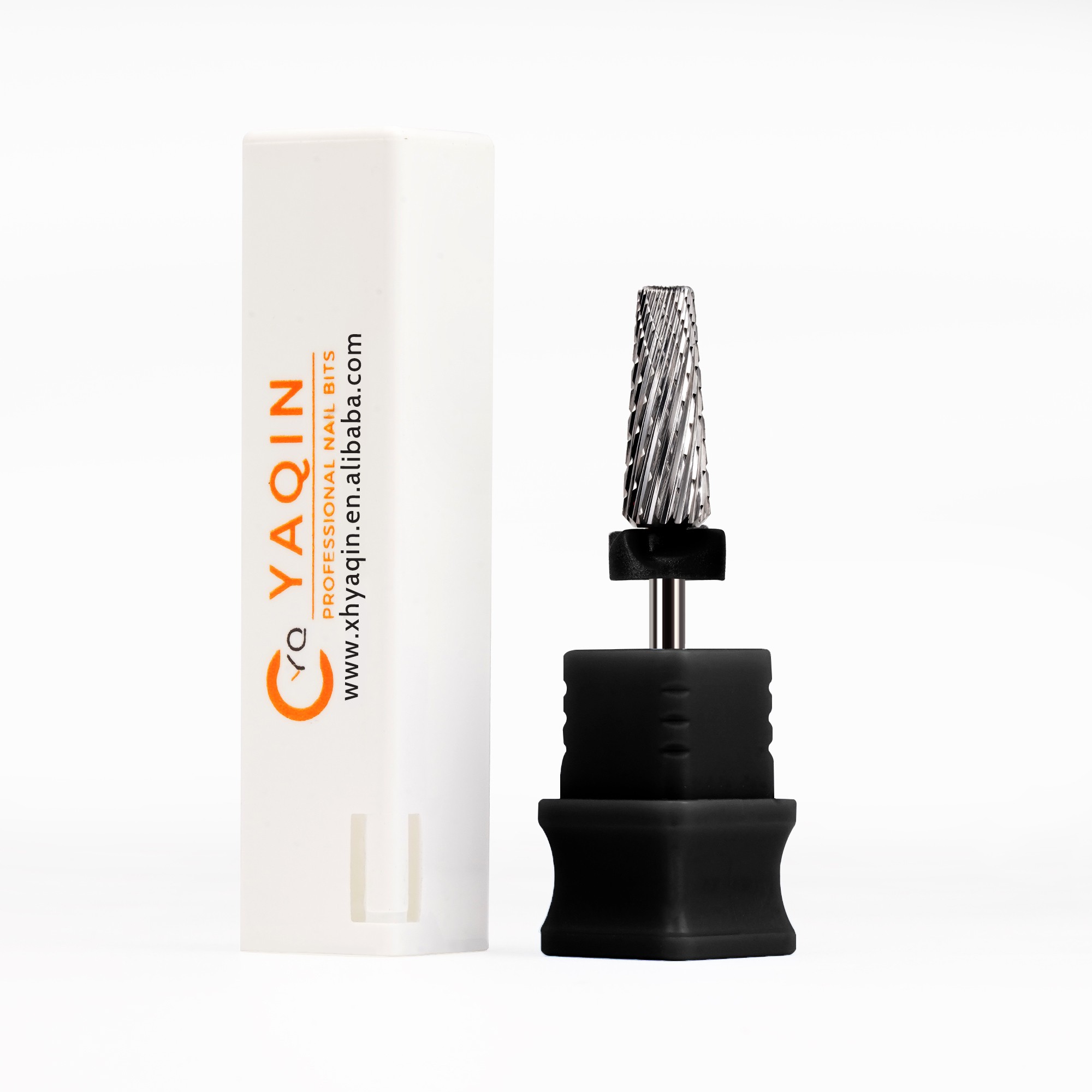
Wuxi Yaqin Trading Co., Ltd. focuses on the production and export of abrasive products and supplies customers across the United States, Canada, Germany, the United Kingdom, Italy, Poland, and many other markets. Its quality-control process covers raw-material purchasing, production, and packing, and the company states that it has passed ISO9001:2000 quality management system certification. For buyers developing private-label nail bit ranges, the practical questions are not limited to color or packaging: confirm bit dimensions, grit designation, rotation requirements, shank compatibility, sampling process, and the level of inspection required for the destination market.
OEM or ODM projects also benefit from defining use cases early. A coarse 20mm tapered bit intended for professional hard-gel removal should not be described or packaged as a universal cuticle bit. Clear positioning helps reduce misuse after delivery and gives operators a more realistic expectation of what the tool can safely accomplish.
A Safer Working Decision
Use a 20mm coarse safety tapered nail bit near the cuticle only when there is sufficient enhancement material to remove and when you can maintain a light, moving, controlled contact. Treat the rounded tip as an added safeguard, not permission to work against skin or aggressively file the natural plate. Once the product becomes thin, switch to a finer tool.
Before adding this type of bit to a salon workflow or product range, test it with the materials most often serviced, check its balance and handpiece fit, and make sure the intended grit and rotation are clearly identified. Near the cuticle, careful tool selection is not slower work—it is the part of the process that protects the nail while keeping the removal service controlled.
News List
- Preventing Gouges and Uneven Filing With Small Barrel Nail Drill BitsSep 20, 2026
- How Diameter and Grit Affect Small Barrel Nail Drill Bit PerformanceSep 20, 2026
- Can Hytos Nail Drill Bits Be Used Safely on Natural Nails and Gel Polish?Sep 20, 2026
- How to Verify Fit Between Hytos Nail Drill Bits and an E-File HandpieceSep 20, 2026
- Safe Speed Settings for Umbrella Nail Drill Bits Around the Nail FoldSep 20, 2026
- Umbrella vs Flame Nail Drill Bits: Which Shape Offers Better Cuticle Control?Sep 20, 2026
Best-Selling Products
 Cross Cut Safety Stainless Steel Tungsten Carbide Nail Drill Bits Salon Foot Use XF-C Grit for Removing Nails
 First-rate Quality Tungsten Carbide Nail Drill Bits Best Coating Manicure Remove Gel Nails Accessories
 Professional Advanced Safety Cuticle Bits Two-Way Rotate 3/32'' Carbide Tungsten 5 in 1 Nail Drill Bits
 Wholesale 5 in 1 Electric Manicure Nail Drill Bits Various Coating Cone Cuticle Bit with Rotary Cross Cut for Nail Art
 New Slant Tooth Tungsten Steel Nail Drill Bits Dead Skin Removal 5-in-1 Universal Grinding Nail Polish Head Tool Nail Drill Bits
 4.0mm Small 5 in 1 Integrated Sharpe Tungsten Nail Drill Bit Straight Teeth Gel Polish Removal
 Flame Sharp XF F M C XC Silver Safety Professional Corn Tungsten Carbide Nail Bit for Drill Machine Accessories
 Factory Direct 5 in 1 Tungsten Carbide Nail Drill Bits 6.8MM Cross Cut Safety Manicure 5 in 1 Nail Drill Bits
Please give us a message