
How to compare China nail drill bit quality before placing an order
How to compare China nail drill bit quality before placing an order
Start with the Use Case, Not the Catalogue
A low quotation and a polished product photo are not enough to judge a China Nail Drill Bit before a bulk purchase. Drill bits that look similar can perform very differently in a salon: one may remove gel smoothly for weeks, while another may heat up, clog, vibrate, lose its cutting edge, or fit poorly in the handpiece. The practical comparison should therefore begin with the work the bit is expected to do.
Procurement teams should first separate bits by application rather than asking a supplier for a generic “best quality” option. Removing hard gel or acrylic, refining an enhancement surface, cleaning around the cuticle area, and smoothing a transition line require different head shapes, abrasiveness, materials, and operating behavior. A bit that is efficient for bulk removal may be inappropriate for detail work near the natural nail. Combining these needs into one vague specification often produces a set with duplicated functions and inconsistent results.
Before requesting samples, prepare a short usage brief: the compatible drill type, intended salon or retail market, expected service volume, coating or artificial material to be removed, preferred bit shapes, and any restrictions on heat, dust, or user skill level. This makes supplier comparisons more meaningful because each factory is quoting against the same requirement.
Material Claims Need Closer Inspection
The material is one of the first quality signals, but its name alone does not settle the question. Diamond, ceramic, carbide, tungsten steel, stainless steel, and abrasive sanding bands each have a place in nail work. Their quality depends on material grade, manufacturing consistency, geometry, and finishing quality as much as the label printed on the package.
For example, a tungsten carbide or tungsten steel bit is generally selected where efficient removal and wear resistance matter. Yet two carbide bits may have noticeably different cutting behavior if their flute depth, flute spacing, edge finishing, concentricity, or body hardness differs. An overly aggressive cutting profile can remove product quickly but leave deep marks or demand more operator control. A poorly finished profile may drag or generate excessive friction instead of cutting cleanly.
For coated or abrasive products, ask how the abrasive layer is attached and whether the surface coverage is uniform across the working area. Sparse abrasive particles, bare patches, uneven coating, or obvious build-up around the edges can shorten useful life. On diamond bits, inconsistent grit distribution may be visible under magnification even when the overall appearance seems acceptable.
Material comparisons should also account for cleaning and corrosion exposure. Salon tools are repeatedly exposed to dust, cleaning agents, moisture, and sterilization procedures. A bit that performs well in a short demonstration but shows staining, surface degradation, or loose abrasive after routine care creates a replacement-cost problem later. Buyers should describe their expected cleaning process when asking suppliers about material selection.
Check Grit and Cutting Profile as Functional Specifications
“Fine,” “medium,” and “coarse” are useful commercial labels, but they are not sufficiently precise for a quality comparison unless the supplier can maintain the same grade from batch to batch. A coarse bit should not arrive with a mix of sharp, moderate, and nearly smooth cutting surfaces. In salon use, inconsistency changes removal speed and increases the chance that technicians apply excess pressure to compensate.
Ask for a grit chart, physical samples, or both. For carbide-style bits, the relevant comparison is often the cut pattern rather than a conventional grit number. Inspect whether the flutes are cleanly machined, evenly spaced, and free from burrs. Look closely at the tip and shoulder transitions. These areas affect control during detail work and are common locations for rough finishing.
Direction also matters. A bit designed for clockwise rotation may behave differently in reverse, and left-handed technicians may need an appropriate reverse-cut option. A supplier should be able to identify the direction clearly in its sample labeling and packaging. If a mixed set includes bits with different directions, the markings must remain legible after unpacking.
It is sensible to define the acceptable cutting range around the actual task. For gel removal, evaluate speed, heat, dust discharge, and surface finish together. For smoothing or finishing work, judge whether the bit leaves controlled refinement rather than visible grooves. A sample that removes material fastest is not automatically the better purchasing choice if it creates more finishing work or raises safety concerns for less experienced users.
Shank Accuracy and Runout Affect Every Use
Many quality disputes are traced to a basic mechanical issue: the shank does not run true in the drill. The bit may look acceptable on a table but wobble when rotating. This creates vibration, makes precision work harder, increases discomfort for the technician, and can accelerate wear in the handpiece chuck.
For standard electric nail drills, buyers commonly need a 3/32-inch shank, but the specification should not end there. Ask the supplier for the nominal shank diameter, tolerance control method, and compatibility with the handpieces used in the target market. A small dimensional variation may be enough to cause a loose fit in one machine and an overly tight fit in another.
Inspect samples by inserting them into representative handpieces and running them at the working speed, not only at a low demonstration speed. Observe the head from the side and front. Noticeable oscillation, inconsistent sound, or a changing contact point can signal runout or imbalance. This is particularly important for longer, heavier, or unusually shaped heads.
The connection between shank and working head also deserves attention. One-piece construction can improve stability for certain metal bits because there is no separate joint to loosen under repeated use. It should still be assessed as a manufacturing feature, not treated as a blanket guarantee. The relevant question is whether the finished bit remains balanced, stable, and intact through the expected application and cleaning cycle.
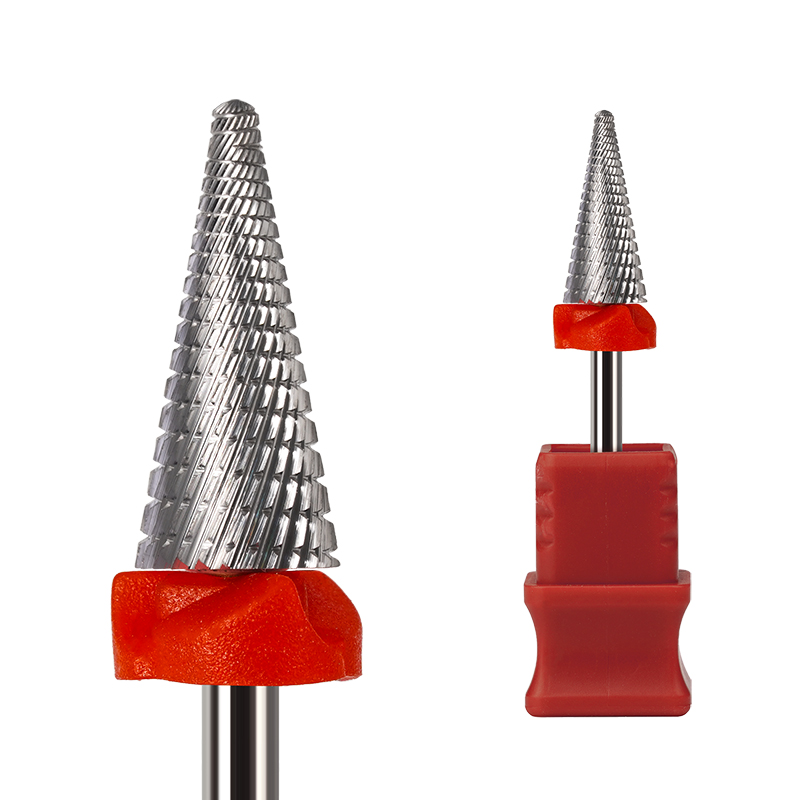
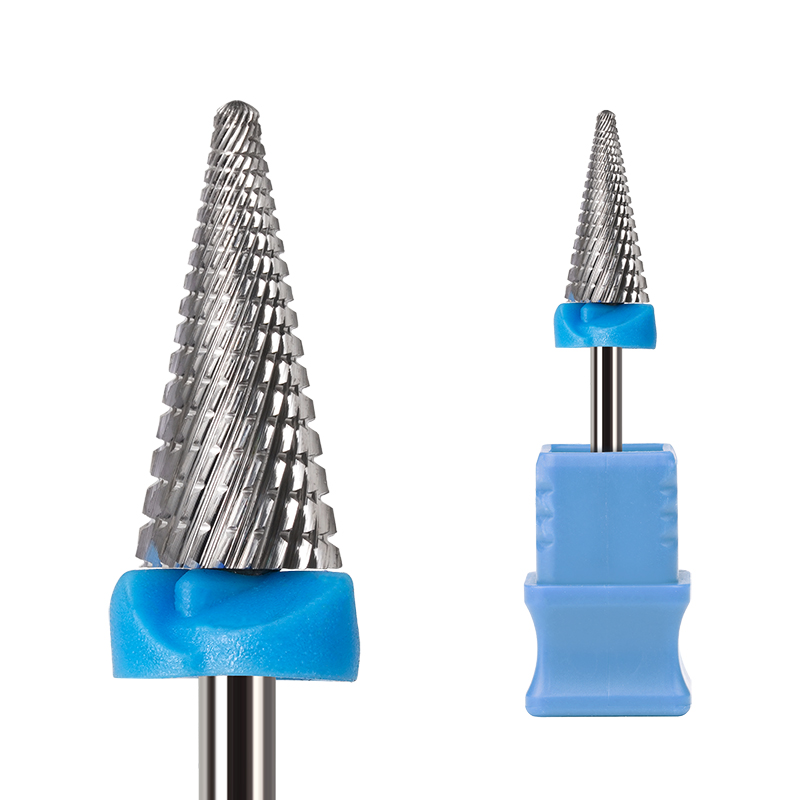
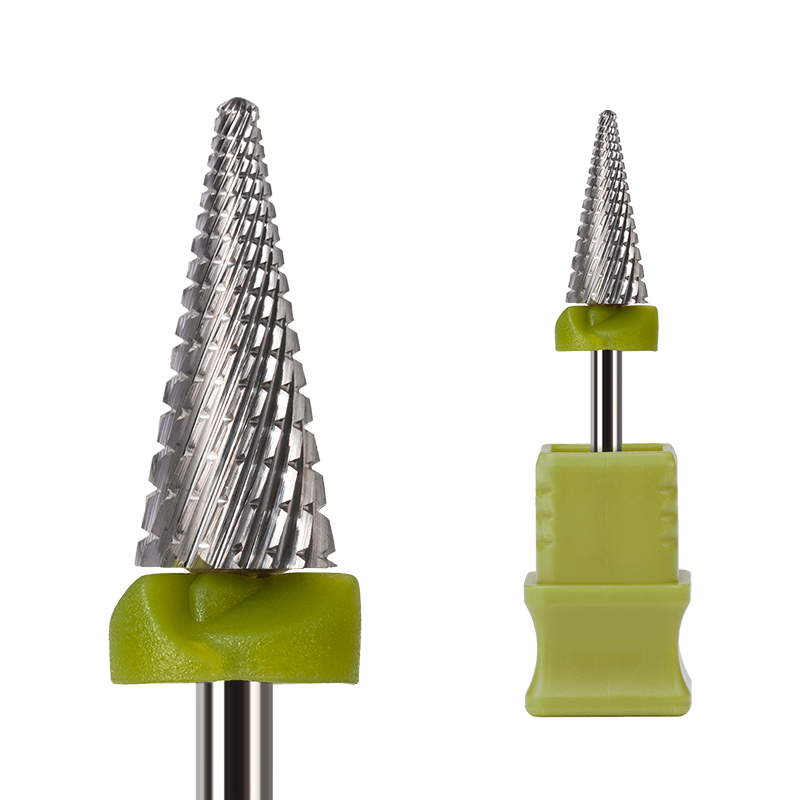
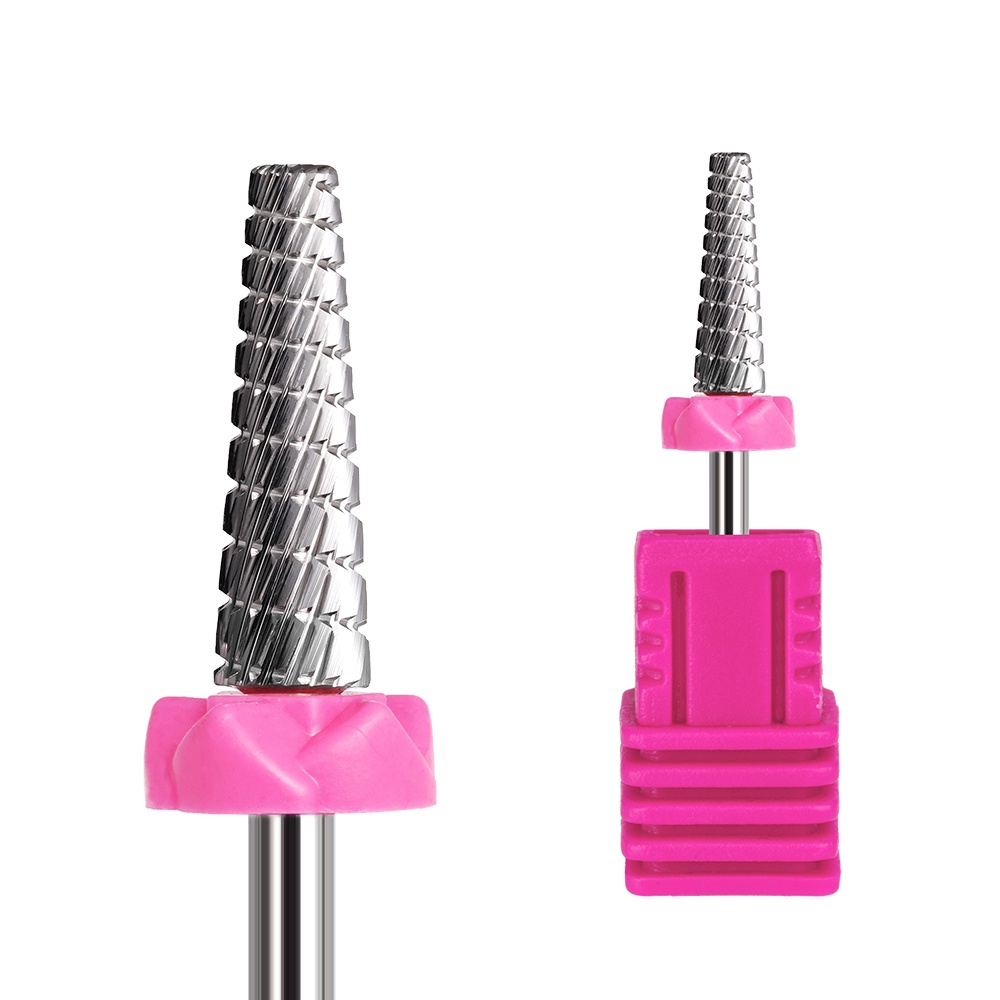
An umbrella-shaped round head illustrates why form and precision must be assessed together. Its rounded profile can be useful for smoothing nail steps, following the C-curve, and refining corners without relying on a sharply pointed end. In this category, buyers should check the symmetry of the head, the smoothness of the rounded edge, and whether the bit stays stable when it contacts the surface at different angles. A product such as High Quality Nail Art Tools Nail Drill Bit Steel Grinding Tungsten Carbide Nail Drill Bits Sets Manicure Pedicure can serve as a reference point for this inspection: its application claims should be verified through samples under the same gel removal and surface-refining tasks planned for the order.
Durability Should Be Measured by Consistent Performance
Buyers often ask how many clients a nail drill bit will serve. That question is reasonable, but a single lifetime figure can be misleading because performance depends on the material being removed, rotation speed, pressure, cleaning practice, technician technique, and whether the bit is used for its intended purpose. A coarse removal bit used aggressively on hard product will not age in the same way as a finishing bit used lightly.
A more useful sample evaluation compares performance across repeated, controlled tasks. Use several pieces from the same sample batch rather than judging one bit. Record whether removal speed changes, whether the bit begins to clog, whether heat increases, whether cutting surfaces become visibly dull, and whether the finish becomes less even. Compare those observations against a known reference bit used under the same conditions.
Do not overlook heat. Heat can come from technique or drill settings, but it can also reflect poor cutting efficiency, clogged flutes, imbalance, or an unsuitable profile. The best bit for a professional setting is not necessarily the least aggressive one; it is the one that gives predictable control at the intended speed and workload. For high-volume salons, consistency from one replacement bit to the next is often more valuable than an impressive result from a single sample.
Sample Orders Must Represent Production, Not Presentation Pieces
A supplier sample can be useful only when buyers know what it represents. Ask whether the sample came from regular production, a development batch, or specially selected stock. For a larger order, request samples from more than one production lot where feasible. This helps reveal whether shape, coating, cutting profile, and finishing are stable rather than dependent on a hand-picked piece.
For a set purchase, inspect the whole set rather than approving only the most important bit. Confirm that each cavity, label, and size designation matches the packing list. Check for duplicate items, mismatched colors where color coding identifies abrasiveness, loose caps, damaged blister packs, or bits that can move freely during transit. Packaging is not just a retail concern: it affects product cleanliness, correct identification, and the rate of arrival damage.
Use an approval sample that is retained by both parties. It should define the main visual and functional expectations: head shape, dimensions, shank fit, direction, finish, labeling, packaging configuration, and any branded elements. Photos are helpful, but a signed physical reference is much easier to use when a later batch is questioned.
Ask Questions That Reveal the Supplier's Process
Quality control documents are useful when they describe a real inspection process rather than merely displaying a certificate. Buyers should ask where inspections occur and what is checked at incoming material, during production, and before packing. A supplier that can explain its controls in practical terms is easier to work with than one that responds only with broad quality statements.
- How are raw materials and abrasive components checked before production?
- What dimensions and appearance points are inspected on finished bits?
- How is shank fit or runout monitored?
- What is the sampling method for a production batch?
- How are nonconforming pieces separated and recorded?
- Can the supplier maintain lot identification on inner and outer packaging?
- What happens if the approved sample and delivered batch differ?
Traceability matters particularly when a buyer is sourcing for multiple salons, distributors, or private-label channels. Lot numbers, packing records, and clear carton marks make it possible to isolate a problem rather than treating the entire shipment as unknown stock. This discipline also helps when reordering a proven specification months later.
Compare the Landed Risk, Not Only the Unit Price
A lower unit price may be reasonable if the bit is intended for occasional retail use, simple filing tasks, or a short promotional set. It becomes less attractive when high replacement rates, customer complaints, poor packaging, rework, and inconsistent performance are added to the cost. Procurement should compare quotations against the expected operating environment and the cost of failure within that environment.
The final purchasing decision should be based on a written specification and a sample evaluation record, not on the assumption that a material name, a product image, or a low price defines quality. When those controls are in place, comparing China Nail Drill Bit suppliers becomes a manageable selection exercise: choose the product whose performance, fit, batch control, and packing standards match the work it will actually be asked to do.
News List
- Preventing Gouges and Uneven Filing With Small Barrel Nail Drill BitsSep 20, 2026
- How Diameter and Grit Affect Small Barrel Nail Drill Bit PerformanceSep 20, 2026
- Can Hytos Nail Drill Bits Be Used Safely on Natural Nails and Gel Polish?Sep 20, 2026
- How to Verify Fit Between Hytos Nail Drill Bits and an E-File HandpieceSep 20, 2026
- Safe Speed Settings for Umbrella Nail Drill Bits Around the Nail FoldSep 20, 2026
- Umbrella vs Flame Nail Drill Bits: Which Shape Offers Better Cuticle Control?Sep 20, 2026
Best-Selling Products
 Cross Cut Safety Stainless Steel Tungsten Carbide Nail Drill Bits Salon Foot Use XF-C Grit for Removing Nails
 First-rate Quality Tungsten Carbide Nail Drill Bits Best Coating Manicure Remove Gel Nails Accessories
 Professional Advanced Safety Cuticle Bits Two-Way Rotate 3/32'' Carbide Tungsten 5 in 1 Nail Drill Bits
 Wholesale 5 in 1 Electric Manicure Nail Drill Bits Various Coating Cone Cuticle Bit with Rotary Cross Cut for Nail Art
 New Slant Tooth Tungsten Steel Nail Drill Bits Dead Skin Removal 5-in-1 Universal Grinding Nail Polish Head Tool Nail Drill Bits
 4.0mm Small 5 in 1 Integrated Sharpe Tungsten Nail Drill Bit Straight Teeth Gel Polish Removal
 Flame Sharp XF F M C XC Silver Safety Professional Corn Tungsten Carbide Nail Bit for Drill Machine Accessories
 Factory Direct 5 in 1 Tungsten Carbide Nail Drill Bits 6.8MM Cross Cut Safety Manicure 5 in 1 Nail Drill Bits
Please give us a message