
Are China nail drill bits a practical choice for growing salons?
Are China nail drill bits a practical choice for growing salons?
For a growing salon, a China Nail Drill Bit can be a practical purchasing choice, but only when the buying decision is based on consistency rather than unit price alone. Drill bits are small, inexpensive tools compared with e-files, lamps, or salon furniture, yet they affect service speed, technician comfort, client safety, and the frequency of replacement. A low-cost bit that runs unevenly, dulls quickly, or produces excessive heat can cost more in lost working time and inconsistent results than a better-controlled alternative.
The useful question is not whether China-made bits are inherently good or bad. China supplies products across a wide quality range, from basic consumables to tightly controlled professional tools. For salon owners and multi-location operators, the decision should come down to whether a supplier can repeatedly deliver the material, grit profile, shank fit, balance, packaging, and batch quality that the business requires.
Why nail drill bit sourcing matters more as a salon grows
A single technician may be able to compensate for a mediocre bit through experience, lighter pressure, or more frequent replacement. That becomes harder when a salon adds staff, serves more clients each day, or tries to standardize service quality across multiple stations. Different technicians may use the same bit differently, but the tool itself should not introduce avoidable variation.
In gel removal and nail preparation, a drill bit has to do several things at once. It needs to remove product efficiently enough to keep appointments on schedule, while leaving the technician with enough control to avoid unnecessary contact with the natural nail or surrounding skin. It also needs to stay reasonably cool during normal use, clean effectively, and withstand the salon's disinfection process without premature corrosion or surface damage.
Those requirements make a broad sourcing decision more complicated than comparing catalog photographs. Two barrel bits may look similar, yet differ in carbide grade, tooth geometry, coating quality, concentricity, and finishing. The differences tend to appear after repeated use rather than during a quick first inspection.
Price is relevant, but replacement cost is the more useful comparison
Lower factory pricing is one reason buyers consider a China Nail Drill Bit, especially when building initial inventory or supplying several technicians. However, the purchase order price should be treated as only one part of the operating cost. A practical comparison includes usable service life, staff time, cleaning reliability, rejected pieces, and the risk of inconsistent client outcomes.
A salon can assess this without needing a complicated procurement system. Take a small number of samples from each shortlisted supplier and use them in the same service categories. Record the date each bit enters use, the services performed, visible wear, cleaning condition, and the point at which the technician no longer considers the cutting performance acceptable. The goal is not to establish a universal lifespan, because service technique and products vary. It is to compare suppliers under the salon's own working conditions.
When evaluating cost, ask four practical questions:
- Does the bit retain cutting efficiency after repeated gel-removal work, or does it require more pressure as it wears?
- Does the shank fit securely and consistently in the salon's existing e-file handpieces?
- Are the teeth and barrel surface easy to clean after product removal?
- Will technicians need to change their technique substantially to avoid heat or grabbing?
A bit with a higher landed cost may still be the more economical choice if it stays predictable longer and reduces the number of tools held in backup inventory. Conversely, a premium-looking bit offers little value if the salon cannot obtain it in repeat orders with the same specification.
Match the bit to the work, not to a generic “professional” label
Salons often create problems by trying to use one shape and one grit for every task. A growing operation benefits from a simple, controlled assortment: a few documented bit types assigned to defined jobs. This limits confusion in training, helps managers order appropriate replacement stock, and reduces the chance that an aggressive bit is used where a finer tool is needed.
For example, a barrel-style carbide bit may be suitable for reducing gel product efficiently, but its profile and grit need to correspond to the material being removed and the user's skill level. Coarser options can remove harder product faster, though they require greater control. Medium and fine options may be more appropriate for controlled reduction, finish work, or technicians who are still developing e-file technique. Narrow and wide barrel widths also serve different purposes: a wider surface can cover open areas efficiently, while a narrower profile may provide more control around contours.
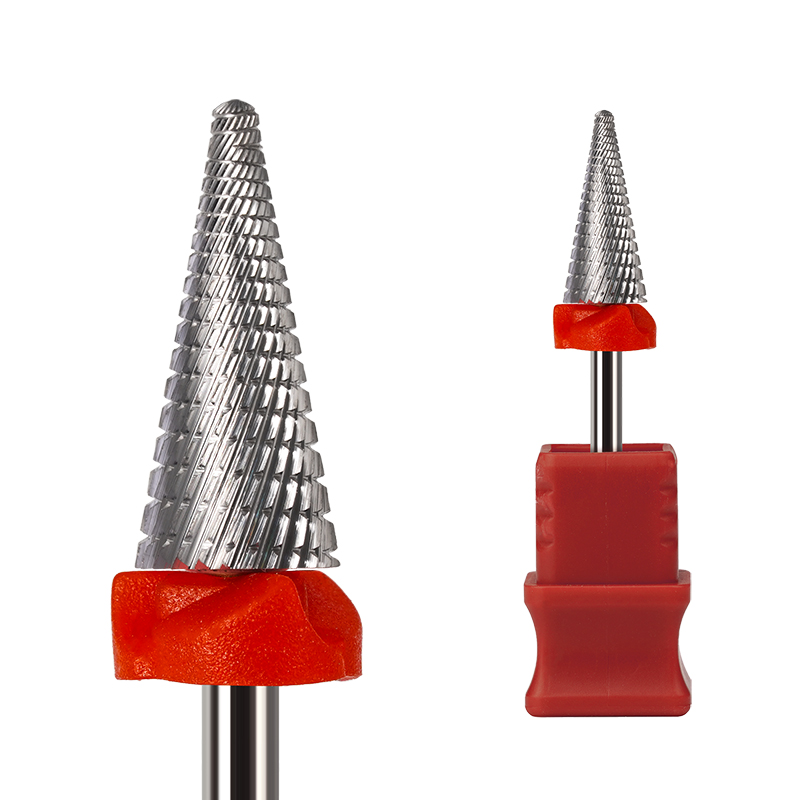
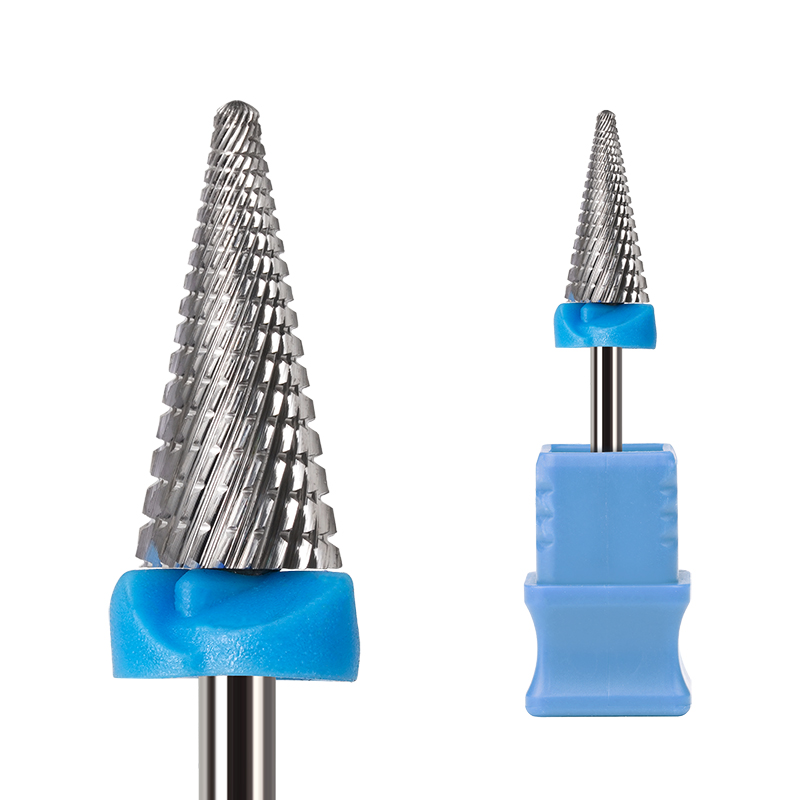
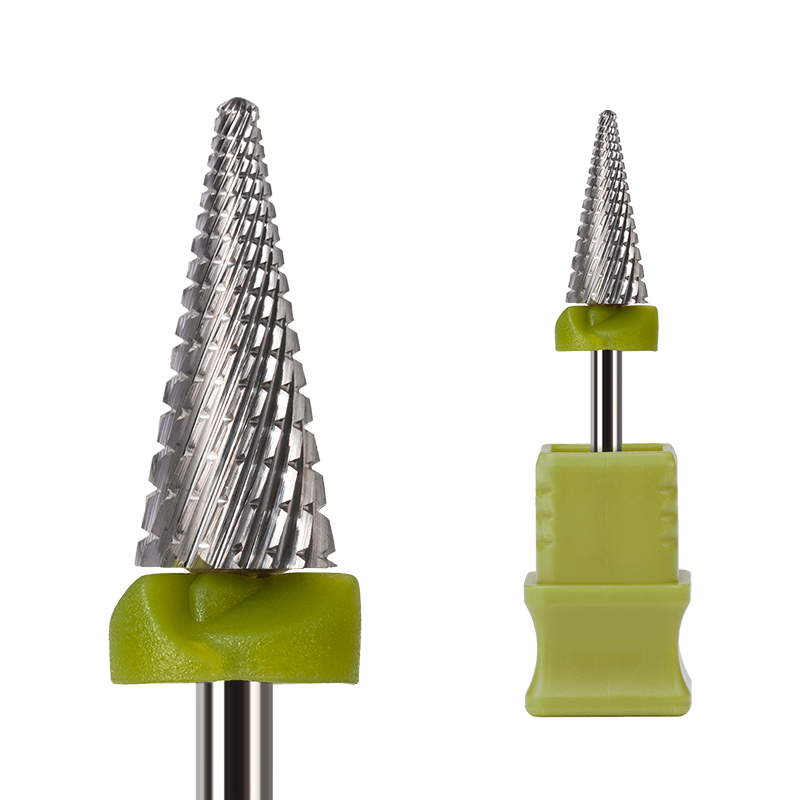
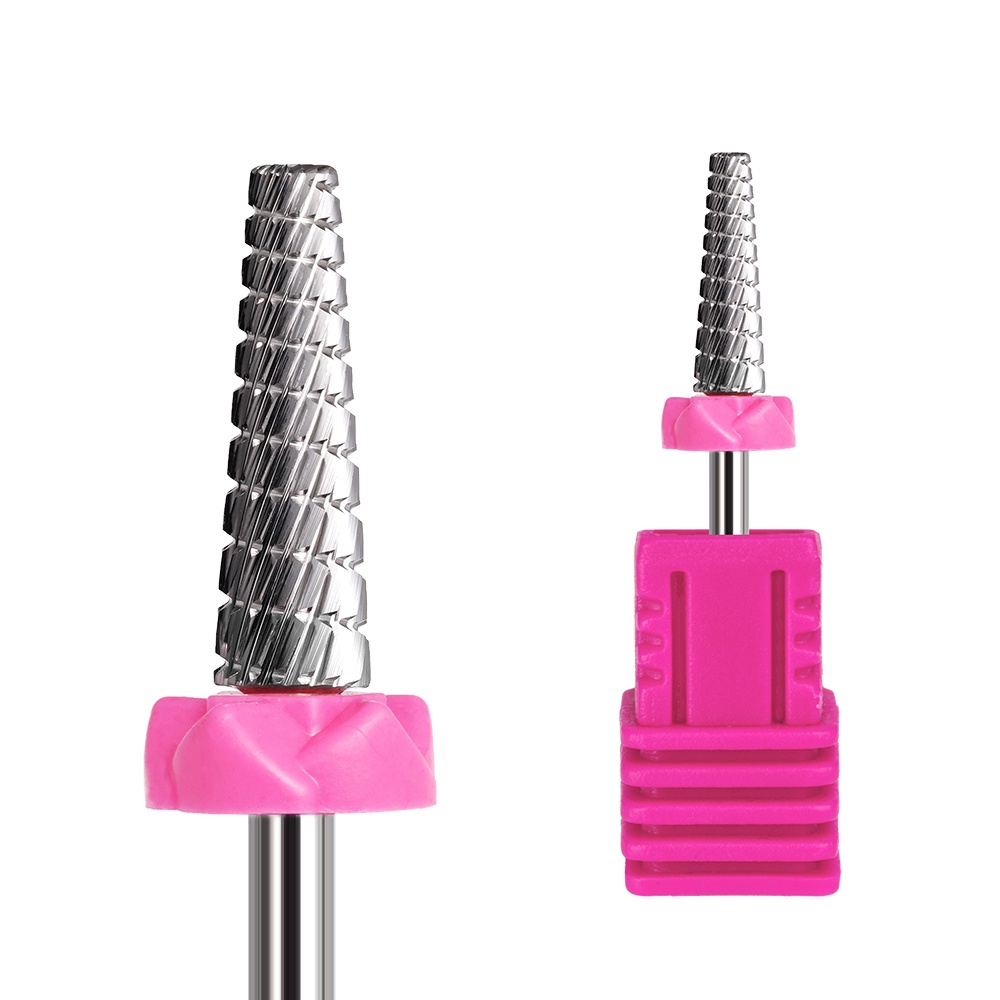
The Large Barrel Smooth Top Natural Tungsten E Life Machine Carbide Nail Drill Bits illustrates the kind of specification a buyer should examine rather than simply accepting a product name. It is offered in coarse, medium, and fine grit options, as well as narrow and wide forms. Its recommended speed ranges distinguish hard gel removal at 15,000 to 20,000 RPM from soft gel and base gel removal at 10,000 to 15,000 RPM. Those ranges are useful as an operating starting point, not as a substitute for technician training, product-specific testing, or salon safety procedures.
Speed guidance is especially important because heat complaints are rarely caused by RPM alone. Heat can result from excess pressure, a dulled cutting surface, prolonged contact in one area, clogged teeth, improper bit selection, or an unstable handpiece. Buyers should avoid assuming that a smooth-top design or carbide material automatically eliminates those risks. The tool may improve control, but technique and maintenance remain part of the system.
What separates a workable supplier from a catalog-only seller
For a salon group, distributor, academy, or private-label business, repeatability matters more than finding the largest product list. A supplier should be able to communicate specifications clearly and maintain them from sample order to production order. Vague descriptions such as “premium carbide” or “high durability” are not enough for purchasing approval unless they are connected to an identifiable product configuration.
Before committing to volume, request details that can be checked on arrival and used in future reorder conversations. At a minimum, these should cover:
- Material identification, including whether the cutting head is tungsten carbide and how the supplier describes the shank material.
- Bit shape, working length, barrel width, smooth-top or safety-top construction, and the intended use of each configuration.
- Grit classification and how the supplier controls the distinction between coarse, medium, and fine batches.
- Shank diameter compatibility with the salon's e-file equipment.
- Cleaning, disinfection, and storage guidance appropriate to the bit material and the salon's operating process.
- Individual packaging, labeling, lot identification, and the process for handling shortages or defective pieces.
Some trading factories can be strong partners because they coordinate production, inspection, packing, and export documentation across a defined product range. Others may primarily aggregate products from changing sources. The distinction is not visible from a website alone. Procurement teams should ask whether the same factory, tooling approach, inspection standard, and packaging process will apply to repeat orders. They should also ask what happens when a specification changes, such as adding a private label, different color ring, revised package insert, or a new grit mix.
OEM or ODM capability can be useful when a salon brand has enough volume to justify custom packaging or a tailored assortment. It should not be treated as a reason to skip validation. Customization increases the cost of getting the specification wrong: a salon may be left with branded inventory that technicians do not like using. Start with approved samples in neutral or low-commitment packaging, then move to customized packaging once performance and reorder consistency have been established.
Inspect samples like operating tools, not display items
A sample review should involve the people who will use and maintain the bits. Purchasing staff can verify quantities, labels, and basic finish, but nail technicians are better placed to identify vibration, dragging, excessive dust retention, or a cutting pattern that does not suit the salon's services.
Use a consistent review process. Check that each bit is straight and seats correctly in the handpiece. Run it at low and working speeds before using it on a service. Compare similar products on the same type of gel system where possible. Observe how cleanly the product is removed, whether the bit clogs, how much pressure is needed, and whether the surface stays controllable after cleaning. Inspect the bit again after several cycles for damage, discoloration, roughness, or a change in cutting behavior.
This process also reveals whether the proposed assortment is unnecessarily complex. If staff cannot reliably distinguish between several similar grits or barrel widths, a smaller set may produce better service consistency. A growing salon does not need every available bit type. It needs enough options to handle its regular work without encouraging improvisation.
Common assumptions that create avoidable buying mistakes
One common assumption is that tungsten carbide automatically indicates a professional-grade bit. Tungsten carbide is widely used because it can provide durable cutting performance, but the finished tool still depends on machining accuracy, tooth design, attachment quality, and process control. Material terminology should begin the evaluation, not end it.
Another is that the most aggressive bit improves salon productivity. Faster removal can be helpful on hard gel, but overly aggressive grit used without suitable training can create uneven service quality and increase the likelihood of discomfort or over-filing. Productivity comes from matching the bit, speed, handpiece, technique, and service protocol, rather than maximizing one variable.
Buyers also sometimes approve a sample and assume the next order will be identical. That is risky when the supplier has not documented the product configuration or when the order is placed through a different sales channel. Keep a retained approved sample, a written specification, and clear photos of labeling and packaging. For recurring orders, compare incoming goods against that reference before distributing them to every station.
A sensible path for first and repeat orders
For an initial purchase, build a trial order around the salon's most frequent services rather than around a full catalog. Select a manageable range of barrel shapes and grits, test them across different technicians, and establish an internal note for intended use and recommended operating limits. This gives managers useful evidence before they commit to larger quantities or branded packaging.
For repeat orders, shift attention toward batch consistency and delivery reliability. Confirm the approved specifications, packaging count, labeling, and any replacement policy before production begins. Check samples or pre-shipment images when the order is significant enough to justify it. On receipt, inspect a defined portion of the delivery before putting everything into circulation.
China-made drill bits can support a growing salon when the supplier relationship is managed as a quality-control decision rather than a bargain search. A well-specified carbide bit, tested in the salon's own workflow and reordered against a clear reference, can offer a workable balance of performance, cost control, and supply flexibility. The salon that benefits most is the one that buys a repeatable tool system, not simply a cheaper box of bits.
News List
- Preventing Gouges and Uneven Filing With Small Barrel Nail Drill BitsSep 20, 2026
- How Diameter and Grit Affect Small Barrel Nail Drill Bit PerformanceSep 20, 2026
- Can Hytos Nail Drill Bits Be Used Safely on Natural Nails and Gel Polish?Sep 20, 2026
- How to Verify Fit Between Hytos Nail Drill Bits and an E-File HandpieceSep 20, 2026
- Safe Speed Settings for Umbrella Nail Drill Bits Around the Nail FoldSep 20, 2026
- Umbrella vs Flame Nail Drill Bits: Which Shape Offers Better Cuticle Control?Sep 20, 2026
Best-Selling Products
 Cross Cut Safety Stainless Steel Tungsten Carbide Nail Drill Bits Salon Foot Use XF-C Grit for Removing Nails
 First-rate Quality Tungsten Carbide Nail Drill Bits Best Coating Manicure Remove Gel Nails Accessories
 Professional Advanced Safety Cuticle Bits Two-Way Rotate 3/32'' Carbide Tungsten 5 in 1 Nail Drill Bits
 Wholesale 5 in 1 Electric Manicure Nail Drill Bits Various Coating Cone Cuticle Bit with Rotary Cross Cut for Nail Art
 New Slant Tooth Tungsten Steel Nail Drill Bits Dead Skin Removal 5-in-1 Universal Grinding Nail Polish Head Tool Nail Drill Bits
 4.0mm Small 5 in 1 Integrated Sharpe Tungsten Nail Drill Bit Straight Teeth Gel Polish Removal
 Flame Sharp XF F M C XC Silver Safety Professional Corn Tungsten Carbide Nail Bit for Drill Machine Accessories
 Factory Direct 5 in 1 Tungsten Carbide Nail Drill Bits 6.8MM Cross Cut Safety Manicure 5 in 1 Nail Drill Bits
Please give us a message