
How to Evaluate a Reliable Nail Drill Bit Supplier for Stable Quality and Lead Time
How to Evaluate a Reliable Nail Drill Bit Supplier for Stable Quality and Lead Time
How to Evaluate a Reliable Nail Drill Bit Supplier for Stable Quality and Lead Time
Choosing a reliable Nail Drill Bit Supplier is not a branding exercise. For procurement teams, it usually comes down to two things that affect the business immediately: whether the bits arrive on time, and whether the quality stays the same from batch to batch. A supplier can quote a good price once. That does not tell you much. What matters is whether they can keep surface finish, sharpness, balance, durability, and packaging consistency under control when your order volume grows or when you reorder after several months.
In nail tools, buyers often get into trouble when they approve samples too quickly. The first sample looks fine, then mass production comes back with uneven cutting performance, coating inconsistency, early wear, or delayed shipment because the supplier is actually outsourcing key steps. If you are buying for salon supply, private label, distribution, or chain retail, your evaluation process should be practical and a little skeptical. Here is the checklist experienced buyers usually wish they had applied earlier.
Start with the manufacturing reality, not the sales pitch
Ask one direct question early: what part of production is done in-house, and what part is outsourced? For nail drill bits, that answer affects quality control more than the brochure does. If the supplier controls raw material selection, shaping, grinding, finishing, inspection, and packing, they have a better chance of keeping stable standards. If they depend on multiple outside workshops, your risk goes up, especially on repeat orders.
A trading factory model can still work well, but only if control is real and traceable. Wuxi Yaqin Trading Co., Ltd., for example, presents itself as a trading factory focused on high quality abrasive products with a strict QC system covering raw material purchasing, production process, and packing, plus OEM/ODM experience and ISO9001:2000 certification. That is useful background, but procurement should still verify how this system works in day-to-day order execution rather than taking the claim at face value.
A quick way to test this is to ask for:
- A simple production flow chart for the exact bit type you plan to buy
- Inspection points used before packing
- How they handle nonconforming pieces
- Whether batch records can be linked to shipment dates
If the answers stay vague, the lead time promise is probably vague too.
Check sample quality like a buyer, not like an end user
Many buyers only check whether a bit “works.” That is not enough. You need to know whether the sample is representative of mass production and whether the supplier understands your use case. A salon-focused bit for gel removal and refinement needs different performance priorities than a low-cost retail pack.
When you review a sample, use a short internal scorecard. Look at cut consistency, smooth rotation, visible finish defects, shank accuracy, corrosion resistance expectations, and how the product is labeled and packed. If possible, ask your technical team or a professional nail technician to compare at least two or three suppliers side by side, using the same machine and application method. That is usually where hidden differences show up.
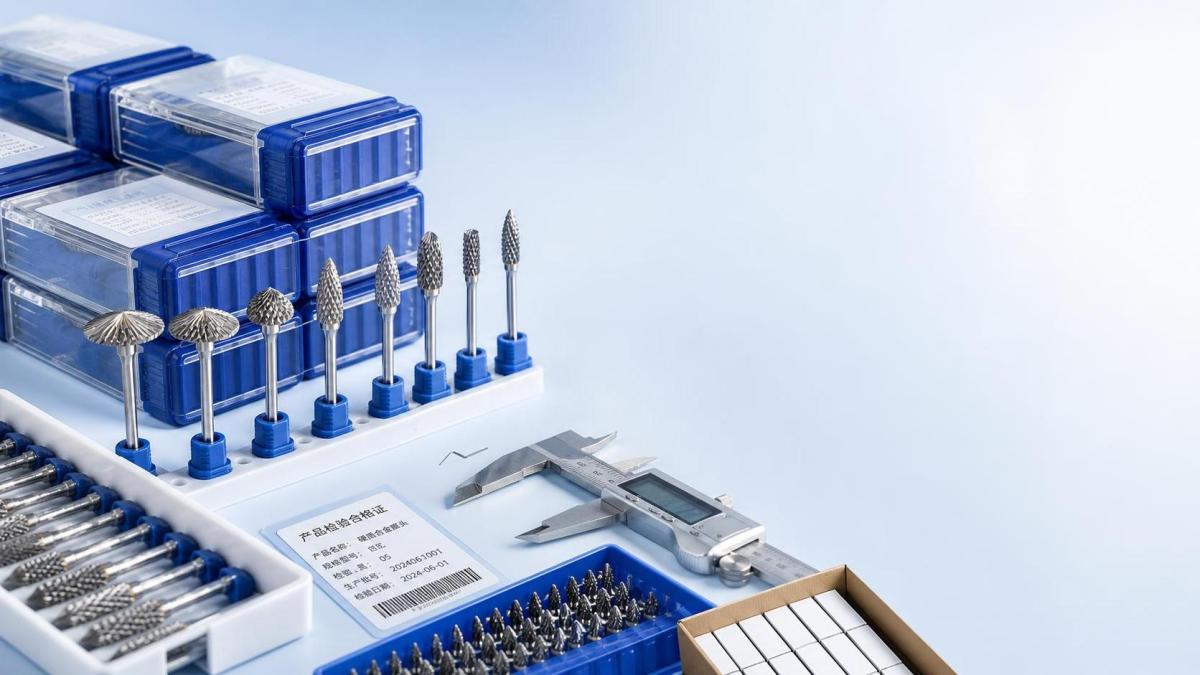
For example, a tungsten steel bit intended for long service life should not just feel sharp at first use. It should also show stable wear behavior after repeated work. A product such as Little Umbrella Tungsten Steel Grinding Head would typically be evaluated for shape precision, removal efficiency, and whether its umbrella round head geometry supports controlled refinement rather than aggressive, uneven cutting. The supplier should be able to explain where that shape performs best: gel removal, detailed nail art refinement, or general salon use.
Do not separate quality from lead time
A common sourcing mistake is treating quality review and delivery review as two separate checks. In reality, they are linked. Suppliers that struggle with process discipline often struggle with scheduling too. When a factory misses raw material timing, changes machine priority, or does rework late in production, quality variation and shipment delay usually appear together.
Ask for normal lead time by SKU, not just “15-25 days” as a generic answer. Then ask what can change that lead time:
- Raw material availability
- Custom packaging approval
- OEM engraving or logo marking
- Peak season production load
- Export booking constraints
Then ask for their actual process after order confirmation. When do they purchase material? When does inspection happen? When is packing completed? Even if they do not share internal documents, their response tells you whether they run production with discipline or rely on improvisation.
Look closely at the QC system, because “100% inspection” means very little by itself
Almost every supplier says they inspect every order. The useful question is: what exactly do they inspect, at which stage, and against what standard? A solid Nail Drill Bit Supplier should be able to describe controls for incoming material, in-process checks, and final packing review.
You do not need a perfect laboratory setup for every order, but you do need clarity. For abrasive and grinding products, buyers usually want confidence in material consistency, dimensional accuracy, appearance, and packaging correctness. If the supplier claims certification, ask what scope it covers. ISO9001:2000 indicates a quality management framework, but it does not by itself prove product performance. Treat it as a process indicator, not a substitute for product verification.
OEM and ODM support should reduce your workload, not create more of it
For procurement, OEM/ODM is often where timelines slip. A supplier may be competent on standard products but weak on artwork control, label matching, barcode accuracy, insert cards, carton marks, or variant management. If your business depends on private label, test the supplier with a small but realistic customization request before you commit to a large program.
Good signs are simple: they confirm artwork carefully, point out technical limits early, and keep revision history clear. Bad signs are also simple: they approve everything too quickly, give unclear file requirements, or avoid responsibility for packaging mistakes.
This matters more if you sell into multiple markets such as the USA, Canada, Germany, the UK, Italy, or Poland, where packaging expectations and buyer documentation routines may differ. The supplier does not need to know every local retail requirement in advance, but they should be responsive enough to adapt without turning every revision into a delay.
Price comparison only works when the quotation basis is the same
A low quotation is often just an incomplete quotation. Before you compare suppliers, lock down the same basis: material, head shape, grit or cutting profile if applicable, shank size, packaging type, logo method, quantity break, inspection expectation, and trade terms. Otherwise you are comparing different products and calling it sourcing.
This is especially important with durable products. If one supplier quotes a tungsten steel option with higher wear resistance and another quotes a cheaper alternative that looks similar in photos, the unit price gap may hide a large difference in replacement cost, complaint risk, and reorder frequency. A bit that lasts longer can be cheaper in actual use, even if the first purchase price is higher.
When reviewing a quotation, ask what is included and what is not. Tooling? Sample charge? Inner box? Export carton? Spare quantity? Rework policy for defects? These details are not administrative noise. They are where procurement cost control actually happens.
Test communication under pressure
Many supplier relationships look fine when everything is easy. The useful test is what happens when something changes. Send a revised packing requirement. Ask for a shipment split. Raise a sample issue. Bring up a lead time concern. You are not trying to create drama; you are checking response quality.
Reliable suppliers answer clearly, confirm the impact, and document the next step. Weak ones become slow, vague, or overly optimistic. Procurement teams should pay close attention to that pattern because it usually predicts how claims and urgent orders will be handled later.
A short approval routine saves trouble later
Before placing a repeatable purchase order, keep the approval routine tight:
- Approve a final sample tied to a written specification.
- Confirm packaging details in one document, not scattered messages.
- Lock lead time from order confirmation, not from “after everything is ready.”
- State what happens if defects or delays exceed the agreed level.【待核实】
- Keep one responsible contact on both sides.
That routine is not complicated, but it filters out a surprising number of future problems.
If you are comparing suppliers for long-term cooperation, choose the one that can explain its process, hold quality steady, and give realistic delivery commitments. In this category, that usually beats the lowest headline price. A Nail Drill Bit Supplier worth keeping is the one that helps you reorder with confidence instead of forcing you to re-check everything from zero each time.
News List
- Preventing Gouges and Uneven Filing With Small Barrel Nail Drill BitsSep 20, 2026
- How Diameter and Grit Affect Small Barrel Nail Drill Bit PerformanceSep 20, 2026
- Can Hytos Nail Drill Bits Be Used Safely on Natural Nails and Gel Polish?Sep 20, 2026
- How to Verify Fit Between Hytos Nail Drill Bits and an E-File HandpieceSep 20, 2026
- Safe Speed Settings for Umbrella Nail Drill Bits Around the Nail FoldSep 20, 2026
- Umbrella vs Flame Nail Drill Bits: Which Shape Offers Better Cuticle Control?Sep 20, 2026
Best-Selling Products
 Cross Cut Safety Stainless Steel Tungsten Carbide Nail Drill Bits Salon Foot Use XF-C Grit for Removing Nails
 First-rate Quality Tungsten Carbide Nail Drill Bits Best Coating Manicure Remove Gel Nails Accessories
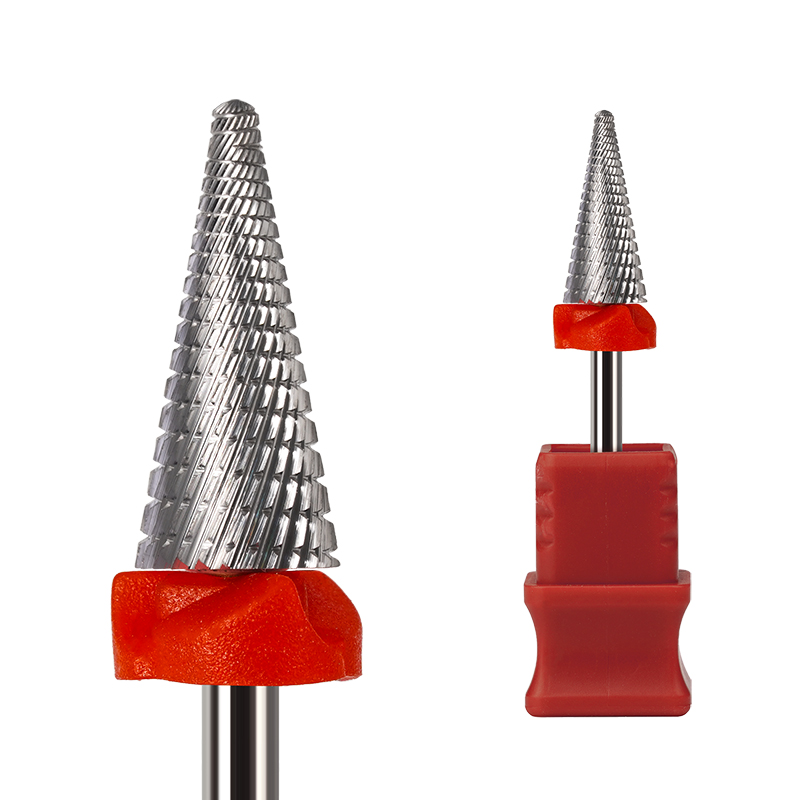
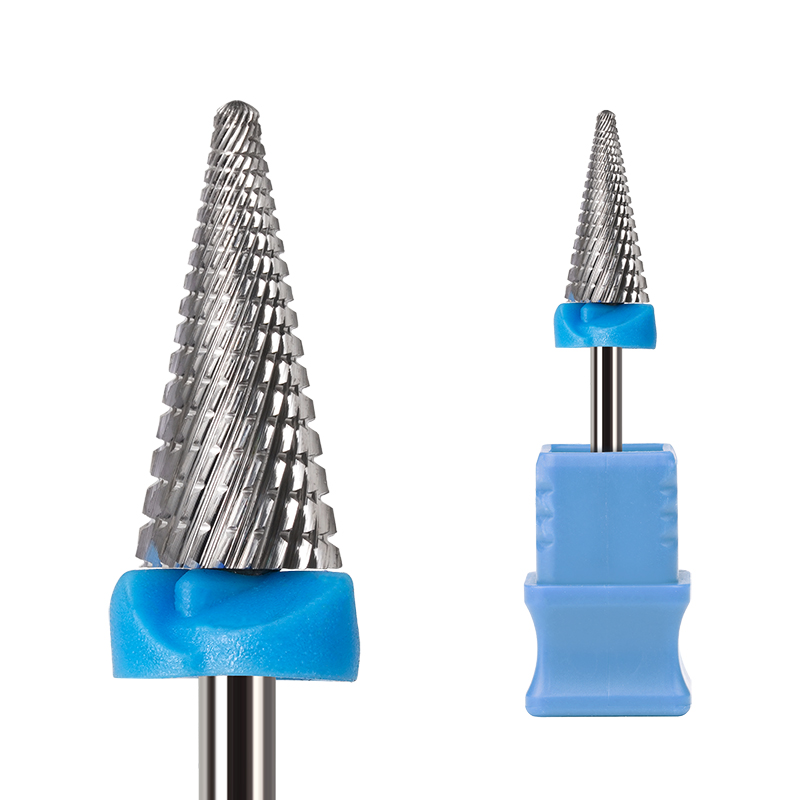
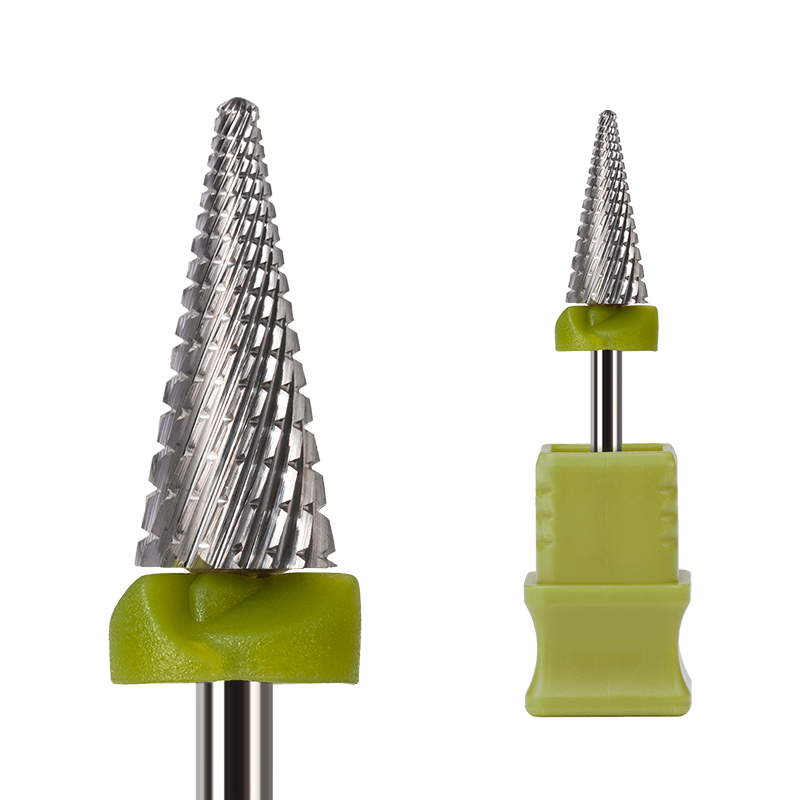
 Professional Advanced Safety Cuticle Bits Two-Way Rotate 3/32'' Carbide Tungsten 5 in 1 Nail Drill Bits
 Wholesale 5 in 1 Electric Manicure Nail Drill Bits Various Coating Cone Cuticle Bit with Rotary Cross Cut for Nail Art
 New Slant Tooth Tungsten Steel Nail Drill Bits Dead Skin Removal 5-in-1 Universal Grinding Nail Polish Head Tool Nail Drill Bits
 4.0mm Small 5 in 1 Integrated Sharpe Tungsten Nail Drill Bit Straight Teeth Gel Polish Removal
 Flame Sharp XF F M C XC Silver Safety Professional Corn Tungsten Carbide Nail Bit for Drill Machine Accessories
 Factory Direct 5 in 1 Tungsten Carbide Nail Drill Bits 6.8MM Cross Cut Safety Manicure 5 in 1 Nail Drill Bits
Please give us a message