
Gel Removal Bits in 2026: What Buyers Are Comparing Now
Gel Removal Bits in 2026: What Buyers Are Comparing Now
In 2026, the conversation around gel removal bits is no longer limited to grit labels or basic shape options.
What matters now is how consistently a bit performs across volume orders, different gel systems, and real salon working conditions.
For companies sourcing nail care tools in the light industrial and daily-use sector, gel removal bits sit at the intersection of safety, durability, finish quality, and supply confidence.
That makes supplier evaluation more strategic than before, especially when product quality can directly affect customer retention, returns, and brand perception.
Why gel removal bits are under closer review
The nail tools category has become more performance-driven.
End users expect faster gel removal, less heat buildup, lower dust splatter, and better control near the natural nail.
As a result, buyers comparing gel removal bits are asking more detailed questions about materials, tooth geometry, concentricity, and wear resistance.
This shift is practical.
A low-cost bit that loses sharpness early or cuts unevenly often creates larger downstream costs through complaints, inconsistent user experience, and replacement pressure.
What defines a high-quality option today
At a basic level, gel removal bits are rotary tools designed to remove hard gel, soft gel, base layers, and related product buildup efficiently.
In practice, quality depends on more than removal speed.
A strong option should balance cutting efficiency with surface control, user safety, machine compatibility, and long service life.
Tungsten carbide and tungsten steel remain preferred materials because they offer hardness, edge retention, and stable performance under repeated use.
Still, raw material alone is not enough.
Manufacturing precision, flute design, tip shape, and quality control determine whether gel removal bits feel smooth and predictable during actual operation.
The comparison points buyers are focusing on in 2026
The market now compares gel removal bits across several business-critical dimensions.
These criteria matter because they connect product details to commercial outcomes.
Better gel removal bits help protect product reviews, reduce claim rates, and make repeat ordering more predictable.
How performance translates into business value
In actual use, the best gel removal bits do not simply remove material faster.
They remove it with less vibration, more directional control, and lower risk of accidental surface damage.
That difference is important in salon-quality nail care, professional technician use, and even premium DIY channels.
A bit that performs smoothly can improve workflow efficiency.
It can also reduce heat discomfort, cut cleanup time, and support a more professional result on hard gel and soft gel removal jobs.
For branded distributors, that means the tool contributes not only to function, but also to perceived product quality.
Design details that deserve attention
Some of the most useful distinctions are found in small technical details.
- Slant tooth structures can improve removal flow and working efficiency.
- A smooth flat tip helps lower the chance of skin contact injury.
- Stable dust ejection direction helps reduce splatter and mess.
- High-hardness material helps preserve edge sharpness through repeated use.
- Balanced construction helps extend the lifespan of the nail grinder itself.
These are not minor selling points.
They are indicators of whether a product has been engineered for stable use rather than short-term cost competition.
What stronger suppliers are doing differently
Supplier capability is now part of the gel removal bits decision, not a separate issue.
The reason is simple.
A well-designed bit still underperforms if batch stability, packing control, or delivery execution are weak.
This is where a trading factory with export experience becomes relevant.
Wuxi Yaqin Trading Co., Ltd. has focused on high-quality abrasive product production and export, serving markets such as the USA, Canada, Germany, the UK, Italy, Poland, and many others.
Its operating model combines manufacturing coordination with international delivery support, which matters for buyers managing continuity across multiple markets.
A complete QC system covering raw material purchasing, production, and packaging reduces uncertainty before goods reach distribution channels.
ISO9001:2000 certification and one-stop service also signal process maturity, especially for OEM and ODM programs where specification control is critical.
A useful example of where the market is moving
One product direction reflects these 2026 priorities clearly.
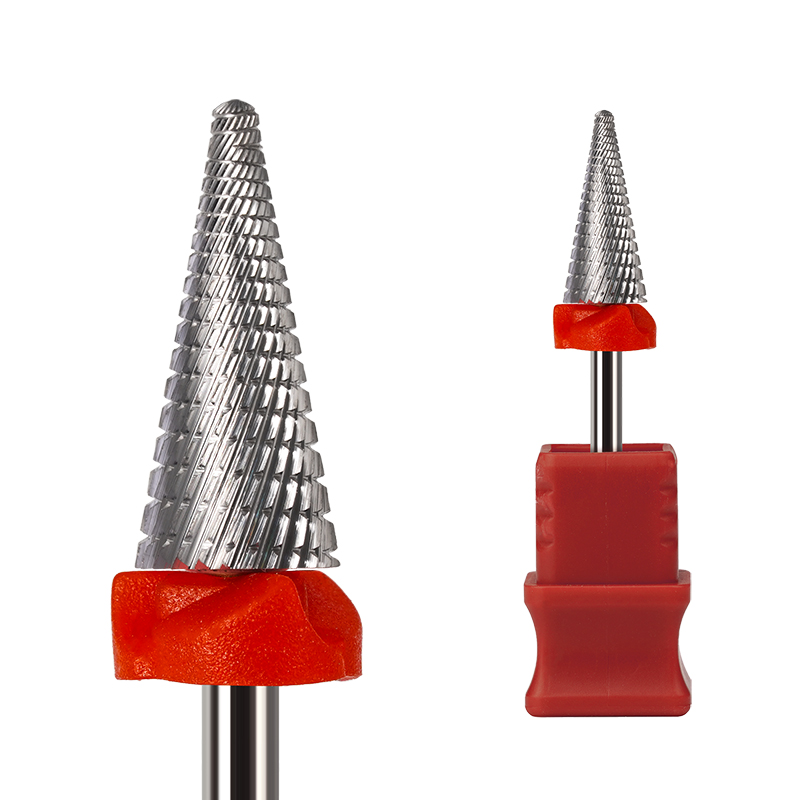
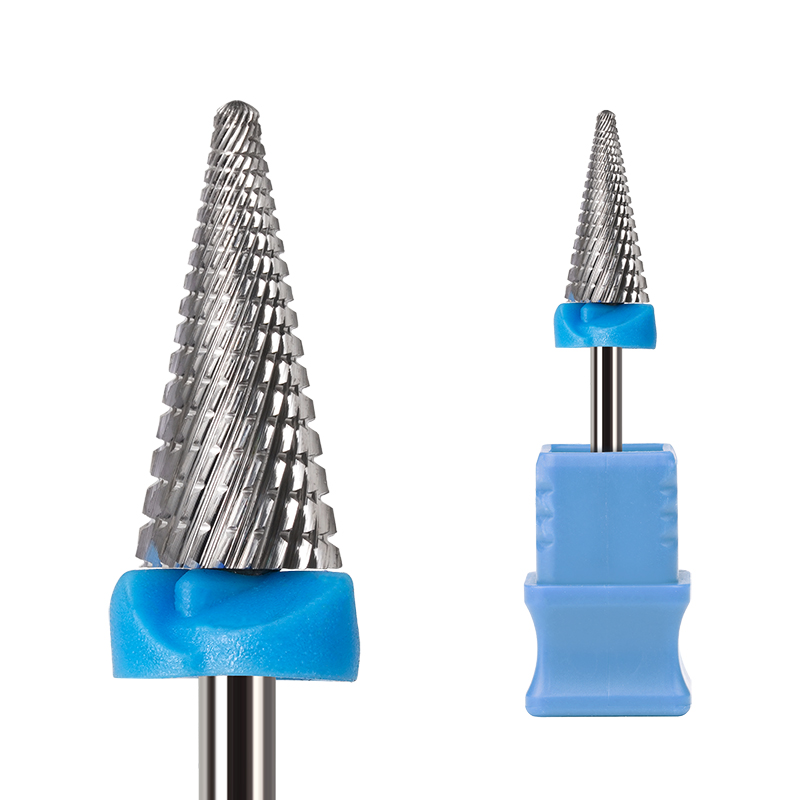
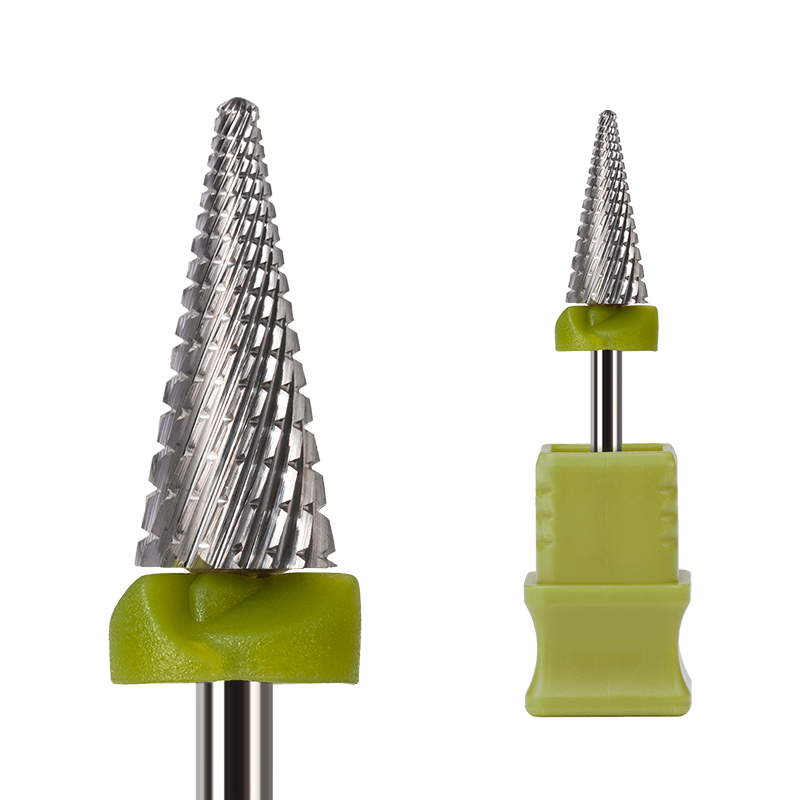
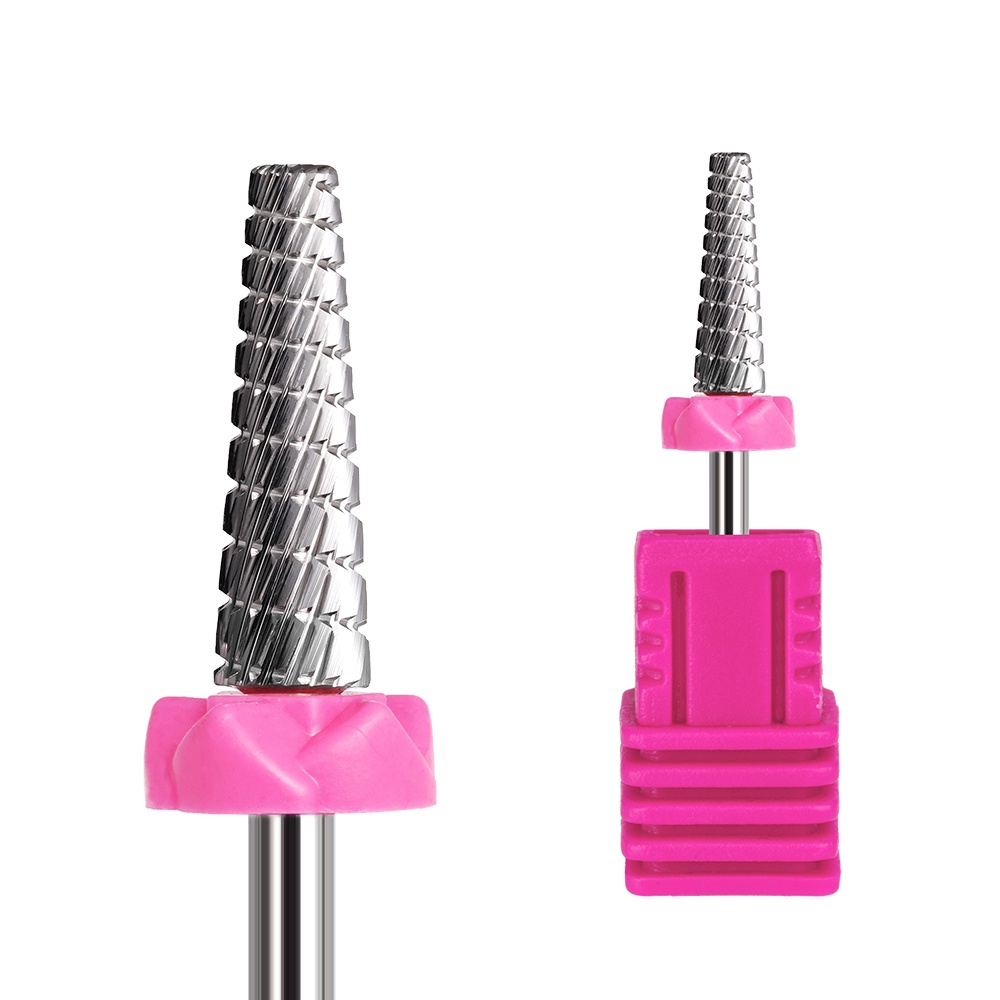
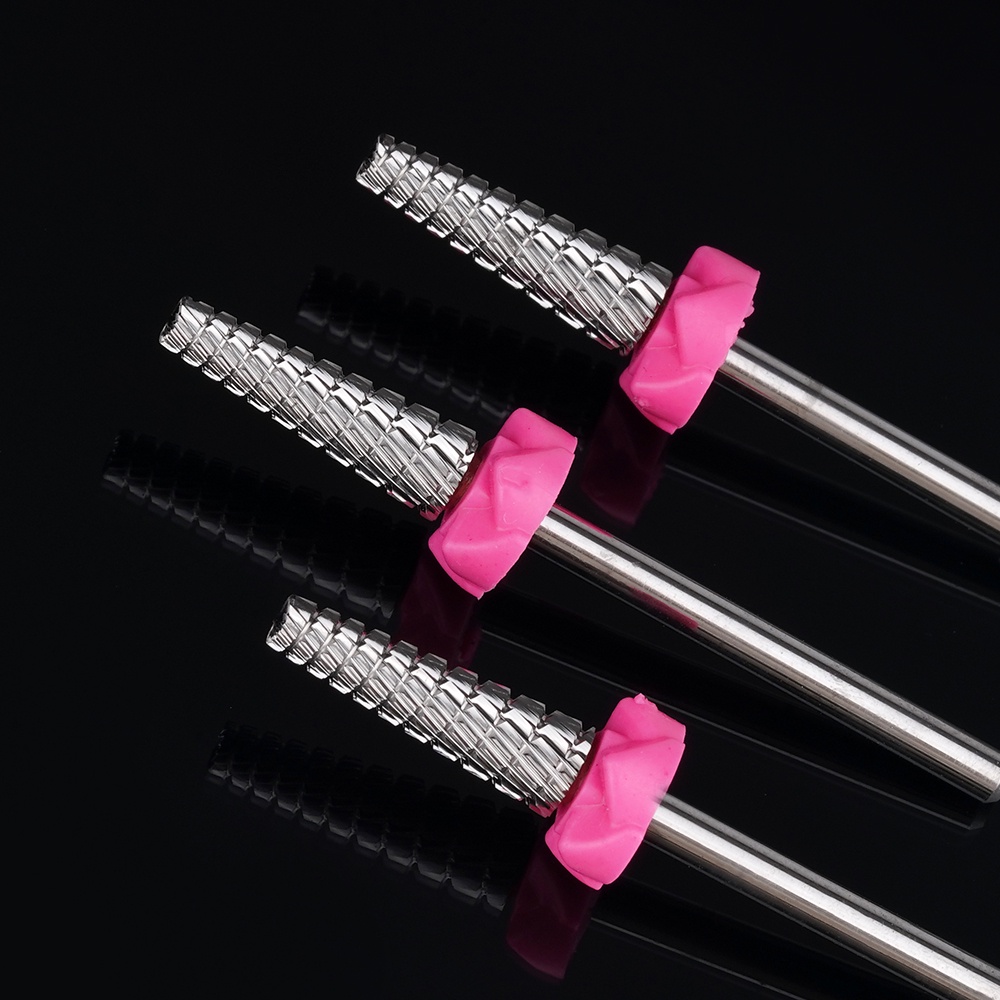
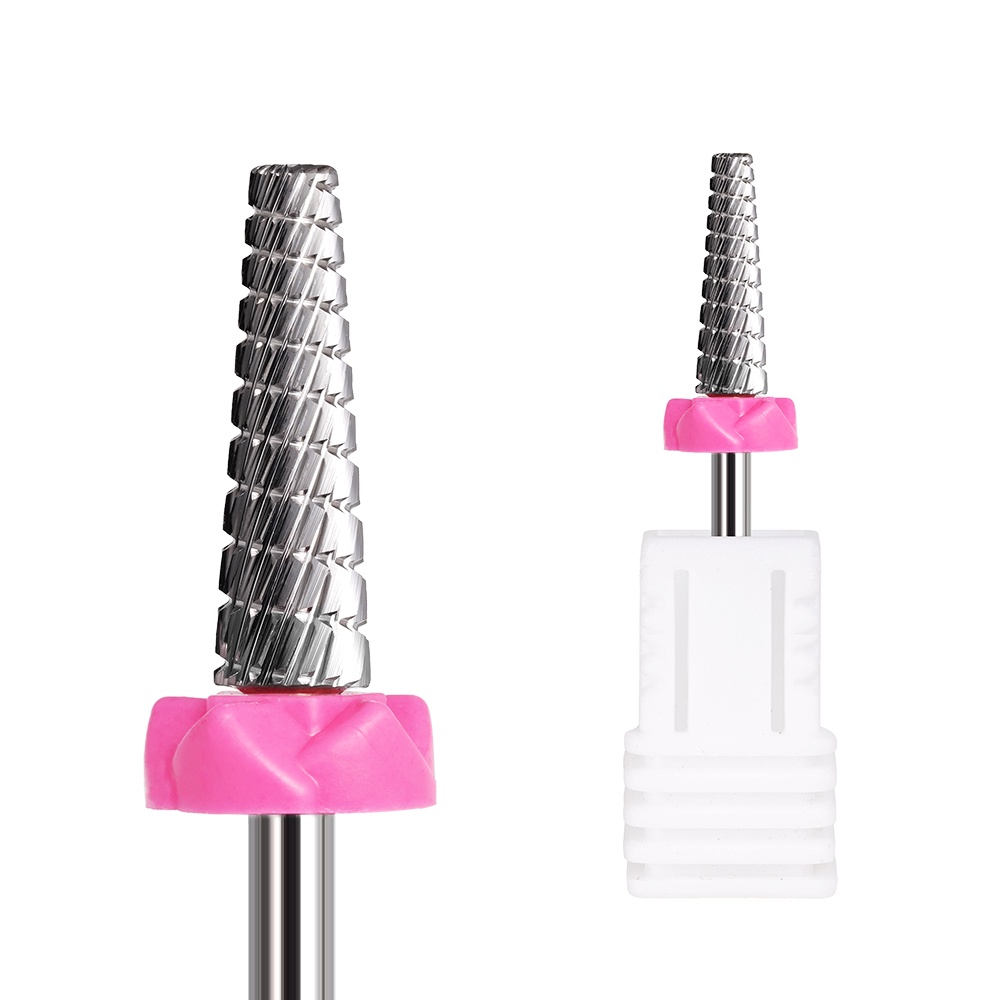
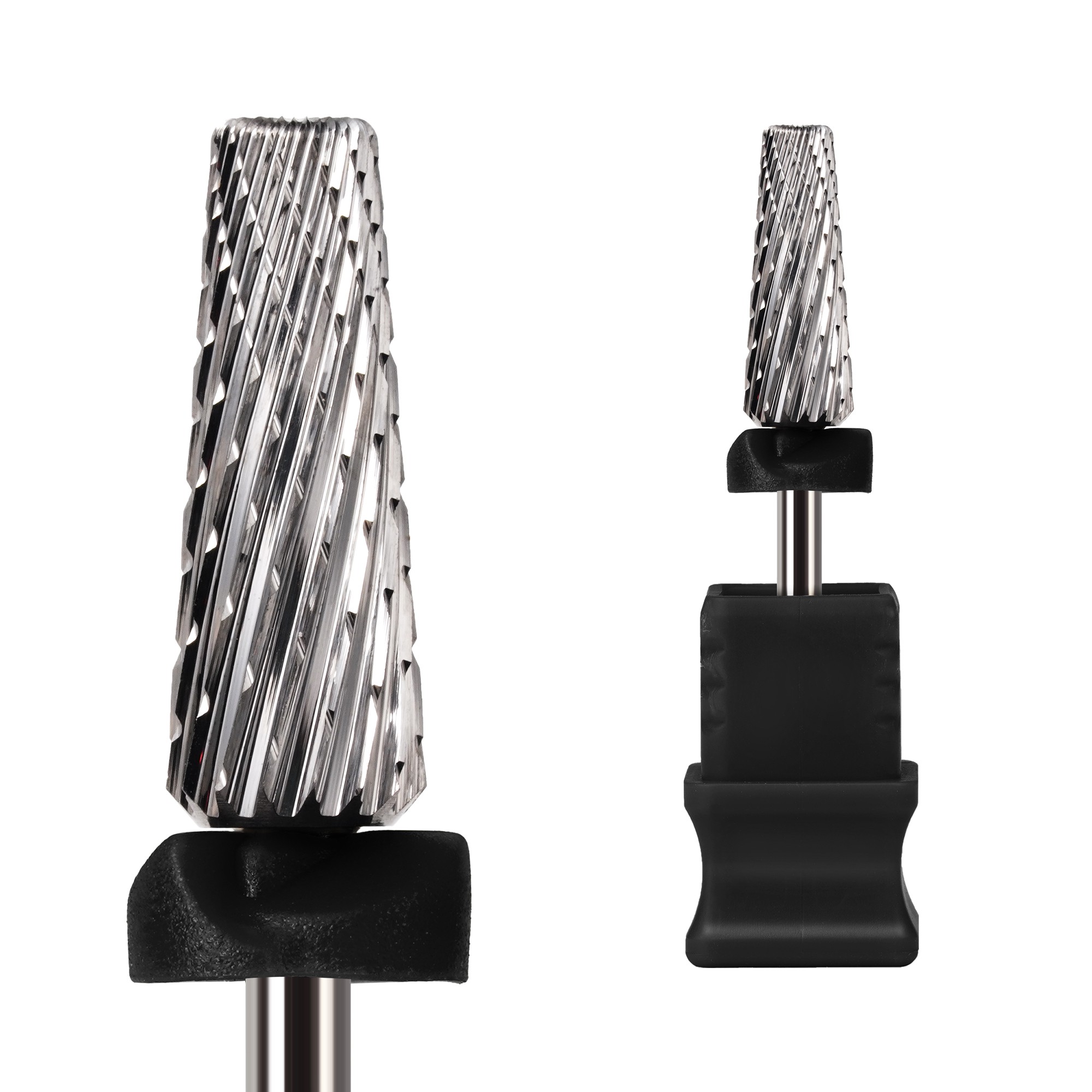
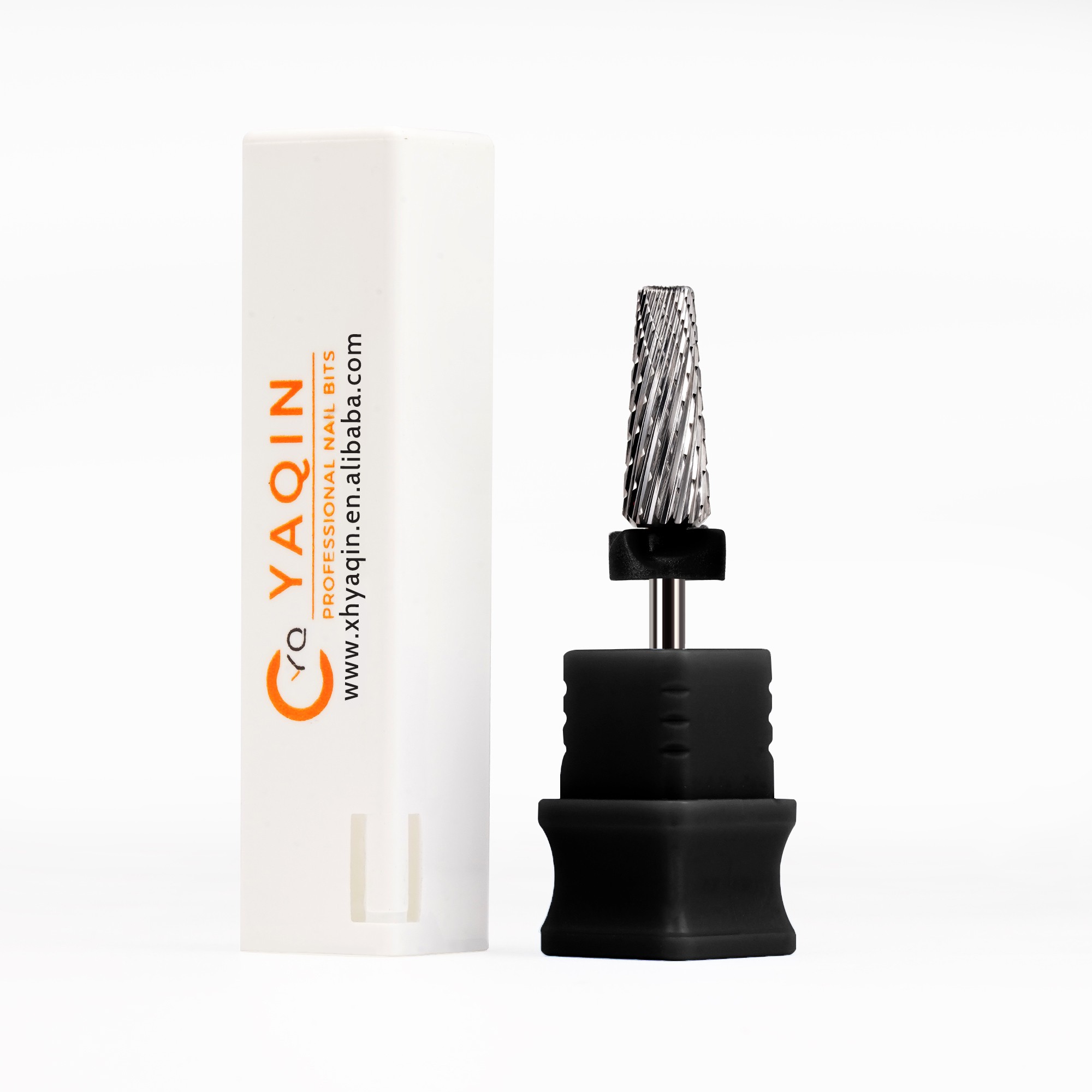
The New Slant Tooth Tungsten Steel Nail Drill Bits Dead Skin Removal 5-in-1 Universal Grinding Nail Polish Head Tool Nail Drill Bits combines several features now being compared more closely.
Its 5-in-1 universal design supports multiple removal tasks, from nail polish and dead skin to hard gels, base coats, soft gels, nail tips, and calluses.
Built from tungsten steel and tungsten carbide, it is positioned for high hardness, strong durability, and lower breakage risk.
The dual-action removal capability, smooth flat tip, and controlled dust ejection direction align well with current expectations around safety and cleaner operation.
When a bit like this also fits common nail grinder systems, it becomes easier to standardize product selection across wider customer groups.
How to evaluate gel removal bits before committing
A practical review process usually works better than comparing catalog claims alone.
- Check material consistency, not just the listed alloy name.
- Review flute shape and tip geometry for safety-sensitive applications.
- Ask about batch QC covering concentricity, finish, and packing accuracy.
- Test gel removal bits on hard gel and soft gel systems separately.
- Confirm OEM or ODM response speed for packaging and branding changes.
- Assess delivery reliability, especially for replenishment cycles.
It also helps to compare how a sample performs after repeated sessions, not just during first use.
Early sharpness can look impressive, but long-term stability is what supports reorder confidence.
Where the next decision should start
The 2026 market for gel removal bits rewards careful comparison.
The strongest choices are usually the ones that combine precise cutting behavior, safety-focused design, durable materials, and reliable supply execution.
Rather than treating gel removal bits as a simple accessory line, it makes sense to build a clearer evaluation framework around performance, QC depth, compatibility, and private-label readiness.
That approach makes future sourcing decisions easier, especially when comparing samples, refining specifications, or planning the next product range update.
News List
- Preventing Gouges and Uneven Filing With Small Barrel Nail Drill BitsSep 20, 2026
- How Diameter and Grit Affect Small Barrel Nail Drill Bit PerformanceSep 20, 2026
- Can Hytos Nail Drill Bits Be Used Safely on Natural Nails and Gel Polish?Sep 20, 2026
- How to Verify Fit Between Hytos Nail Drill Bits and an E-File HandpieceSep 20, 2026
- Safe Speed Settings for Umbrella Nail Drill Bits Around the Nail FoldSep 20, 2026
- Umbrella vs Flame Nail Drill Bits: Which Shape Offers Better Cuticle Control?Sep 20, 2026
Best-Selling Products
 Cross Cut Safety Stainless Steel Tungsten Carbide Nail Drill Bits Salon Foot Use XF-C Grit for Removing Nails
 First-rate Quality Tungsten Carbide Nail Drill Bits Best Coating Manicure Remove Gel Nails Accessories
 Professional Advanced Safety Cuticle Bits Two-Way Rotate 3/32'' Carbide Tungsten 5 in 1 Nail Drill Bits
 Wholesale 5 in 1 Electric Manicure Nail Drill Bits Various Coating Cone Cuticle Bit with Rotary Cross Cut for Nail Art
 New Slant Tooth Tungsten Steel Nail Drill Bits Dead Skin Removal 5-in-1 Universal Grinding Nail Polish Head Tool Nail Drill Bits
 4.0mm Small 5 in 1 Integrated Sharpe Tungsten Nail Drill Bit Straight Teeth Gel Polish Removal
 Flame Sharp XF F M C XC Silver Safety Professional Corn Tungsten Carbide Nail Bit for Drill Machine Accessories
 Factory Direct 5 in 1 Tungsten Carbide Nail Drill Bits 6.8MM Cross Cut Safety Manicure 5 in 1 Nail Drill Bits
Please give us a message