
Must-Have Items for Nail Technicians: Building a Faster and Safer Workstation
Must-Have Items for Nail Technicians: Building a Faster and Safer Workstation
Speed and safety at a nail station come from the way each tool, surface, and routine works together. The must-have items for nail technicians are not limited to an e-file or a tray of bits. A fast workstation removes wasted motion, keeps dust away from the breathing zone, separates clean tools from used ones, and reduces the chance of heat spikes, skin contact, or product contamination. When a setup is correct, the working hand does not need to search for tools, cords do not drag across wet product, and every abrasive part matches the material being removed.
A useful starting point is the machine itself. An electric nail drill should run smoothly across low and medium speeds without noticeable vibration at the handpiece. Excess vibration usually means poor bearing quality, a bent shank, wrong bit insertion depth, or a collet that no longer grips evenly. Any of those issues slow down removal and make pressure harder to control. Torque matters more than headline speed for gel and enhancement removal because a handpiece that stalls under light pressure forces repeated passes. Repeated passes create friction, scatter dust, and can lead to over-thinning in one small area while the surrounding product remains thick.
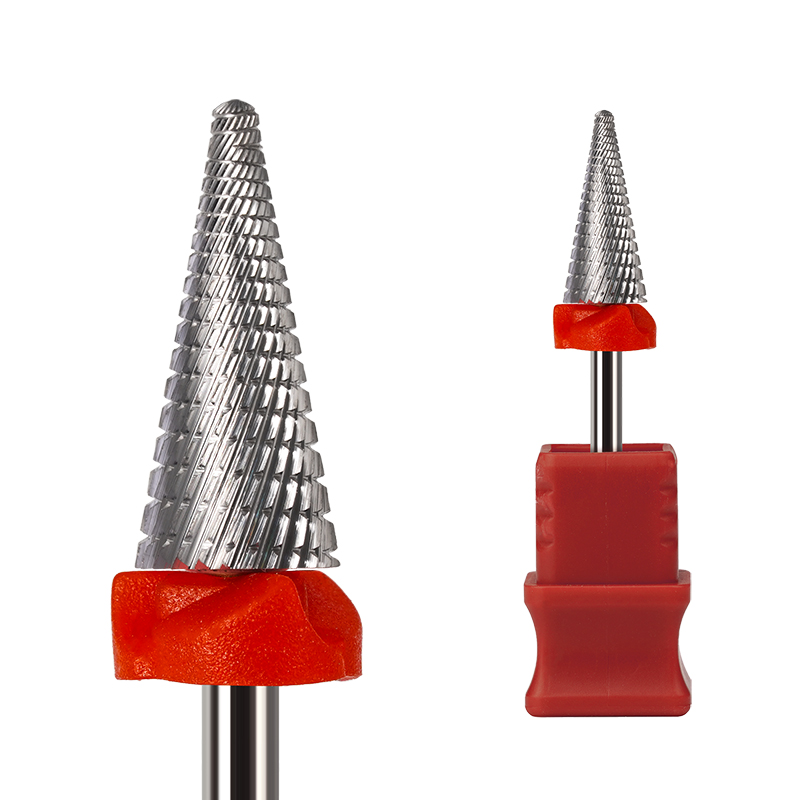
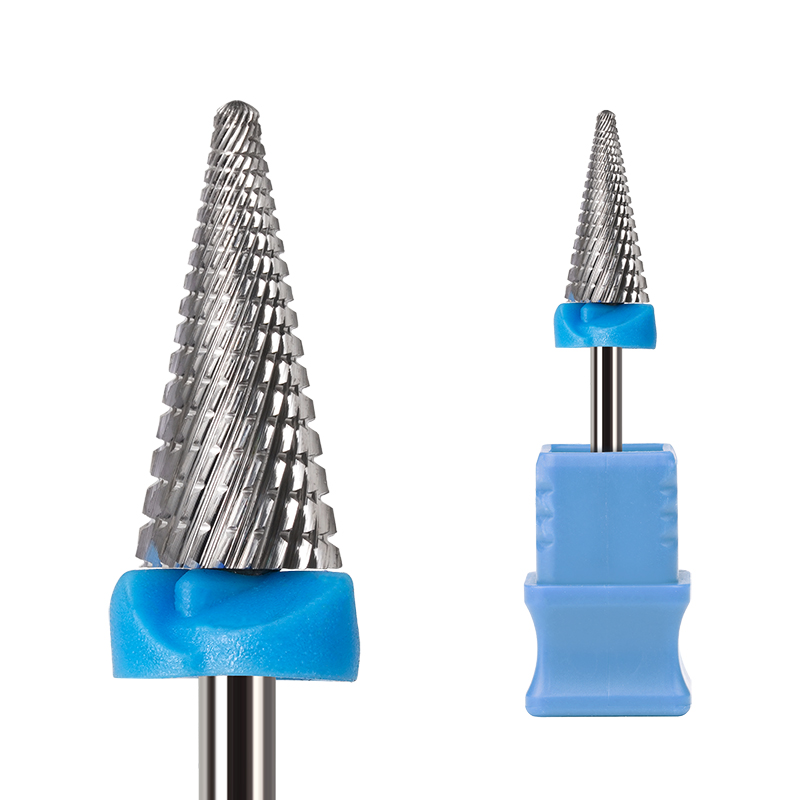
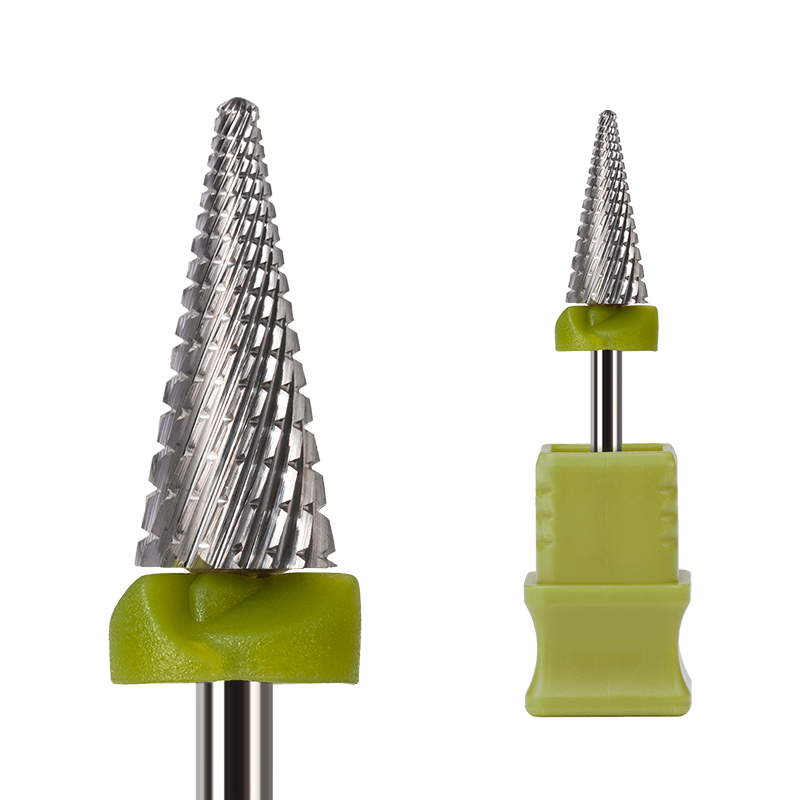
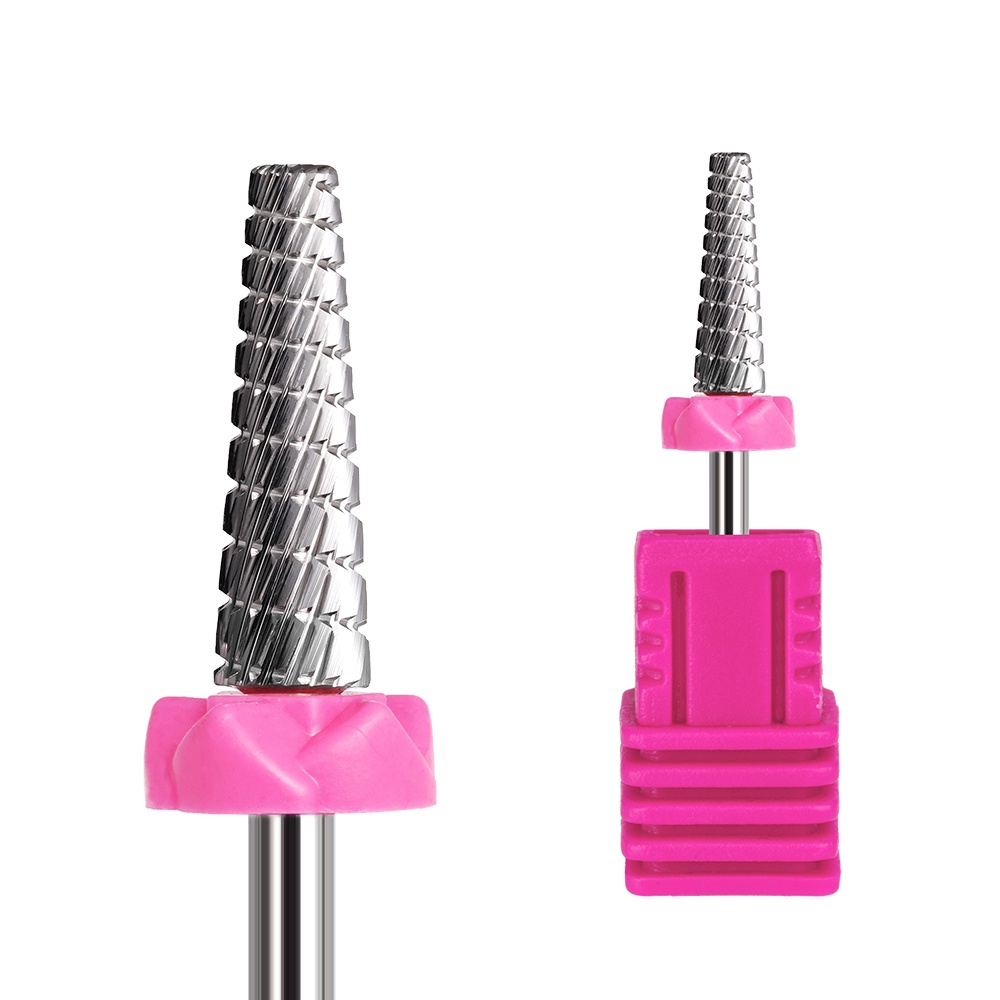
The bit set around that drill determines whether removal is controlled or chaotic. Coarse and extra-coarse carbide bits are commonly used for bulk reduction on hard gel, acrylic overlays, and tip blend-down, while finer grits are better suited to refining leftover product near the cuticle zone or sidewalls. Shape matters as much as grit. Barrel and tapered barrel designs cut broad surfaces efficiently, but a flat tip with a smooth edge can be safer near lateral folds if the operator keeps the shank parallel and avoids digging with the corner. That is why some stations keep one dedicated bit for bulk removal and another for prep, instead of trying to force a single geometry to do everything.
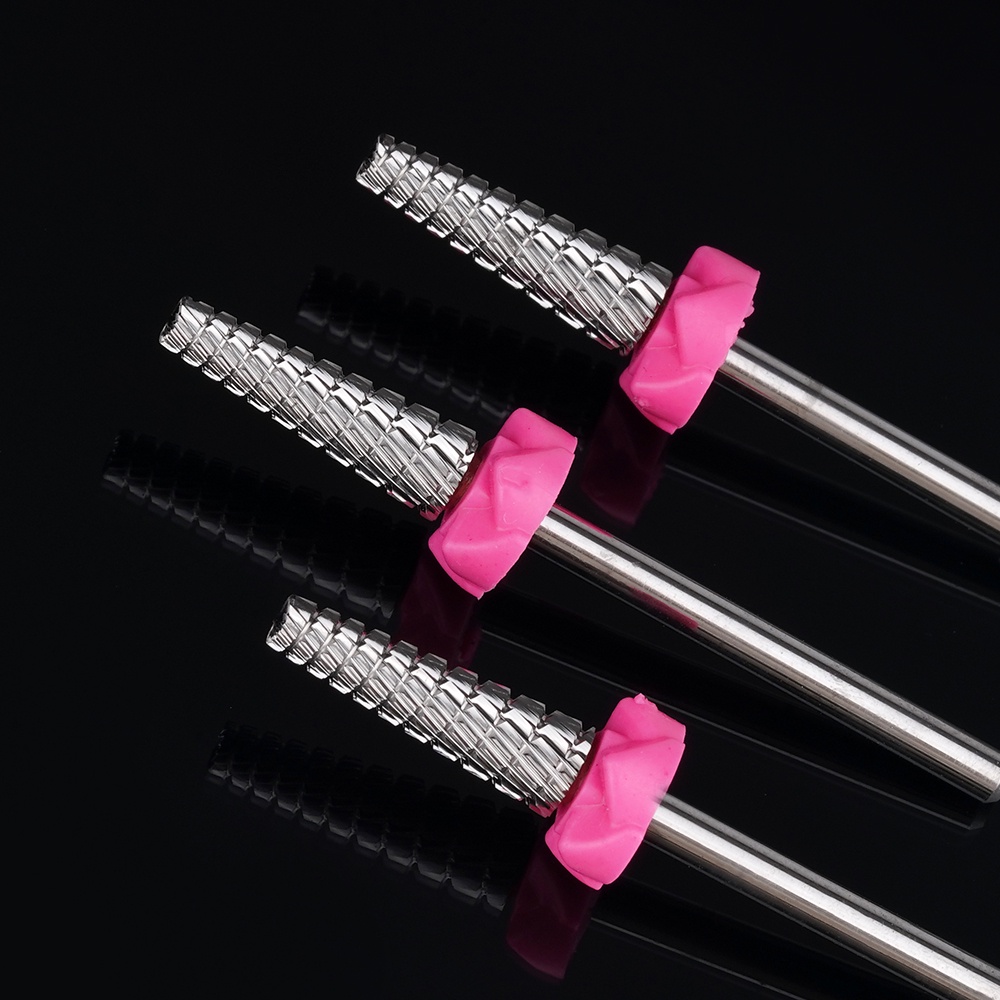
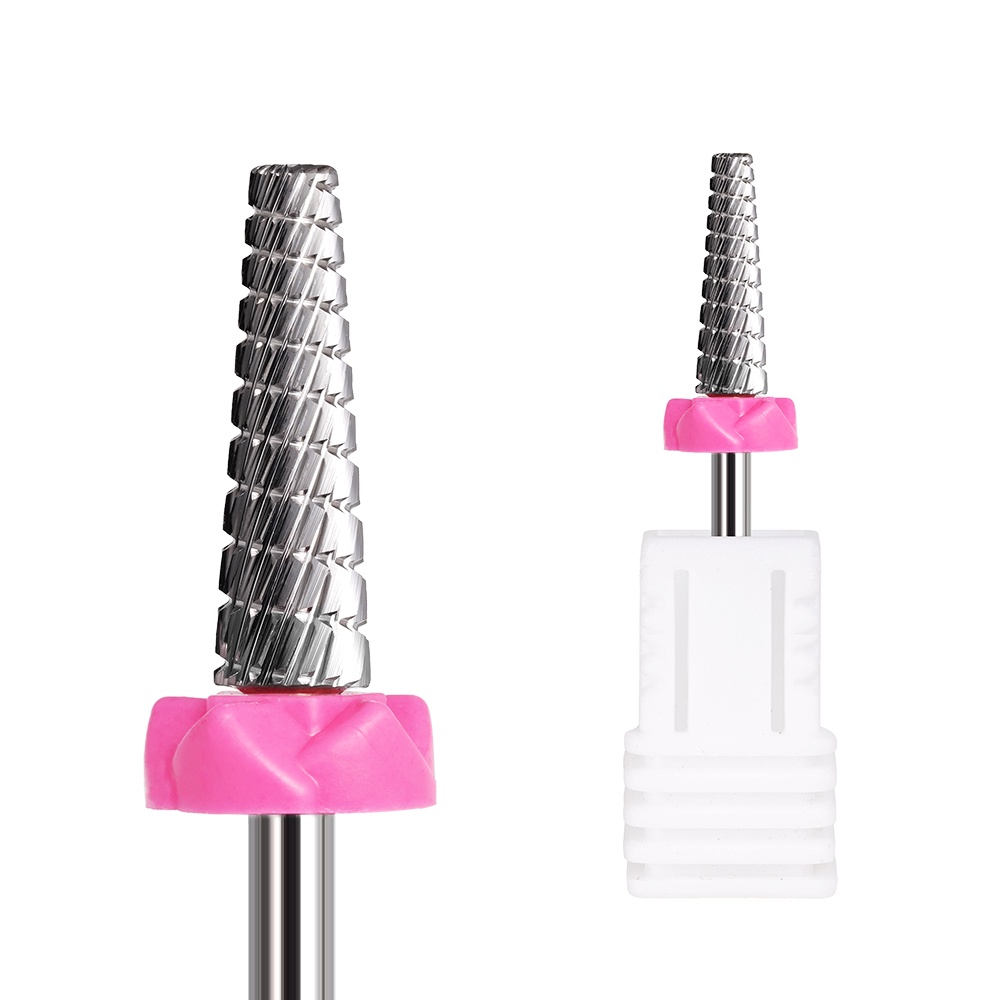
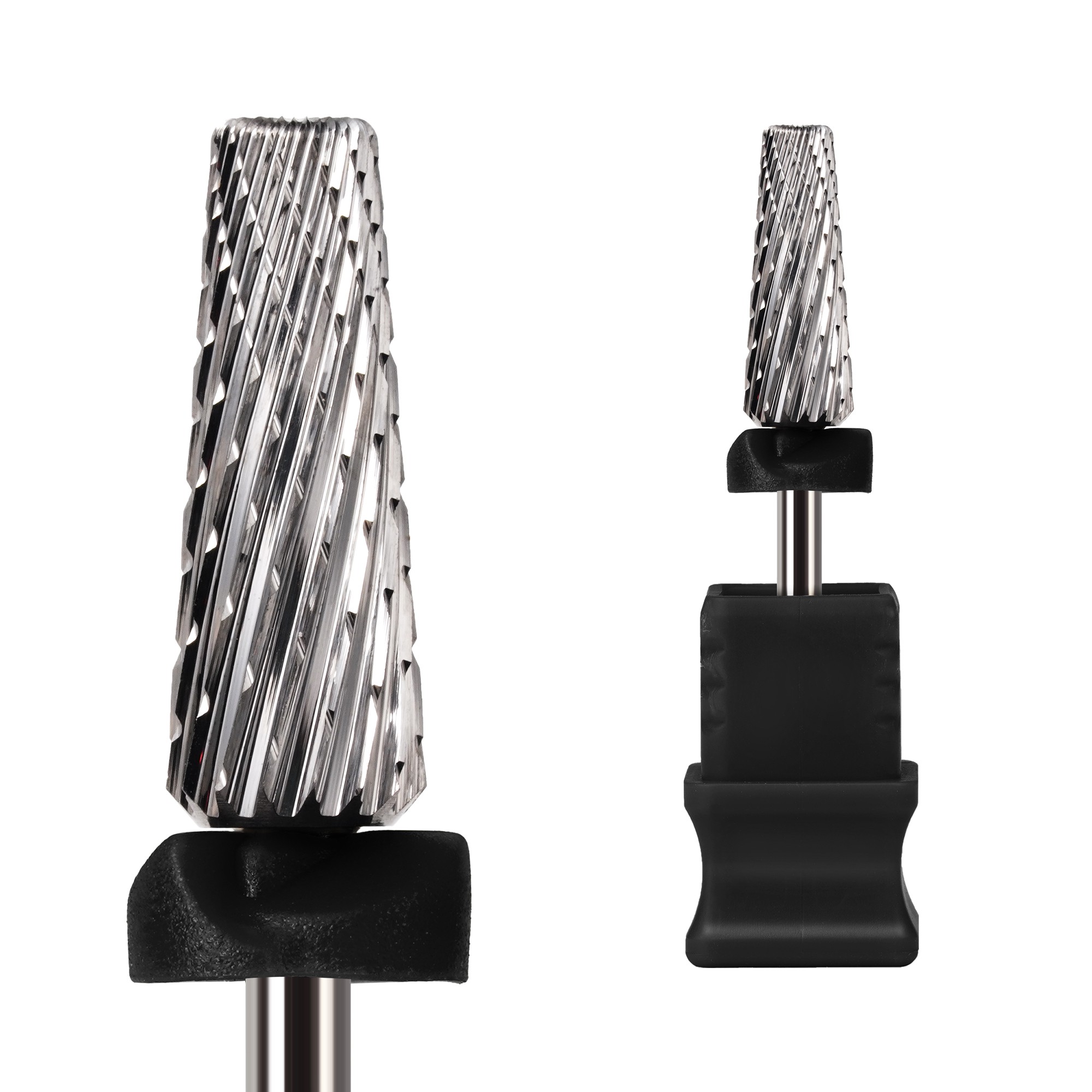
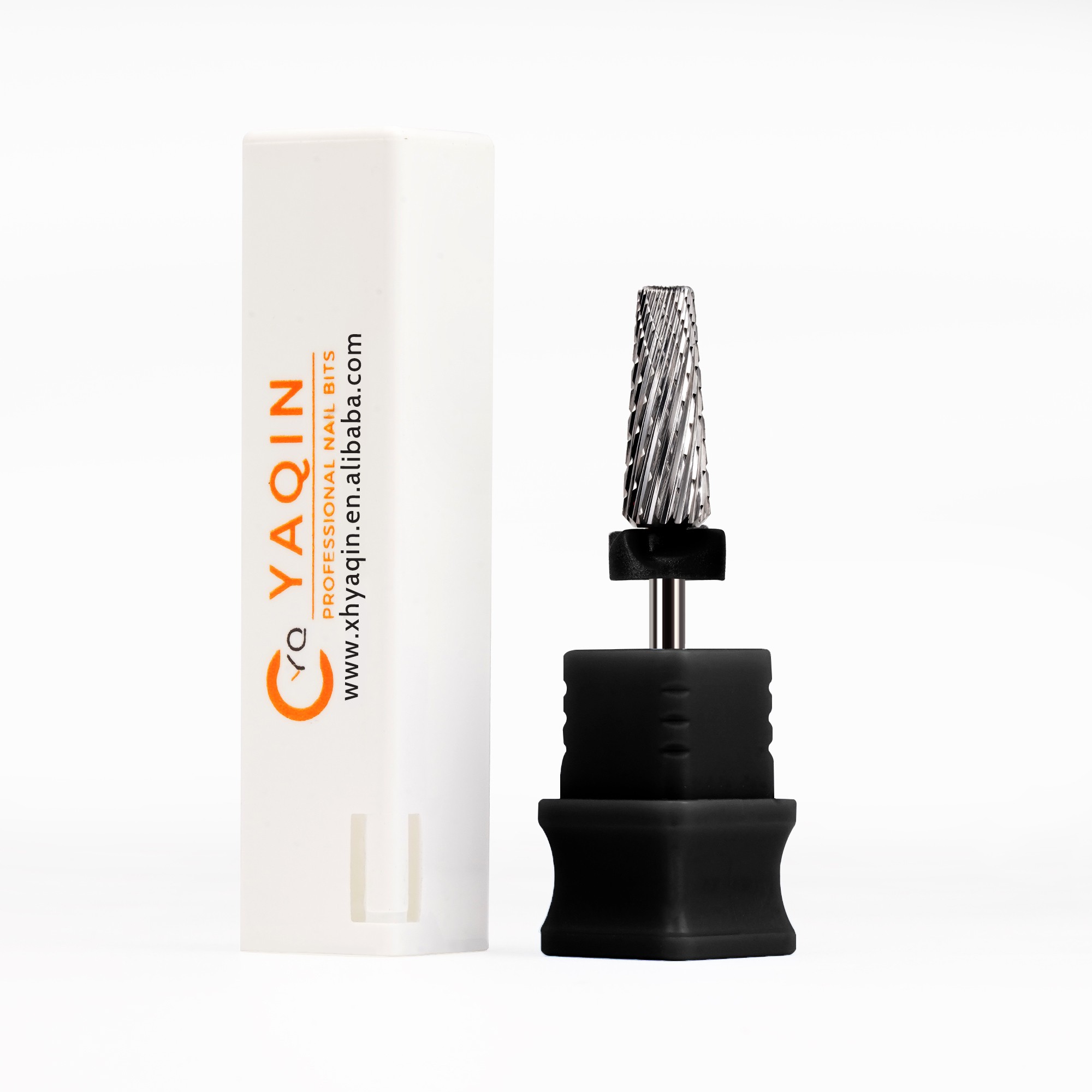
During gel removal, dust ejection pattern is often overlooked. A bit that throws powder in a consistent direction makes extraction easier because the source stays closer to the intake zone of the dust collector. If debris sprays in every direction, the table becomes slippery, labels on bottles become gritty, and fine powder settles into drawers and drill vents. In that context, a precision tungsten carbide option such as Golden Flat Tip Carbide 4XC Nail Drill Bit Gel Remover Skewed Tooth fits naturally into a workstation built around controlled removal: the flat tip geometry can reduce accidental skin contact, while a durable high-hardness body is better suited to repeated daily exposure to hard gel, base coat residue, and tough surface grinding.
Dust control has to be built into the table, not added as an afterthought
Many slow workstations are actually dust-management problems. When powder collects on the armrest, under the lamp, around bottle caps, and inside the e-file handpiece cradle, every step takes longer because the surface must be wiped before the next product can be opened safely. A dust collector should sit directly below or slightly forward of the filing zone so debris falls into airflow instead of drifting across the table. Placement matters more than raw fan noise. If the intake is too far back, the hand blocks suction. If it is too low, floating particles remain around the face before settling.
Filter maintenance has a direct effect on removal speed. A clogged filter weakens capture and lets heat build inside the collector, while an overused disposable bag may leak fine dust around the edges. A practical routine is to empty or replace collection media before performance noticeably drops, not after the table already looks dirty. On wet-cleaned stations, electrical housings should be wiped carefully so solvent or disinfectant does not seep into fan grilles, power switches, or drill vents.
The tabletop material should also be chosen with filing in mind. Textured cloth covers trap powder and are harder to sanitize fully. A smooth, chemical-resistant surface allows dust to be lifted rather than smeared. If a mat is used, it should lie flat and resist curling at the edges, because raised corners catch cords and can flip metal tools toward the floor.
Hand tools still matter even in an e-file heavy setup
Manual tools are often the difference between clean prep and damaged natural nails. A workstation should include a fine hand file for detail correction, a buffer with predictable grit, a cuticle pusher with a crisp but not razor-sharp edge, and a nipper reserved only for detached dead tissue. Using a dull pusher increases pressure and can scratch the nail plate during prep. Using an aggressive buffer after e-file work can erase the time saved by machine removal and leave the plate overworked.
Abrasive selection should be intentional. Coarse disposable files remove product quickly, but they are not the right choice for final smoothing near the natural nail. Fine-grit abrasives reduce scratching before base application, yet they should not be used to force removal of thick residual hard gel because the extra rubbing heats the surface and spreads dust. A faster station keeps abrasives grouped by task rather than by package type: removal, refinement, surface prep, and finishing. That small change reduces mix-ups during busy turnover.
Hygiene tools need physical separation, not just cleaning fluid nearby
Safety depends on how clean and used items are handled between steps. A workstation runs better when there are at least three defined zones: sterile or disinfected instruments, active tools in current use, and items waiting for cleaning. Without that separation, a bit can be wiped and mistakenly returned to the clean tray before full processing. Covered containers for pre-clean soak, a rigid box for cleaned bits, and a waste cup for lint-free wipes simplify movement and reduce accidental cross-contact.
Brushes used to clear dust from the nail surface deserve more attention than they usually get. Soft brushes that look harmless can spread fine debris onto product necks, lamp buttons, and touch screens if they are reused too long without cleaning. A station built for speed keeps one brush for direct nail dust, another for table cleanup, and avoids using the same brush on skin and equipment surfaces.
Liquid handling should be equally controlled. Dappen dishes, pump dispensers, and gel pots need stable positions away from the e-file cord path. Spilled acetone or cleanser around a powered handpiece creates avoidable risk, and open liquid near active filing captures airborne dust that later contaminates the product. If monomer, cleanser, or remover is part of the workflow, lids should be closed between use rather than left open for convenience.
Lighting and posture affect precision more than many tool upgrades
A faster station is easier to build when visibility is consistent. Shadowy sidewalls and reflective glare from high-gloss product lead to rework because leftover material is missed on the first pass. A cool-toned task lamp with adjustable angle usually works better than relying only on overhead room lighting. The goal is to reveal surface texture without washing out edges. If the lamp head forces awkward wrist positions or collides with the dust collector hose, the setup is too crowded.
Arm support deserves similar attention. A stable hand rest keeps the working angle shallow and prevents the drill bit from bouncing when crossing from product to natural nail. If the client hand sits too low, the wrist bends and pressure becomes inconsistent. If it sits too high, the shoulder lifts and control fades over longer appointments. A well-sized armrest with a wipeable surface often improves both speed and finish quality more than adding extra drill bits that rarely get used.
Storage should shorten decisions, not create visual clutter
Open display racks can look organized while actually slowing work. Too many visible bottles and duplicate abrasives make selection slower and increase the chance of grabbing the wrong grit or chemistry. Daily-use items should stay within one arm’s reach: the active handpiece, two or three primary bits, prep tools, wipes, and the current system products. Backup stock belongs in sealed drawers or labeled bins away from filing dust.
Bit storage should also protect the tool itself. Tungsten carbide and tungsten steel components are durable, but dropping them into a mixed metal tray can chip edges, dull cutting teeth, or bend finer shanks over time. Individual holders or perforated sterilization boxes prevent tool-to-tool impact and make post-clean drying more reliable. If a bit starts cutting unevenly, it should be inspected for packed debris in the teeth before assuming the machine is at fault.
Common errors that make a workstation slower and less safe
- Using one aggressive bit for every stage, including natural nail prep. That usually creates unnecessary friction and leaves too little margin near thin areas.
- Running very high speed to compensate for low torque. The result can be heat, chatter, and dust blown beyond the collector intake.
- Storing clean files or bits in open air beside active filing dust. Even a well-cleaned tool can be re-contaminated before the next service starts.
- Letting product residue harden on the handpiece cradle, lamp base, or bottle necks. Those small deposits trap dust and steadily reduce workflow efficiency.
- Keeping extension cords, lamp cables, and drill leads crossing the central work zone. Tangled routing is not only untidy; it changes hand movement and increases spill risk.
Maintenance should be simple enough to repeat every day. Bits need debris removal before disinfection so retained product does not mask wear. Handpieces should be checked for unusual heat, sound, or resistance when rotating. Dust collector grilles should be inspected for buildup, and surfaces that contact acetone or cleanser should be reviewed for softening or cracking. If a station includes waterproof-compatible tools or detachable components, that does not remove the need to dry them fully before storage or reuse.
The must-have items for nail technicians are therefore the ones that keep material removal predictable, visibility clear, dust controlled, and hygiene boundaries obvious. A workstation becomes faster when each item has a narrow purpose and a fixed place, and it becomes safer when the abrasive, machine setting, and support surface match the task instead of forcing corrections later.
News List
- Preventing Gouges and Uneven Filing With Small Barrel Nail Drill BitsSep 20, 2026
- How Diameter and Grit Affect Small Barrel Nail Drill Bit PerformanceSep 20, 2026
- Can Hytos Nail Drill Bits Be Used Safely on Natural Nails and Gel Polish?Sep 20, 2026
- How to Verify Fit Between Hytos Nail Drill Bits and an E-File HandpieceSep 20, 2026
- Safe Speed Settings for Umbrella Nail Drill Bits Around the Nail FoldSep 20, 2026
- Umbrella vs Flame Nail Drill Bits: Which Shape Offers Better Cuticle Control?Sep 20, 2026
Best-Selling Products
 Cross Cut Safety Stainless Steel Tungsten Carbide Nail Drill Bits Salon Foot Use XF-C Grit for Removing Nails
 First-rate Quality Tungsten Carbide Nail Drill Bits Best Coating Manicure Remove Gel Nails Accessories
 Professional Advanced Safety Cuticle Bits Two-Way Rotate 3/32'' Carbide Tungsten 5 in 1 Nail Drill Bits
 Wholesale 5 in 1 Electric Manicure Nail Drill Bits Various Coating Cone Cuticle Bit with Rotary Cross Cut for Nail Art
 New Slant Tooth Tungsten Steel Nail Drill Bits Dead Skin Removal 5-in-1 Universal Grinding Nail Polish Head Tool Nail Drill Bits
 4.0mm Small 5 in 1 Integrated Sharpe Tungsten Nail Drill Bit Straight Teeth Gel Polish Removal
 Flame Sharp XF F M C XC Silver Safety Professional Corn Tungsten Carbide Nail Bit for Drill Machine Accessories
 Factory Direct 5 in 1 Tungsten Carbide Nail Drill Bits 6.8MM Cross Cut Safety Manicure 5 in 1 Nail Drill Bits
Please give us a message