
How to Evaluate Hytos Nail Drill Bits Before Adding Them to a Pro Kit
How to Evaluate Hytos Nail Drill Bits Before Adding Them to a Pro Kit
A professional nail-drill kit should not be built around the most aggressive bit or the lowest unit cost. It should be built around predictable cutting behavior. When assessing Hytos nail drill bits, the useful question is not simply whether a bit removes product quickly. It is whether it removes the intended material at a controlled rate, stays stable in a standard e-file, clears debris effectively, and remains safe to handle through repeated cleaning and service cycles.
A bit that feels sharp on its first use can still be a weak purchasing choice if its shank runs off-center, its teeth load with gel, or its finish changes after routine sanitation. Conversely, a well-made bit may not be suitable for every task: a coarse carbide barrel can be efficient for reducing hard gel or removing extensions, but it is the wrong working surface for delicate natural-nail preparation. Evaluation should therefore start with the work the kit must support, then move to material, geometry, fit, and sample performance.
Define the job before judging the bit
“Nail drill bit” is too broad a category for meaningful comparison. A pro kit commonly needs separate solutions for bulk product removal, refining product near the sidewalls, surface preparation, cuticle-area work, and occasional callus work. Trying to make one bit cover all of those jobs usually increases service time and raises the chance of over-filing.
Build the evaluation brief around the materials normally encountered. Soft gel, hard gel, builder gel, acrylic, dip systems, nail tips, and natural nail surfaces each respond differently to abrasive contact. A bit intended for hard material removal needs enough cutting efficiency to avoid prolonged heat-generating contact. A bit used near living tissue needs a controlled, forgiving profile rather than maximum removal speed.
This first distinction prevents a common procurement error: choosing one “multi-use” bit based on a supplier image, then expecting it to replace a balanced assortment. A multifunctional bit can reduce the number of tool changes in a specific workflow, but it does not eliminate the need for task-appropriate fine tools.
Material claims need to match the cutting application
For frequent removal of hard enhancement products, tungsten carbide is generally the material to examine first. Carbide bits cut through shaped teeth or flutes rather than through a coated abrasive layer. Their value comes from retaining a defined cutting profile during repeated use, provided the carbide grade, brazing or forming quality, and geometry are sound.
Do not treat “tungsten steel” and “tungsten carbide” as interchangeable proof of quality. Product listings may use broad material language, while the performance that matters depends on the finished tool. Inspect whether the teeth are cleanly formed, whether the flute edges are uniform around the barrel, and whether the transition from head to shank appears properly finished. Visible irregularity is not merely cosmetic. Uneven teeth can produce inconsistent removal, vibration, and localized friction.
Diamond-coated, ceramic, and sanding-band systems still have roles in a professional kit. Diamond tools are commonly selected for controlled detail work and surface refinement. Ceramic can be useful where lower heat transfer or a lighter cutting feel is preferred, though its behavior and durability should be judged for the exact formula and geometry. Disposable sanding bands simplify hygiene management for suitable preparation tasks, but their abrasive consistency and fit on the mandrel deserve the same scrutiny as permanent bits.
The appropriate question is: does this material and profile fit the task, cleaning routine, and expected service volume? A high-hardness carbide bit may be a sensible choice for bulk gel reduction, while a fine diamond bit remains the more suitable choice for close-detail preparation.
Inspect the cutting geometry, not just the grit label
Grit descriptions can guide selection, but they do not tell the whole story for carbide tools. Two bits described as coarse can cut very differently because tooth depth, flute spacing, helix direction, barrel diameter, and top profile all affect how material is removed.
A cross-cut or helical flute pattern is often worth examining for gel-removal work because it can help break material into dust and move it away from the working area. The benefit is practical only when the channels remain open during use. Tight, shallow, or poorly finished teeth may retain sticky product, forcing the operator to pause, brush the bit, or apply more pressure. That reduces the speed advantage that a coarse bit is meant to provide.
Evaluate the top of the bit separately from its sides. A smooth flat top or safety top can provide a more controlled approach when working near a nail edge or sidewall, especially in workflows where the tool may briefly contact adjacent areas. It is not a substitute for training or careful speed control, but it gives the kit a more forgiving option than a fully sharp-edged barrel.
Direction also matters. Left- and right-hand rotation compatibility should be specified rather than assumed. A flute pattern designed to evacuate dust in one rotation direction may cut less efficiently or retain debris when reversed. For shared kits, determine whether the selected e-files and working methods require left-hand, right-hand, or bidirectional options before placing a bulk order.
Shank precision is a basic acceptance requirement
A strong cutting head cannot compensate for a poor shank. Most professional e-files use a standard 3/32-inch shank, but nominal size alone is not enough. The shank should insert smoothly, lock securely in the chuck, and rotate without visible wobble. A loose fit can create vibration, shorten chuck life, and make even a fine bit feel harsh. An oversized or rough shank can damage the handpiece clamp or make tool changes inconsistent.
Check samples in the actual handpieces used by the team, not only in a bench fixture. Run each sample at low, medium, and working speed. Observe the head from the side while it rotates. A slight visual runout often becomes obvious at speed, and the operator will feel it before a product specification reveals it.
There are three practical checks:
- Insert and release the bit repeatedly to confirm smooth, consistent chuck engagement.
- Run the bit unloaded and listen for vibration or abnormal movement at the head.
- Use it on a representative cured product and note whether it tracks predictably without bouncing, skipping, or pulling.
A bit can be sharp and still fail this test. In a pro kit, rotation stability is a safety and usability requirement, not a premium feature.
Assess heat as a system result
Heat is not caused by one factor. It results from bit geometry, rotational speed, pressure, dwell time, clogging, and the material being removed. A dull bit often creates more heat because the operator compensates with pressure and repeated passes. An overly aggressive bit can also create heat when it encourages the user to stay in one area too long.
During sampling, compare bits under the same working conditions. Use a consistent product thickness, similar e-file speed, and the same practical removal method. Watch for whether the bit continues to cut with light contact after several passes. A reliable bit should allow steady movement across the enhancement rather than require force to maintain removal.
Dust ejection is closely related to this issue. When powder exits the flutes in a consistent direction, the cutting surface is easier to see and is less likely to become packed with material. The aim is not dust-free operation, which is unrealistic in filing work, but a bit that remains effective without repeatedly redistributing debris across the nail and workstation. Extraction equipment, masks, and cleaning practices remain necessary parts of the working environment.
Use a sample protocol that reflects real kit conditions
Visual inspection should screen out obvious defects, but it cannot establish long-term suitability. Before adding Hytos nail drill bits to a recurring kit specification, obtain enough samples to compare the same style across typical tasks. Include more than one operator where possible, because a bit that feels stable to one experienced user may expose handling issues for another.
A useful sample protocol does not need laboratory complexity. Record the bit type, handpiece model, product removed, direction of rotation, working speed range, and observations after each use. Focus on changes that matter to kit performance: loss of cutting feel, increased vibration, clogged teeth, discoloration or corrosion after cleaning, and difficulty inserting the shank.
Cleaning compatibility deserves a deliberate check. Bits used in professional environments may be brushed, washed, disinfected, and dried repeatedly. The selected tool should tolerate the intended process without trapped residue, surface deterioration, or compromised cutting action. A design with difficult-to-clean debris channels may be less practical even if it performs well when new.
It is also sensible to inspect the packaging and identification system. Bulk kits become difficult to manage when bit type, grit, direction, or intended function cannot be identified at a glance. Clear labeling helps prevent a coarse removal tool from being used for a preparation task simply because it was stored in the wrong place.
How a 5-in-1 carbide bit should be judged
Multi-zone carbide designs can be useful when a workflow repeatedly moves from rapid bulk removal to refining and closer work around the nail. The zones should create genuinely distinct cutting behavior, not just a visually complex pattern. Examine whether each section is easy to identify, whether the transition between sections feels controlled, and whether the bit can be cleaned without residue collecting at those transitions.
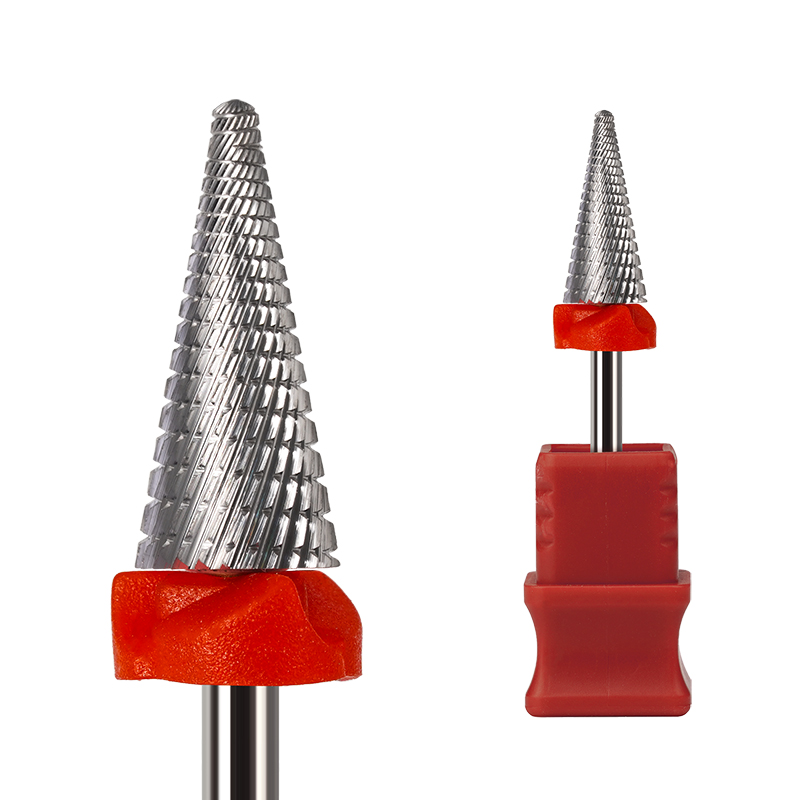
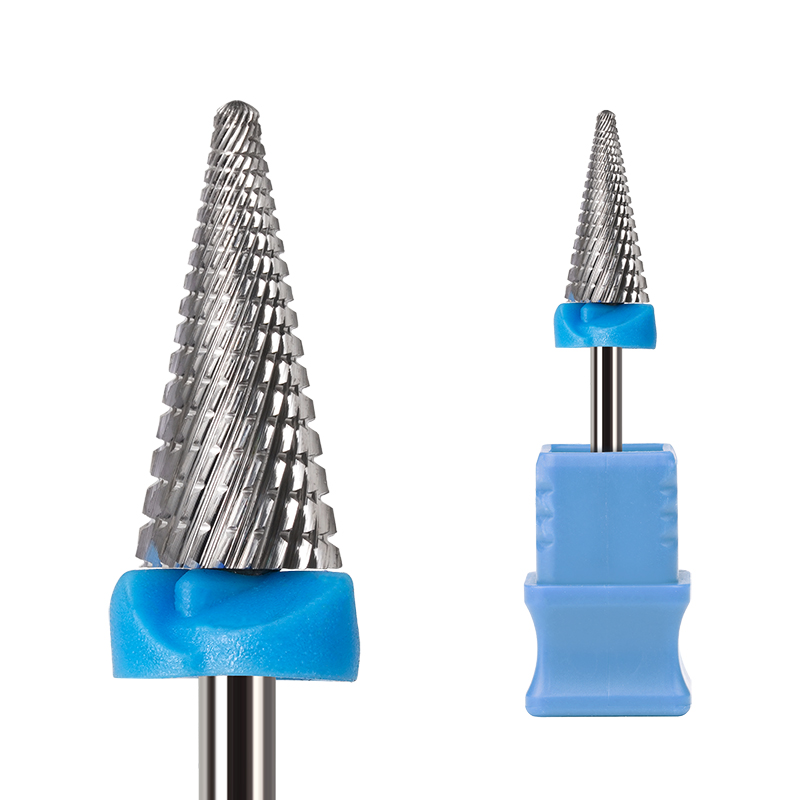
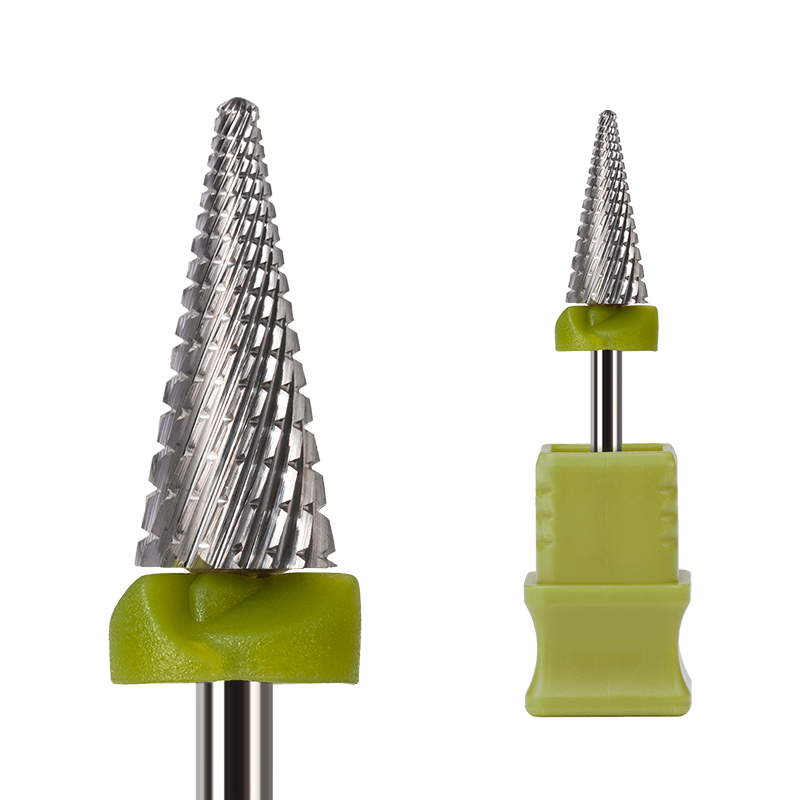
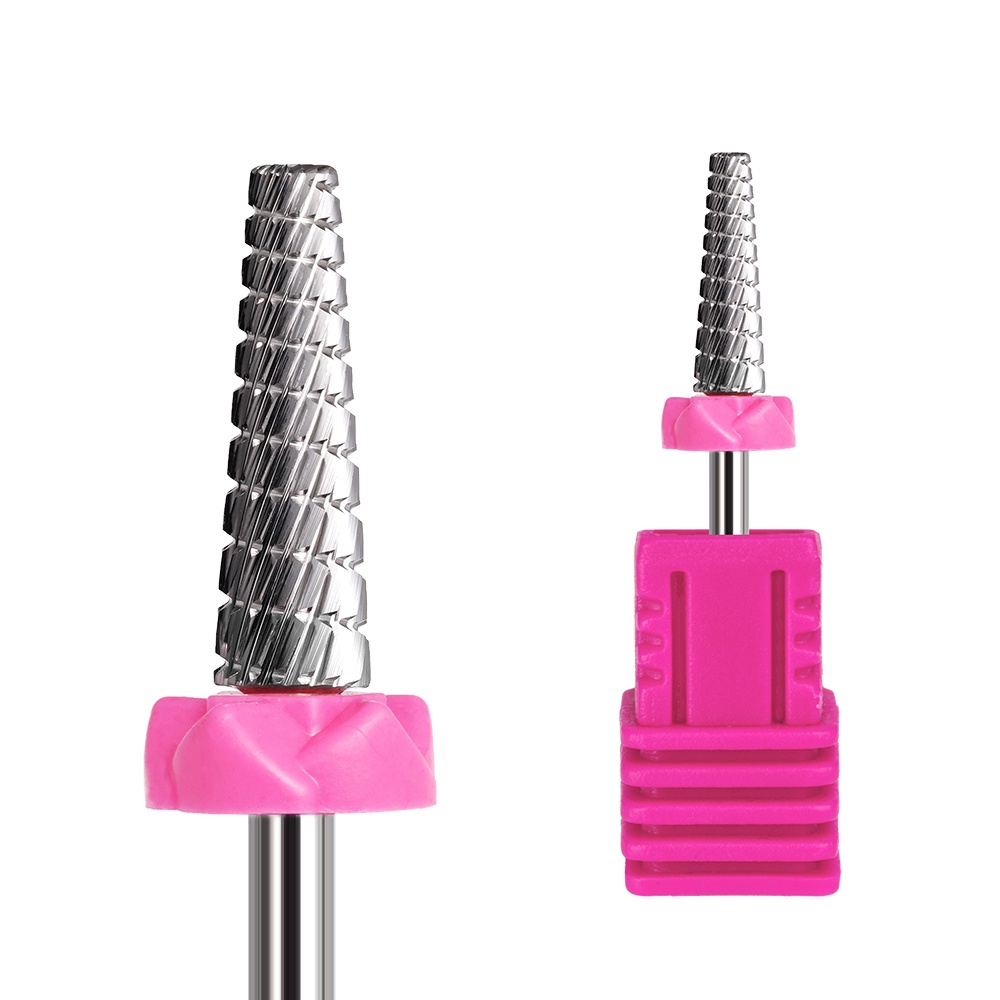
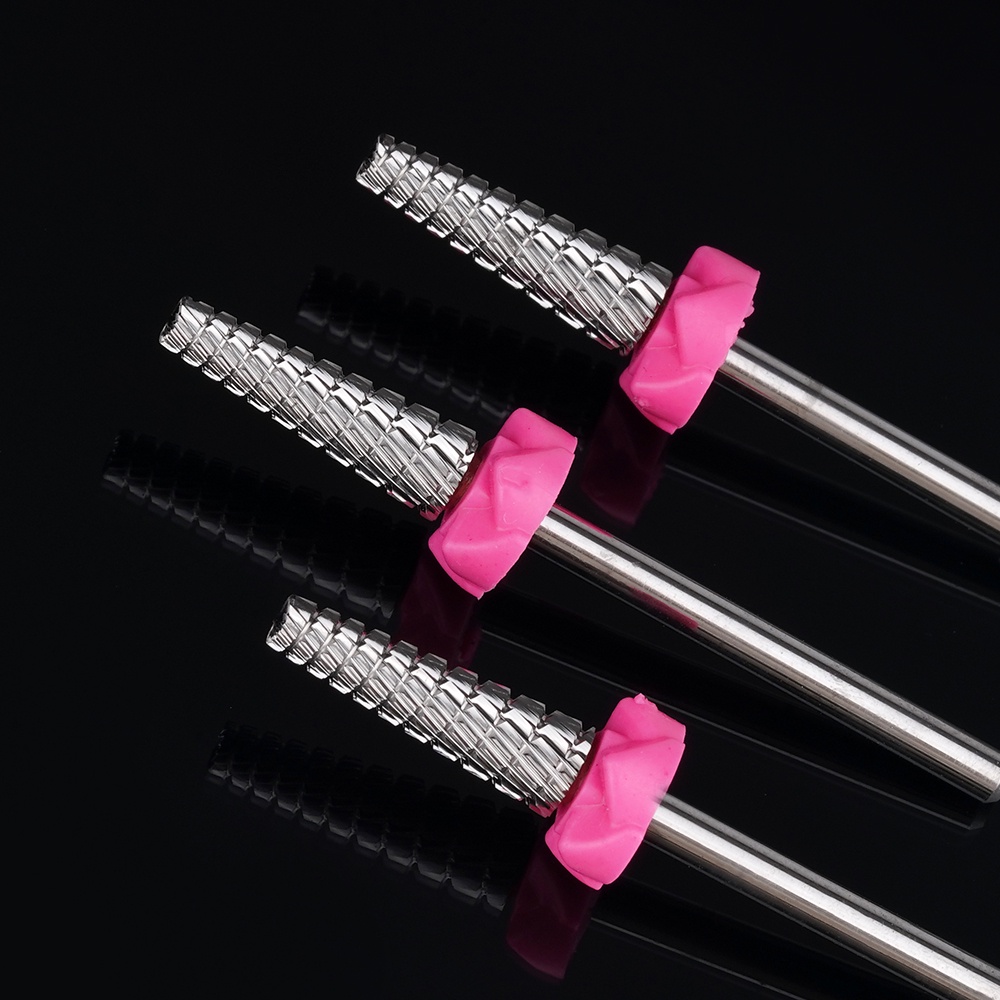
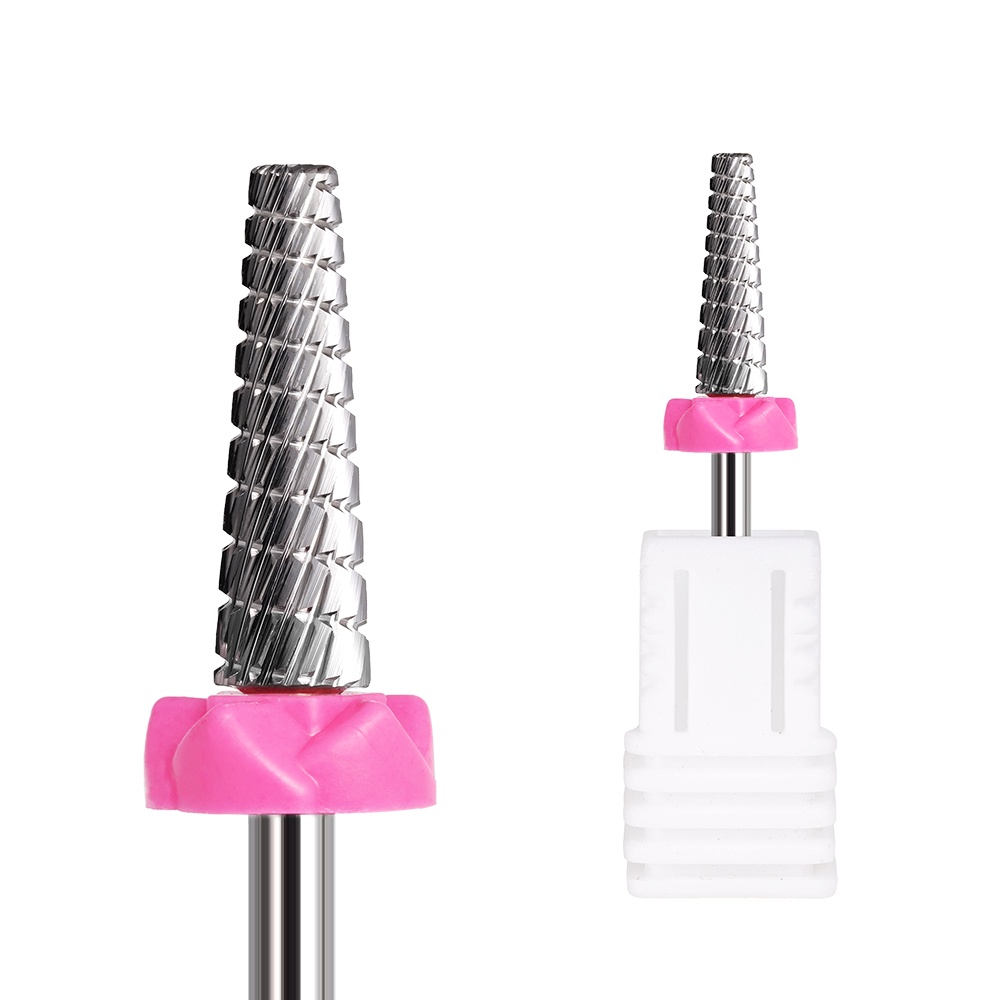
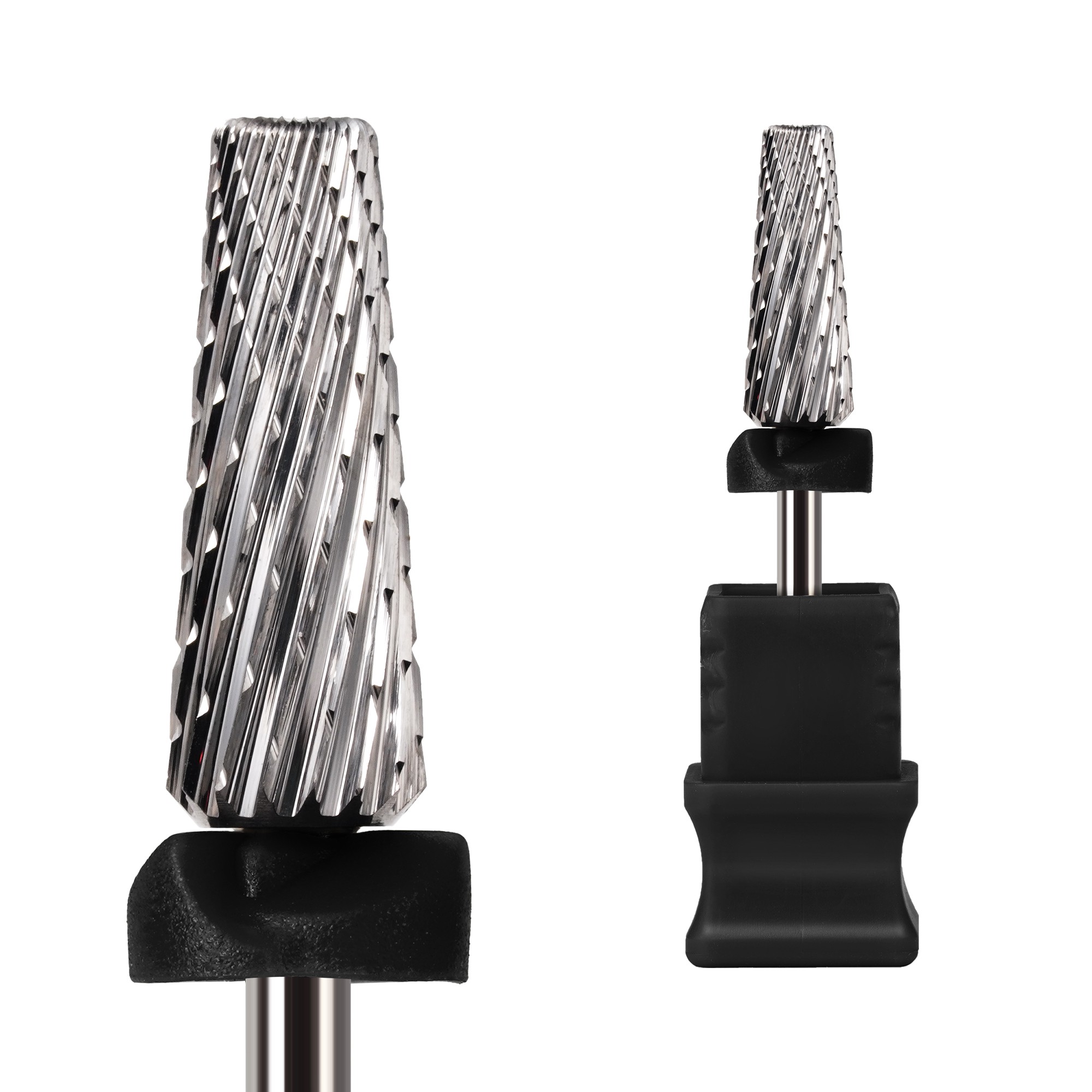
For example, the High Quality Helical Tungsten Carbide Nail Drill Bits 5 in 1 Professional Cross Cut Teeth Fast Remove Nail Gel Nail Drill Bit is positioned for tasks including gel removal, nail preparation, dead-skin work, nail-tip removal, and callus-related filing. That breadth makes it a candidate for assessment where a kit needs a versatile carbide tool, particularly for hard or soft gel reduction. Its smooth flat tip and helical cross-cut form should be assessed in the actual workflow for control near edges, debris evacuation, and whether its cutting zones match the team’s preferred sequence.
It should not be treated as the only bit required in a professional assortment. Fine preparation, precise cuticle-area work, and highly controlled natural-nail refinement still call for dedicated tools with a less aggressive contact profile. The strongest use case for a 5-in-1 bit is reducing tool changes during compatible removal and shaping stages, not replacing every category in the kit.
Separate supplier quality control from product acceptance
Supplier process discipline matters because bit consistency depends on more than a single approved sample. For repeat orders, request a defined specification covering material, shank size, head shape, tooth pattern, grit or coarseness designation, rotation direction, finish, and packaging. Retain an approved reference sample or detailed visual record so that future deliveries can be compared against the same standard.
Where OEM or private-label sourcing is involved, align the specification with the intended kit architecture before artwork or packaging is finalized. A trading factory with quality controls across raw materials, production, and packing can support more consistent repeat supply, but the purchaser still needs an acceptance process that checks the delivered tools against the agreed functional requirements.
Do not approve a range based solely on hardness language, polished product images, or a claim of fast removal. Those claims become meaningful only when the bit fits securely, runs true, cuts the intended product without excessive pressure, clears dust adequately, and remains usable after the cleaning routine it will actually receive.
Make the final decision by role, not by appearance
A practical professional kit usually benefits from a small group of clearly assigned tools rather than several nearly identical barrels. Approve a coarse or medium carbide removal bit only after confirming cutting stability on the enhancement materials most often serviced. Add a versatile multi-zone carbide bit when its working zones reduce unnecessary changes without introducing confusion. Keep fine-detail and natural-nail preparation tools separate, with profiles chosen for controlled contact rather than speed.
The final purchase decision should rest on a documented sample comparison, compatibility with existing e-files, repeatable cleaning behavior, and a specification that can be applied to future batches. That approach turns drill-bit selection from a visual catalog decision into a workable quality standard for the entire kit.
News List
- Preventing Gouges and Uneven Filing With Small Barrel Nail Drill BitsSep 20, 2026
- How Diameter and Grit Affect Small Barrel Nail Drill Bit PerformanceSep 20, 2026
- Can Hytos Nail Drill Bits Be Used Safely on Natural Nails and Gel Polish?Sep 20, 2026
- How to Verify Fit Between Hytos Nail Drill Bits and an E-File HandpieceSep 20, 2026
- Safe Speed Settings for Umbrella Nail Drill Bits Around the Nail FoldSep 20, 2026
- Umbrella vs Flame Nail Drill Bits: Which Shape Offers Better Cuticle Control?Sep 20, 2026
Best-Selling Products
 Cross Cut Safety Stainless Steel Tungsten Carbide Nail Drill Bits Salon Foot Use XF-C Grit for Removing Nails
 First-rate Quality Tungsten Carbide Nail Drill Bits Best Coating Manicure Remove Gel Nails Accessories
 Professional Advanced Safety Cuticle Bits Two-Way Rotate 3/32'' Carbide Tungsten 5 in 1 Nail Drill Bits
 Wholesale 5 in 1 Electric Manicure Nail Drill Bits Various Coating Cone Cuticle Bit with Rotary Cross Cut for Nail Art
 New Slant Tooth Tungsten Steel Nail Drill Bits Dead Skin Removal 5-in-1 Universal Grinding Nail Polish Head Tool Nail Drill Bits
 4.0mm Small 5 in 1 Integrated Sharpe Tungsten Nail Drill Bit Straight Teeth Gel Polish Removal
 Flame Sharp XF F M C XC Silver Safety Professional Corn Tungsten Carbide Nail Bit for Drill Machine Accessories
 Factory Direct 5 in 1 Tungsten Carbide Nail Drill Bits 6.8MM Cross Cut Safety Manicure 5 in 1 Nail Drill Bits
Please give us a message