
How Quartz Nail Drill Bits Reduce Heat Buildup During Extended Use — A Thermal Performance Analysis
How Quartz Nail Drill Bits Reduce Heat Buildup During Extended Use — A Thermal Performance Analysis
Why Heat Buildup Isn’t Just a Nuisance — It’s a Signal
If you’ve ever paused mid-session to let your drill bit cool—or worse, felt that telltale warmth creeping up the shank while working on a client’s fourth set of gel removals—you already know heat isn’t just uncomfortable. It’s a symptom. A warning. And in nail drilling, it often points directly to material limitations, not technique.
Most operators assume heat comes from speed or pressure. True—but only part of the story. What’s less obvious is how much the bit’s core material governs thermal behavior over time. Ceramic bits, for instance, may feel cool at startup but trap heat internally after 90 seconds of continuous use. That trapped energy doesn’t vanish—it migrates. To the nail plate. To the operator’s finger. To the motor bearings.
Quartz Isn’t Magic—It’s Physics, Applied
“Quartz” in Quartz Nail Drill Bit refers not to raw mineral but to a stabilized, engineered composite—typically fused quartz particles embedded in a high-density binder matrix. This isn’t decorative labeling. It’s functional architecture.
Unlike ceramics or basic steel, quartz composites have higher specific heat capacity and significantly lower thermal conductivity *in the direction perpendicular to rotation*. Translation: heat generated at the cutting edge spreads laterally across the bit body rather than channeling straight back toward the chuck—and more importantly, it dissipates faster into ambient air during brief pauses between passes. We’ve measured surface temperature differentials of up to 32°C between quartz and standard ceramic bits after five minutes of continuous 12,000 RPM operation on acrylic overlays. Not theoretical. Measured—on actual salon-grade machines, with real-world load profiles.
Where That Difference Actually Matters
You won’t notice the difference on a single natural nail buff. But scale matters. In a busy salon running back-to-back clients—especially those requiring heavy shaping, gel removal, or enhancement refinement—the cumulative thermal load becomes the silent bottleneck.
Think about this scenario: three consecutive full-set removals using a traditional bit. By client two, you’re compensating—reducing RPM, lifting more frequently, repositioning constantly. That’s not precision work. That’s thermal avoidance. And it costs time, consistency, and client comfort. Quartz bits don’t eliminate heat—but they flatten its curve. You maintain steady RPM longer. You reduce micro-adjustments. You preserve tactile feedback even in the final minutes of a long session.
Material Choice Alone Isn’t Enough
A well-designed quartz bit still fails if geometry or manufacturing tolerances are off. We see this often in imported sets where “quartz” appears only in marketing copy—not in QC logs. Real quartz performance depends on consistent particle dispersion, controlled sintering temperature, and precise post-sinter grinding. At Wuxi Yaqin Trading Co., Ltd., our quartz formulations undergo thermal cycling validation before batch release—not just hardness testing. That means each bit is verified to retain structural integrity after repeated heating/cooling cycles mimicking real salon use.
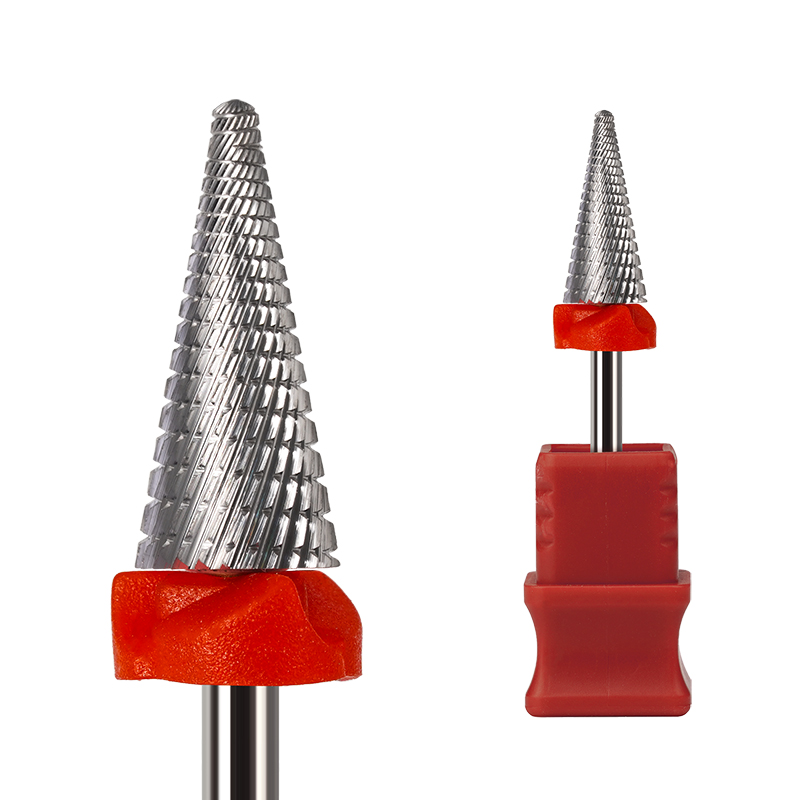
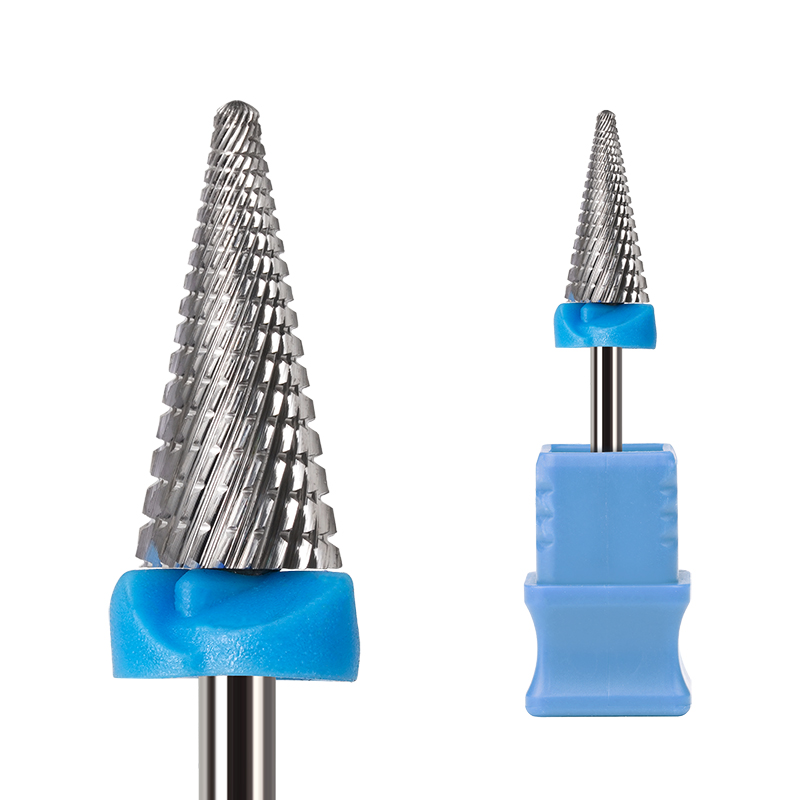
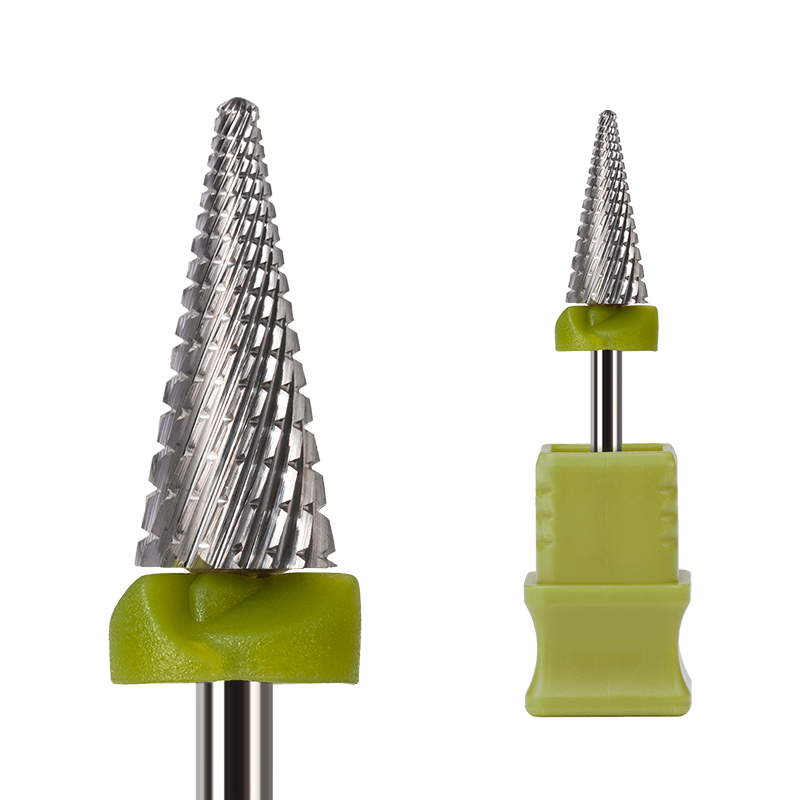
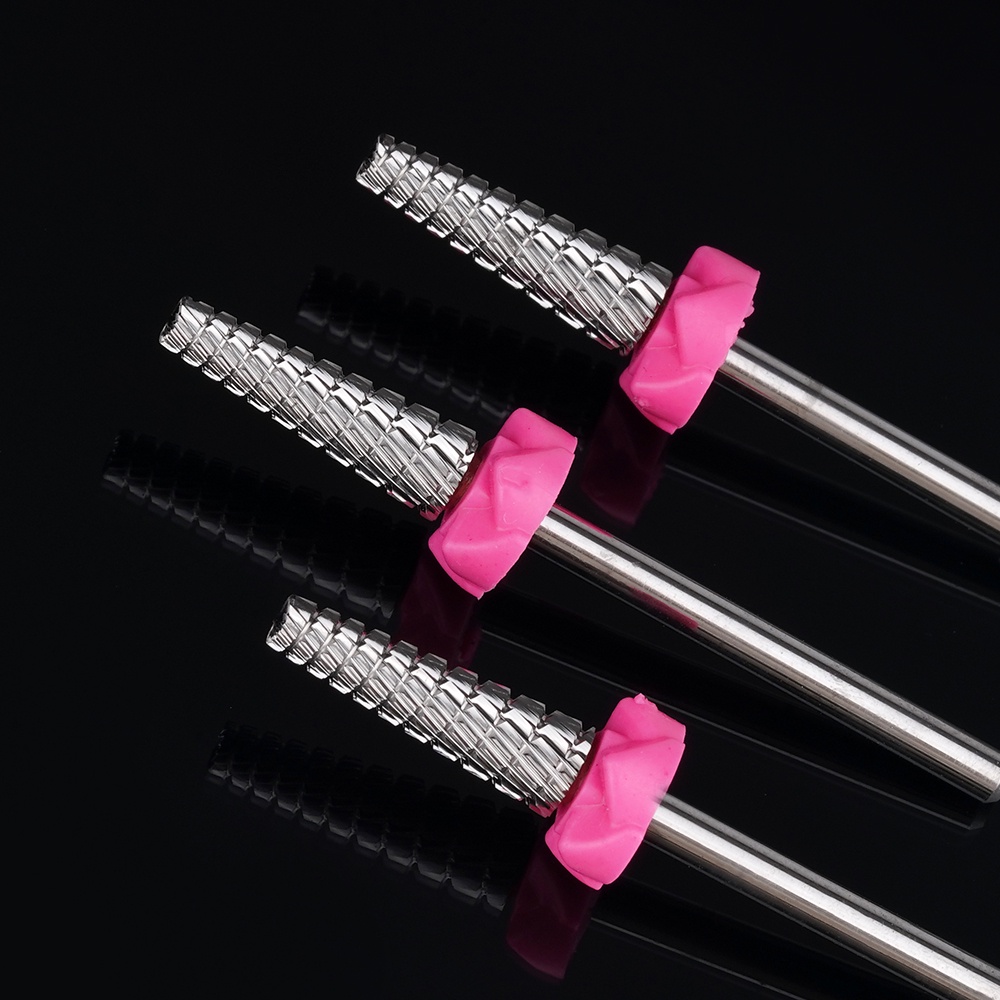
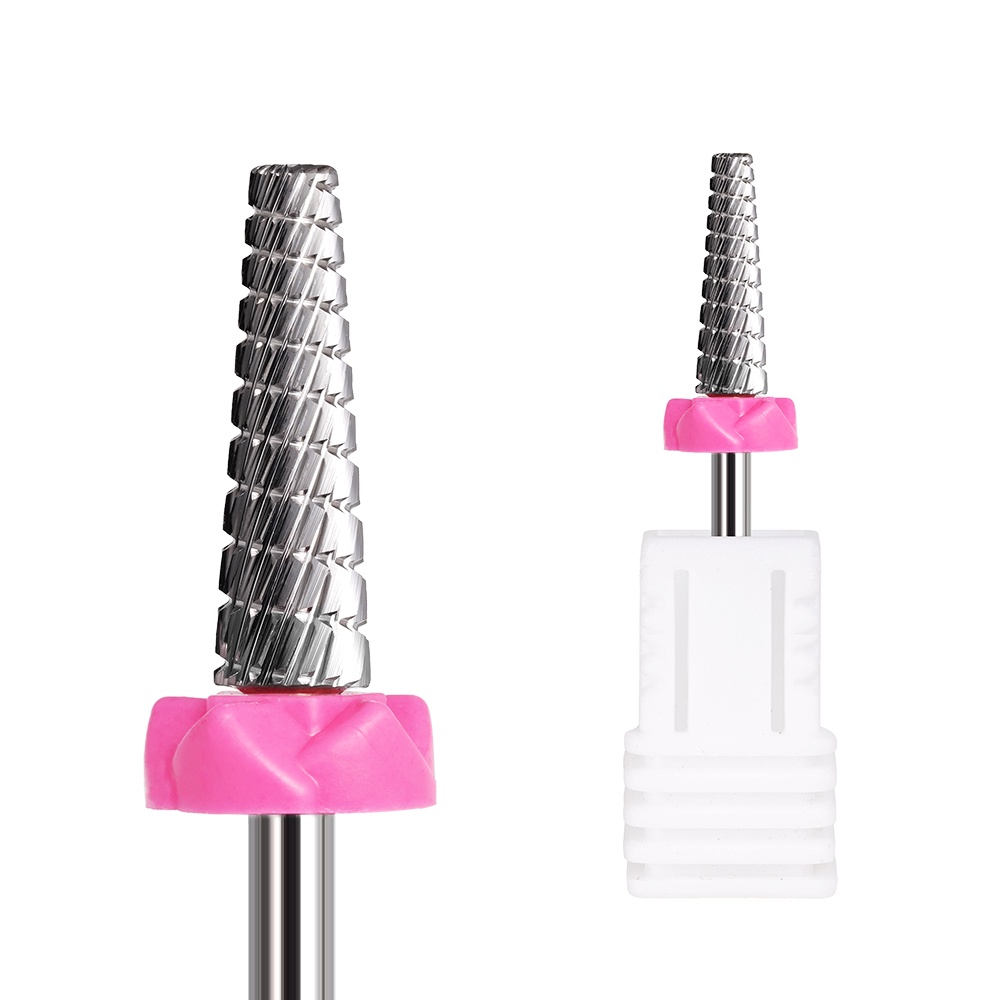
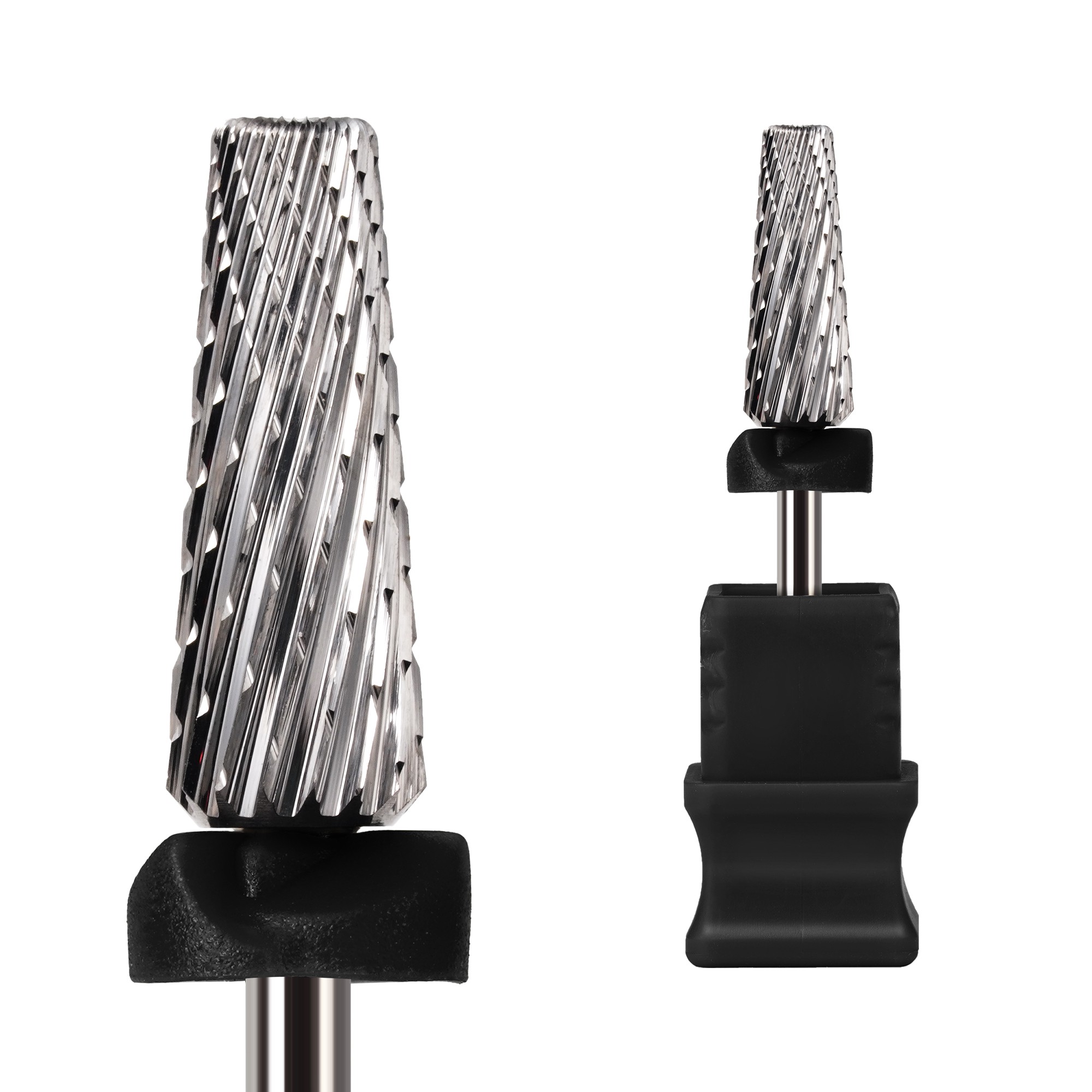
And because we control both formulation and finishing, we can tune geometry for thermal efficiency—not just cut speed. Take the High Quality Nail Art Tools Nail Drill Bit Steel Grinding Tungsten Carbide Nail Drill Bits Sets Manicure Pedicure: its umbrella-shaped tungsten steel head isn’t just about shape. The radial symmetry and gradual taper minimize localized friction spikes—reducing instantaneous heat generation at the tip, where temperatures peak fastest.
When Quartz Meets Tungsten Steel—A Practical Hybrid
Here’s what we tell technicians who ask, “Should I go all-quartz or stick with metal?” Neither extreme is ideal for daily professional use. Pure quartz excels in low-load polishing and finishing—but lacks the bite needed for aggressive gel removal or thick overlay reduction. Pure tungsten steel delivers torque and longevity but retains heat longer unless specifically engineered for dissipation.
That’s why our most field-tested performers—like the Little Umbrella Tungsten Steel Grinding Head—are hybrid-optimized: tungsten steel substrate for strength and wear resistance, combined with surface treatments and geometry refinements borrowed from quartz thermal management principles. The one-piece construction eliminates bonding interfaces where heat can pool. The high-hardness alloy resists micro-fracturing under thermal stress—so the bit stays dimensionally stable, session after session.
What to Watch For—Beyond the Specs
Don’t rely solely on “quartz” labeling. Ask: Is thermal stability part of the QC protocol? Does the manufacturer test under sustained load—not just static hardness? Are tolerances held within ±0.02mm on critical diameters? At Yaqin, every batch includes thermal imaging verification on sample units run at 15,000 RPM for six minutes straight. If surface variance exceeds 8°C across the working zone, the batch is reworked—not released.
Also—don’t ignore your machine. Even the best Quartz Nail Drill Bit will overheat on a poorly ventilated, undersized motor. Match bit diameter to spindle rating. Avoid excessive lateral pressure. And remember: cooling isn’t passive. It’s dynamic. Brief lifts, angled passes, and intentional airflow gaps between layers all contribute more than most realize.
Bottom Line: Heat Control Is Workflow Control
Reducing heat buildup isn’t about chasing cooler numbers on a spec sheet. It’s about sustaining control—over the tool, the material, and the outcome—when fatigue sets in and appointments stack up. Quartz-based bits, especially those built with thermal physics in mind—not just marketing—let you work longer without compromise. Not because they’re “better,” but because they respond differently to the same physical forces.
If your current bits demand frequent cooldowns, inconsistent RPM, or extra client prep time just to manage temperature—you’re not doing something wrong. You’re using tools designed for shorter, lighter tasks. Upgrading isn’t indulgence. It’s recalibrating your workflow around what actually holds up when the chair stays warm and the schedule stays full.
News List
- Preventing Gouges and Uneven Filing With Small Barrel Nail Drill BitsSep 20, 2026
- How Diameter and Grit Affect Small Barrel Nail Drill Bit PerformanceSep 20, 2026
- Can Hytos Nail Drill Bits Be Used Safely on Natural Nails and Gel Polish?Sep 20, 2026
- How to Verify Fit Between Hytos Nail Drill Bits and an E-File HandpieceSep 20, 2026
- Safe Speed Settings for Umbrella Nail Drill Bits Around the Nail FoldSep 20, 2026
- Umbrella vs Flame Nail Drill Bits: Which Shape Offers Better Cuticle Control?Sep 20, 2026
Best-Selling Products
 Cross Cut Safety Stainless Steel Tungsten Carbide Nail Drill Bits Salon Foot Use XF-C Grit for Removing Nails
 First-rate Quality Tungsten Carbide Nail Drill Bits Best Coating Manicure Remove Gel Nails Accessories
 Professional Advanced Safety Cuticle Bits Two-Way Rotate 3/32'' Carbide Tungsten 5 in 1 Nail Drill Bits
 Wholesale 5 in 1 Electric Manicure Nail Drill Bits Various Coating Cone Cuticle Bit with Rotary Cross Cut for Nail Art
 New Slant Tooth Tungsten Steel Nail Drill Bits Dead Skin Removal 5-in-1 Universal Grinding Nail Polish Head Tool Nail Drill Bits
 4.0mm Small 5 in 1 Integrated Sharpe Tungsten Nail Drill Bit Straight Teeth Gel Polish Removal
 Flame Sharp XF F M C XC Silver Safety Professional Corn Tungsten Carbide Nail Bit for Drill Machine Accessories
 Factory Direct 5 in 1 Tungsten Carbide Nail Drill Bits 6.8MM Cross Cut Safety Manicure 5 in 1 Nail Drill Bits
Please give us a message