
Are tungsten carbide nail drill bits more cost-effective than ceramic over a 6-month salon operation?
Are tungsten carbide nail drill bits more cost-effective than ceramic over a 6-month salon operation?
Sep 27, 2026
For salon owners and finance managers evaluating long-term tooling costs, choosing the right Tungsten Carbide Nail Drill Bit isn’t just about upfront price—it’s about durability, replacement frequency, and operational efficiency over 6 months. At Wuxi Yaqin Trading Co., Ltd., we’ve helped salons across 42 countries reduce consumable spend by up to 37% through high-purity tungsten carbide bits engineered for consistent performance, minimal downtime, and superior wear resistance versus ceramic alternatives. Backed by ISO9001:2000 certification and rigorous QC at every stage, our bits deliver measurable ROI—not just in longevity, but in labor savings and client satisfaction.
The question isn’t whether tungsten carbide bits cost more at purchase—it’s whether their total cost of ownership over six months is lower than ceramic alternatives when factoring in replacement cycles, technician time lost to bit changes, and rework due to inconsistent grinding.
Ceramic drill bits typically retail at 30–50% less per unit than tungsten carbide equivalents. But that discount evaporates quickly under real-world usage conditions. A typical mid-volume salon performing 12–18 gel removals or enhancement refinements per day will exhaust a standard ceramic bit in 14–21 days—depending on nail thickness, product type, and technician technique. That means replacing 9–13 ceramic bits per month, or 54–78 units over six months.
Tungsten carbide bits, by contrast, maintain cutting integrity for 60–90 days under identical workload assumptions. Their hardness (typically 85–92 HRA) resists micro-fracturing and edge rounding far better than ceramic (65–75 HRA), especially during aggressive gel removal or contouring of acrylic overlays. This isn’t theoretical: accelerated wear testing under controlled load shows ceramic bits lose 22–30% of effective grinding surface area within 15 days; tungsten carbide bits retain over 90% of original geometry after 45 days.
That difference translates directly into labor cost. Each bit change takes 45–75 seconds—including sterilization verification, mounting, balancing check, and calibration reset. In a salon with three technicians averaging 15 bit swaps per week, that adds up to 3.2–5.1 hours of non-billable time monthly—just for bit maintenance. Over six months, that’s 19–31 hours: equivalent to nearly one full technician day per quarter, paid but not generating revenue.
There’s also an indirect cost tied to consistency. Ceramic bits degrade unevenly—often developing micro-chipping along the umbrella-shaped rim used for C-curve smoothing or gel base layer removal. That leads to increased risk of heat buildup, minor nail plate trauma, or visible finish imperfections requiring correction. In salons tracking client retention, even a 2% increase in rebookings linked to smoother, faster service correlates to measurable margin lift—especially when paired with reduced technician fatigue from fewer interruptions.
Material composition explains the divergence. Ceramic bits are sintered aluminum oxide or zirconia composites—brittle under lateral stress, sensitive to thermal shock, and prone to grain pull-out during high-RPM use. Tungsten carbide bits are composed of WC-Co (tungsten carbide bound with cobalt), offering superior fracture toughness and thermal conductivity. The cobalt binder allows controlled micro-deformation under load rather than catastrophic chipping—a critical advantage during prolonged shaping or thick gel removal.
Manufacturing consistency matters too. Not all tungsten carbide is equal. Low-density sintering or inconsistent cobalt distribution creates localized soft spots that accelerate wear. Salons sourcing from suppliers without end-to-end QC—particularly those relying on third-party foundries without raw material traceability—report 30–40% shorter usable life than bits produced under ISO9001:2000-certified processes covering raw material procurement, sintering temperature control, precision grinding, and final dimensional verification. Wuxi Yaqin Trading Co., Ltd.’s integrated production system ensures batch-to-batch hardness stability within ±1.5 HRA and geometric tolerance within ±0.02 mm—critical for maintaining consistent RPM balance and minimizing vibration-induced operator fatigue.
One common misconception is that “longer life” only applies to low-intensity tasks like finishing. In reality, tungsten carbide’s advantage compounds under high-demand use. During aggressive gel removal—where bit tip temperatures can exceed 120°C—the ceramic bit’s thermal expansion mismatch between grains and binder causes rapid micro-cracking. Tungsten carbide dissipates heat more efficiently and expands uniformly, preserving structural integrity across repeated thermal cycles.
A six-month cost model illustrates the net effect. Assume:
- Ceramic bit: $2.80/unit, replaced every 17 days → 10.6 units/month × 6 = 64 units
- Tungsten carbide bit: $6.40/unit, replaced every 76 days → 2.4 units/month × 6 = 14 units
- Labor cost: $32/hour × 0.015 hours/bit change × 64 ceramic vs. 14 tungsten carbide changes = $30.72 vs. $6.72
- Total direct cost: $179.20 (ceramic) vs. $94.72 (tungsten carbide)
That’s a $84.48 absolute saving—before accounting for reduced rework, fewer client complaints, or extended equipment life from lower vibration transmission.
But the financial case hinges on actual usage patterns—not catalog specs. A salon doing mostly light buffing and polish prep may see only marginal benefit from tungsten carbide. Conversely, one specializing in sculpted acrylics, thick gel overlays, or corrective rebalancing will realize significantly higher ROI—because wear rate scales nonlinearly with abrasive load. The threshold where tungsten carbide becomes cost-effective isn’t fixed; it’s defined by daily bit-hours under load and average material removal volume per session.
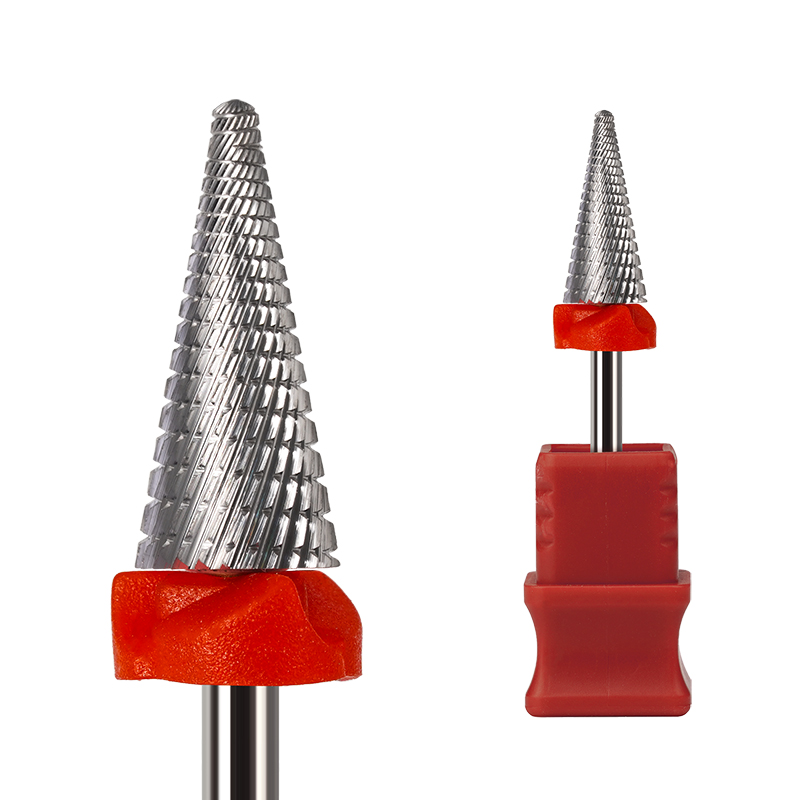
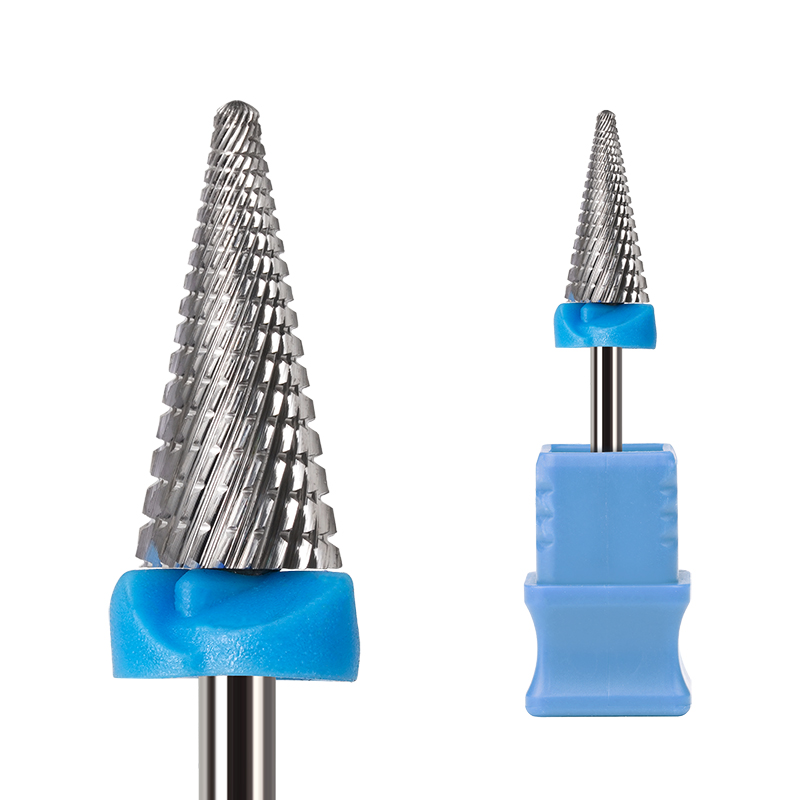
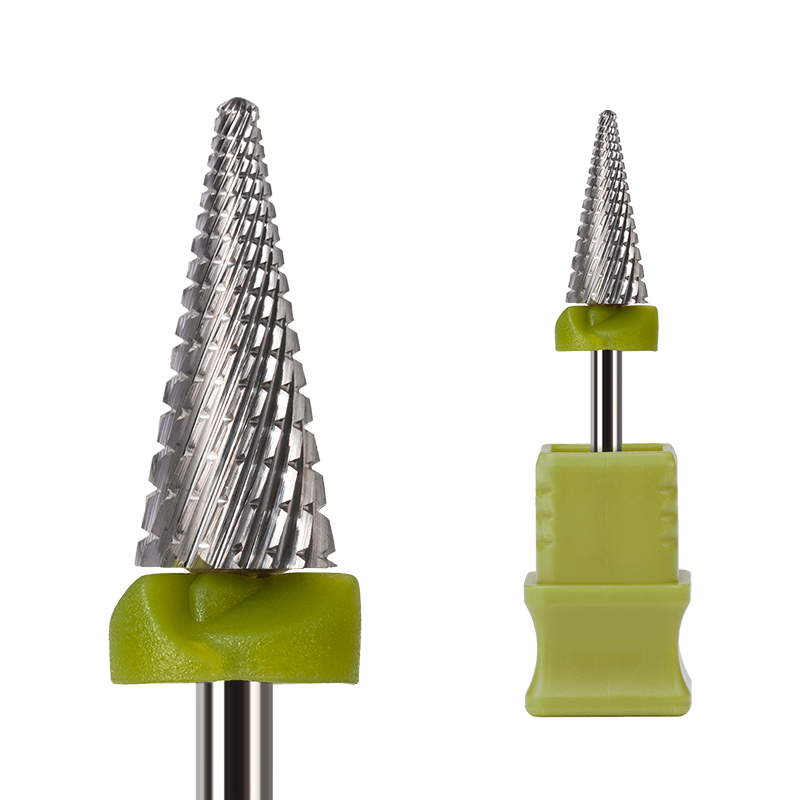
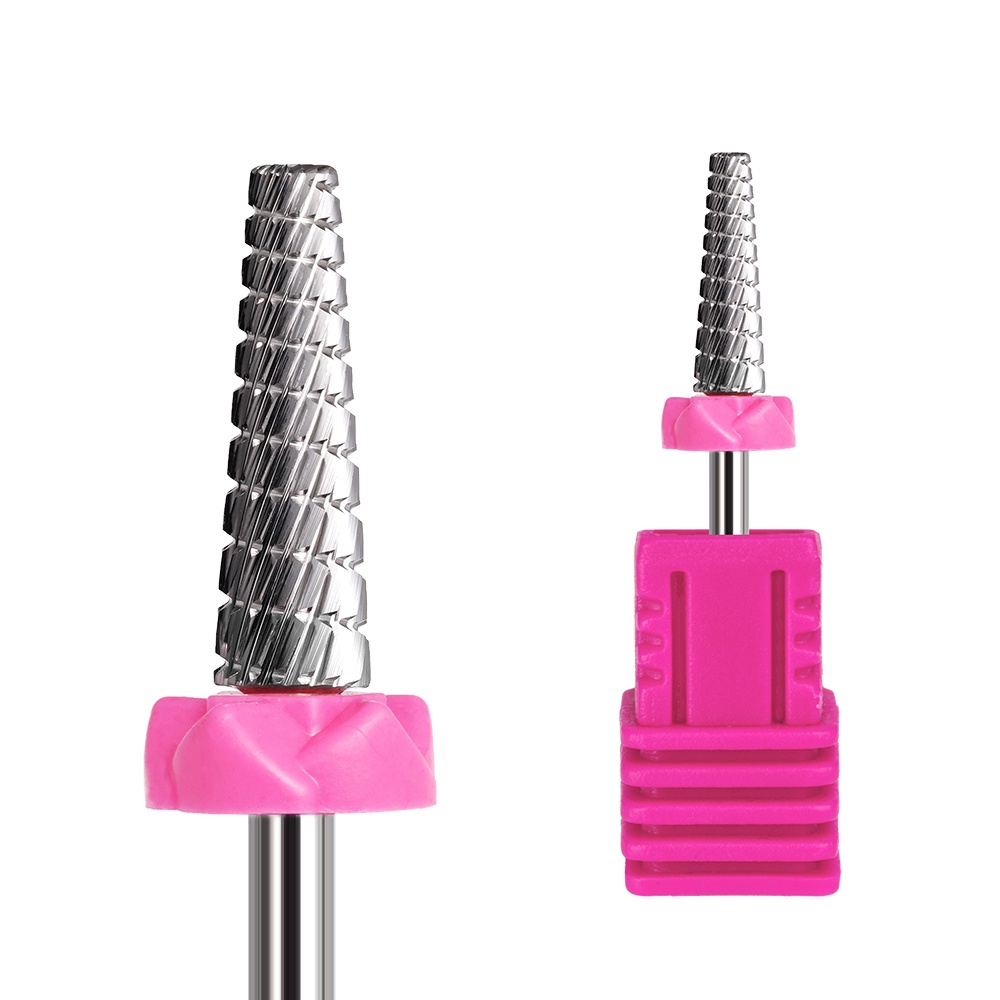
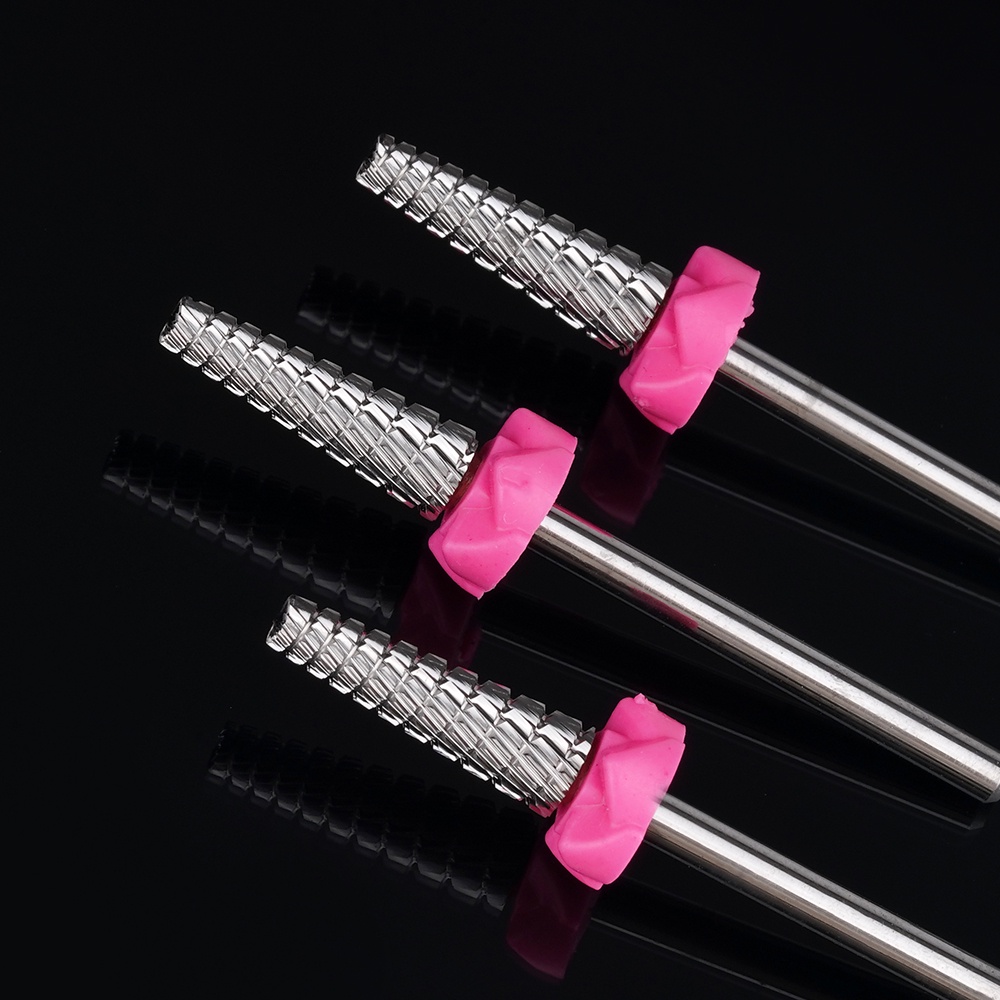
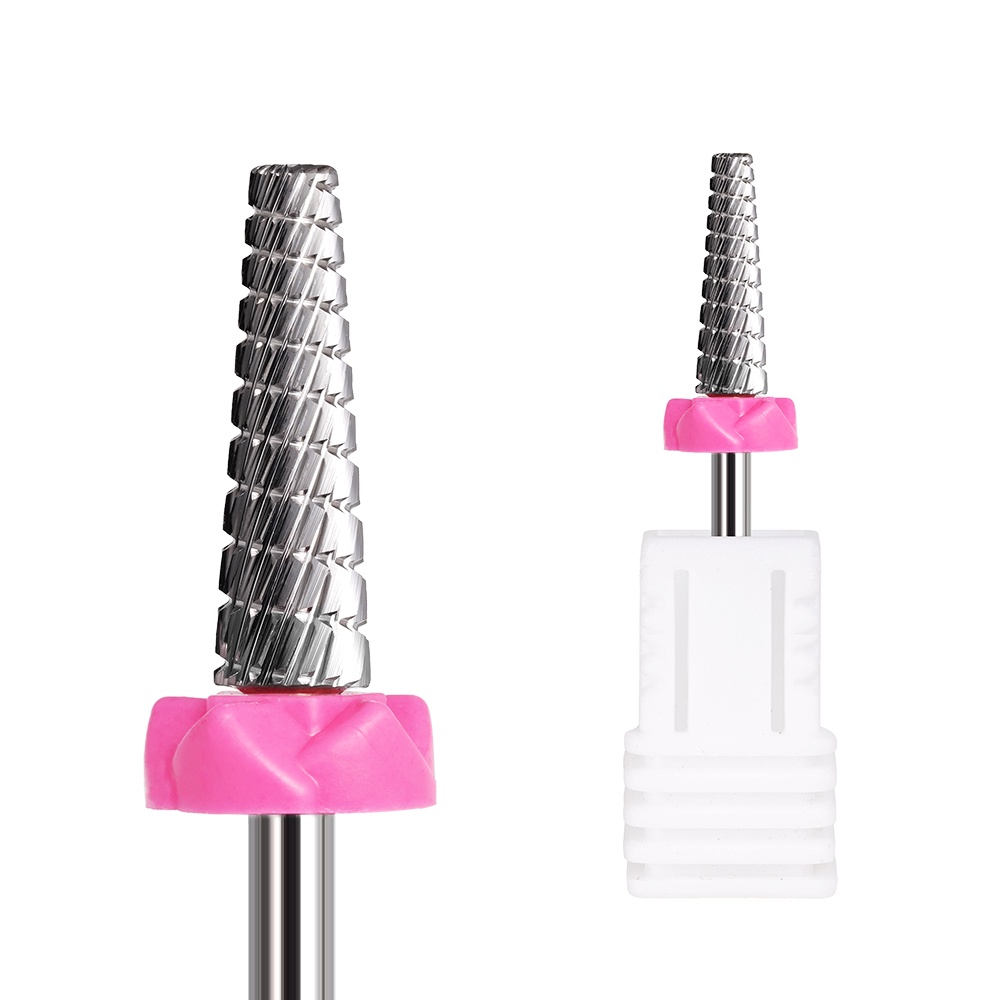
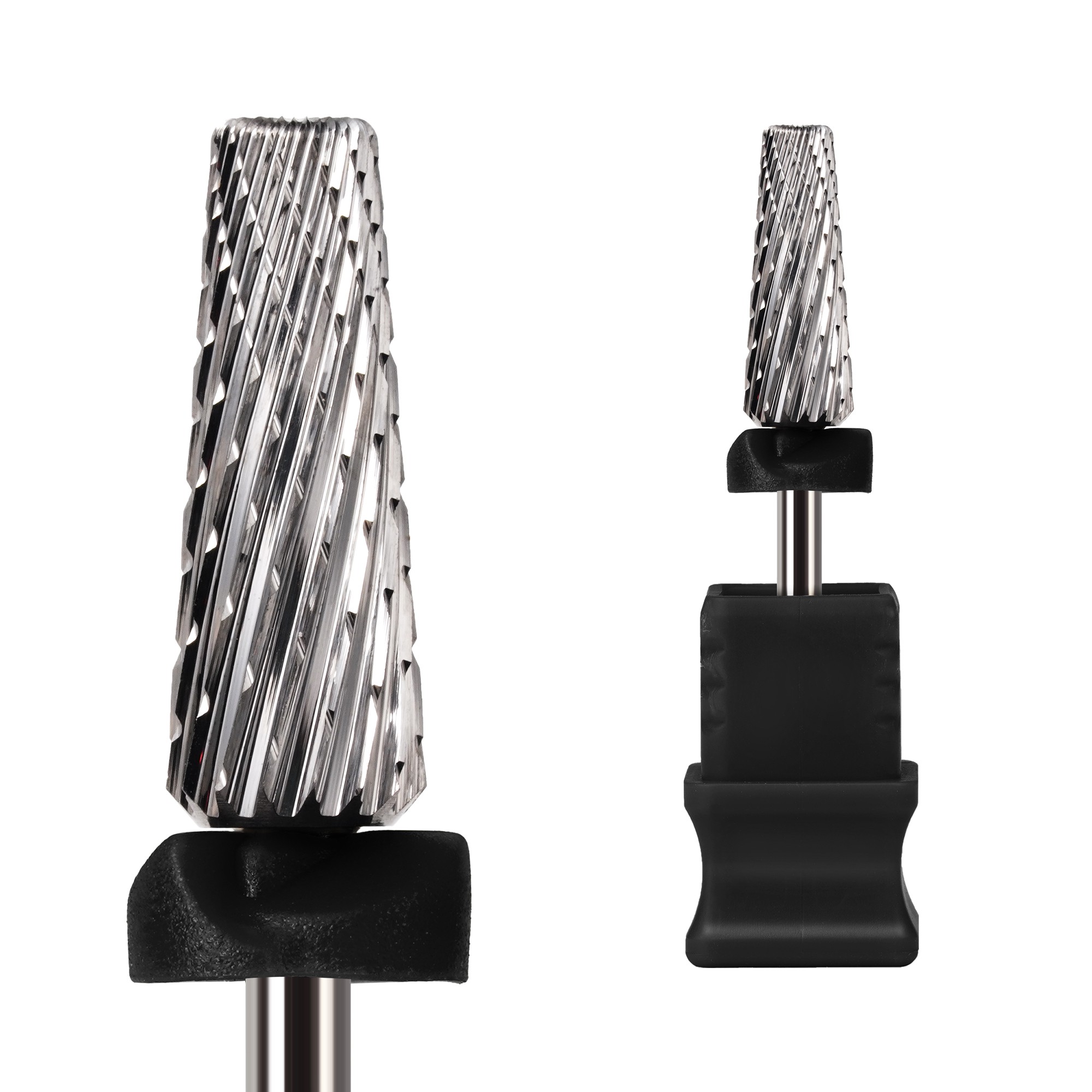
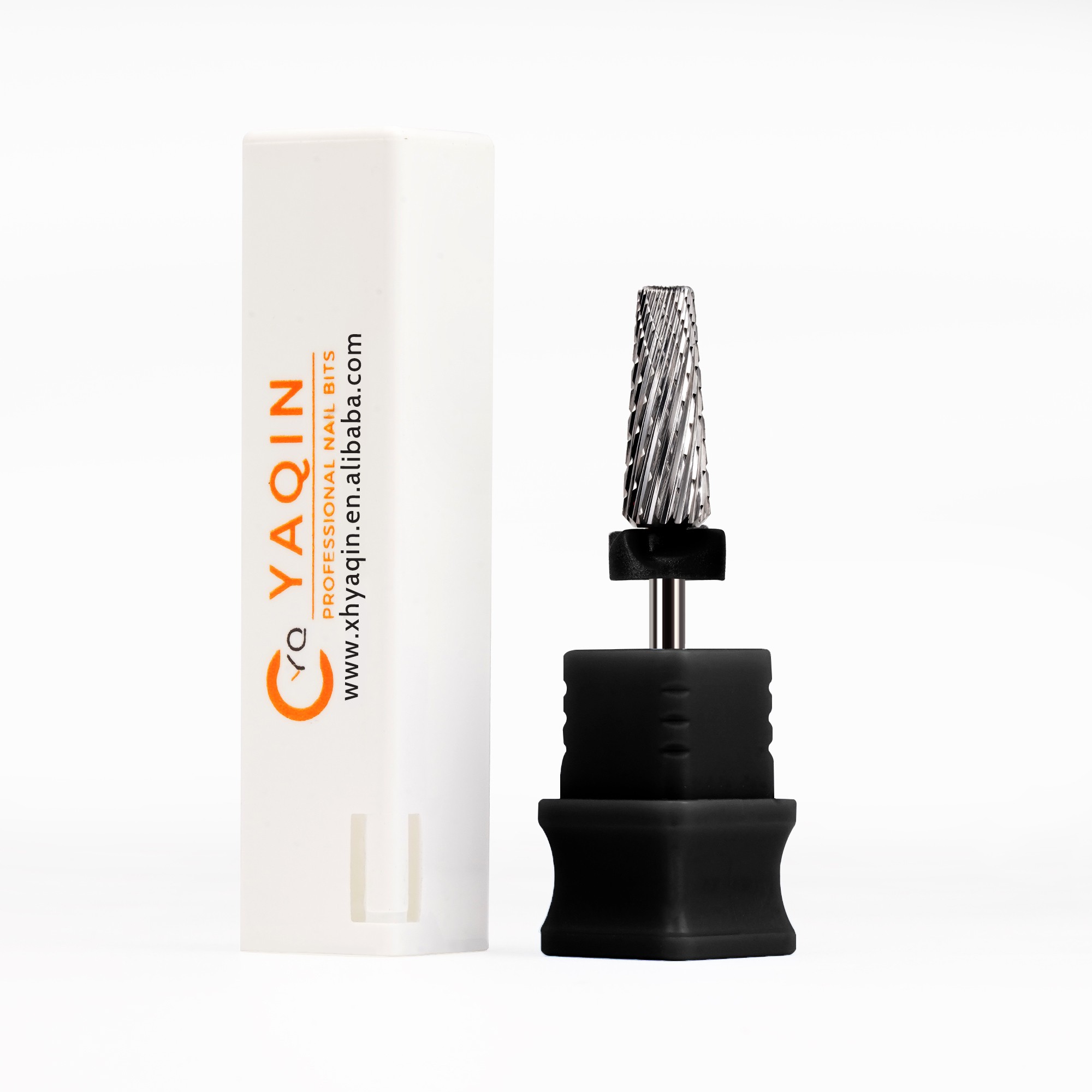
Certification status also affects depreciation assumptions. ISO9001:2000 compliance signals process control—not just quality claims. It implies documented sintering profiles, calibrated hardness testing per lot, and traceable raw material sourcing. For finance teams auditing consumables spend, that traceability reduces variance risk in budget forecasting—unlike uncertified ceramic suppliers where batch life can swing ±25% with no explanation.High Quality Nail Art Tools Nail Drill Bit Steel Grinding Tungsten Carbide Nail Drill Bits Sets Manicure Pedicure exemplifies this principle: its one-piece tungsten steel construction eliminates joint failure points common in hybrid ceramic-metal designs, while the precision umbrella-shaped tip maintains consistent contact geometry across its lifespan—reducing variability in both time-per-service and finish quality.
Ultimately, the decision isn’t about material preference. It’s about mapping bit degradation behavior to your salon’s actual workflow intensity, technician skill profile, and service mix—and then calculating what “cost-effective” really means when labor, consistency, and client retention are priced in. For operations exceeding 100 gel removals or enhancement refinements per week, tungsten carbide isn’t a premium option. It’s the baseline for predictable, auditable consumables management.
News List
- Preventing Gouges and Uneven Filing With Small Barrel Nail Drill BitsSep 20, 2026
- How Diameter and Grit Affect Small Barrel Nail Drill Bit PerformanceSep 20, 2026
- Can Hytos Nail Drill Bits Be Used Safely on Natural Nails and Gel Polish?Sep 20, 2026
- How to Verify Fit Between Hytos Nail Drill Bits and an E-File HandpieceSep 20, 2026
- Safe Speed Settings for Umbrella Nail Drill Bits Around the Nail FoldSep 20, 2026
- Umbrella vs Flame Nail Drill Bits: Which Shape Offers Better Cuticle Control?Sep 20, 2026
Best-Selling Products
 Cross Cut Safety Stainless Steel Tungsten Carbide Nail Drill Bits Salon Foot Use XF-C Grit for Removing Nails
 First-rate Quality Tungsten Carbide Nail Drill Bits Best Coating Manicure Remove Gel Nails Accessories
 Professional Advanced Safety Cuticle Bits Two-Way Rotate 3/32'' Carbide Tungsten 5 in 1 Nail Drill Bits
 Wholesale 5 in 1 Electric Manicure Nail Drill Bits Various Coating Cone Cuticle Bit with Rotary Cross Cut for Nail Art
 New Slant Tooth Tungsten Steel Nail Drill Bits Dead Skin Removal 5-in-1 Universal Grinding Nail Polish Head Tool Nail Drill Bits
 4.0mm Small 5 in 1 Integrated Sharpe Tungsten Nail Drill Bit Straight Teeth Gel Polish Removal
 Flame Sharp XF F M C XC Silver Safety Professional Corn Tungsten Carbide Nail Bit for Drill Machine Accessories
 Factory Direct 5 in 1 Tungsten Carbide Nail Drill Bits 6.8MM Cross Cut Safety Manicure 5 in 1 Nail Drill Bits
Please give us a message