
Can a Quartz Nail Drill Bit create a smoother acrylic finish?
Can a Quartz Nail Drill Bit create a smoother acrylic finish?
Can a Quartz Nail Drill Bit Create a Smoother Acrylic Finish?
Can a Quartz Nail Drill Bit create a smoother acrylic finish? It can improve the refinement stage of acrylic work, but it should not be viewed as a universal replacement for every bit in the service sequence. For technical evaluators, the more useful question is: at which stage of acrylic processing does a quartz abrasive surface add measurable control, and where does another cutter geometry perform better?
Acrylic enhancements respond differently to an abrasive tool than natural nail, soft gel, or hard gel. The material is rigid enough to tolerate controlled filing, yet it can develop grooves, heat marks, thinning, and uneven transitions when removal is too aggressive. A smooth result is not created by abrasive grit alone. It comes from the relationship between abrasive particle consistency, bit shape, rotation speed, contact pressure, dust clearance, and the technician’s ability to keep the bit moving across the enhancement.
For buyers assessing bits for salons, training programs, private-label lines, or high-volume distribution, quartz bits are often most relevant as controlled finishing tools rather than heavy-removal tools. Their real value depends on how consistently the abrasive surface behaves from one production lot to the next.
What “Smoother” Means in Acrylic Finishing
In a practical manicure workflow, “smooth” has more than one meaning. A surface may feel smooth to the fingertip while still showing shallow rotary tracks under glossy top coat. It may look even at the apex but have an abrupt step near the cuticle area. It may also appear polished immediately after filing, only to reveal unevenness when the dust is removed and light reflects across the nail.
A technical evaluation should therefore separate finish quality into several checks:
- Scratch profile: Are the marks fine and uniform, or are there deep, isolated gouges?
- Surface flatness: Does the bit level the acrylic without creating low spots around the apex or sidewalls?
- Transition control: Can the technician blend product near the cuticle without catching, digging, or over-thinning?
- Heat behavior: Does the working surface remain manageable during a normal pass?
- Post-finish appearance: Does the acrylic accept color or top coat without visible filing lines?
A Quartz Nail Drill Bit may support a finer, more even scratch pattern when its mineral coating or bonded abrasive layer is evenly distributed. That matters because inconsistent particle size tends to create an inconsistent finish: a few larger, sharper particles cut disproportionately deeply while surrounding areas merely rub the surface. The result is a finish that needs extra hand filing or buffering to correct.
Why Quartz Abrasive Construction Can Be Useful
Quartz-based nail bits are generally associated with an abrasive rather than fluted cutting action. Instead of removing acrylic through distinct cutting teeth, the surface works through many small abrasive contact points. When the grit is well controlled, this can feel less abrupt than a coarse carbide cutter and can give the operator more feedback during detail work.
That behavior is particularly useful when reducing visible file marks, softening a product transition, preparing the surface for a new overlay, or refining an acrylic structure after bulk material has already been removed. A rounded or safety-oriented profile may also offer a more forgiving working edge near the proximal nail fold, although no bit design eliminates the need for training, appropriate speed, and careful technique.
There are limits. Quartz abrasive does not necessarily mean “finer,” and it does not automatically mean “cooler.” A coarse quartz surface used with excessive pressure can create friction and heat quickly. Similarly, a bit that has become clogged with acrylic dust may burnish rather than cut, leading the operator to press harder. That is usually when a supposedly gentle finishing tool begins producing unwanted surface damage.
The Grit Decision Is More Important Than the Material Name
Product names can make selection appear simpler than it is. In reality, the same base material can perform very differently depending on grit grade, bonding method, shape, and surface coverage. “Quartz” should be treated as one part of the specification, not as the complete performance description.
For acrylic finishing, a useful selection logic is to match the bit to the amount of correction required:
A medium grit may be the most versatile for general acrylic refinement, while a finer surface is usually better suited to final smoothing. However, the correct choice changes with the acrylic formula, its age, the thickness of the enhancement, and the service protocol. A very hard, heavily built set may require an initial carbide or coarse abrasive step before a quartz bit can work efficiently.
Do Not Compare Quartz and Carbide as If They Serve the Same Job
One common sourcing mistake is to compare a quartz bit and a tungsten carbide bit only by removal speed. This tends to make the quartz option look weaker, even when it is being considered for a different purpose. Carbide bits rely on engineered flutes that shear material away; they are usually selected where rapid debulking, product removal, and repeatable throughput are priorities. Quartz abrasive surfaces are more often assessed for controlled refinement and a less aggressive finishing feel.
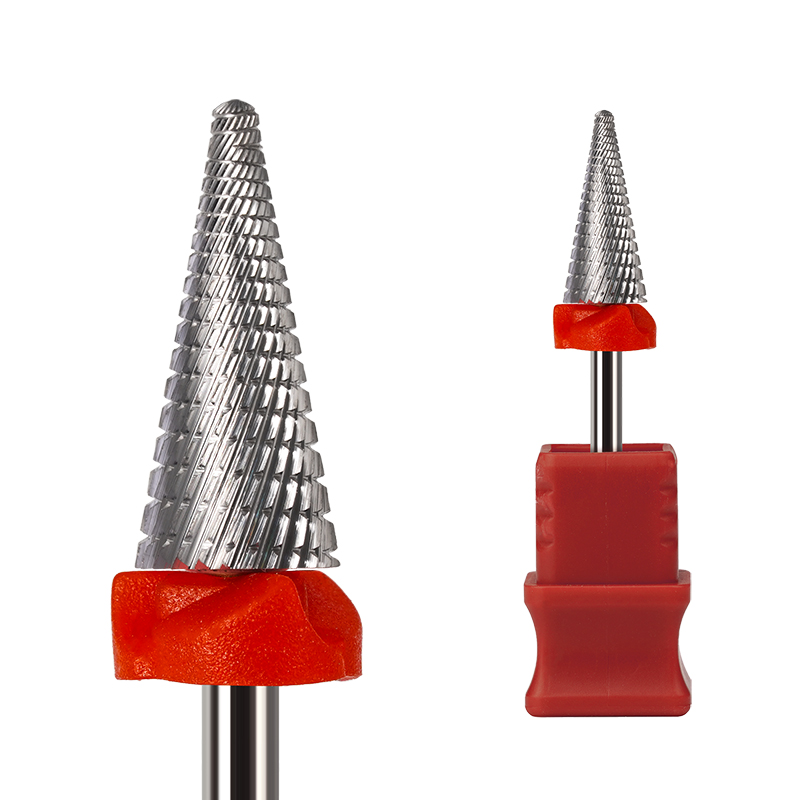
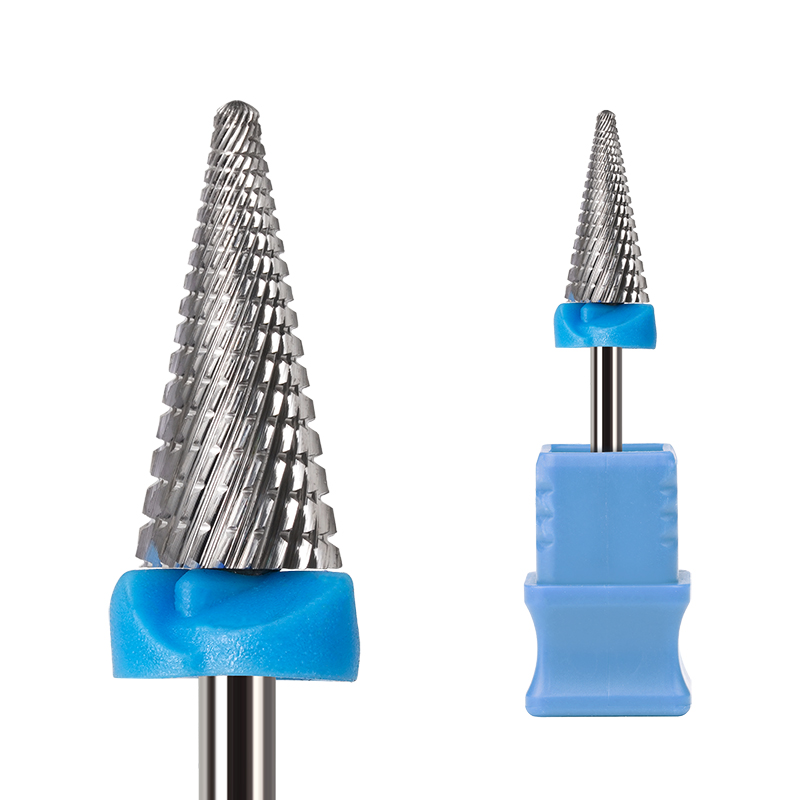
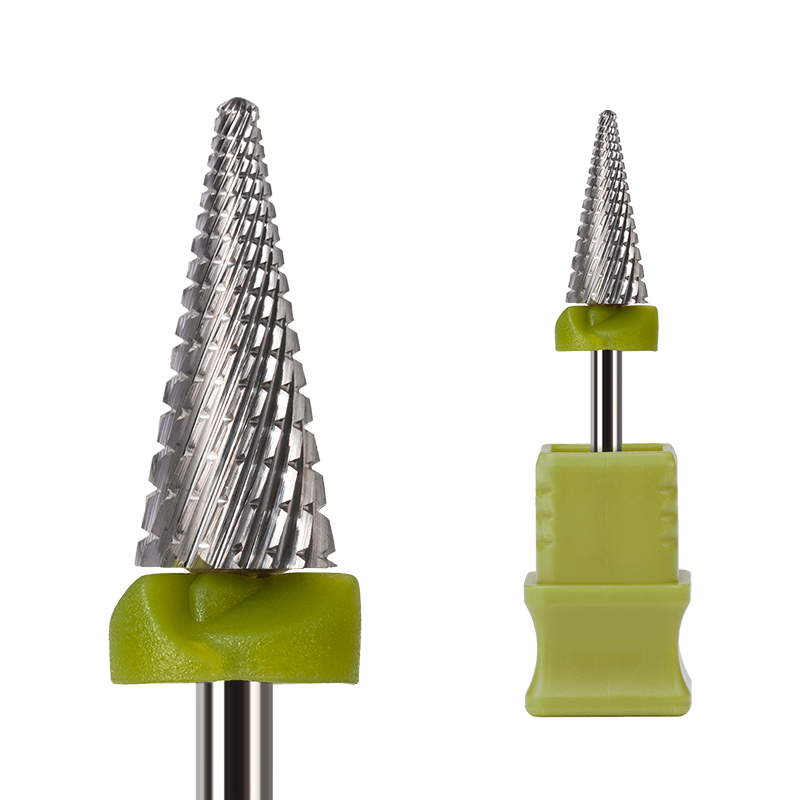
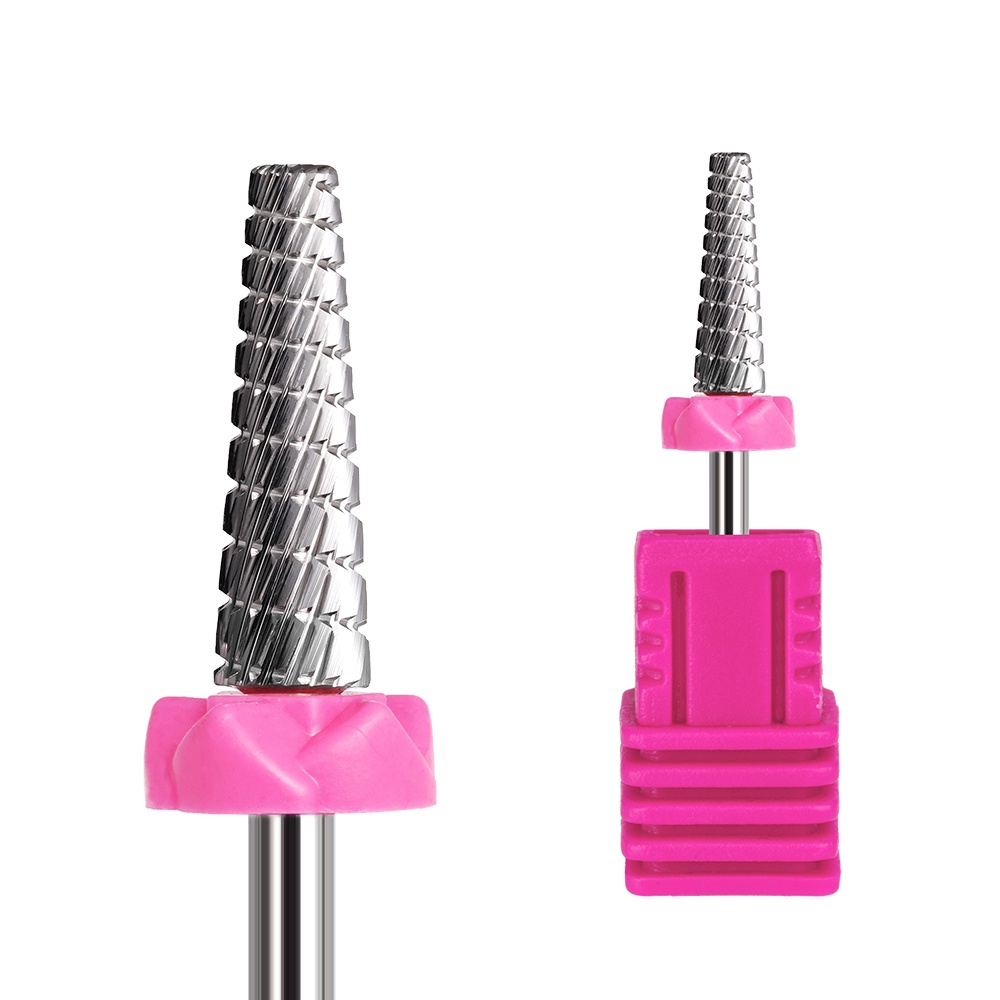
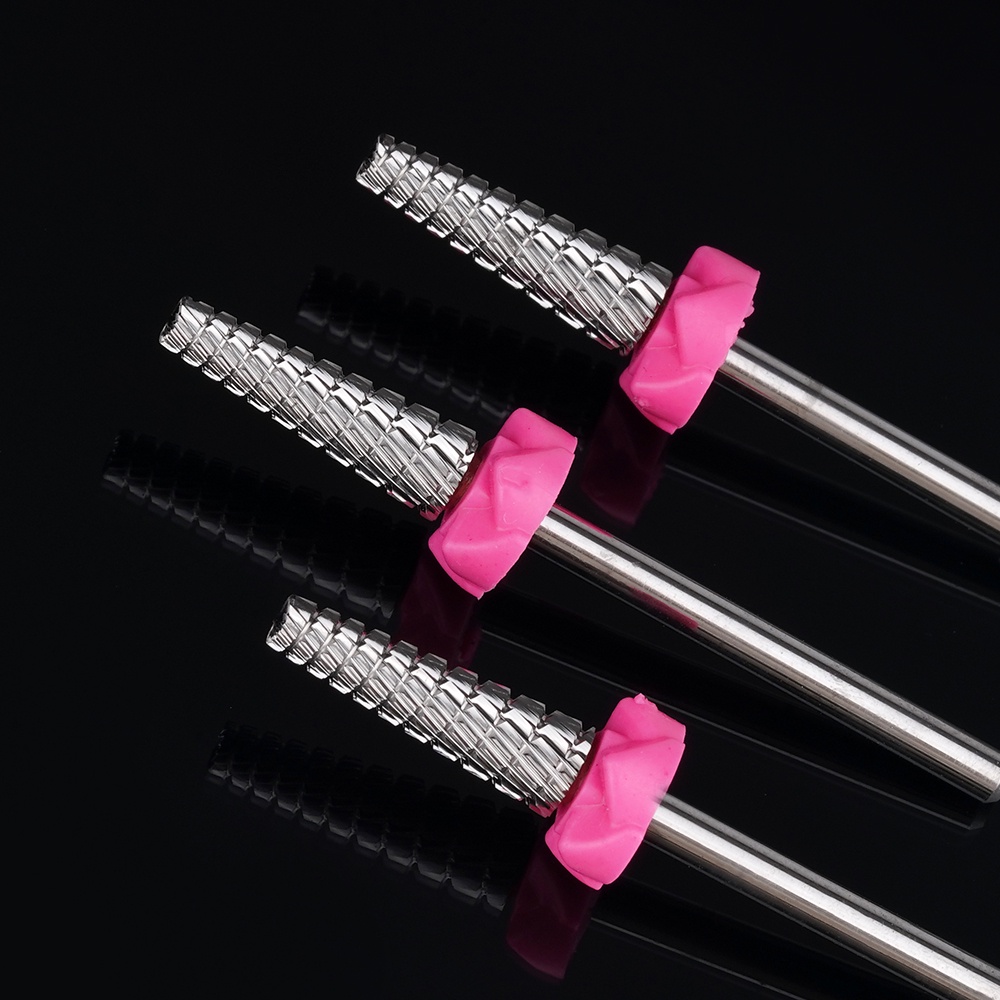
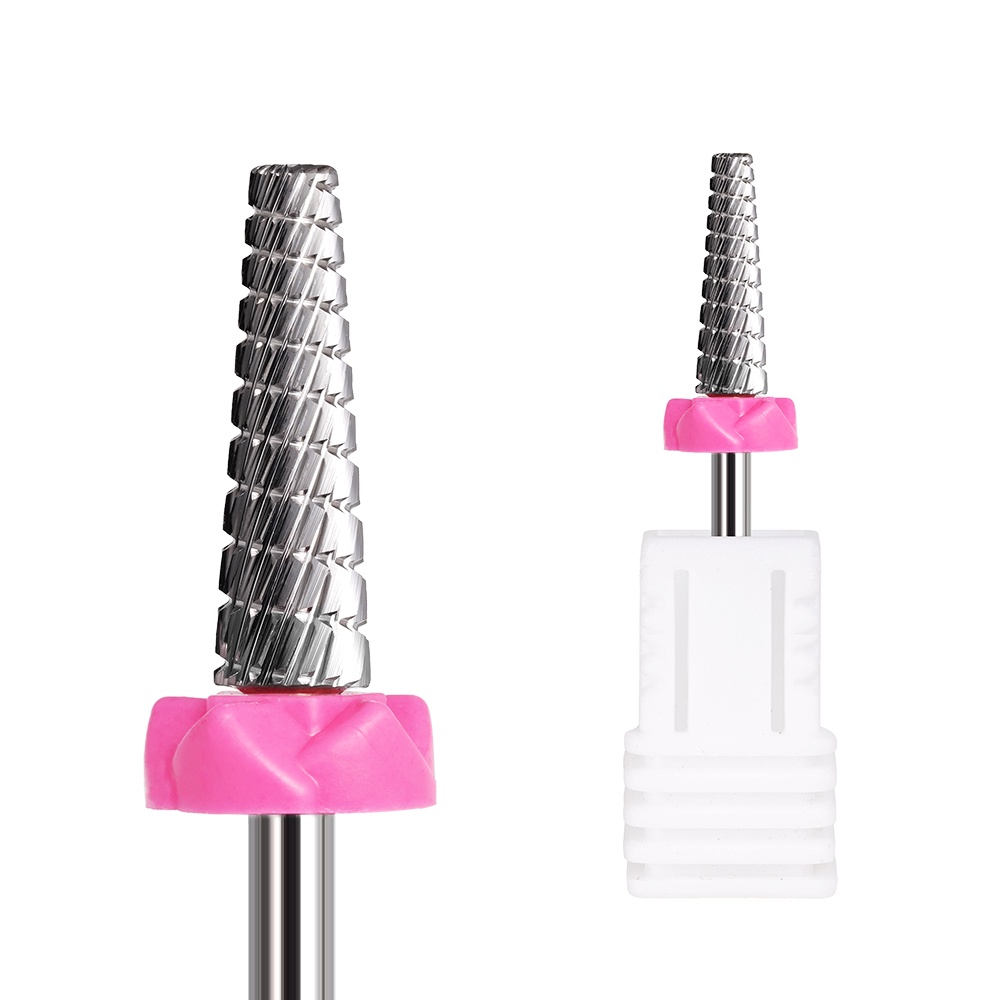
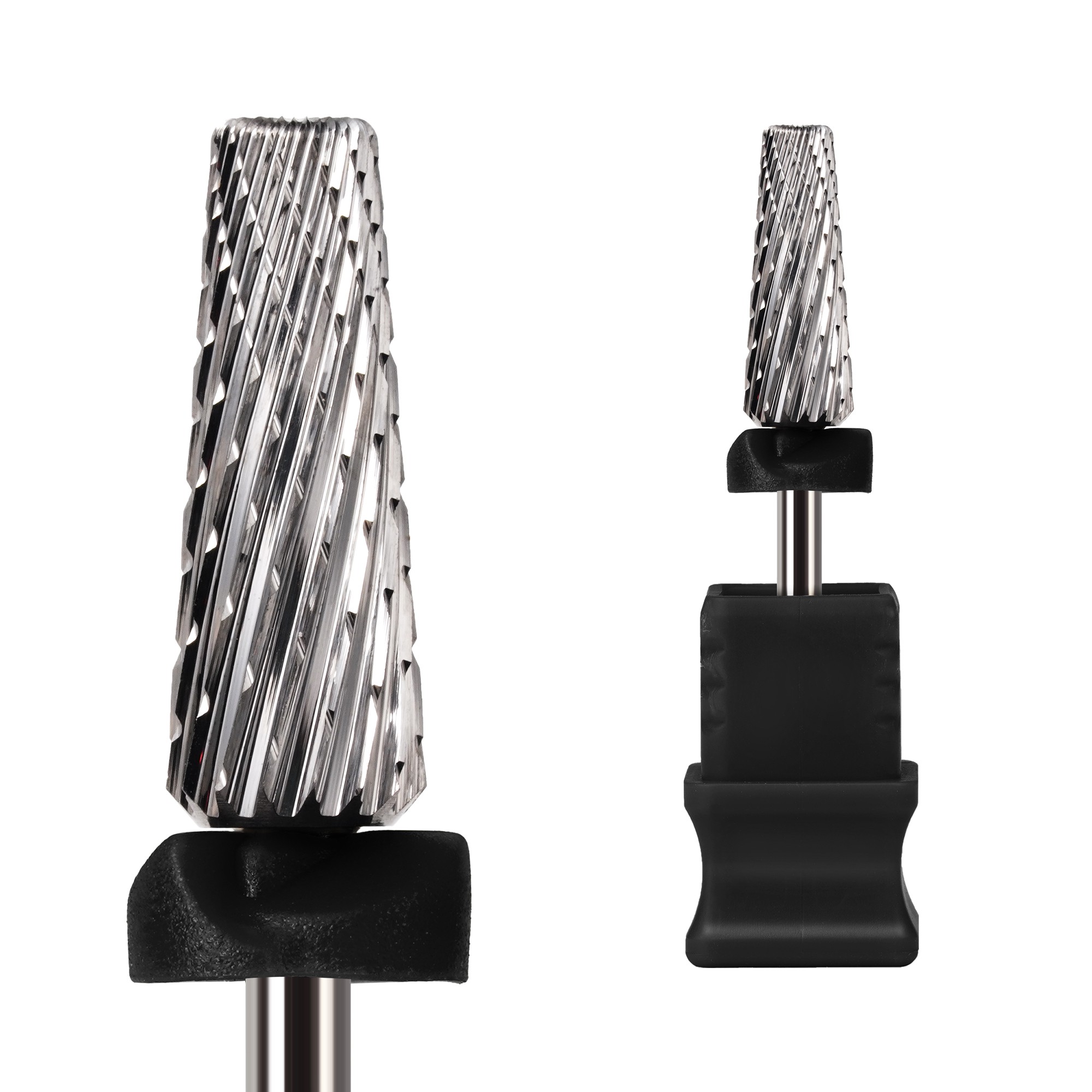
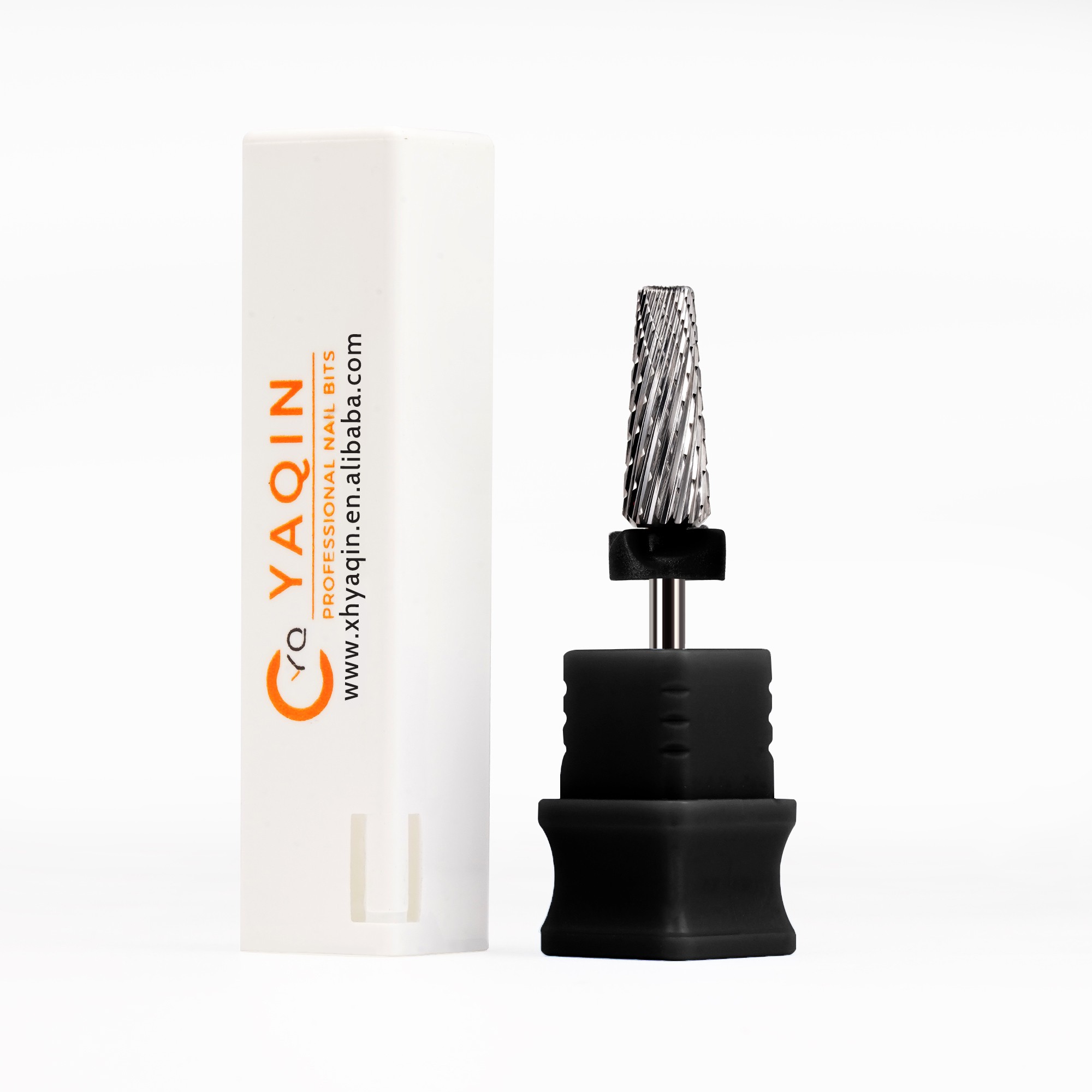
For example, a carbide bit with well-designed flute geometry can be a sensible first-stage tool for removing hard gel, acrylic bulk, or base layers. The Hot Sale Professional 3XC Tungsten Carbide Nail Art Drill Bit Burr Milling Cutter for Manicure is positioned for rapid removal of gel-related materials, nail tips, and calluses, with a consistent dust-ejection direction intended to reduce splatter. Its tungsten carbide construction and high-hardness cutting design make it relevant when a workflow needs material reduction before the final refinement pass.
The key decision is not whether carbide is better than quartz in absolute terms. It is whether the bit is assigned to the right stage. A two-step process often produces a more reliable acrylic finish: use a suitable carbide cutter for controlled bulk reduction, then move to a finer abrasive bit for surface leveling and transition work. This approach can reduce the temptation to overwork either tool.
Heat Management: The Test That Often Changes the Purchasing Decision
Technicians rarely judge a bit only by its initial cut. They remember whether it becomes uncomfortable during repeated use. Heat is influenced by speed, pressure, dwell time, abrasive sharpness, and dust removal. It is also affected by whether the operator is trying to make a finishing bit perform a bulk-removal task.
During evaluation, use the same acrylic type, nail form, handpiece, and approximate service sequence for every candidate bit. Avoid a test in which one operator uses a light touch and another applies heavy pressure; the results will say more about technique than about the tool. Observe the bit after repeated passes, not only during the first few seconds. Check whether acrylic residue fills the abrasive texture, whether cutting becomes less even, and whether the operator compensates by increasing pressure.
A smoother finish should not come at the expense of excessive dwell time. If a quartz bit needs repeated slow passes to remove moderate ridges, it may be too fine for that task. Conversely, if it removes material rapidly but leaves pronounced tracks, it may be too coarse for final finishing. The best fit is the one that reaches the intended surface state with minimal corrective work afterward.
What to Inspect in a Quartz Nail Drill Bit Sample
For technical teams, visual inspection remains valuable even before formal wear testing. Rotate the bit under strong directional light. The abrasive field should appear consistent around the working area, with no obvious bare patches, heavy clumps, cracks, or irregular coating boundaries. On shaped bits, inspect the tip and transition from barrel to shoulder; these locations often reveal whether the abrasive coverage was applied evenly.
Then assess dimensional consistency. A small variation in working diameter, taper, or tip roundness may alter how the bit behaves near the cuticle and sidewalls. If the intended audience includes newer technicians, safety-oriented geometries deserve particular attention. A controlled edge can support safer handling, but it should still be evaluated against real acrylic contact rather than assumed from product imagery.
Compatibility should also be confirmed. The shank must fit the intended e-file system securely, and the supplier should provide clear information about intended direction of use, recommended operating range, cleaning method, and disinfection compatibility. A finish bit that cannot be maintained appropriately will not hold its performance long enough to support a repeat purchase program.
Durability Is Not Just About How Long the Bit Looks New
Abrasive durability should be measured by retained finish quality. A quartz surface may still look intact while its cutting behavior has changed: particles may have rounded, bonding may have weakened, or fine acrylic debris may have become difficult to remove. In a service setting, this can show up as longer appointment times, more heat, or inconsistent results between the first and later clients of the day.
A practical evaluation protocol can include repeated use on comparable acrylic test pieces, followed by inspection of the scratch pattern at planned intervals. Record whether the bit continues to level evenly and whether cleaning restores its performance. There is no single universal lifecycle because acrylic chemistry, use pressure, sanitation procedure, and bit geometry all change the outcome. What matters is consistency within the intended use case.
Supplier process control is relevant here. Wuxi Yaqin Trading Co., Ltd. works with abrasive product production and export and describes a quality-control system covering raw material purchasing, production, and packaging. For distributors and OEM/ODM buyers, such process visibility can be as important as the sample itself. Ask how grit consistency, bonding integrity, shank dimensions, and packing protection are checked across batches, especially when ordering for large-scale manicure work.
Questions Worth Asking Before Approval
Before placing a larger order, technical evaluators should request answers that are specific enough to support comparison. What is the stated grit grade, and how is it controlled? Is the abrasive layer bonded, coated, or otherwise formed? Which acrylic systems were considered during product testing? Are there defined acceptance criteria for visible coating defects and shank runout? Can the supplier provide samples from the intended production configuration rather than from an unrelated prototype?
It is equally reasonable to clarify terminology. In the nail industry, names such as “quartz,” “stone,” “ceramic,” and “diamond-style” are sometimes used broadly in marketing. Confirm the actual working material and structure rather than relying on the category name alone. A precise specification makes performance expectations easier to manage and helps prevent a mismatch between a distributor’s catalog description and the tool delivered to salons.
A Balanced Selection Verdict
A Quartz Nail Drill Bit can contribute to a smoother acrylic finish when it is selected as a refinement tool with an appropriate grit, stable abrasive coverage, and a geometry suited to the area being worked. It is especially worth considering when the goal is to reduce coarse filing marks, blend transitions, and create a more uniform surface before the final coating step.
It is not necessarily the fastest choice for heavy acrylic removal, nor should “quartz” be treated as a guarantee of low heat or gentle operation. For a dependable professional workflow, evaluate it alongside a suitable bulk-removal cutter, test it under realistic conditions, and judge the result under reflective finish—not merely by how smooth the acrylic feels before dust is cleared. That is where a technically sound bit selection becomes visible in the finished manicure.
News List
- Preventing Gouges and Uneven Filing With Small Barrel Nail Drill BitsSep 20, 2026
- How Diameter and Grit Affect Small Barrel Nail Drill Bit PerformanceSep 20, 2026
- Can Hytos Nail Drill Bits Be Used Safely on Natural Nails and Gel Polish?Sep 20, 2026
- How to Verify Fit Between Hytos Nail Drill Bits and an E-File HandpieceSep 20, 2026
- Safe Speed Settings for Umbrella Nail Drill Bits Around the Nail FoldSep 20, 2026
- Umbrella vs Flame Nail Drill Bits: Which Shape Offers Better Cuticle Control?Sep 20, 2026
Best-Selling Products
 Cross Cut Safety Stainless Steel Tungsten Carbide Nail Drill Bits Salon Foot Use XF-C Grit for Removing Nails
 First-rate Quality Tungsten Carbide Nail Drill Bits Best Coating Manicure Remove Gel Nails Accessories
 Professional Advanced Safety Cuticle Bits Two-Way Rotate 3/32'' Carbide Tungsten 5 in 1 Nail Drill Bits
 Wholesale 5 in 1 Electric Manicure Nail Drill Bits Various Coating Cone Cuticle Bit with Rotary Cross Cut for Nail Art
 New Slant Tooth Tungsten Steel Nail Drill Bits Dead Skin Removal 5-in-1 Universal Grinding Nail Polish Head Tool Nail Drill Bits
 4.0mm Small 5 in 1 Integrated Sharpe Tungsten Nail Drill Bit Straight Teeth Gel Polish Removal
 Flame Sharp XF F M C XC Silver Safety Professional Corn Tungsten Carbide Nail Bit for Drill Machine Accessories
 Factory Direct 5 in 1 Tungsten Carbide Nail Drill Bits 6.8MM Cross Cut Safety Manicure 5 in 1 Nail Drill Bits
Please give us a message