
Are silicone nail drill bits suitable for sensitive skin clients in professional salons?
Are silicone nail drill bits suitable for sensitive skin clients in professional salons?
Yes—silicone nail drill bits are generally suitable for clients with sensitive skin in professional salons, provided they are used correctly and matched to appropriate tasks. Unlike aggressive metal or carbide bits, silicone bits generate minimal heat, produce no metal shavings, and offer a non-abrasive surface that reduces friction-induced irritation. However, suitability isn’t automatic: it depends on bit design, rotational speed, technician technique, and the specific sensitivity profile of the client—not just the material alone.
Many nail technicians assume “softer material = always safer,” only to discover later that improper use—such as excessive pressure, prolonged contact, or mismatched grit level—can still trigger redness, micro-tearing, or reactive dryness, especially around cuticles and lateral nail folds. In high-volume salons where consistency matters, relying solely on material type without verifying performance under real working conditions risks inconsistent outcomes. That’s why understanding how silicone bits behave *in practice*, not just in theory, is essential for confident decision-making.
How Silicone Bits Interact with Sensitive Skin—Beyond the Label
Silicone nail drill bits work by gently buffing or polishing rather than cutting or grinding. Their elastomeric composition absorbs vibration, dampens noise, and distributes pressure more evenly across the nail plate and surrounding tissue. This makes them particularly effective for final smoothing, shine enhancement, and light gel polish removal—tasks where thermal buildup or mechanical trauma must be avoided.
But sensitivity varies. Some clients react to friction alone; others respond to residual polymer dust, chemical exposure during prep, or even the psychological stress of prolonged tool contact. A silicone bit may reduce one risk factor (heat), yet if it’s poorly balanced or operated at >15,000 RPM without adequate cooling intervals, it can still cause localized warmth or subtle edema. Likewise, low-density silicone formulations may deform under load, leading to uneven contact and unintentional drag—especially on curved nail surfaces or thickened toenails.
Crucially, silicone bits are not universal replacements. They lack the aggressive stock removal capacity needed for callus reduction or deep acrylic lifting. Using them for such tasks forces technicians to apply more pressure or repeat passes—defeating their core benefit. That’s where understanding functional boundaries becomes practical, not theoretical.
When Silicone Isn’t Enough—and What to Use Instead
For clients with diagnosed eczema, psoriasis, post-chemotherapy nail changes, or history of perionychial inflammation, silicone bits alone may be insufficient if the underlying task requires structural modification. Removing thick, dystrophic toenails—or safely debriding hyperkeratotic tissue—demands controlled, precise material removal without slippage or overheating.
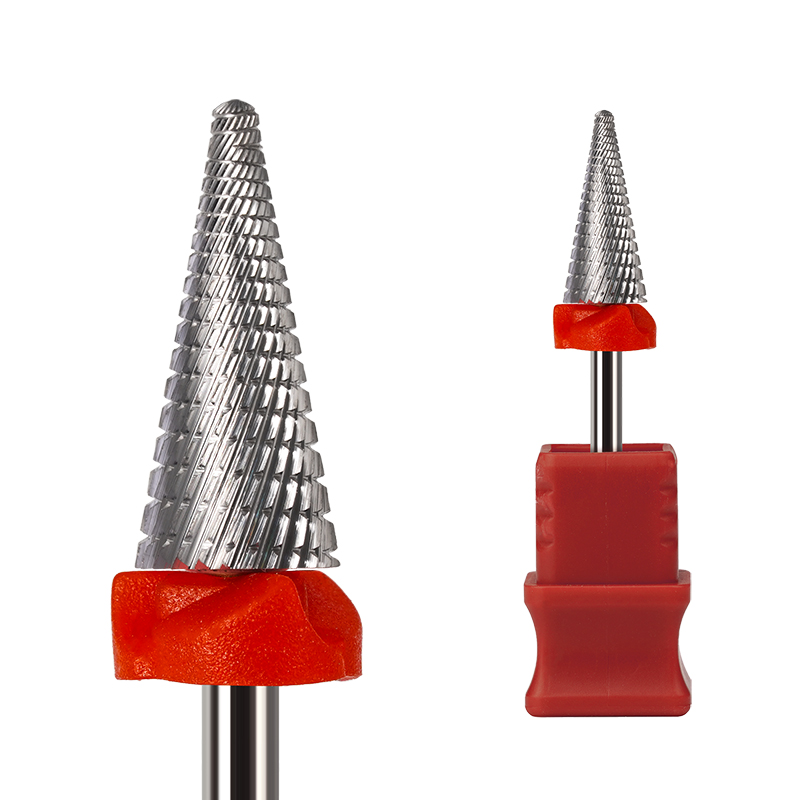
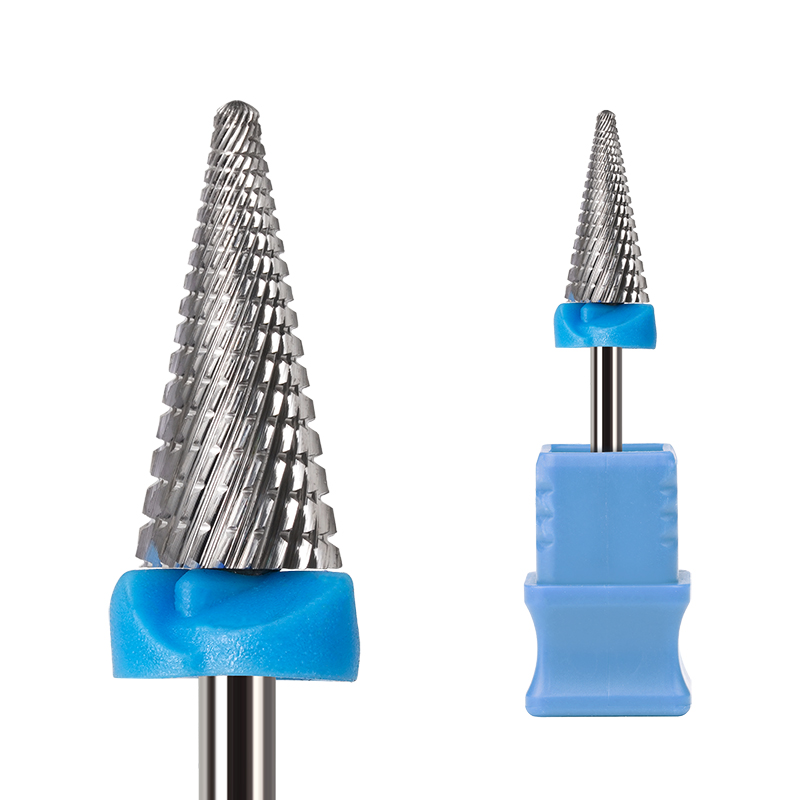
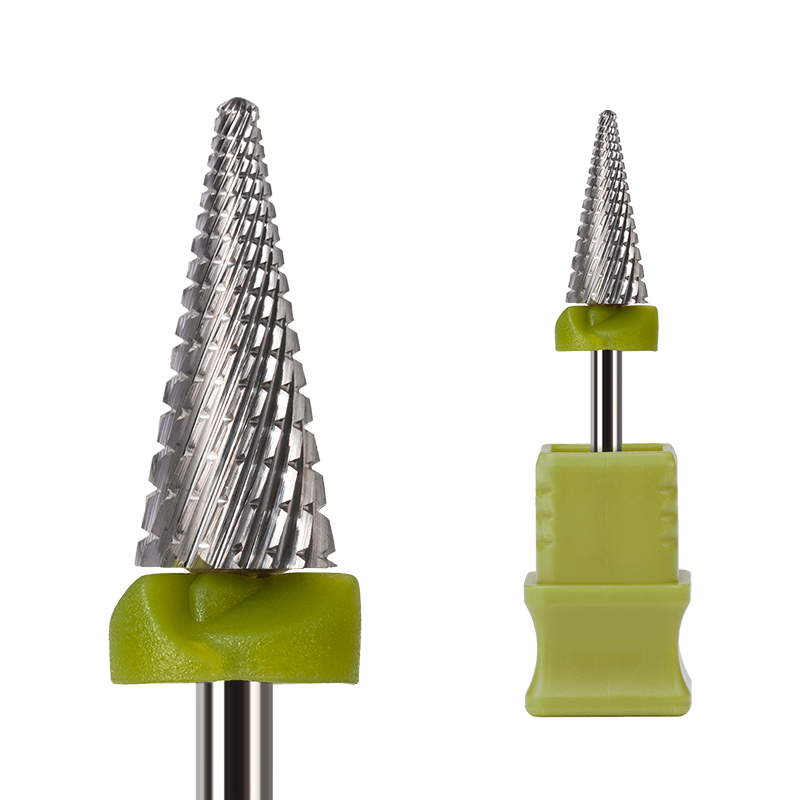
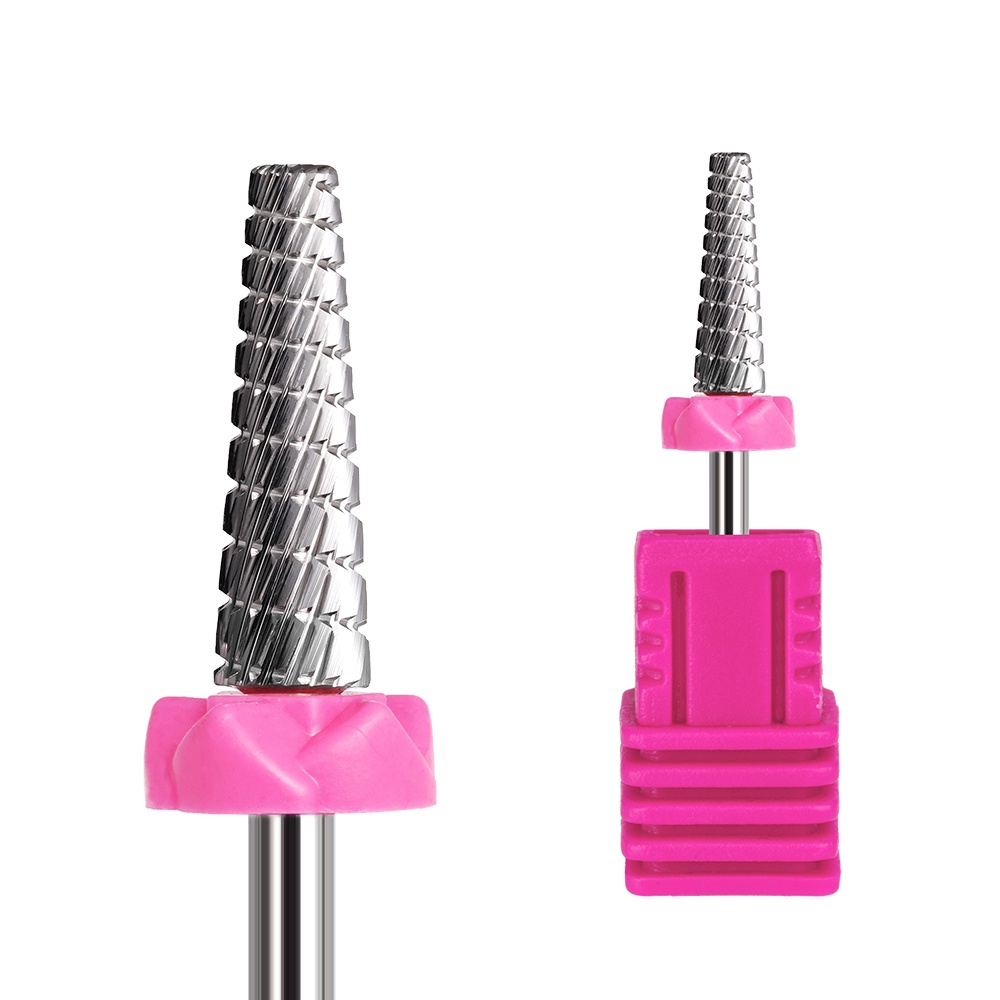
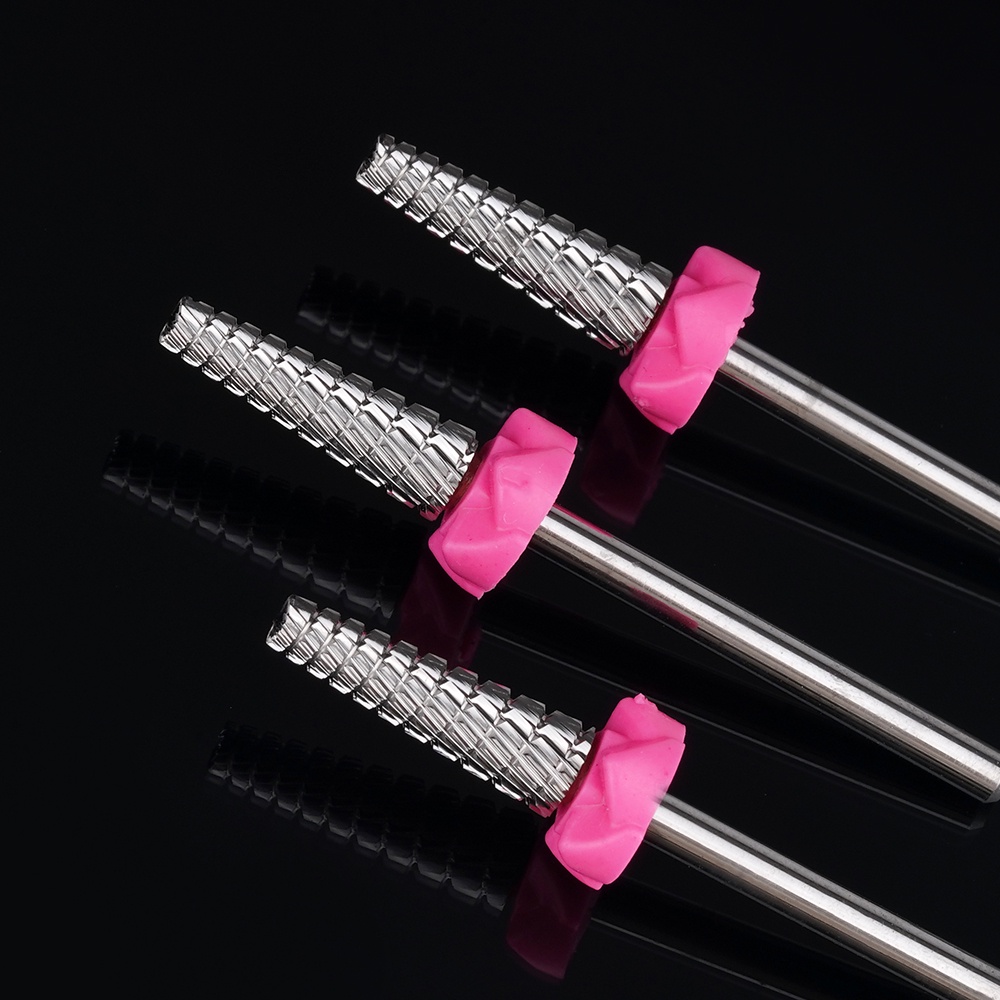
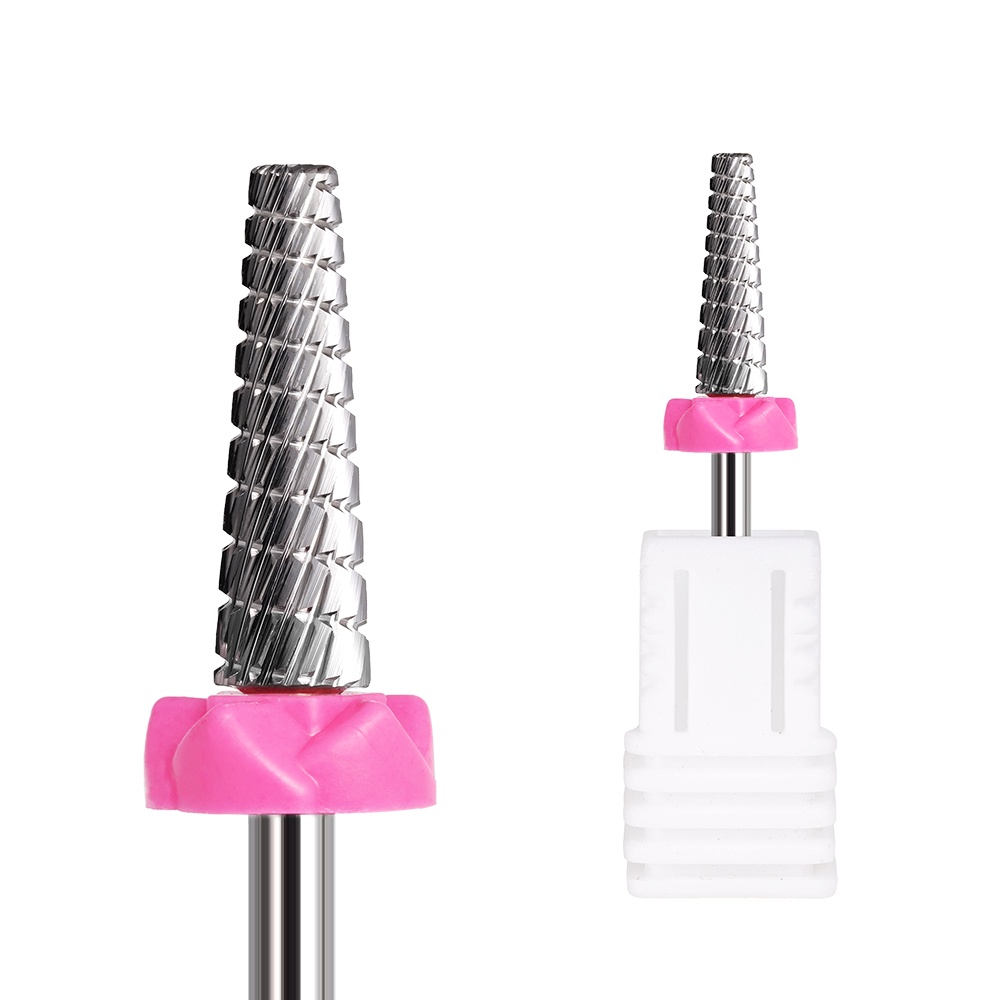
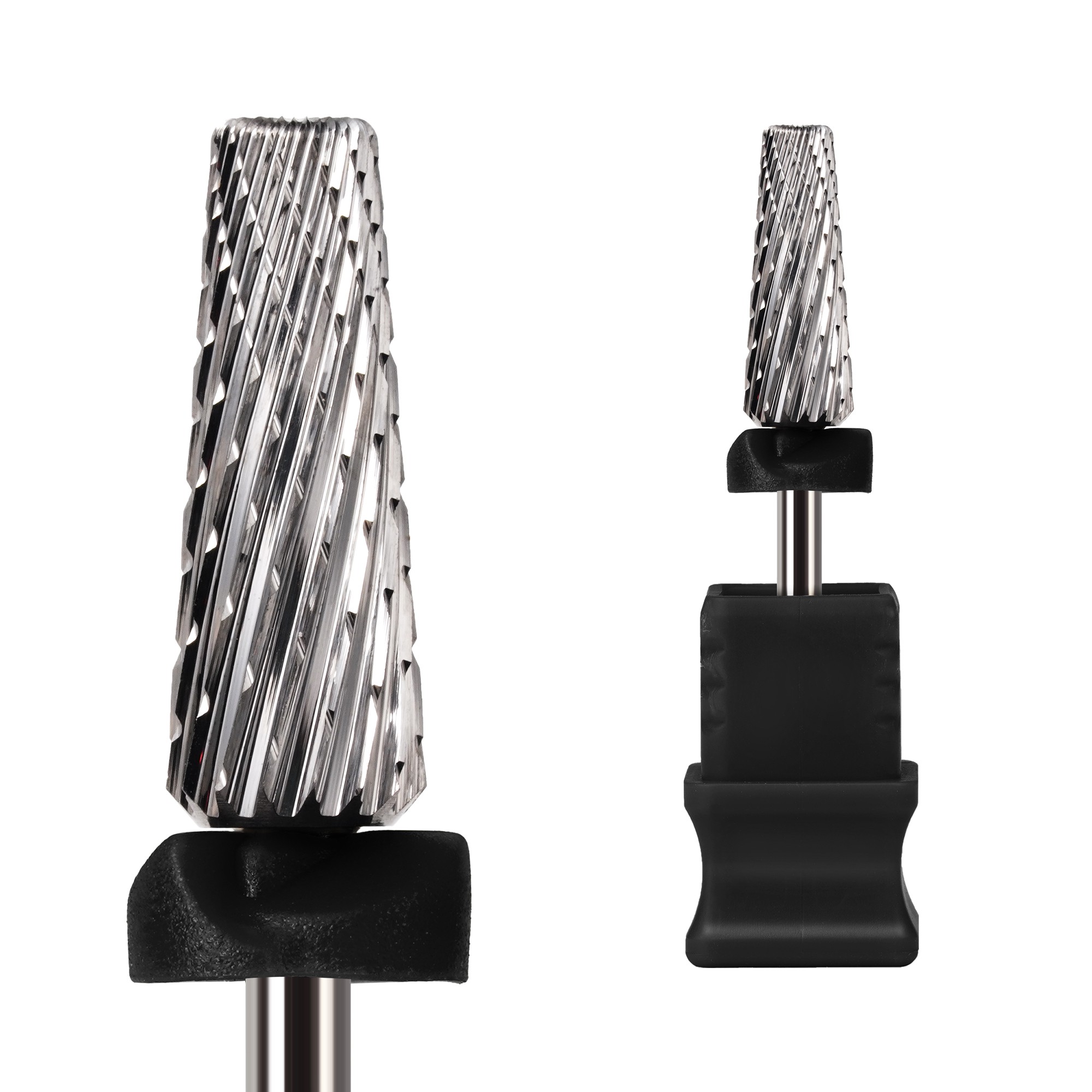
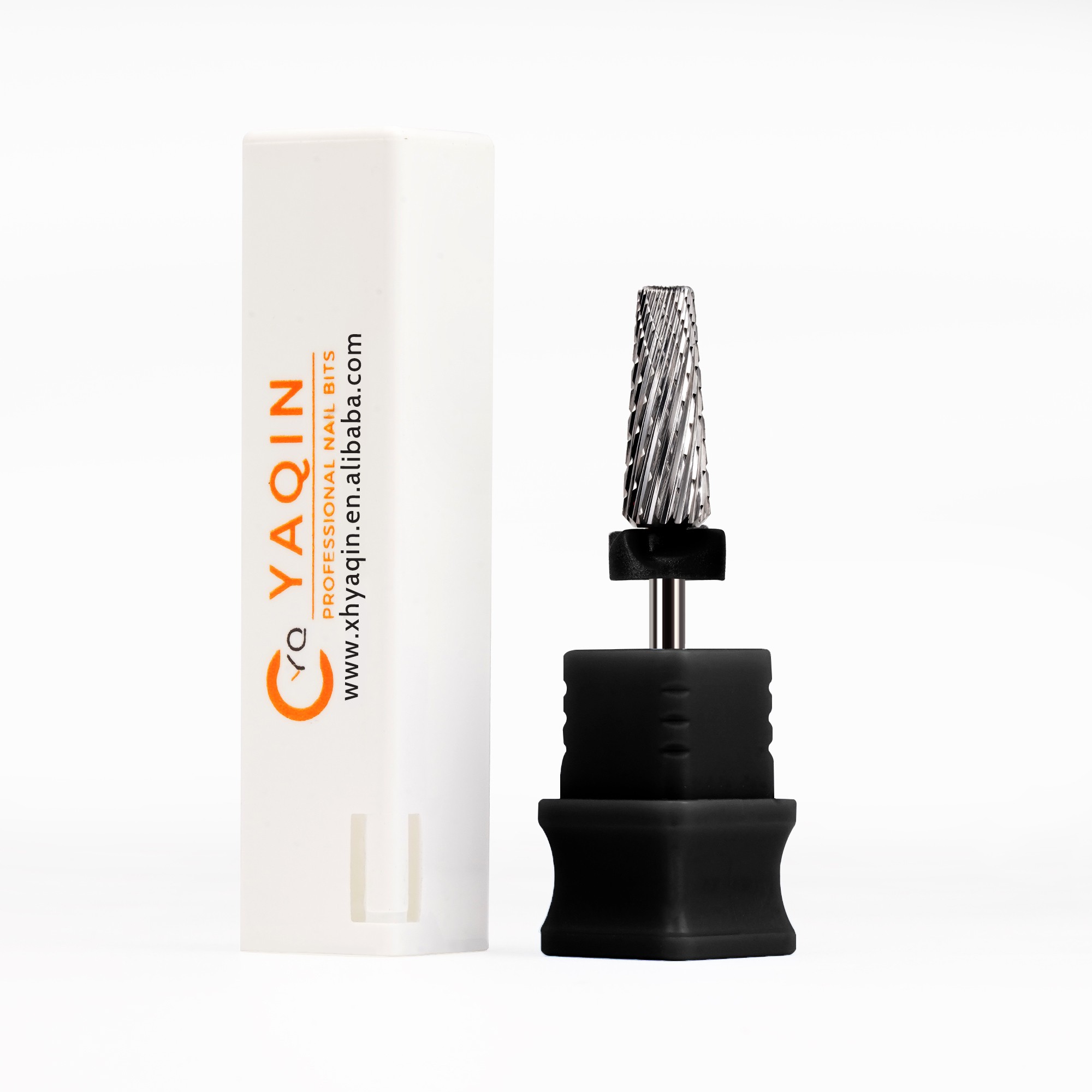
In those cases, a hybrid approach often works best: start with a silicone bit for initial conditioning and surface prep, then switch to a high-precision, low-vibration alternative like the Cross Cut Safety Stainless Steel Tungsten Carbide Nail Drill Bits Salon Foot Use XF-C Grit for Removing Nails. Its tungsten carbide cutting surface delivers excellent grinding efficiency with minimal dwell time, while the stainless steel shank ensures stability and reduced chatter—even at moderate speeds (8,000–12,000 RPM). The XF-C grit profile is engineered for consistent, bite-limited engagement, reducing the risk of sudden catch or gouging that can aggravate sensitive tissue.
This bit also features a safety-designed cross-cut geometry that prevents deep penetration into soft tissue, making it appropriate for foot-focused work where skin integrity near the nail margin is critical. Its longer service life means fewer bit changes mid-service—reducing procedural interruptions that can heighten client anxiety or discomfort.
Key Operational Checks Before Every Sensitive-Skin Service
Material choice matters, but execution determines outcome. Before beginning any service on a sensitive-skin client, verify these five points:
- Bit integrity: Inspect silicone bits for cracks, swelling, or surface glazing—signs of thermal degradation or chemical exposure. Replace if texture feels slick or inconsistent.
- Speed calibration: Never exceed 10,000 RPM with silicone bits on natural nails or thin enhancements. Use a tachometer or built-in speed display—not just visual estimation.
- Cooling rhythm: Apply 3-second bursts followed by 2-second lifts. Continuous contact—even with silicone—traps heat in the nail bed over time.
- Pressure test: Rest the bit lightly on the back of your own hand while running. If you feel vibration or warmth within 5 seconds, reduce speed or recheck balance.
- Client feedback loop: Ask specifically: “Is this pressure comfortable *now*?” not “Is this okay?” Avoid leading questions that suppress honest response.
Why Consistency Matters More Than Material Alone
A single “sensitive skin” label covers diverse physiological realities: rosacea-prone facial skin adjacent to cuticles, diabetic neuropathy affecting pain perception, or corticosteroid-thinned epidermis. No bit solves all of these—but consistent, repeatable technique does. That’s where ISO9001-certified manufacturing, like that applied to Wuxi Yaqin Trading Co., Ltd.’s abrasive products, becomes operationally relevant. Strict QC across raw material sourcing, production tolerances, and packaging ensures each batch performs within documented parameters—not just once, but across hundreds of salon shifts.
It also means less time spent troubleshooting inconsistent bit behavior—no unexpected runout, no premature wear due to alloy impurity, no variation in grit adhesion that alters friction profiles. For technicians managing multiple sensitive-skin appointments daily, predictability translates directly into reduced cognitive load and more reliable client outcomes.
Selecting Based on Task, Not Just Skin Type
Think in terms of *function first, material second*. Match the tool to what needs to happen—not just who it’s being used on:
No single bit serves every need—even within one client’s session. The most experienced technicians maintain small, purpose-specific sets and rotate based on observed tissue response, not preset assumptions.
Ultimately, suitability isn’t inherent to silicone—it’s earned through informed selection, calibrated execution, and ongoing verification against real-time client feedback. When those elements align, silicone nail drill bit become a reliable asset—not just a marketing claim.
News List
- Preventing Gouges and Uneven Filing With Small Barrel Nail Drill BitsSep 20, 2026
- How Diameter and Grit Affect Small Barrel Nail Drill Bit PerformanceSep 20, 2026
- Can Hytos Nail Drill Bits Be Used Safely on Natural Nails and Gel Polish?Sep 20, 2026
- How to Verify Fit Between Hytos Nail Drill Bits and an E-File HandpieceSep 20, 2026
- Safe Speed Settings for Umbrella Nail Drill Bits Around the Nail FoldSep 20, 2026
- Umbrella vs Flame Nail Drill Bits: Which Shape Offers Better Cuticle Control?Sep 20, 2026
Best-Selling Products
 Cross Cut Safety Stainless Steel Tungsten Carbide Nail Drill Bits Salon Foot Use XF-C Grit for Removing Nails
 First-rate Quality Tungsten Carbide Nail Drill Bits Best Coating Manicure Remove Gel Nails Accessories
 Professional Advanced Safety Cuticle Bits Two-Way Rotate 3/32'' Carbide Tungsten 5 in 1 Nail Drill Bits
 Wholesale 5 in 1 Electric Manicure Nail Drill Bits Various Coating Cone Cuticle Bit with Rotary Cross Cut for Nail Art
 New Slant Tooth Tungsten Steel Nail Drill Bits Dead Skin Removal 5-in-1 Universal Grinding Nail Polish Head Tool Nail Drill Bits
 4.0mm Small 5 in 1 Integrated Sharpe Tungsten Nail Drill Bit Straight Teeth Gel Polish Removal
 Flame Sharp XF F M C XC Silver Safety Professional Corn Tungsten Carbide Nail Bit for Drill Machine Accessories
 Factory Direct 5 in 1 Tungsten Carbide Nail Drill Bits 6.8MM Cross Cut Safety Manicure 5 in 1 Nail Drill Bits
Please give us a message