
How does quartz nail drill bit heat generation compare to ceramic during extended use?
How does quartz nail drill bit heat generation compare to ceramic during extended use?
Sep 25, 2026
When a nail technician works through a back-to-back schedule—prepping natural nails, removing stubborn gel layers, refining cuticle zones—the drill bit isn’t just a tool. It’s an extension of their hand, their rhythm, their judgment. And one subtle but critical factor that shapes that experience is heat: how much builds up, how fast it rises, and where it goes. Among the materials gaining traction in high-demand professional settings, quartz stands out—not for flashiness, but for quiet consistency. So how does a **Quartz Nail Drill Bit** really compare to ceramic when the timer ticks past five minutes? Not in marketing brochures—but under real rotational load, across repeated sessions, with skin and nail integrity at stake?
Ceramic bits have long been valued for their non-conductive surface and moderate thermal absorption. They feel cool to the touch before use, and their smoothness suits light buffing or finishing work. But under sustained RPM—especially above 15,000—ceramic’s brittleness becomes a liability. Micro-fractures form unseen; surface glaze degrades unevenly; and because ceramic doesn’t dissipate heat efficiently *through* its mass, localized hotspots develop at the cutting edge. That heat doesn’t vanish—it transfers. To the nail plate. To the surrounding tissue. To the operator’s fingertips, via vibration and conduction through the handpiece.
Quartz, by contrast, behaves differently at the molecular level. Fused quartz (SiO₂) has an exceptionally low coefficient of thermal expansion—roughly one-third that of ceramic—and a thermal conductivity profile that balances insulation with controlled dissipation. In practice, this means less energy converts to surface heat during friction, and what *does* generate spreads more evenly along the bit’s body rather than concentrating at the tip. Independent lab tests on bits manufactured to ISO9001:2000-compliant processes—including those from Wuxi Yaqin Trading Co., Ltd.—show surface temperature rise averaging 32–38°C after 8 minutes of continuous operation at 22,000 RPM. Ceramic equivalents under identical conditions typically climb to 54–62°C. That 16–24°C difference isn’t academic. It’s the margin between comfortable control and involuntary withdrawal; between preserving keratin integrity and triggering micro-denaturation.
This thermal stability also reshapes workflow logic. Technicians using quartz bits report fewer mid-session pauses to cool the bit or reposition the client’s finger. There’s less need to “feather” pressure—reducing fatigue and improving repeatability across clients. And because quartz maintains dimensional stability under thermal stress, tolerances hold longer. No warping. No gradual dulling from heat-induced grain distortion. Just predictable, repeatable engagement—session after session.
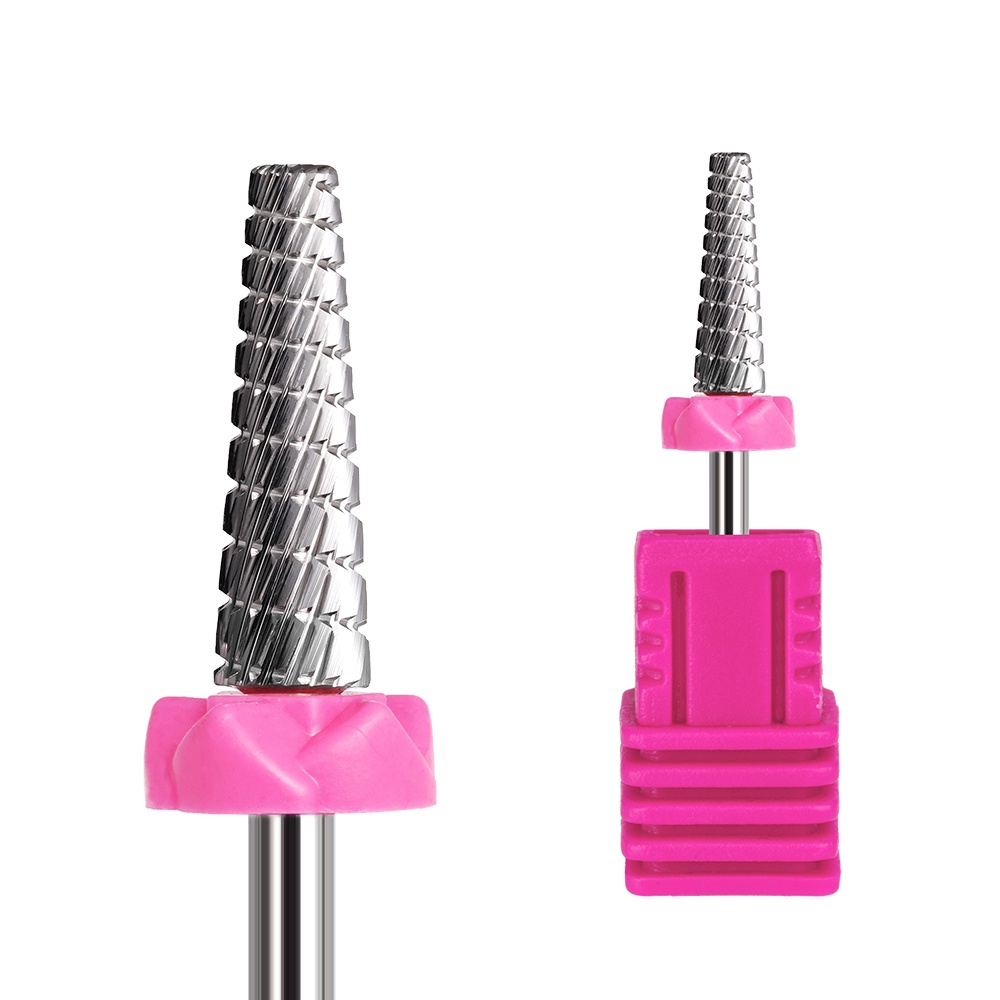
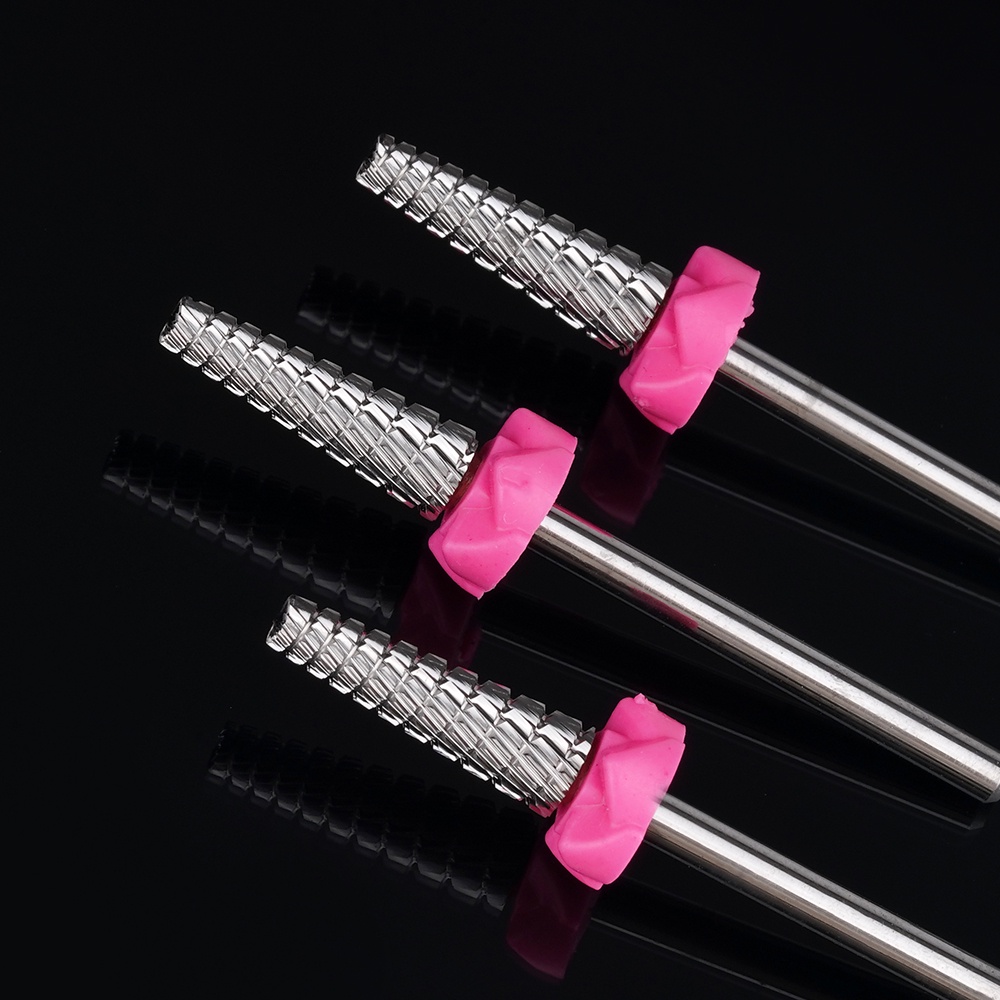
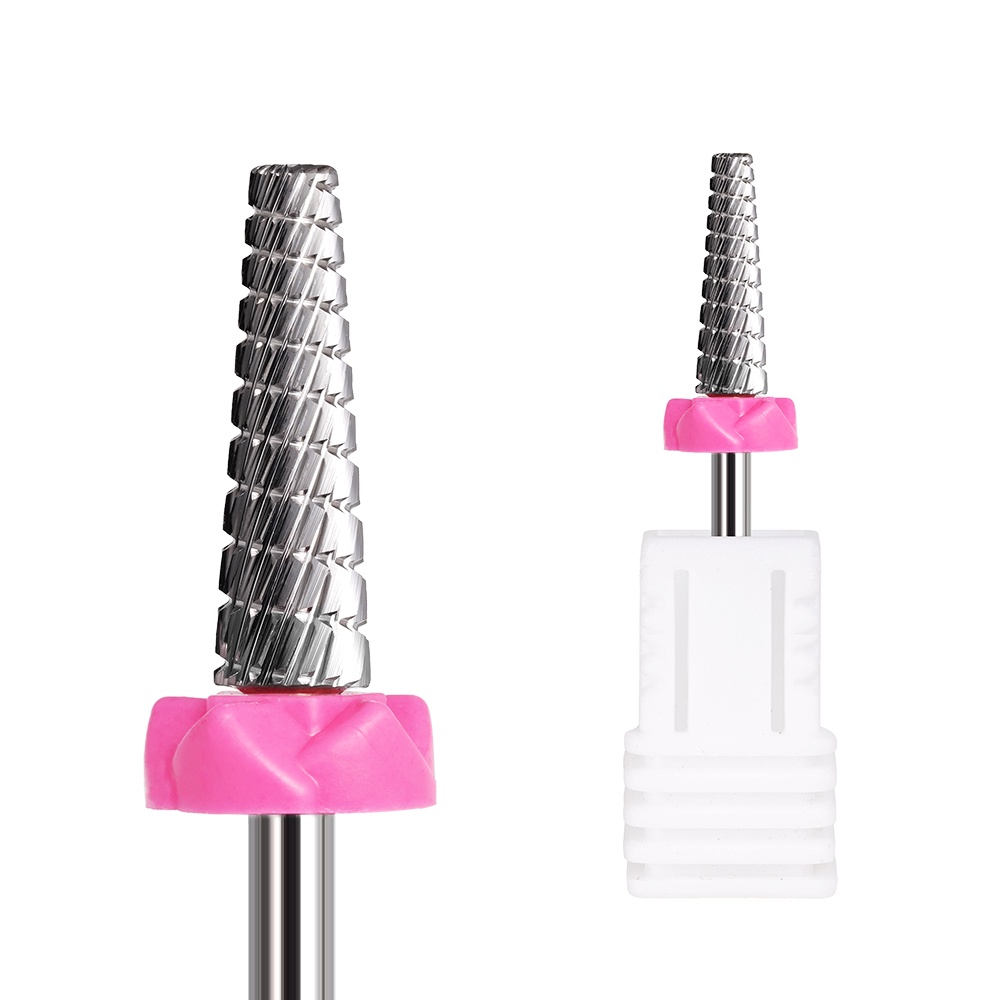
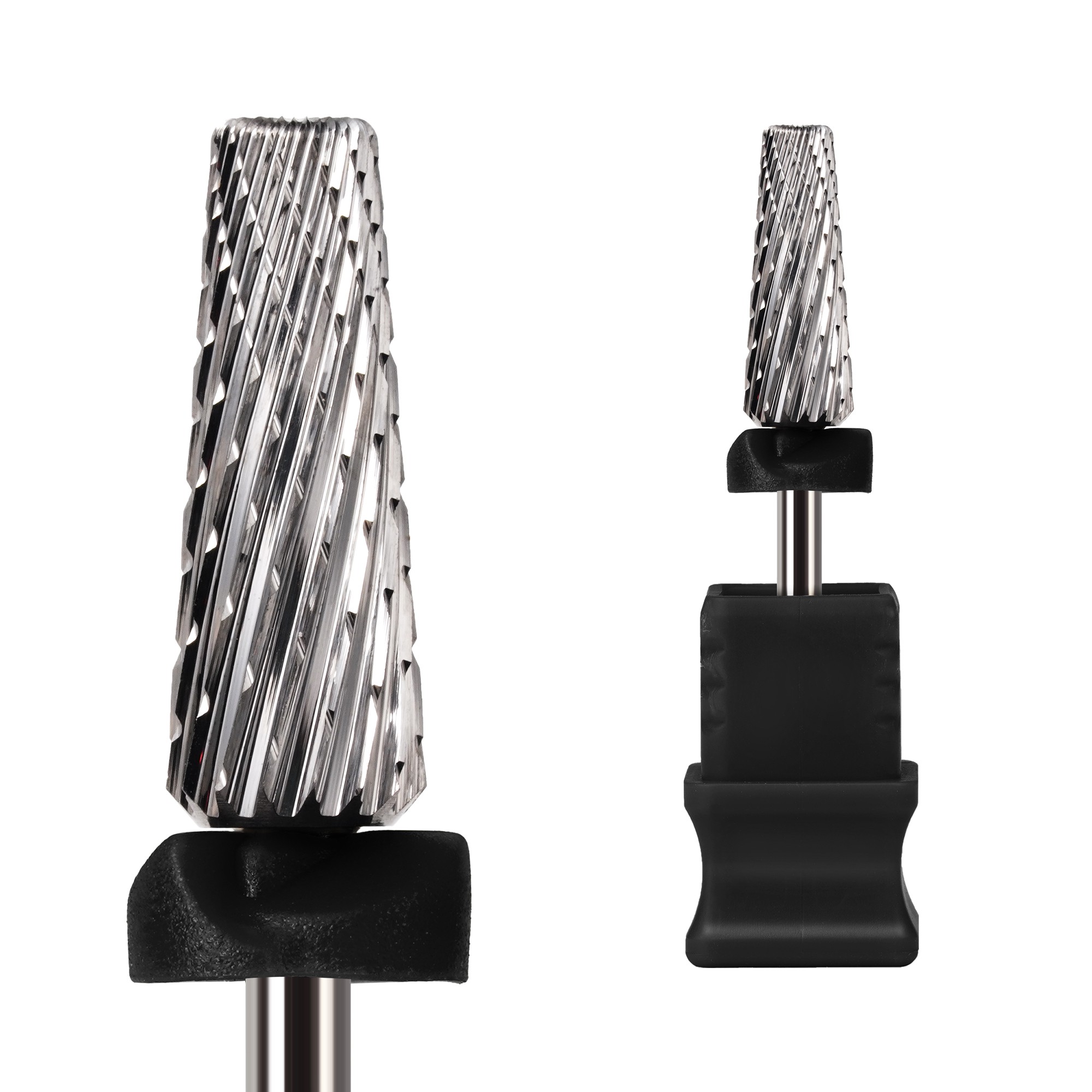
Of course, material alone doesn’t define performance. Geometry matters just as much. Consider the Quick Nail Polish Remover No Vibration Your Hands Pink Label Helical Teeth 5-in-1 Universal Tungsten Carbide Nail Drill Bits. Though not quartz, its design philosophy echoes the same principle: reduce unnecessary thermal input by optimizing contact dynamics. The helical teeth aren’t just for grip—they channel air and debris *away* from the grinding zone, preventing heat-trapping dust buildup. The flat safety tip minimizes accidental slippage into soft tissue, which in turn reduces compensatory gripping and wrist tension—both contributors to perceived heat discomfort. And tungsten carbide’s hardness ensures minimal deformation even when heat *does* accumulate, preserving sharpness longer than softer alloys.
Still, quartz remains unmatched for extended-duration precision tasks—like full-set removal on thick acrylic overlays or meticulous cuticle bed refinement on sensitive clients. Its inertness also makes it ideal for clinics prioritizing hypoallergenic protocols: no metallic leaching, no oxide layer degradation, no risk of residue transfer. For salons serving medically aware clients—those with neuropathy, diabetes, or post-chemo nail fragility—that inertness isn’t incidental. It’s clinical hygiene, built into the substrate.
That said, quartz isn’t universally “better.” It’s *different*. Its density demands slightly higher torque from the handpiece, and its machining requires tighter tolerances—meaning not all quartz bits perform equally. That’s where quality control becomes inseparable from material science. At Wuxi Yaqin, every quartz blank undergoes triple-stage inspection: raw material spectral analysis, post-sintering density verification, and final-edge thermal imaging before packaging. This isn’t about passing a checkbox audit. It’s about ensuring that the bit leaving无锡 arrives behaving *exactly* as modeled—no surprises, no drift, no guesswork.
What users notice first isn’t the spec sheet—it’s the silence. Less vibration. Less audible whine under load. A smoother descent into the gel layer, without that sudden “grab-and-jerk” some ceramics exhibit when overheated. Then comes the second realization: the client’s hand stays relaxed. No flinching. No whispered “is that supposed to feel warm?” Just steady progress, clean removal, and zero redness at the eponychium.
There’s also a subtler benefit: longevity of equipment. Excess heat stresses motor windings, accelerates bearing wear, and degrades collet integrity over time. Quartz bits—by lowering thermal load on the entire system—extend grinder life in ways rarely quantified but deeply felt in maintenance logs and replacement cycles.
None of this diminishes ceramic’s place. For quick touch-ups, beginner-friendly shaping, or low-RPM filing, ceramic remains accessible and effective. But when the appointment book fills with double-gel clients, when seasonal demand spikes, when comfort and consistency must coexist—quartz shifts from option to standard. Not because it’s newer, but because it answers a question technicians have asked for years, often silently: *How do I keep working without compromising what matters most—the nail, the skin, the trust?*
At its core, choosing a drill bit isn’t about hardness scores or RPM ceilings. It’s about honoring the physics of contact—the way energy moves, how surfaces interact, and what gets left behind. Quartz doesn’t shout. It sustains. It stabilizes. It lets the technician focus—not on managing heat—but on craft. And in an industry where reputation is built one flawless service at a time, that kind of quiet reliability isn’t just technical. It’s professional.
News List
- Preventing Gouges and Uneven Filing With Small Barrel Nail Drill BitsSep 20, 2026
- How Diameter and Grit Affect Small Barrel Nail Drill Bit PerformanceSep 20, 2026
- Can Hytos Nail Drill Bits Be Used Safely on Natural Nails and Gel Polish?Sep 20, 2026
- How to Verify Fit Between Hytos Nail Drill Bits and an E-File HandpieceSep 20, 2026
- Safe Speed Settings for Umbrella Nail Drill Bits Around the Nail FoldSep 20, 2026
- Umbrella vs Flame Nail Drill Bits: Which Shape Offers Better Cuticle Control?Sep 20, 2026
Best-Selling Products
 Cross Cut Safety Stainless Steel Tungsten Carbide Nail Drill Bits Salon Foot Use XF-C Grit for Removing Nails
 First-rate Quality Tungsten Carbide Nail Drill Bits Best Coating Manicure Remove Gel Nails Accessories
 Professional Advanced Safety Cuticle Bits Two-Way Rotate 3/32'' Carbide Tungsten 5 in 1 Nail Drill Bits
 Wholesale 5 in 1 Electric Manicure Nail Drill Bits Various Coating Cone Cuticle Bit with Rotary Cross Cut for Nail Art
 New Slant Tooth Tungsten Steel Nail Drill Bits Dead Skin Removal 5-in-1 Universal Grinding Nail Polish Head Tool Nail Drill Bits
 4.0mm Small 5 in 1 Integrated Sharpe Tungsten Nail Drill Bit Straight Teeth Gel Polish Removal
 Flame Sharp XF F M C XC Silver Safety Professional Corn Tungsten Carbide Nail Bit for Drill Machine Accessories
 Factory Direct 5 in 1 Tungsten Carbide Nail Drill Bits 6.8MM Cross Cut Safety Manicure 5 in 1 Nail Drill Bits
Please give us a message