
Can diamond nail drill bits safely remove gel polish without damaging natural nails?
Can diamond nail drill bits safely remove gel polish without damaging natural nails?
Diamond nail drill bits have become a quiet revolution—not flashy, but deeply practical—for nail professionals who treat every client’s natural nail as irreplaceable. When gel polish removal comes up in conversation among technicians, what often follows isn’t just technique talk—it’s a shared sigh of caution. Because behind the glossy finish lies a delicate balance: remove stubborn product without compromising the thin, living layer beneath. That’s where diamond-coated bits step in—not as brute-force tools, but as precision partners calibrated for respect.
It’s not about speed alone. It’s about how heat builds—or doesn’t—how friction behaves under pressure, and whether the bit glides or grinds. Many assume “diamond” means aggressive abrasion. In reality, the safest diamond nail drill bits are those engineered with ultra-fine grit distribution, consistent electroplating, and substrate integrity that resists micro-fracturing during repeated use. At Wuxi Yaqin Trading Co., Ltd., this understanding shapes every batch: ISO9001:2000-certified production, raw material traceability, and multi-stage QC ensure each bit delivers predictable performance—not just once, but across hundreds of applications.
Consider the moment a technician reaches for a bit before gel removal. The nail plate is already stressed—dehydrated from UV curing, slightly softened by prior soaking or filing, and sensitive to thermal spikes. A poorly coated or inconsistently gritted bit can generate localized heat faster than the nail can dissipate it. That warmth? It doesn’t just feel warm—it triggers keratin denaturation at the surface level, weakening structural bonds over time. Worse, inconsistent coating leads to uneven wear, causing sudden drag or skipping—both of which invite operator error: increased pressure, longer dwell time, unintentional thinning near the stress points like the free edge or lateral folds.
This is why grit fineness matters more than hardness ratings. A fine-grit diamond bit doesn’t “cut” so much as gently abrade—lifting cured polymer layers in controlled micro-fragments rather than tearing or chipping them away. It works with the natural contour of the nail, adapting to subtle curves without gouging. And because fine grit generates less friction per rotation, heat stays low—even during extended sessions on thicker enhancements or layered gels.
Material choice also plays a silent but critical role. Tungsten steel shanks aren’t just strong—they’re dimensionally stable. Unlike softer alloys, they resist flexing under load, keeping rotational alignment true. That stability translates directly into control: no vibration, no wobble, no surprise slips near cuticle zones. It’s the difference between feeling like you’re guiding the tool—and feeling like it’s guiding you.
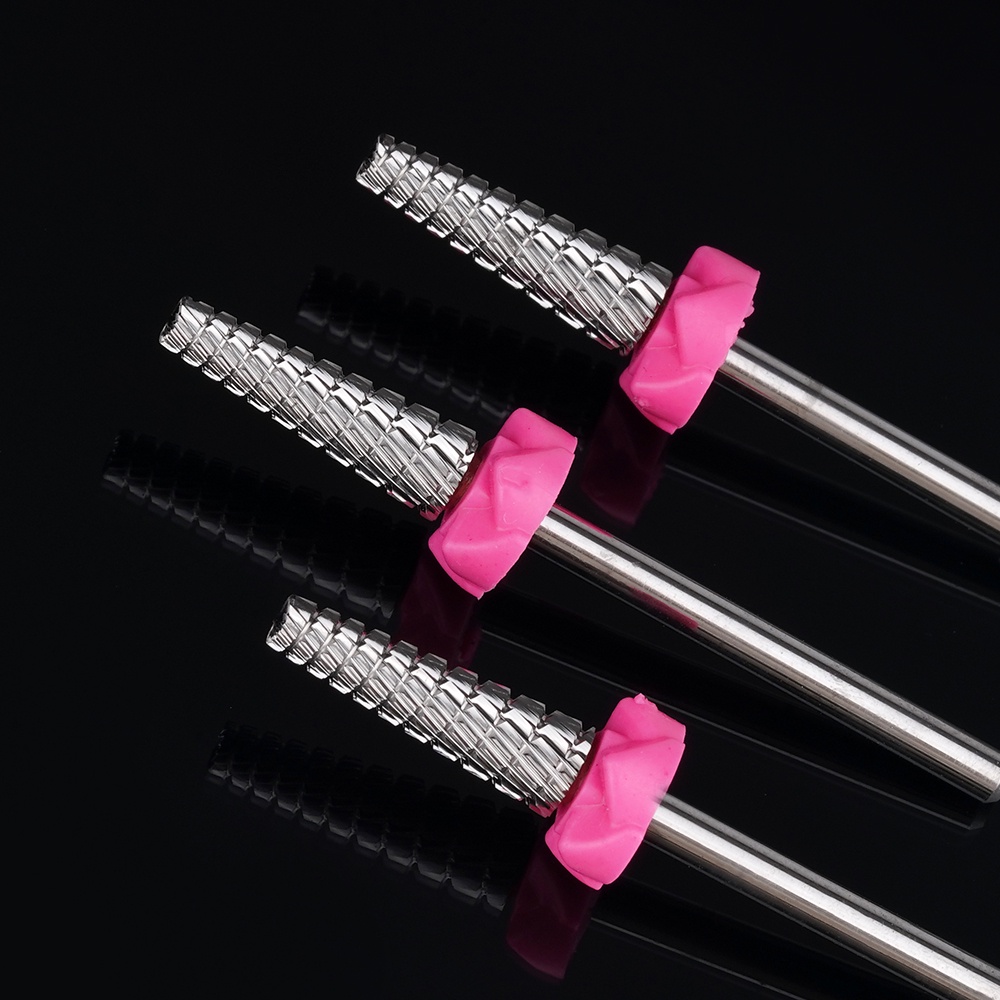
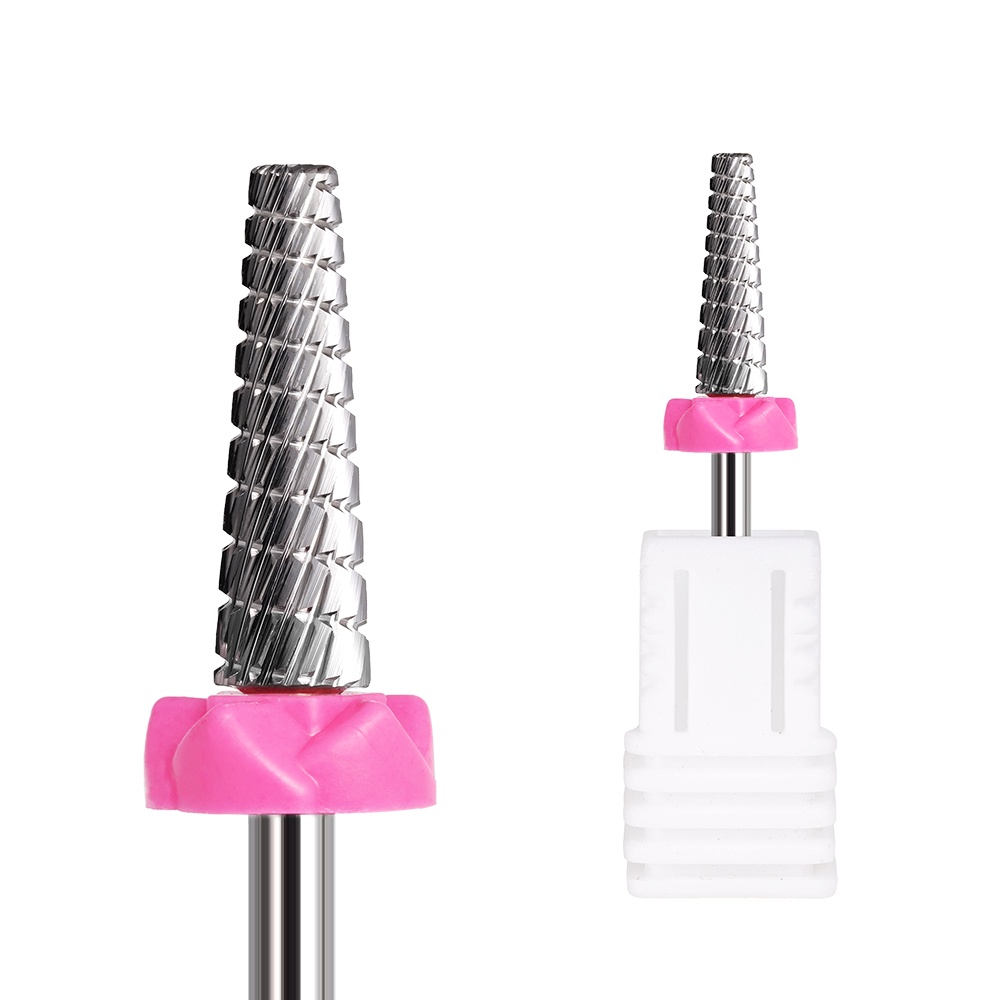
Which brings us to real-world versatility. While gel polish removal is a frequent use case, the same bit that lifts color cleanly also preps nail plates for new applications, refines edges after acrylic buildup, and delicately clears dust and residue from the nail bed groove—without disturbing surrounding skin. One such design is the Gold Coated Efficient &Stable Nail Drill Bit Cuticle Clean. Its gold plating isn’t cosmetic—it enhances corrosion resistance, especially against acetone-based removers and disinfectants commonly used in salons. That means longevity isn’t compromised by routine cleaning or chemical exposure. And with a 2.35mm shank diameter, it fits seamlessly into most professional handpieces—no adapters, no guesswork.
Three tip variations serve distinct purposes within the same workflow: the Sharp Round Tip excels at precise cuticle lifting and inner nail bed cleaning; the Flat Tip with Fine Teeth offers balanced surface leveling and gentle gel lift-off; the Small Ball Tip provides smooth contouring along the sidewalls and stress-free blending near the lunula. None are meant for heavy acrylic reduction—but all excel where subtlety matters most.
Still, even the best diamond nail drill bit won’t compensate for technique gaps. Pressure matters—too little, and efficiency drops; too much, and heat rises while control falls. Speed matters—many technicians default to high RPMs out of habit, yet medium speeds (15,000–25,000 RPM) often yield cleaner, cooler results with fine-grit bits. And motion matters: light, overlapping passes—never lingering in one spot—keep temperature even and prevent micro-burns invisible to the naked eye but detectable later as brittleness or ridging.
There’s also a hygiene rhythm to consider. Diamond bits don’t shed particles like sanding bands, but they do collect residue—especially gel dust mixed with natural oils and skin flakes. A quick rinse under warm water followed by a soft brush clean preserves coating integrity far better than harsh scrubbing or ultrasonic baths that may loosen electroplated diamonds over time. And because these bits resist corrosion so well, they stay hygienic longer between sterilizations—reducing downtime without sacrificing safety.
What users often overlook isn’t the bit itself—but how it integrates into their daily rhythm. A bit that rotates smoothly, fits securely, and maintains its edge session after session changes the feel of the job. Less fatigue. Fewer corrections. More confidence when working near fragile zones. That consistency isn’t accidental. It’s built into tungsten steel’s tensile strength, refined through Yaqin’s strict process controls, and validated across markets from Berlin to Toronto—where technicians rely on repeatability, not luck.
So, can diamond nail drill bits safely remove gel polish without damaging natural nails? Yes—but only if they’re designed for the task, not just labeled for it. Not all diamond bits are equal. Some prioritize cost over coating uniformity. Others use coarse grit under the guise of “efficiency,” trading long-term nail health for short-term speed. True safety lives in the details: the grain size, the bond strength, the thermal conductivity of the base metal, and the care taken at every stage—from raw material sourcing to final packaging.
For professionals managing dozens of clients weekly, reliability isn’t abstract. It’s the absence of post-service complaints about thinning or sensitivity. It’s the ability to reuse the same bit across multiple clients without re-calibrating technique. It’s knowing that when a client asks, “Will this hurt my nails?” the answer rests not just in words—but in the quiet, steady hum of a well-engineered tool doing exactly what it promises.
That’s the kind of trust built not in marketing claims, but in thousands of rotations—each one measured, tested, and tuned to protect what matters most: the natural nail, intact and resilient, ready for whatever comes next.
News List
- Preventing Gouges and Uneven Filing With Small Barrel Nail Drill BitsSep 20, 2026
- How Diameter and Grit Affect Small Barrel Nail Drill Bit PerformanceSep 20, 2026
- Can Hytos Nail Drill Bits Be Used Safely on Natural Nails and Gel Polish?Sep 20, 2026
- How to Verify Fit Between Hytos Nail Drill Bits and an E-File HandpieceSep 20, 2026
- Safe Speed Settings for Umbrella Nail Drill Bits Around the Nail FoldSep 20, 2026
- Umbrella vs Flame Nail Drill Bits: Which Shape Offers Better Cuticle Control?Sep 20, 2026
Best-Selling Products
 Cross Cut Safety Stainless Steel Tungsten Carbide Nail Drill Bits Salon Foot Use XF-C Grit for Removing Nails
 First-rate Quality Tungsten Carbide Nail Drill Bits Best Coating Manicure Remove Gel Nails Accessories
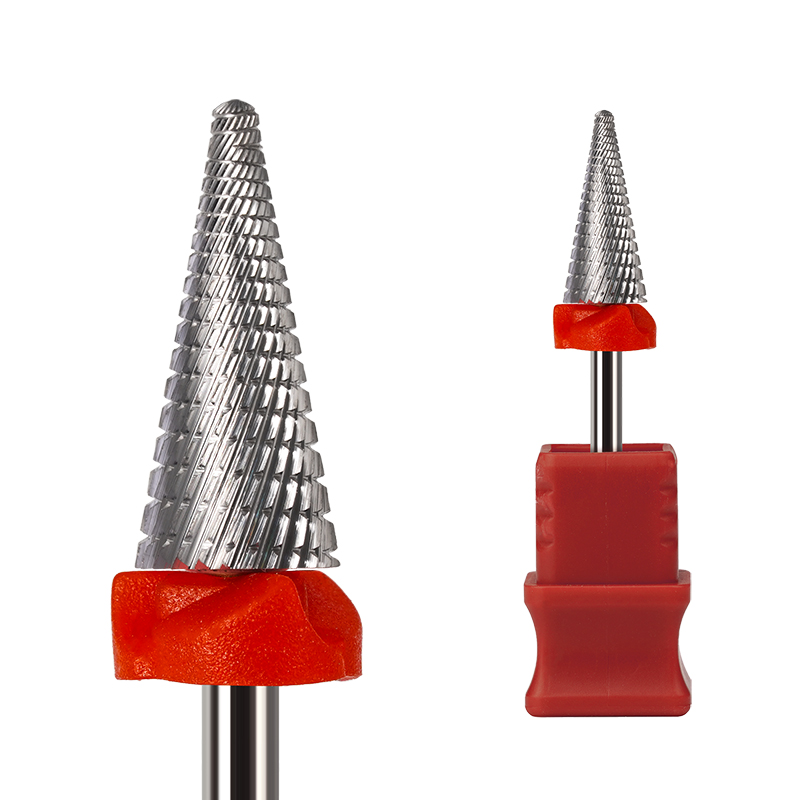
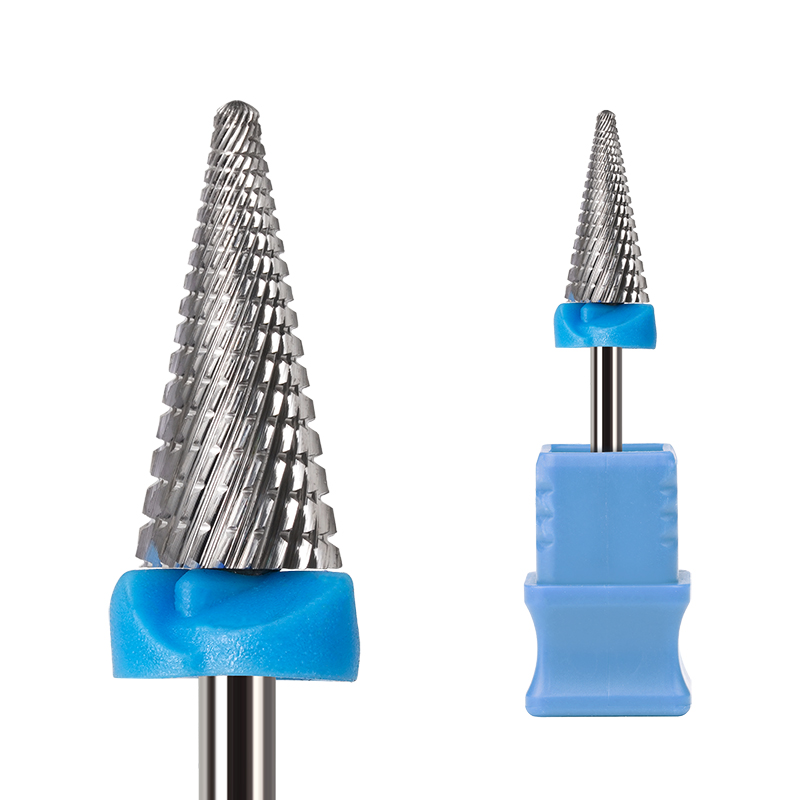
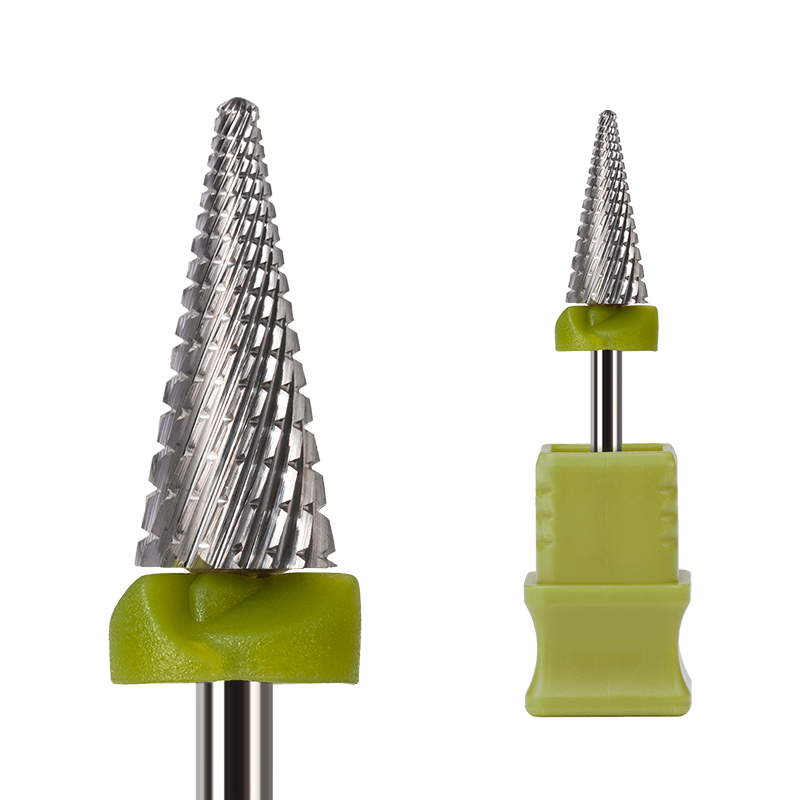
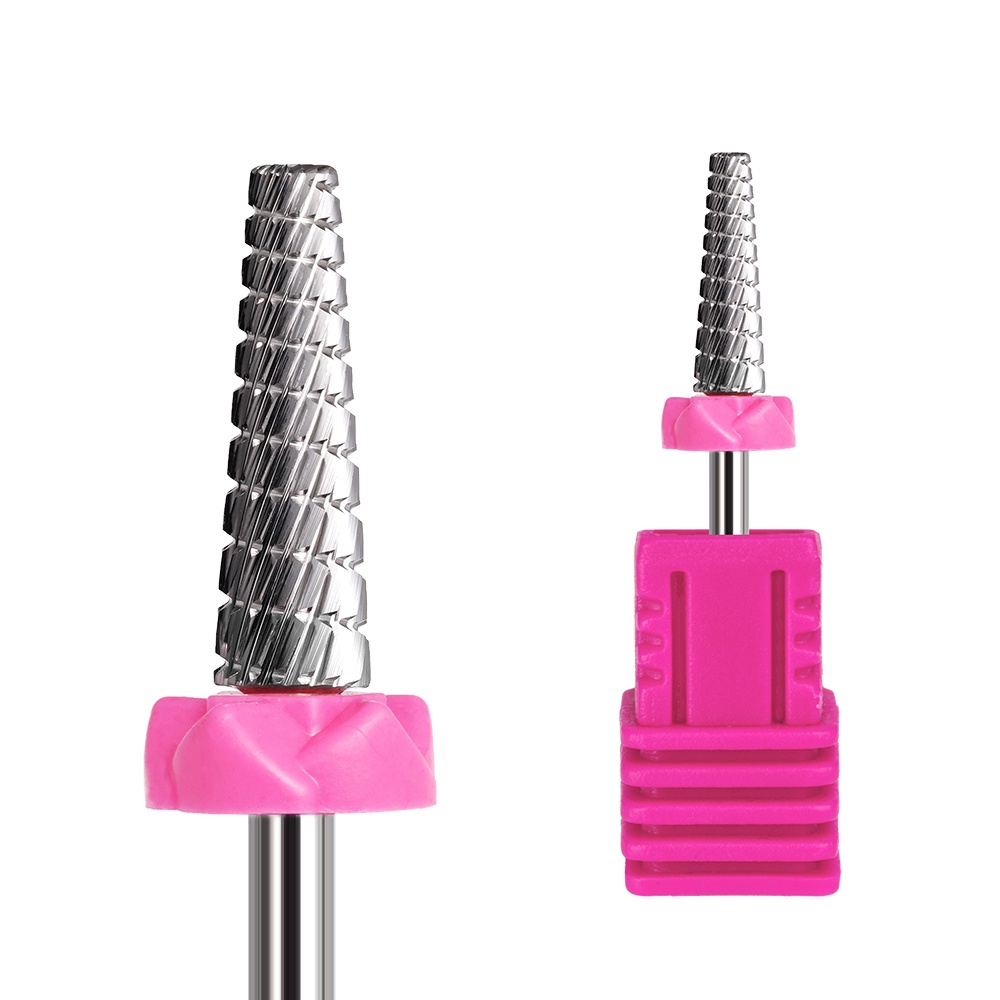
 Professional Advanced Safety Cuticle Bits Two-Way Rotate 3/32'' Carbide Tungsten 5 in 1 Nail Drill Bits
 Wholesale 5 in 1 Electric Manicure Nail Drill Bits Various Coating Cone Cuticle Bit with Rotary Cross Cut for Nail Art
 New Slant Tooth Tungsten Steel Nail Drill Bits Dead Skin Removal 5-in-1 Universal Grinding Nail Polish Head Tool Nail Drill Bits
 4.0mm Small 5 in 1 Integrated Sharpe Tungsten Nail Drill Bit Straight Teeth Gel Polish Removal
 Flame Sharp XF F M C XC Silver Safety Professional Corn Tungsten Carbide Nail Bit for Drill Machine Accessories
 Factory Direct 5 in 1 Tungsten Carbide Nail Drill Bits 6.8MM Cross Cut Safety Manicure 5 in 1 Nail Drill Bits
Please give us a message