
Which gel removal bits help minimize heat during soak-off removal?
Which gel removal bits help minimize heat during soak-off removal?
For soak-off gel removal, the coolest-running choice is usually a sharp carbide bit with a medium or fine cross-cut pattern, used with light pressure and constant movement. A bit that cuts efficiently removes product in small chips instead of rubbing the surface. That distinction matters: rubbing converts hand pressure and rotation into heat, while clean cutting shortens the time the bit stays in contact with any one area.
Bit selection cannot be separated from the remaining product. Hard builder gel, soft gel color, rubber base, and a thin residual layer do not respond the same way. A coarse bit can remove a thick enhancement efficiently, yet it can create excess heat when used close to the natural nail or when it is forced through soft, gummy material. Fine grit is gentler near the base layer, but it will heat up if asked to remove a thick bulk layer too slowly. The low-heat approach is therefore a sequence of bit choices rather than one bit used from start to finish.
Choose a cutting surface that clears product instead of polishing it
Tungsten carbide gel removal bits are widely used for bulk reduction because their flutes cut rather than abrade. A well-made carbide bit with defined, clean flute edges generally produces less friction than a worn bit with rounded cutting edges. It also tends to leave visible shavings rather than fine dust alone. Shavings are not a guarantee of correct technique, but they are often a useful sign that the coating is being cut away efficiently.
Cross-cut carbide patterns are especially useful where a smooth, controlled removal path is needed. The intersecting flutes break up the gel and reduce the tendency for a long ribbon of product to wrap around the bit. When the flutes remain open, debris can exit the cutting area. When the flutes clog, the same bit begins to skid across the coating, and surface temperature rises quickly.
Ceramic bits can also be selected for gel removal. Their cutting action often feels less aggressive, particularly on soft gel, and they do not retain heat in the same way as metal after contact stops. However, a ceramic bit still creates heat if it is dull, overloaded, or held stationary. Ceramic is not automatically cooler; the benefit depends on flute geometry, grit, speed, and how much material is being removed.
Diamond bits are usually better reserved for finishing tasks, cuticle-area refinement, or very light surface work. Their abrasive particles create many small points of contact. On thick soak-off gel, this can turn removal into prolonged rubbing, especially if a fine diamond bit is used for bulk reduction. That makes diamond less suitable as the primary choice when the goal is to lower heat during removal.
Match grit to the stage of removal
A coarse grit does not inherently run hotter than a fine grit. On a thick, cured hard-gel layer, a coarse carbide may create less heat because it completes the reduction with fewer passes and less force. The same coarse bit becomes harder to control when only a thin base layer remains. At that point, its fast cut can lead to hesitation, repeated corrective strokes, or contact too close to the nail plate. Heat often follows that loss of control.
Medium grit is commonly the most versatile choice for soaking-off preparation. It can reduce color and bulk without leaving deep, uneven channels when it is used with a floating motion. Fine grit is appropriate for the last reduction stage, but it should not be expected to remove every layer from scratch. When a fine bit seems to require pressure, the task has exceeded the bit's intended role.
Shape changes both control and contact area
Barrel-shaped carbide bits are practical for broad, flat central zones because they keep the working surface aligned with the coating. A wide barrel removes material efficiently, but it requires careful angle control near sidewalls and the proximal area. A narrower barrel or tapered shape gives more room to work around curved sections and reduces the chance that a large cutting surface contacts a small area all at once.
For heat management, a rounded safety top is often preferable to a sharp, pointed end around the cuticle area and lateral folds. The rounded top does not eliminate the need for control, but it reduces the likelihood of accidental digging when the bit angle changes. It also allows a light gliding approach instead of forcing the bit edge into a transition line.
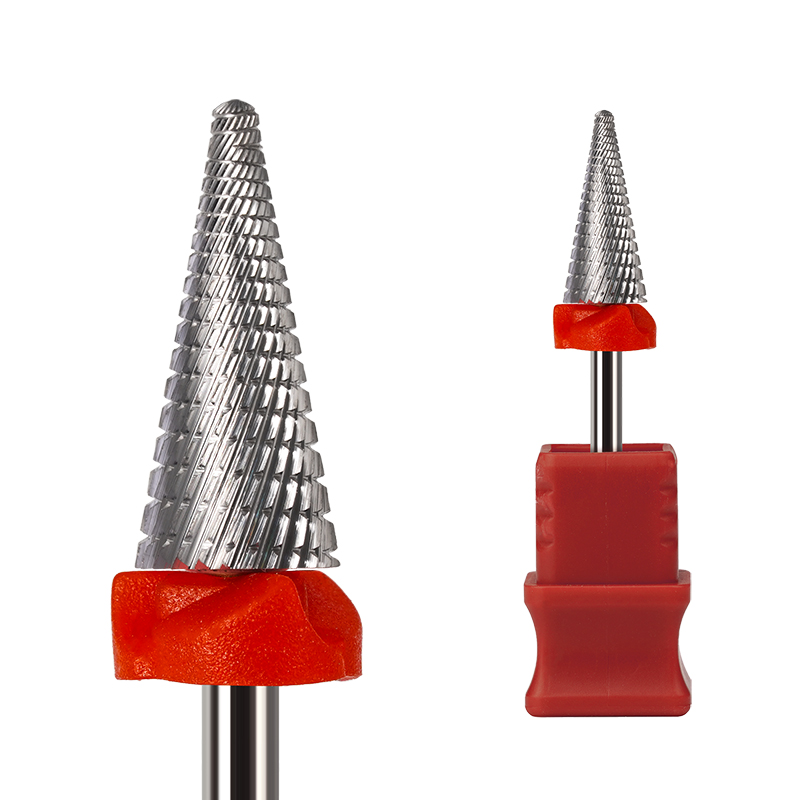
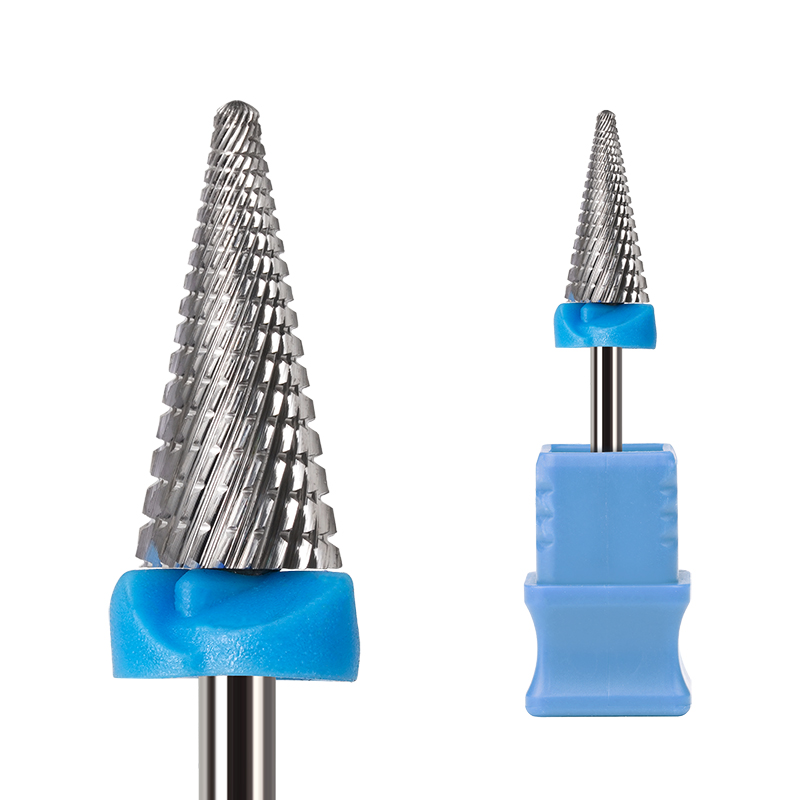
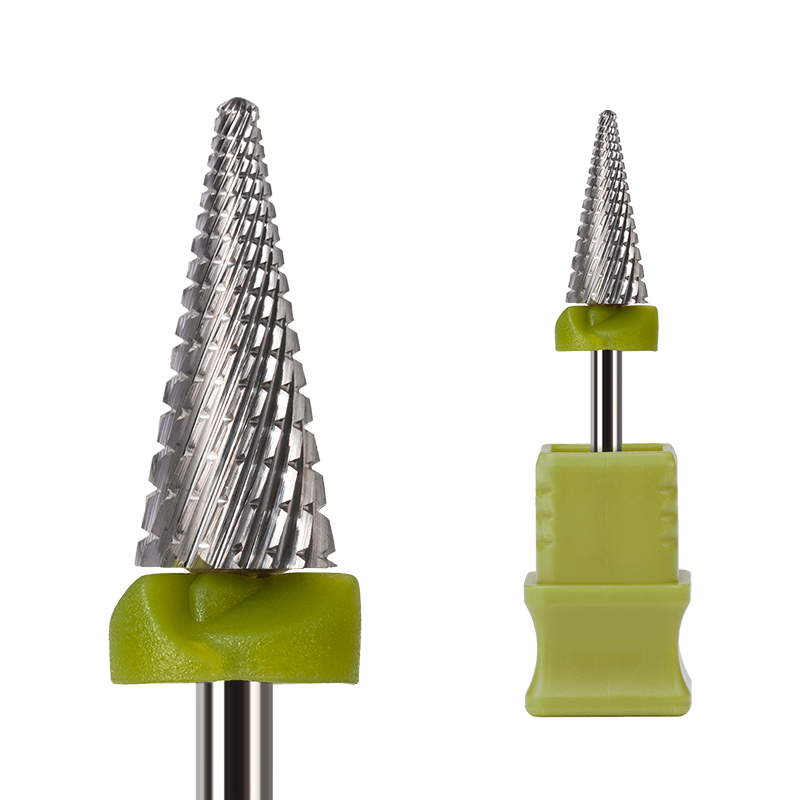
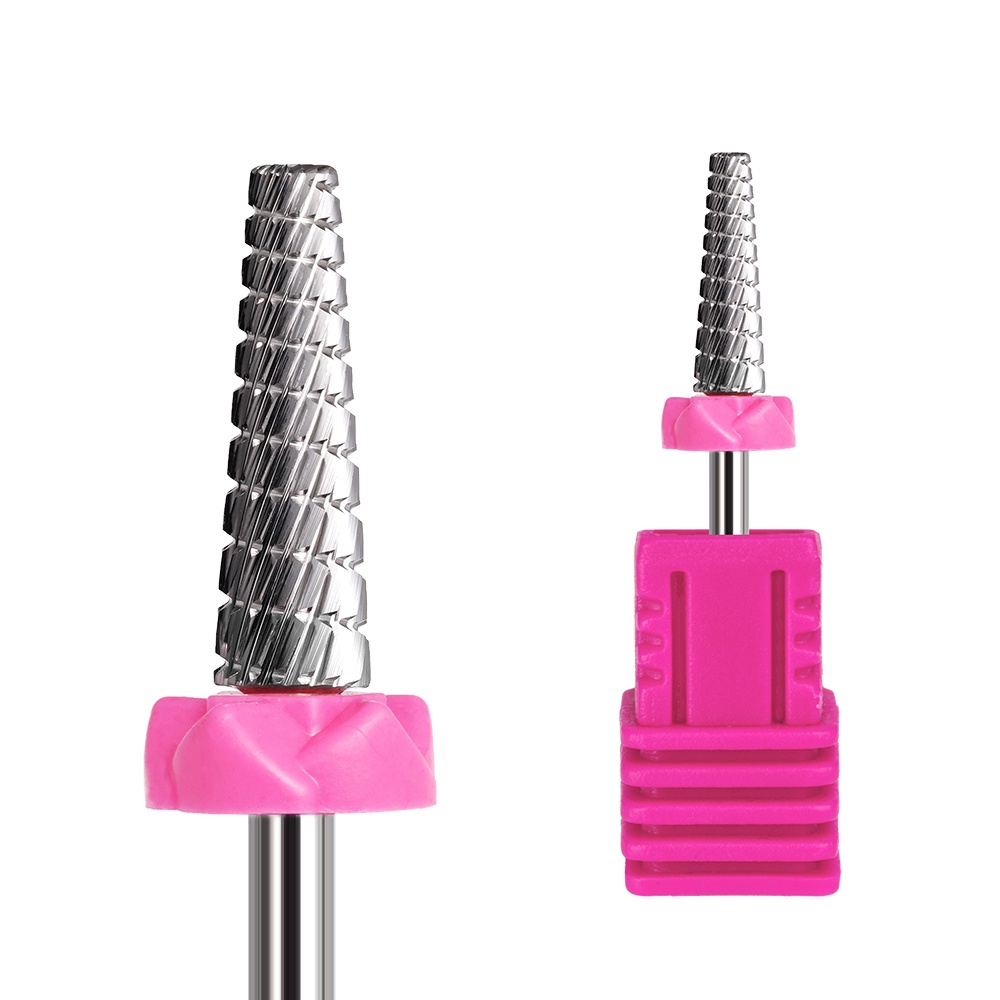
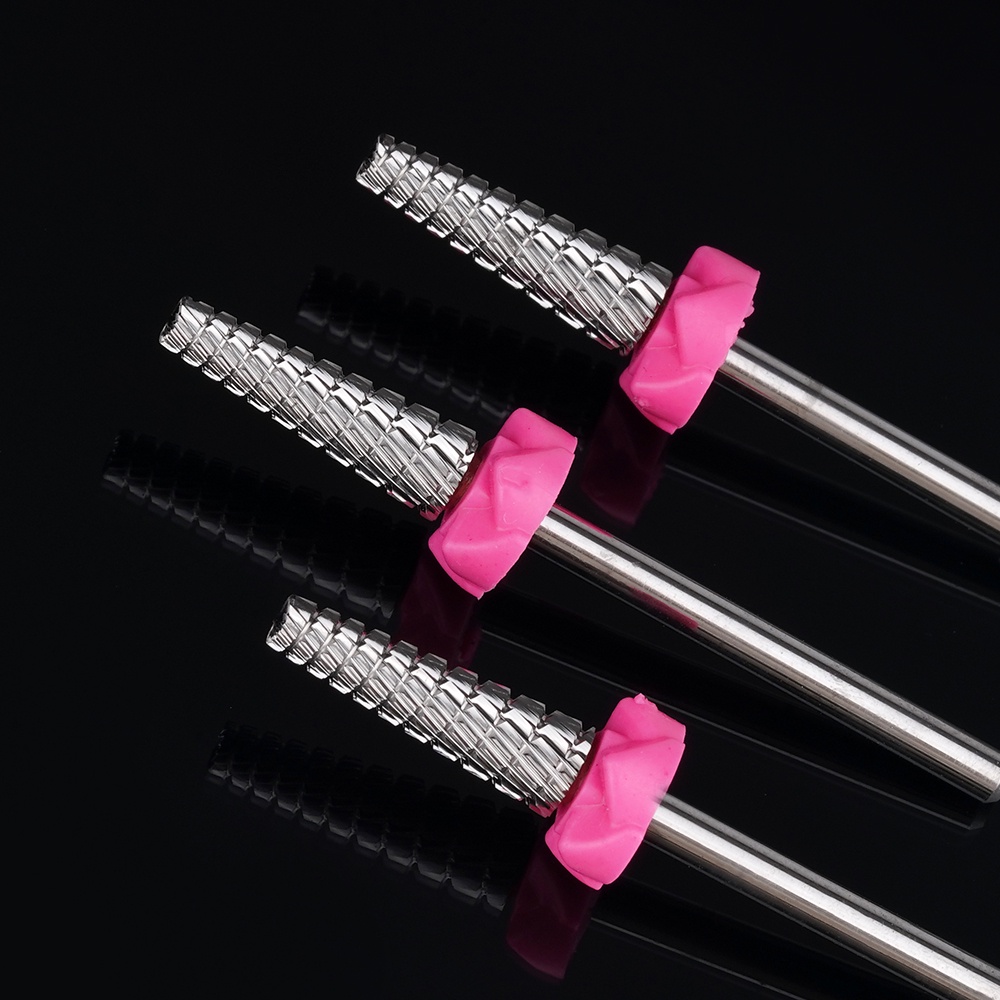
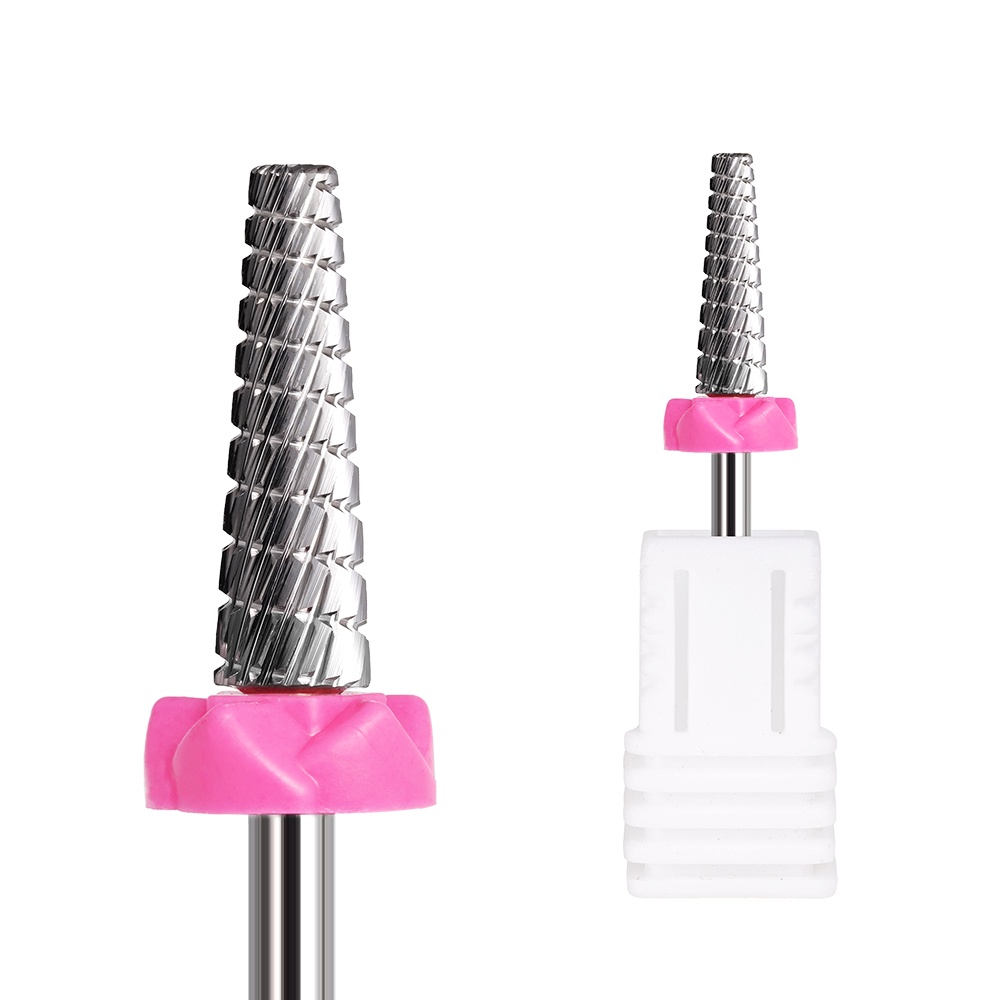
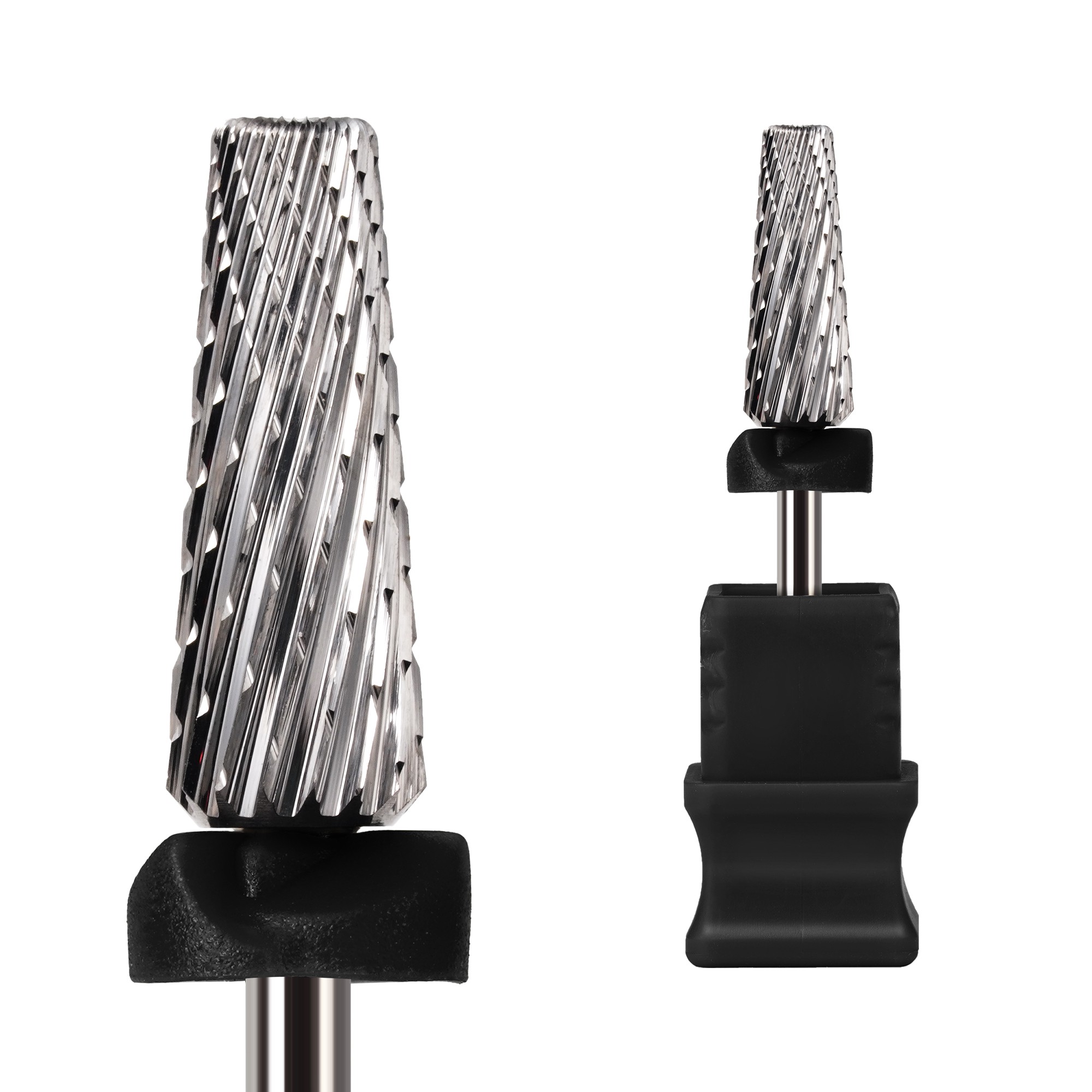
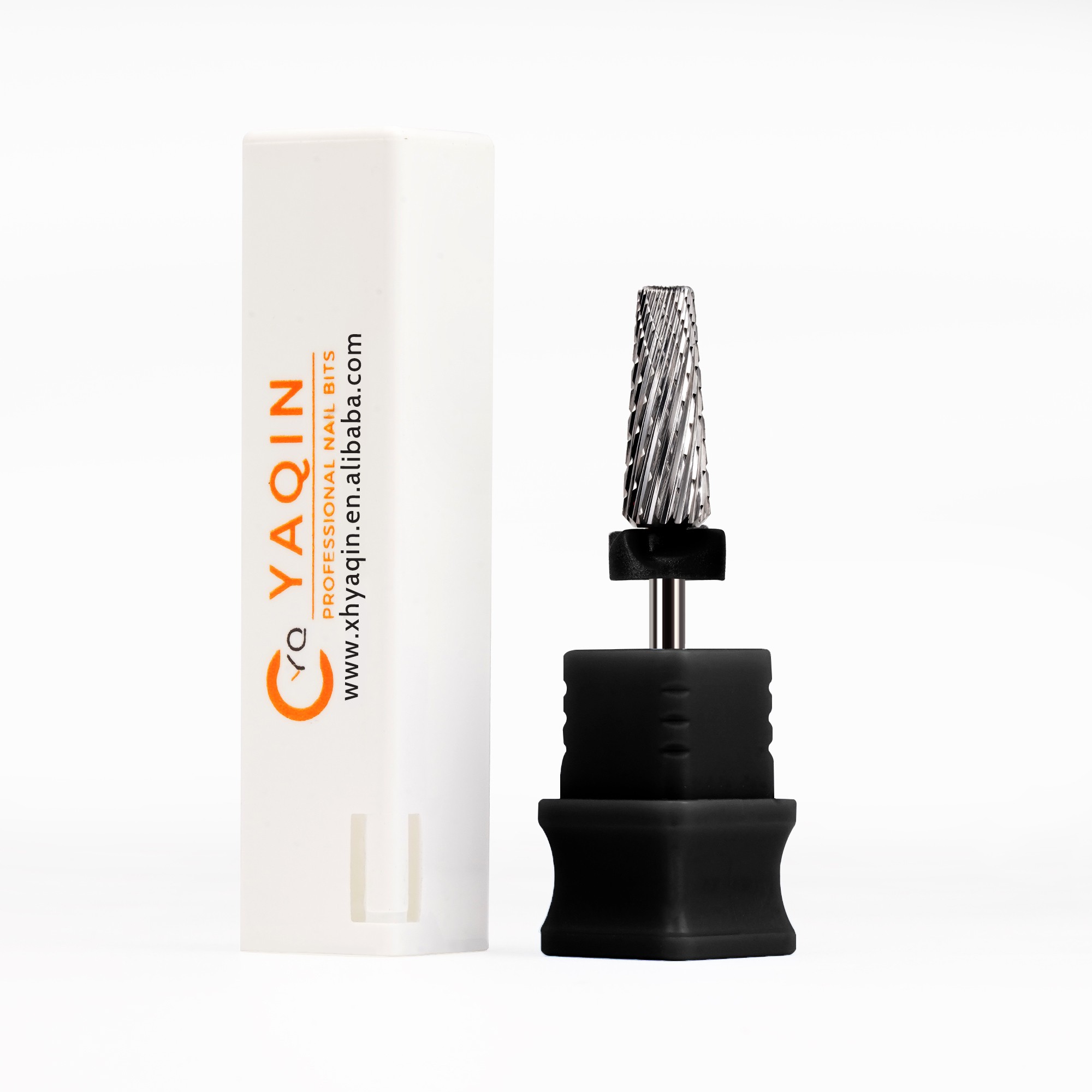
A 5-in-1 carbide format combines working zones that differ in effective cutting behavior along the barrel. This can make it possible to reduce bulk with the wider section and transition to a more controlled area without changing tools mid-service. For example, the Factory Direct 5 in 1 Tungsten Carbide Nail Drill Bits 6.8MM Cross Cut Safety Manicure 5 in 1 Nail Drill Bits is available in coarse, medium, and fine options with a rounded safety tip. The practical value of this type of geometry is not that it removes the need for technique; it is that the technician can choose a contact zone suited to the thickness and location of the remaining gel.
Speed should support the cut, not compensate for a dull bit
For hard-gel reduction, a working range around 15,000 to 20,000 RPM is commonly used with a suitable carbide bit. Soft gel and base gel generally require less speed, often around 10,000 to 15,000 RPM. These are working ranges rather than a command to set every drill to the same number. Drill torque, handpiece condition, bit diameter, gel thickness, and the direction of travel all affect the result.
Too little speed encourages pressure. The bit drags, the hand slows down, and contact time increases. Too much speed can make the bit feel difficult to regulate, especially when moving from a thick apex into a thin perimeter. The safest adjustment is usually modest: select a speed at which the bit removes product with a relaxed grip and a visible, even trail of material, then reduce pressure before increasing RPM.
Rotation direction also matters. The flutes should cut in the intended direction of travel. A bit used against its effective cutting direction can chatter, skip, or pull at the coating. That sensation often leads to more pressure, which raises heat and makes the service less predictable. Before touching the nail, confirm that the bit's cut orientation matches the drill setting and the chosen hand movement.
Contact time is the most reliable heat warning
Heat is often blamed on RPM alone, but stationary contact is a more direct cause. Even a fine bit at a moderate setting can create a hot spot when it pauses over one point. Keep the bit moving in short, overlapping passes. A pass should travel across the gel rather than remain parked until the product disappears.
Use the broadest stable portion of the bit on broad product areas. Tilting a barrel so that only a narrow edge touches may feel precise, but it concentrates force into a small zone and can gouge or heat the gel. Near sidewalls, decrease the active contact area deliberately by changing to a narrower section or a smaller bit, not by pressing the corner of a large barrel into the edge.
Pressure should be light enough that the bit continues to glide. A useful tactile cue is that the handpiece should not bog down and the finger being worked on should not be pushed downward by the bit. If removal slows, stop and identify the cause: the gel may be thicker than expected, the bit may be loaded with debris, the grit may be too fine, or the cutting edge may be worn.
Leave a controlled layer for the soak-off stage
During soak-off removal, the drill is generally used to break the top seal and reduce the bulk, not to chase every trace of product to the natural nail. Leaving a thin, even layer of gel before wrapping or soaking reduces the time spent with the bit near the nail plate. It also gives the remover a more accessible surface and reduces the temptation to use pressure on areas that have already become thin.
The color change between gel layers is useful here. A technician can often identify a base layer, a translucent builder layer, or a natural-nail transition by looking for a consistent change in opacity or texture. Do not assume that every clear-looking layer is product, however. Some natural nails have uneven color, ridges, or prior filing marks. When the layer is uncertain, switch to a finer bit or stop drilling and proceed with soaking.
After the soak, softened product should release with gentle assistance. If it remains firmly bonded, rewrap rather than return immediately to aggressive drilling over a thin area. Scraping hard residue creates a different form of heat and mechanical stress, even when the drill is no longer in use.
Signs that the bit or process needs correction
- Fine dust with almost no product removal: the bit may be dull, clogged, too fine for the layer, or moving with insufficient cutting engagement.
- Sudden warmth after several smooth passes: inspect the flutes for packed gel. Soft product can smear into the cutting channels and turn an efficient carbide into a friction surface.
- Heat concentrated near the center of the nail: the bit may be lingering over the thickest area instead of using a faster, lighter sweep across it.
- Chatter or a bouncing sensation: check rotation direction, hand stability, and whether the barrel is being used on an extreme edge. Chatter increases intermittent friction and leaves an uneven surface.
- Removal becomes difficult only near the perimeter: change to a smaller contact area or reduce the remaining gel by soaking. A large bit is less forgiving where the nail curves sharply.
Cleaning is part of thermal control. Remove gel dust from the flutes after each service according to the bit material and the established sanitation procedure. A clean bit cuts more consistently, while residual product creates drag before the next pass even begins. Inspect carbide edges under good light; discoloration, corrosion, damaged teeth, or a polished-looking cutting surface are reasons to replace the bit rather than increase speed or pressure.
The lowest-heat setup is therefore not defined by a single grit or material. It is a sharp, appropriate-cutting bit used for the correct layer, at a stable speed, with open flutes and continuous movement. Reducing bulk efficiently, then leaving a thin layer for soak-off, protects control where the natural nail is closest and most vulnerable.
News List
- Preventing Gouges and Uneven Filing With Small Barrel Nail Drill BitsSep 20, 2026
- How Diameter and Grit Affect Small Barrel Nail Drill Bit PerformanceSep 20, 2026
- Can Hytos Nail Drill Bits Be Used Safely on Natural Nails and Gel Polish?Sep 20, 2026
- How to Verify Fit Between Hytos Nail Drill Bits and an E-File HandpieceSep 20, 2026
- Safe Speed Settings for Umbrella Nail Drill Bits Around the Nail FoldSep 20, 2026
- Umbrella vs Flame Nail Drill Bits: Which Shape Offers Better Cuticle Control?Sep 20, 2026
Best-Selling Products
 Cross Cut Safety Stainless Steel Tungsten Carbide Nail Drill Bits Salon Foot Use XF-C Grit for Removing Nails
 First-rate Quality Tungsten Carbide Nail Drill Bits Best Coating Manicure Remove Gel Nails Accessories
 Professional Advanced Safety Cuticle Bits Two-Way Rotate 3/32'' Carbide Tungsten 5 in 1 Nail Drill Bits
 Wholesale 5 in 1 Electric Manicure Nail Drill Bits Various Coating Cone Cuticle Bit with Rotary Cross Cut for Nail Art
 New Slant Tooth Tungsten Steel Nail Drill Bits Dead Skin Removal 5-in-1 Universal Grinding Nail Polish Head Tool Nail Drill Bits
 4.0mm Small 5 in 1 Integrated Sharpe Tungsten Nail Drill Bit Straight Teeth Gel Polish Removal
 Flame Sharp XF F M C XC Silver Safety Professional Corn Tungsten Carbide Nail Bit for Drill Machine Accessories
 Factory Direct 5 in 1 Tungsten Carbide Nail Drill Bits 6.8MM Cross Cut Safety Manicure 5 in 1 Nail Drill Bits
Please give us a message