
When to use a one-way volcano nail drill bit for product removal
When to use a one-way volcano nail drill bit for product removal
When to Use a One-Way Volcano Nail Drill Bit for Product Removal
Choosing the right nails drill bit for product removal affects more than appointment speed. It affects how consistently an operator can remove material, how clearly the work surface remains visible, and how much control is retained as the enhancement becomes thinner near the natural nail. A one-way volcano nail bit is often chosen for efficient bulk removal of gel, acrylic, builder gel, and similar enhancements, but it is not a universal answer to every removal task.
The name can be confusing. Some operators search for a “vocano bit,” while others use terms such as one way nail drill bit, one-direction carbide bit, or volcano-shaped nail bit. In practice, the key question is not the spelling or product label. It is whether the cutting pattern, grit level, bit profile, handpiece rotation, and operator technique suit the material being removed.
A one-way bit can be fast and clean in the right conditions. Used in the wrong rotation direction, with excessive pressure, or too close to a thin natural nail, it can become difficult to control. The most useful decision is therefore not simply “Should I use a volcano bit?” but “At which stage of removal does this bit make sense, and what should I switch to afterward?”
What makes a one-way volcano bit different?
A one-way nail drill bit has flutes or cutting teeth designed to work effectively in one intended rotational direction. Unlike a true two-way bit, it is not meant to deliver the same cutting behavior in both forward and reverse. This matters for right-handed and left-handed operators, as well as for technicians who change hand position while working across the nail plate.
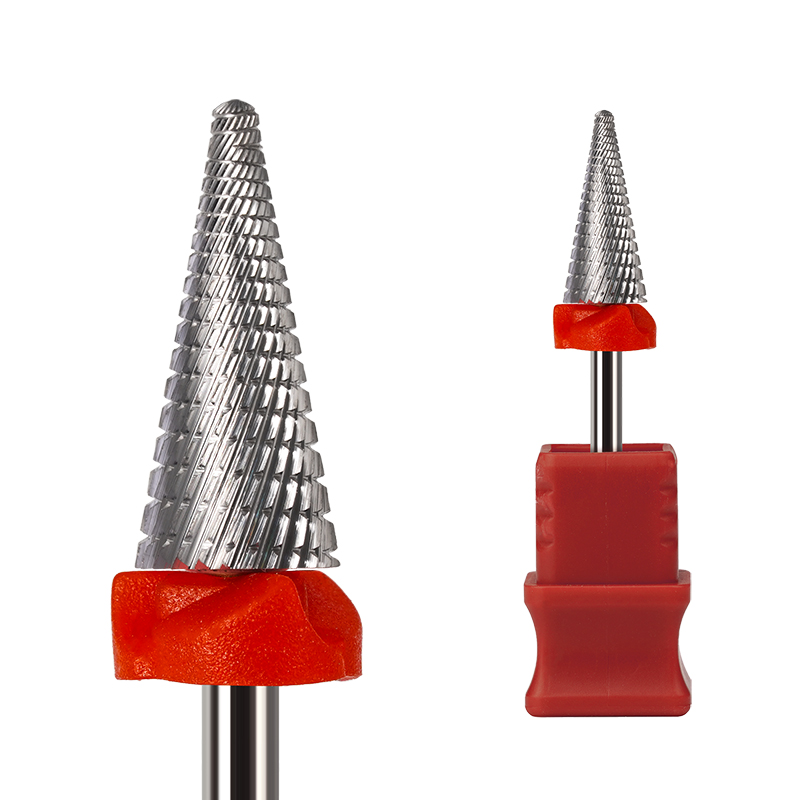
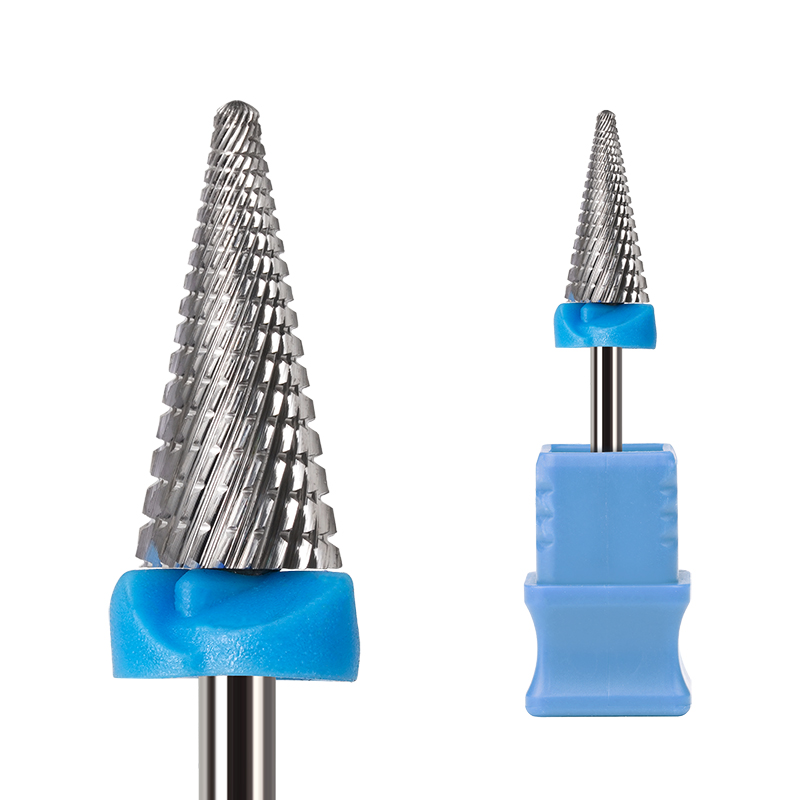
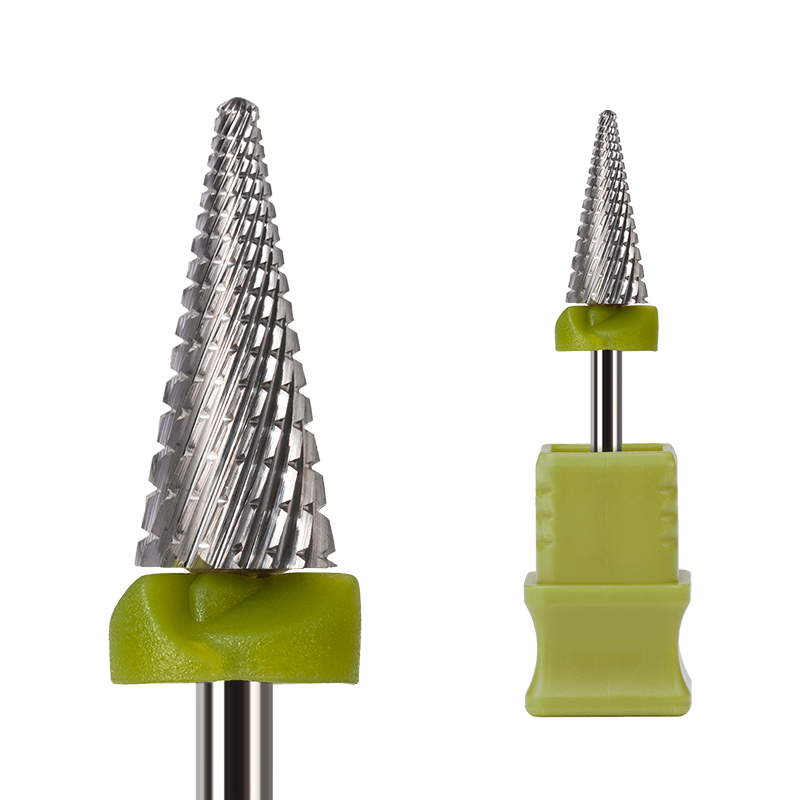
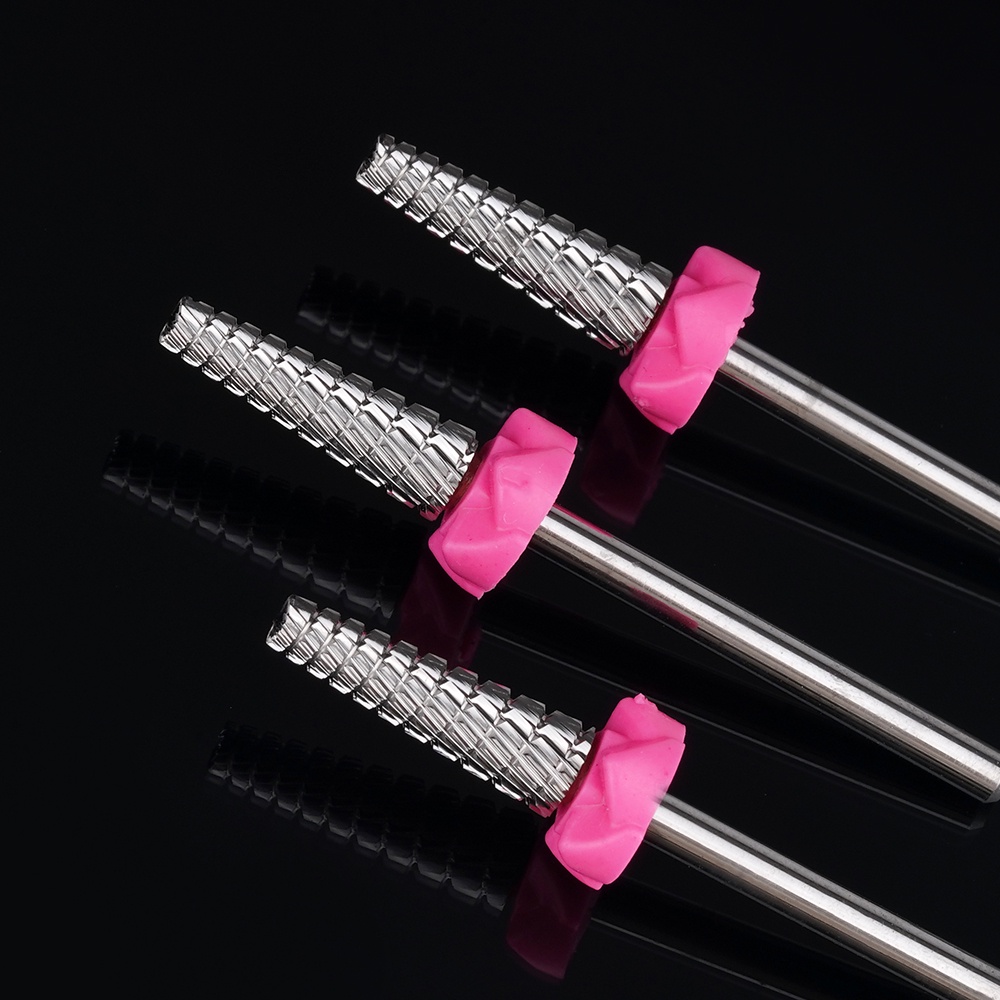
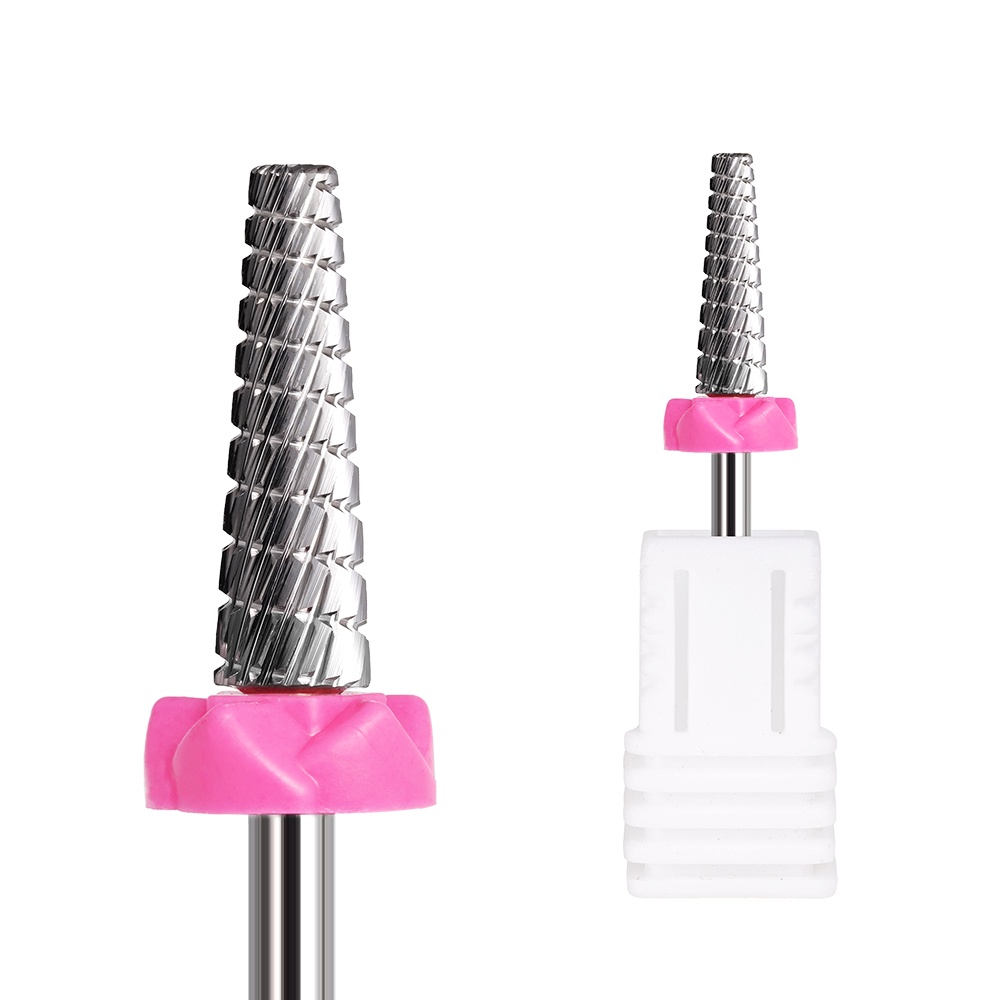
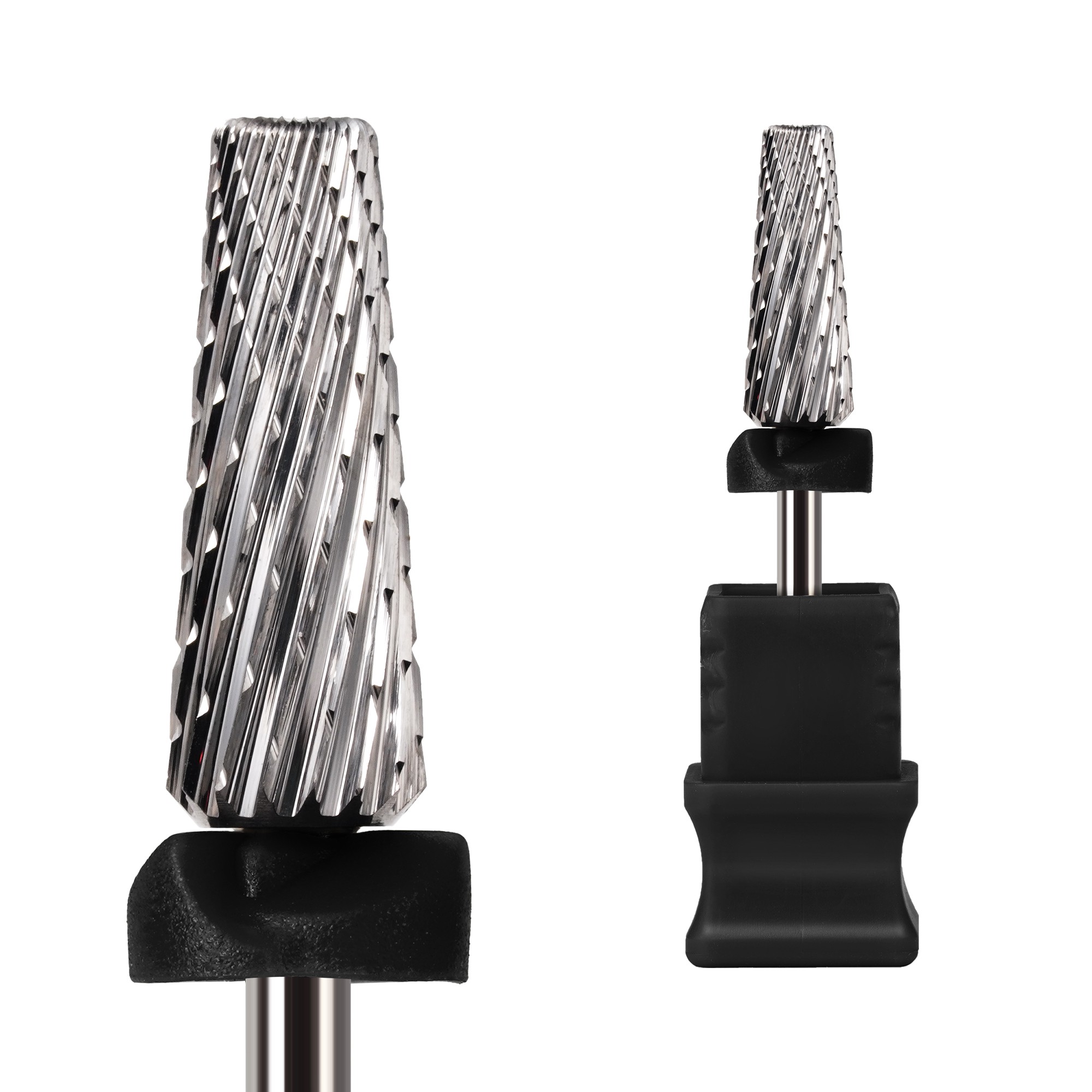
The “volcano” description commonly refers to a broad, tapered, or barrel-like working form that can make contact across a useful area of product while still allowing access around the upper structure of the enhancement. Depending on the exact profile, it may be particularly effective for reducing bulk without relying on a very narrow point. A larger contact area can improve removal speed, but only when the operator keeps the bit moving and lets the cutting edge do the work.
Carbide versions are usually selected for hard artificial product because their fluted cutting geometry removes material rather than merely abrading it. That distinction is important. A sanding band may be appropriate for certain prep or refinement tasks, while a carbide nails drill bit is generally more efficient when significant gel or acrylic thickness must be reduced. The appropriate choice still depends on the enhancement, its condition, and the remaining product layer.
The situations where it earns its place
A one-way volcano bit is most useful during the bulk-reduction phase: the point where there is still enough product thickness to remove safely and where a broad, controlled cutting path saves time. This may include taking down hard gel overlays, reducing an acrylic extension before a rebalance, removing a thick builder-gel structure, or clearing most of an old enhancement before changing the service.
It is especially practical when the existing surface is uneven. Product that has lifted slightly at the free edge, accumulated thickness through repeated fills, or developed a high apex can be difficult to reduce evenly with a small bit. A volcano profile allows the operator to level larger areas using light, continuous passes rather than digging into one point.
For salon work, this can make removal feel less laborious. For a high-volume operator, it also creates a clearer sequence: remove bulk, reassess the thickness, then move to a finer tool for the remaining layer and detail zones. The bit should not be treated as the only tool required for the entire service.
A one-way volcano bit may also be a sensible option when working mainly in one habitual direction across the nail. An operator who knows which handpiece setting matches the flute direction can maintain a more predictable cut. That predictability is the main advantage of a one-way design; the limitation is that it may be less convenient when the work demands frequent switching between forward and reverse.
Product type should decide the grit, not impatience
A coarse bit can remove hard product efficiently, but a coarse cut is not automatically better. It should be matched to material thickness and hardness. When a hard gel enhancement has substantial bulk, a coarse carbide may be appropriate for the first passes. Once the structure is reduced, continuing with that same aggressive cut increases the need for careful pressure and distance management.
Medium grit is often the more flexible daily option for operators who work across several enhancement systems. It can reduce gel product steadily without the abrupt feel that some users experience with a coarse tool. Fine grit is more suitable for thinning the final residual layer, blending product, or refining areas where the operator needs a less aggressive response.
The supplied operating range should also be treated as a working guide, not as permission to use one speed everywhere. For one tungsten carbide cross-cut option, the stated ranges are 15,000–20,000 RPM for hard gel removal and 10,000–15,000 RPM for soft gel or base-gel removal. Speed must still be adjusted for the handpiece, bit condition, product thickness, the operator’s control, and the client’s comfort. A bit that skips, grabs, or produces discomfort needs an immediate reassessment rather than more pressure.
Rotation direction is not a minor detail
Before placing a one-way bit on the nail, confirm its intended rotation. The flutes should cut smoothly in the selected direction; if the bit appears to drag, bounce, or resist the product, stop and check the handpiece setting. Running a one-way bit in the opposite direction may reduce cutting efficiency and can make its movement less predictable.
This is a practical purchasing issue as well as an operating issue. A salon with technicians who routinely need to work comfortably in both forward and reverse may prefer a two-way bit for some services. A one-way bit can remain an excellent specialist tool, but its directional design should be visible in training, storage, and purchasing specifications. Mixed stock without clear identification invites mistakes.
The operator should use a controlled, sweeping motion, keeping the tool in contact only as long as needed. Holding a carbide bit still in one area generates friction. Excessive friction can create heat and leave grooves in the enhancement, even when the bit itself is sharp. Removal should be a process of light passes and frequent visual checks, not a race to expose the natural nail.
When not to use it—or when to put it down
A one-way volcano bit is not the right answer for every detail task. It is generally not the first choice for close cuticle work, narrow sidewall cleaning, or precise work in tight corners. Its wider working surface can limit visibility near delicate zones. Narrow bits are more agile where line of sight matters; wide bits are useful where a larger contact area supports faster filing across the central nail surface.
It should also be retired from the task when the remaining product is thin enough that the natural nail is becoming difficult to distinguish. At that stage, a finer bit, hand file, or another less aggressive method may provide better feedback. A skilled removal service often leaves a controlled thin layer of compatible base material rather than attempting to remove every trace with a coarse carbide tool.
Do not use any e-file bit over skin irritation, open areas, or conditions that require professional assessment outside the nail service. Product lifting also needs attention. Filing across a lifted edge without understanding the condition beneath it can conceal a problem rather than resolve it. Cleanliness, correct disinfection procedures, and replacement of worn tools remain part of safe daily practice.
Choosing a practical bit set for changing workloads
Operators who handle both removal and prep often benefit more from a small, clearly differentiated selection than from many similar bits. A coarse, medium, and fine option support different stages of product reduction. Bit width should follow the nail area and the operator’s working style. A wide bit can make central-surface filing quicker, while a narrow form can reduce visual obstruction around tighter areas.
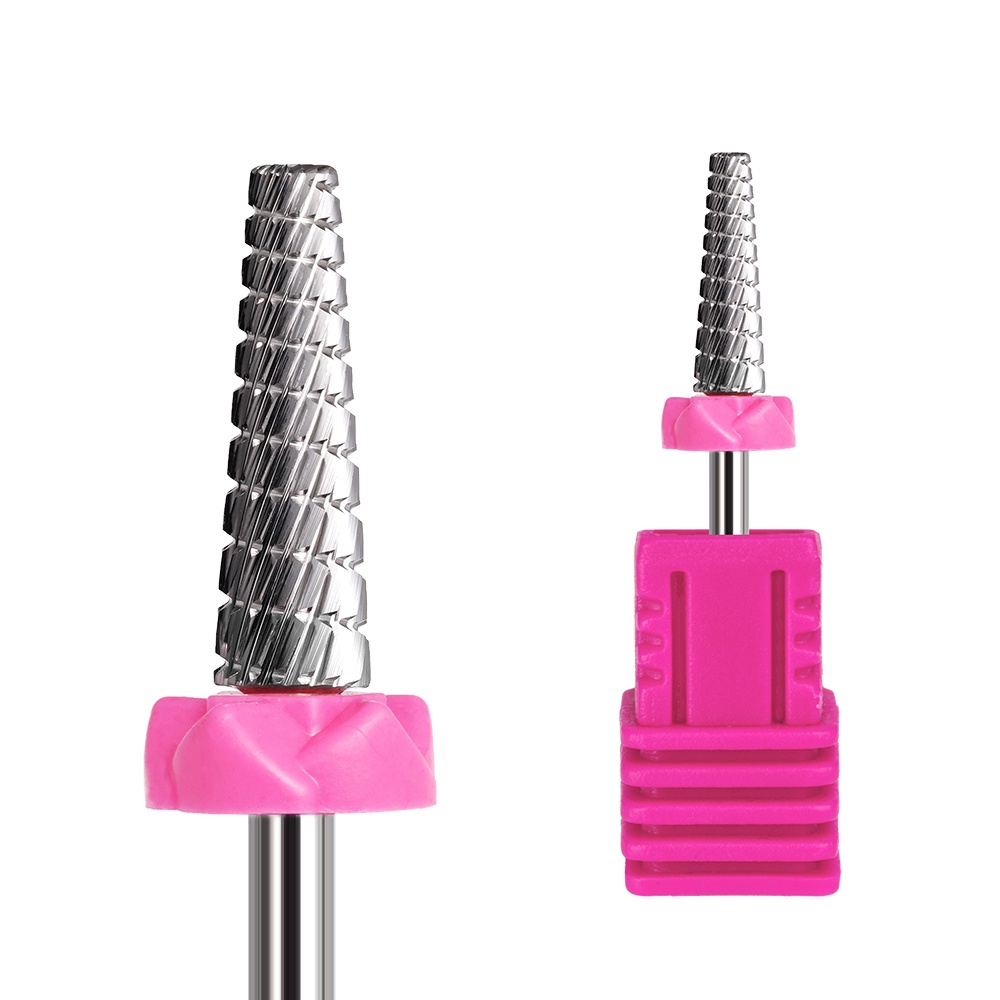
For example, the 5 in 1 Tungsten Carbide Nail Drill Bits Cross Cut Safety Manicure 5 in 1 Bit Set combines cross-cut tungsten carbide options for gel removal and nail prep, including coarse, medium, and fine choices as well as narrow and wide formats. Its rounded tip is relevant to operators looking to reduce accidental skin contact risk, but no safety-shaped bit replaces proper training, movement, or pressure control. The protective cap is also useful for keeping tools separated during storage and transport.
Durability should be assessed in use, not only from appearance. A carbide bit should maintain a consistent cutting response, resist corrosion under appropriate care, and be checked for damage before use. Cleaning methods must be compatible with the material and the salon’s hygiene procedure. A sharp bit usually requires less force; however, sharpness also means an operator must stay disciplined about speed, angle, and transition points.
A better buying decision starts with the work sequence
When evaluating a one-way volcano nail drill bit, begin with the products removed most often: hard gel, soft gel, acrylic, or a mix. Then consider whether technicians predominantly use forward or reverse rotation, whether the team needs narrow access or broad removal coverage, and which grit transitions are already available at the table. This makes the selection specific enough to avoid buying a fast bit that does not suit the actual workflow.
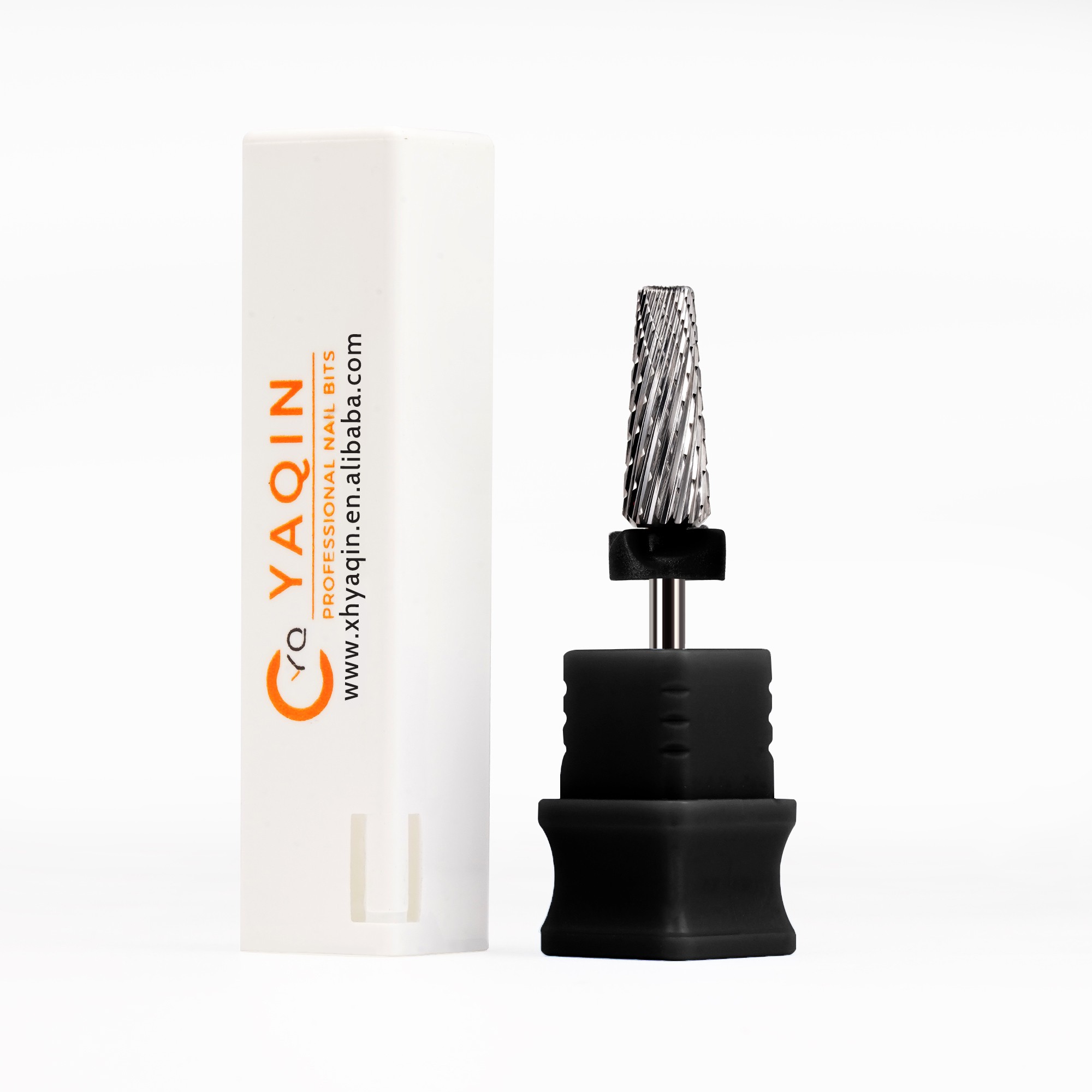
For distributors, training providers, and salons buying at scale, consistency between shipments matters as much as the initial sample. Wuxi Yaqin Trading Co., Ltd. focuses on producing and exporting abrasive products to markets including the USA, Canada, Germany, the UK, Italy, Poland, and 42 other countries. Its stated quality-control process covers raw-material purchasing, production, and packing, and the company reports ISO9001:2000 quality management system certification alongside OEM/ODM and production-to-delivery service. When selecting customized bit ranges, buyers should still confirm the required flute direction, grit marking, packaging format, and any market-specific documentation before production is finalized.
A one-way volcano bit is most valuable when it is used deliberately: for efficient bulk removal in its correct rotation direction, followed by a finer method as the work approaches the natural nail. That sequence protects control, reduces unnecessary filing, and makes product removal easier to repeat across different enhancement services.
News List
- Preventing Gouges and Uneven Filing With Small Barrel Nail Drill BitsSep 20, 2026
- How Diameter and Grit Affect Small Barrel Nail Drill Bit PerformanceSep 20, 2026
- Can Hytos Nail Drill Bits Be Used Safely on Natural Nails and Gel Polish?Sep 20, 2026
- How to Verify Fit Between Hytos Nail Drill Bits and an E-File HandpieceSep 20, 2026
- Safe Speed Settings for Umbrella Nail Drill Bits Around the Nail FoldSep 20, 2026
- Umbrella vs Flame Nail Drill Bits: Which Shape Offers Better Cuticle Control?Sep 20, 2026
Best-Selling Products
 Cross Cut Safety Stainless Steel Tungsten Carbide Nail Drill Bits Salon Foot Use XF-C Grit for Removing Nails
 First-rate Quality Tungsten Carbide Nail Drill Bits Best Coating Manicure Remove Gel Nails Accessories
 Professional Advanced Safety Cuticle Bits Two-Way Rotate 3/32'' Carbide Tungsten 5 in 1 Nail Drill Bits
 Wholesale 5 in 1 Electric Manicure Nail Drill Bits Various Coating Cone Cuticle Bit with Rotary Cross Cut for Nail Art
 New Slant Tooth Tungsten Steel Nail Drill Bits Dead Skin Removal 5-in-1 Universal Grinding Nail Polish Head Tool Nail Drill Bits
 4.0mm Small 5 in 1 Integrated Sharpe Tungsten Nail Drill Bit Straight Teeth Gel Polish Removal
 Flame Sharp XF F M C XC Silver Safety Professional Corn Tungsten Carbide Nail Bit for Drill Machine Accessories
 Factory Direct 5 in 1 Tungsten Carbide Nail Drill Bits 6.8MM Cross Cut Safety Manicure 5 in 1 Nail Drill Bits
Please give us a message