
Which Safety and Quality Standards Should Diamond Nail Drill Bits Meet?
Which Safety and Quality Standards Should Diamond Nail Drill Bits Meet?
Which Safety and Quality Standards Should Diamond Nail Drill Bits Meet?
For quality control and safety managers, selecting a compliant diamond nail drill bit is not simply a matter of choosing the right grit or checking whether it fits a standard e-file. The bit may contact the natural nail, artificial product residue, dead skin around the nail plate, and occasionally sensitive surrounding tissue. If its coating sheds, the shank runs out of true, edges are poorly finished, or production lots are inconsistent, the result can be more than an unhappy technician. It can mean client injury, avoidable dust exposure, complaints, returns, and questions about a distributor’s quality controls.
There is no single worldwide “diamond nail drill bit certification” that proves every aspect of safety. A responsible sourcing decision therefore combines general product-safety obligations, chemical compliance for the destination market, controlled manufacturing, dimensional inspection, performance testing, and traceability. The exact legal route depends on whether the product is sold to salons, consumers, or both, and on the country where it is placed on the market.
Start With the Correct Regulatory Question
A diamond bit is a mechanical abrasive accessory, not an electrical appliance by itself. That distinction matters. Electrical safety rules normally apply to the nail drill machine, power supply, and charging system; they do not automatically certify the removable bit. Yet the accessory still needs to be safe when used as intended and under reasonably foreseeable misuse. A bit marketed for professional cuticle work, for example, will be judged more carefully than one clearly intended only for surface refinement on artificial nails.
For EU distribution, general product-safety obligations and applicable chemical rules should be reviewed before shipment. REACH compliance is particularly relevant where metals, plating, bonding materials, color coatings, or packaging inks may contain substances subject to restrictions or information duties. If a product is supplied to UK customers, the applicable UK product-safety and chemical framework should be checked separately rather than assuming EU paperwork is automatically sufficient. In the United States and Canada, product-safety requirements can vary by state, province, retailer policy, intended user, and the claims made on the packaging.
The practical lesson is simple: do not ask a supplier for a generic “certificate” without first defining the sales market and intended use. Ask what documents support the product’s material composition, what market requirements have been reviewed, and whether the supplier can connect those records to the specific production lot being delivered.
Material Safety Is More Than “Stainless Steel Shank”
A typical diamond nail drill bit consists of a metal shank, an abrasive working surface, and a bonding system that holds diamond particles in place. Each element deserves scrutiny. The shank should have adequate corrosion resistance for repeated cleaning and exposure to salon chemicals. Its surface should be smooth enough to avoid snagging gloves, towels, or the handpiece chuck. Any visible burr at the base, tip, or transition between abrasive and non-abrasive areas is a rejection point, not a cosmetic detail.
The abrasive layer must be firmly bonded and evenly distributed. Sparse coating can make a bit cut unpredictably; overloaded or irregular coating can feel aggressive and retain residue. A quality team should not rely on appearance alone. It is sensible to establish an agreed inspection method for coating coverage, bare spots, loose particles, discoloration, and early wear after a defined use simulation. The test method does not need to be complicated, but it must be repeatable between incoming inspection and supplier inspection.
Chemical documentation should also address coatings and plating where present. “Nickel-free” or “medical grade” should never appear on product literature unless the supplier can substantiate the exact claim. In fact, “medical grade” is often a marketing phrase with no useful definition for a salon abrasive. For nail bits, buyers are better served by material declarations, restricted-substance documentation appropriate to the market, and clear instructions on cleaning and replacement.
Dimensional Accuracy and Rotational Stability Are Safety Controls
A well-made bit should seat correctly in the handpiece and rotate with minimal visible wobble. In professional use, even a small amount of runout can make controlled work around the sidewall and cuticle difficult. It also increases vibration, technician fatigue, and the chance that the tool skips across the surface. This is one of the most common quality failures that can be missed when goods are inspected only in static trays.
Incoming inspection should verify shank diameter, usable length, head geometry, and concentricity against the agreed specification. The commonly used 3/32-inch shank format may be expected by many nail e-file users, but a buyer should still confirm the actual dimensional tolerance and handpiece compatibility. “Universal” is a commercial description, not a substitute for a measured fit check. Samples should be run in representative machines at normal operating speed, not merely inserted into a chuck for a photograph.
Head shape also affects risk. Ball, flame, cone, barrel, and safety-top designs all have different working zones. A rounded or flat safety top can reduce the likelihood of accidental gouging in certain applications, but it does not make high-speed operation risk-free. The correct bit shape, speed, pressure, and technician technique remain a system, and a product specification should avoid promising injury prevention in absolute terms.
Define Grit by Function, Not by a Vague Label
“Fine,” “medium,” and “coarse” are useful retail labels, but they can be too broad for controlled procurement. Two suppliers may both label a diamond nail drill bit as medium while delivering noticeably different cutting behavior. The actual abrasive particle size, coating density, head geometry, and bonding method all influence performance. A quality agreement should identify the intended application: cuticle preparation, dead-skin removal, surface refinement, product reduction, or work around artificial enhancements.
For professional distribution, retain approved reference samples for each grit and profile. Compare new lots against those samples for finish, feel, coating coverage, and operating behavior. This is especially helpful where multiple factories or OEM versions are involved. It prevents a subtle drift in aggressiveness from becoming a field complaint after thousands of units have been packed under a private label.
Performance requirements should include what the bit must not do: it should not snag, shed visible abrasive particles during normal use, crack at the head-to-shank transition, or become unusably dull after limited routine handling. The precise durability threshold should be agreed by the buyer and supplier because it depends heavily on use conditions, cleaning process, product type, speed, and pressure. A claim such as “long-lasting” is not a test plan.
Hygiene Depends on Design, Instructions, and Real Salon Practice
Nail drill bits are reusable tools in many salon settings, so cleanability is a genuine safety consideration. Crevices, rough transitions, and dense areas of retained debris make cleaning more difficult. Suppliers should provide practical cleaning, disinfection, drying, storage, and replacement instructions suitable for the material and intended market. If sterilization compatibility is claimed, the claim should be backed by an appropriate validation or material assessment; it should not be added casually because a competitor uses the word.
It is also worth separating cleaning from disinfection and sterilization. They are not interchangeable terms. A tool can look clean while still requiring the infection-control process set by a salon’s local rules or internal protocol. Safety managers should ensure that packaging and instructions do not encourage unsafe reuse or imply that a quick wipe is adequate for every service situation.
Dust Control Should Be Considered at the Tool Level
Dust is generated by the material being removed as well as by the bit itself. A well-balanced abrasive tool can help produce a more controlled working pattern, but it cannot eliminate exposure to filing dust. The salon’s local extraction, maintenance of the e-file, technician positioning, and suitable protective practices matter just as much. Product copy should be careful here: a bit may be designed to clear debris more consistently, but it should not be marketed as a complete dust-control solution.
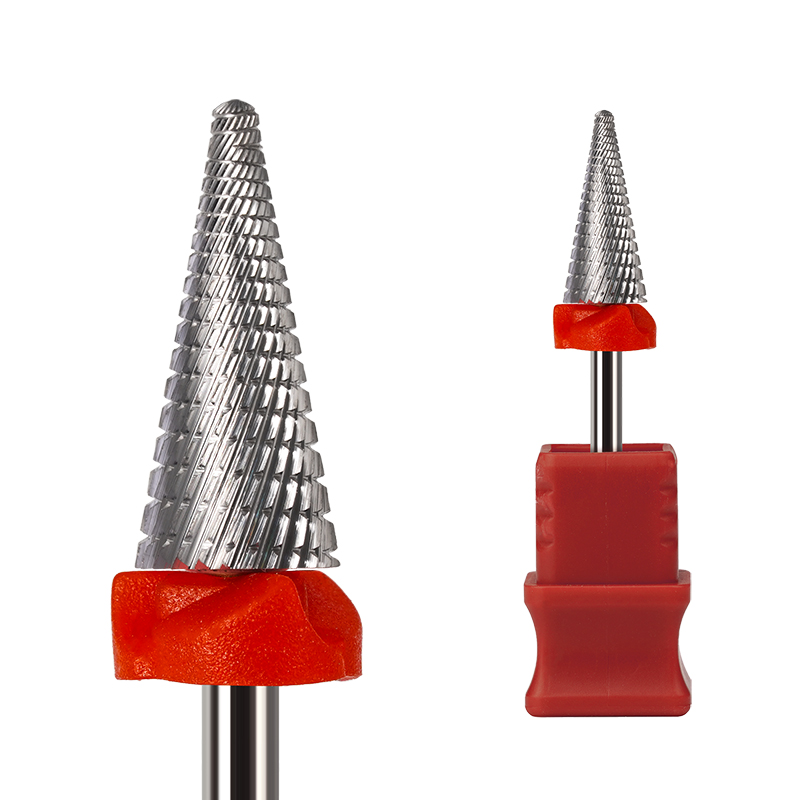
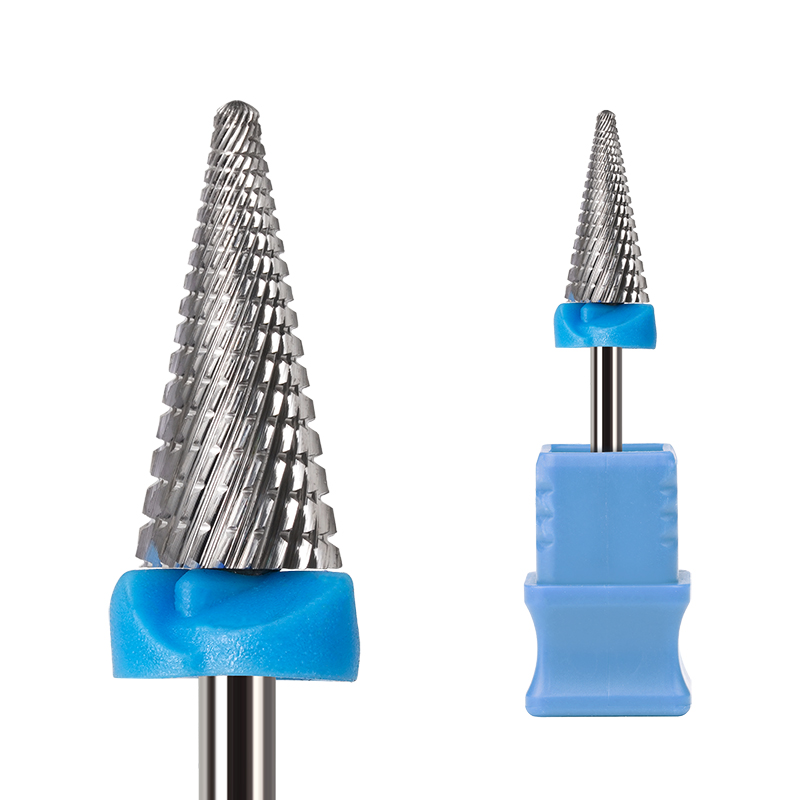
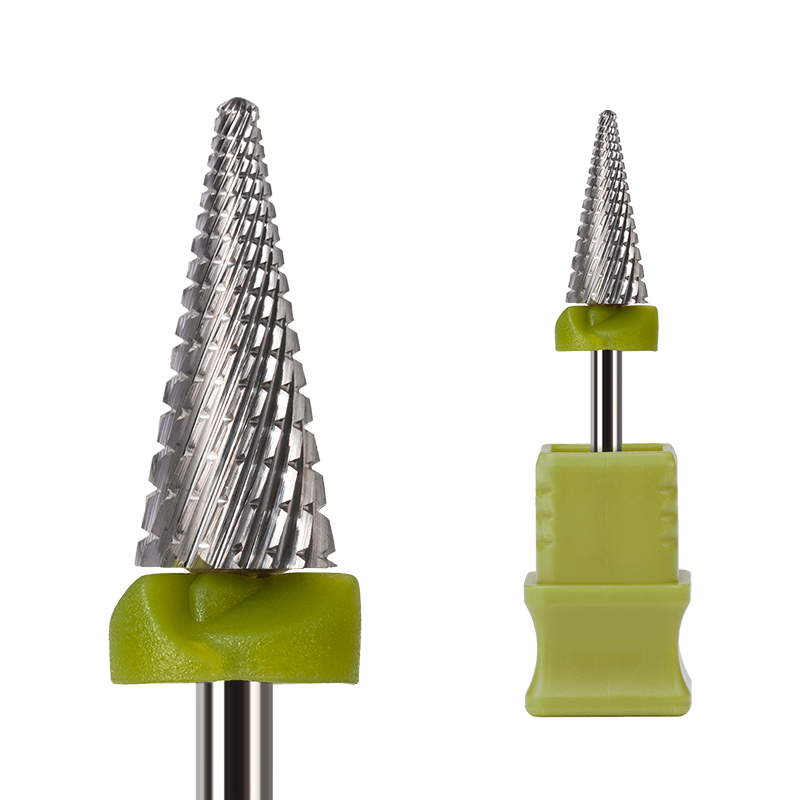
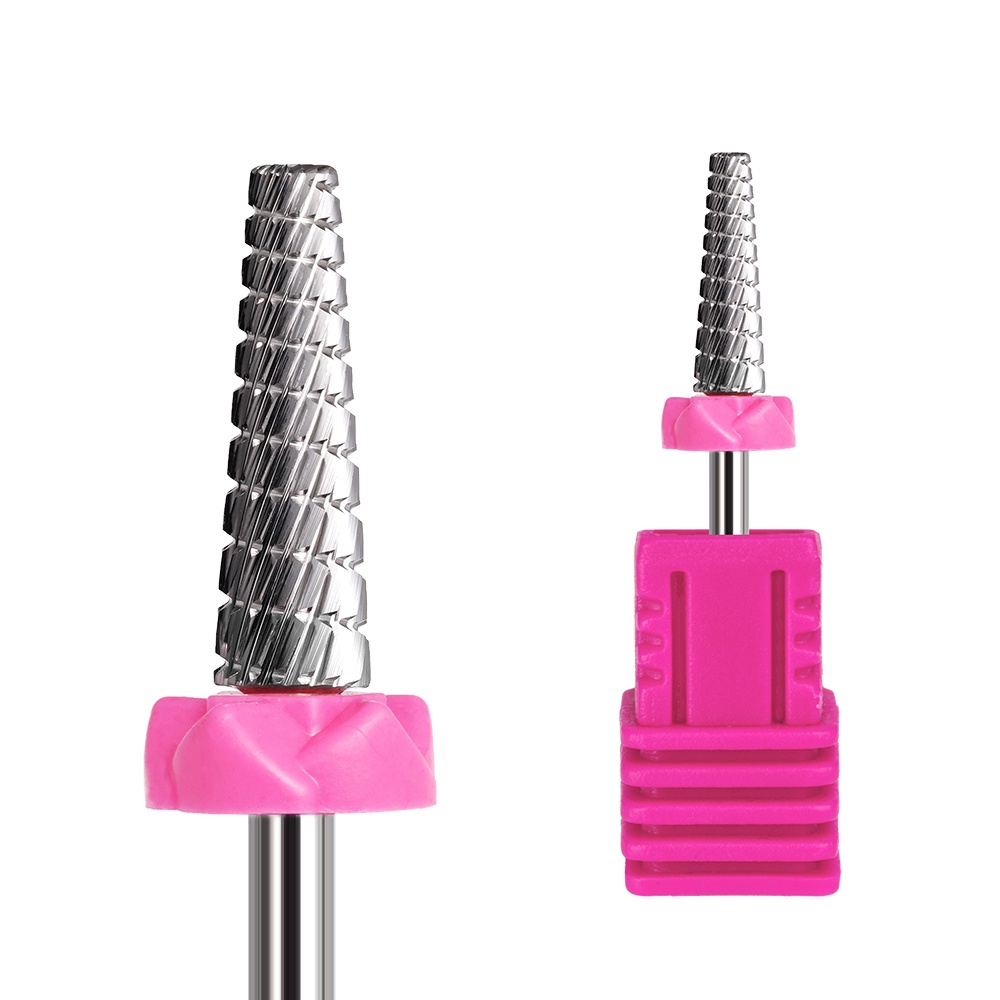
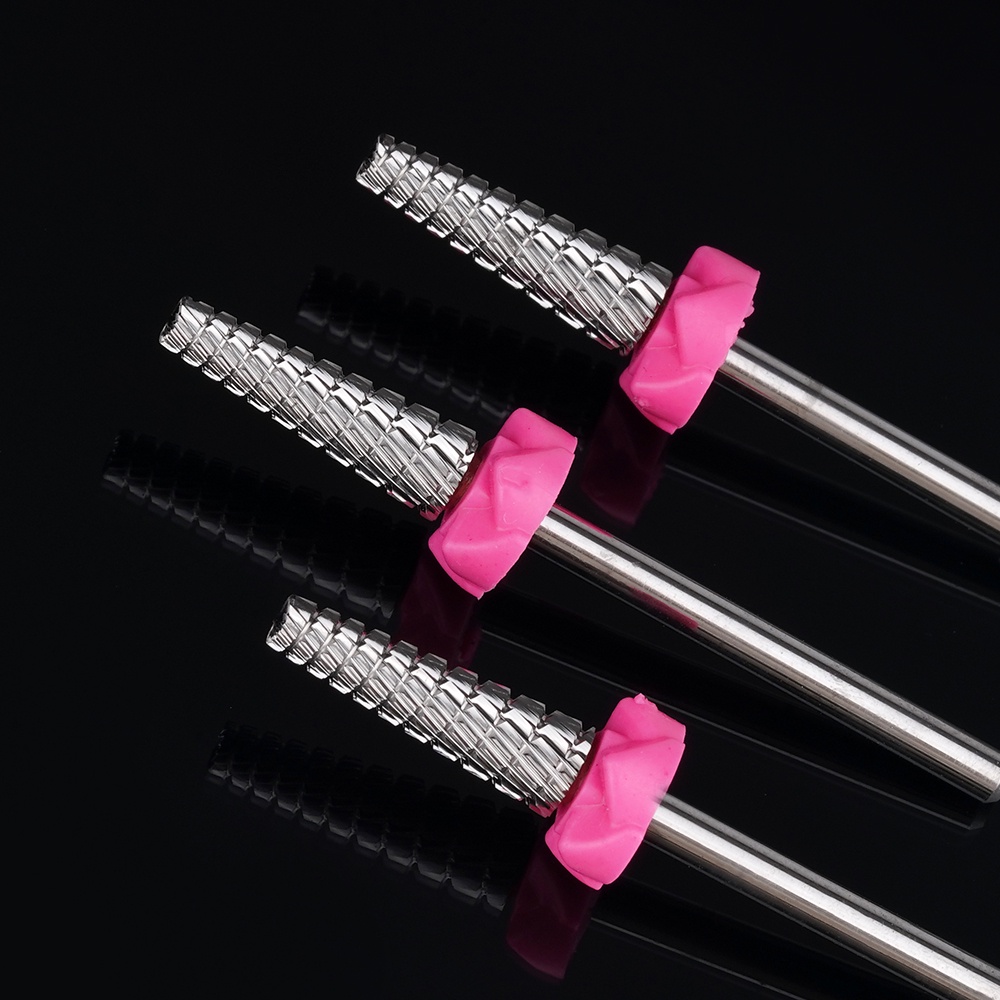
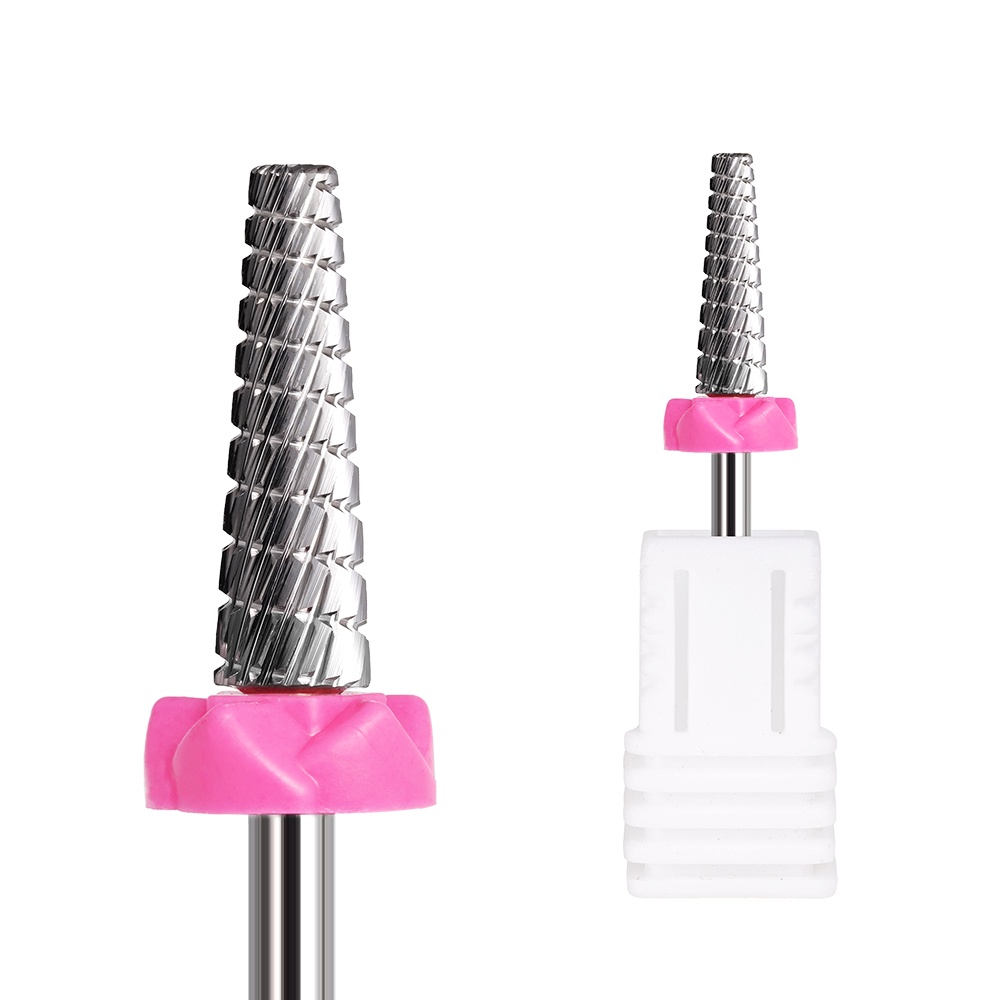
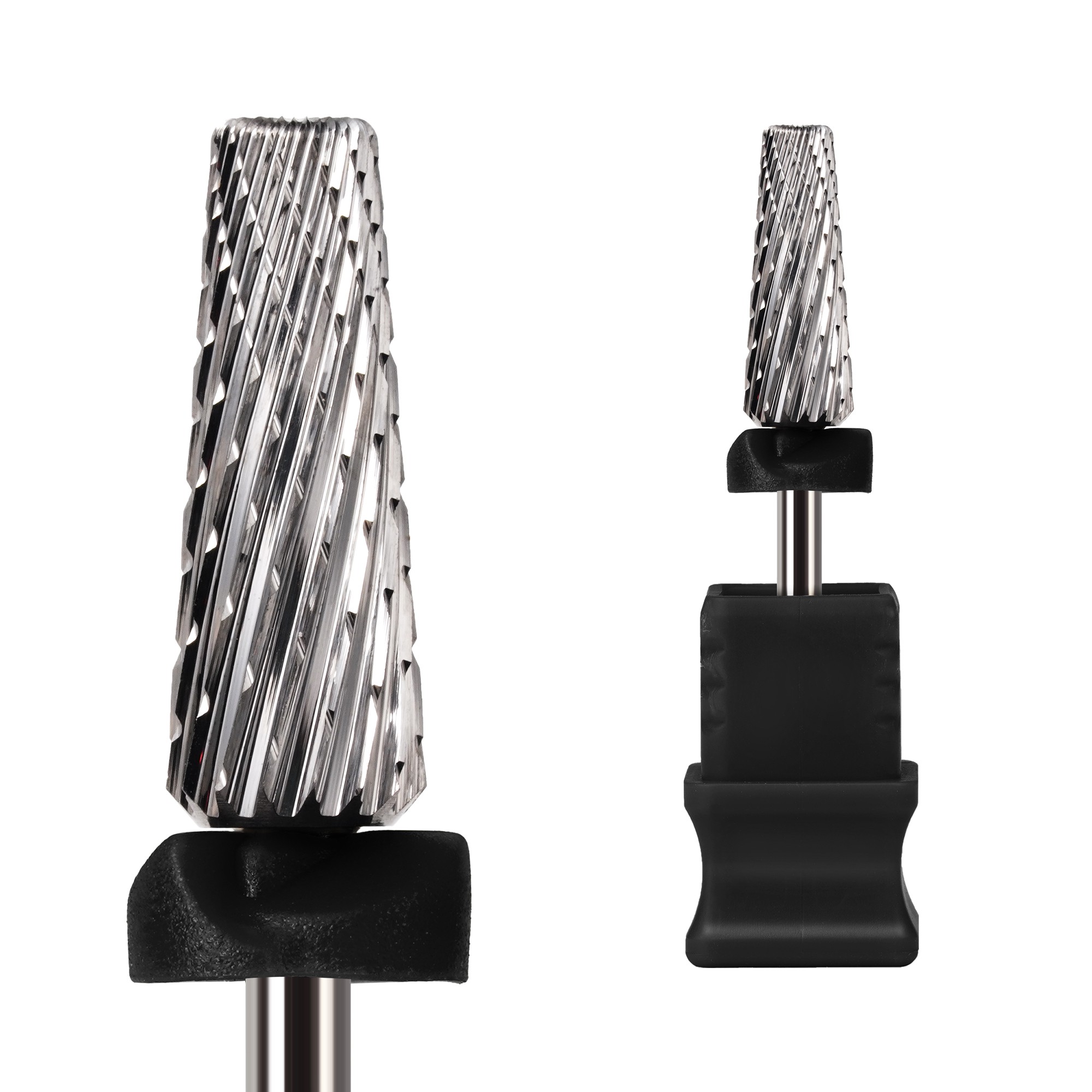
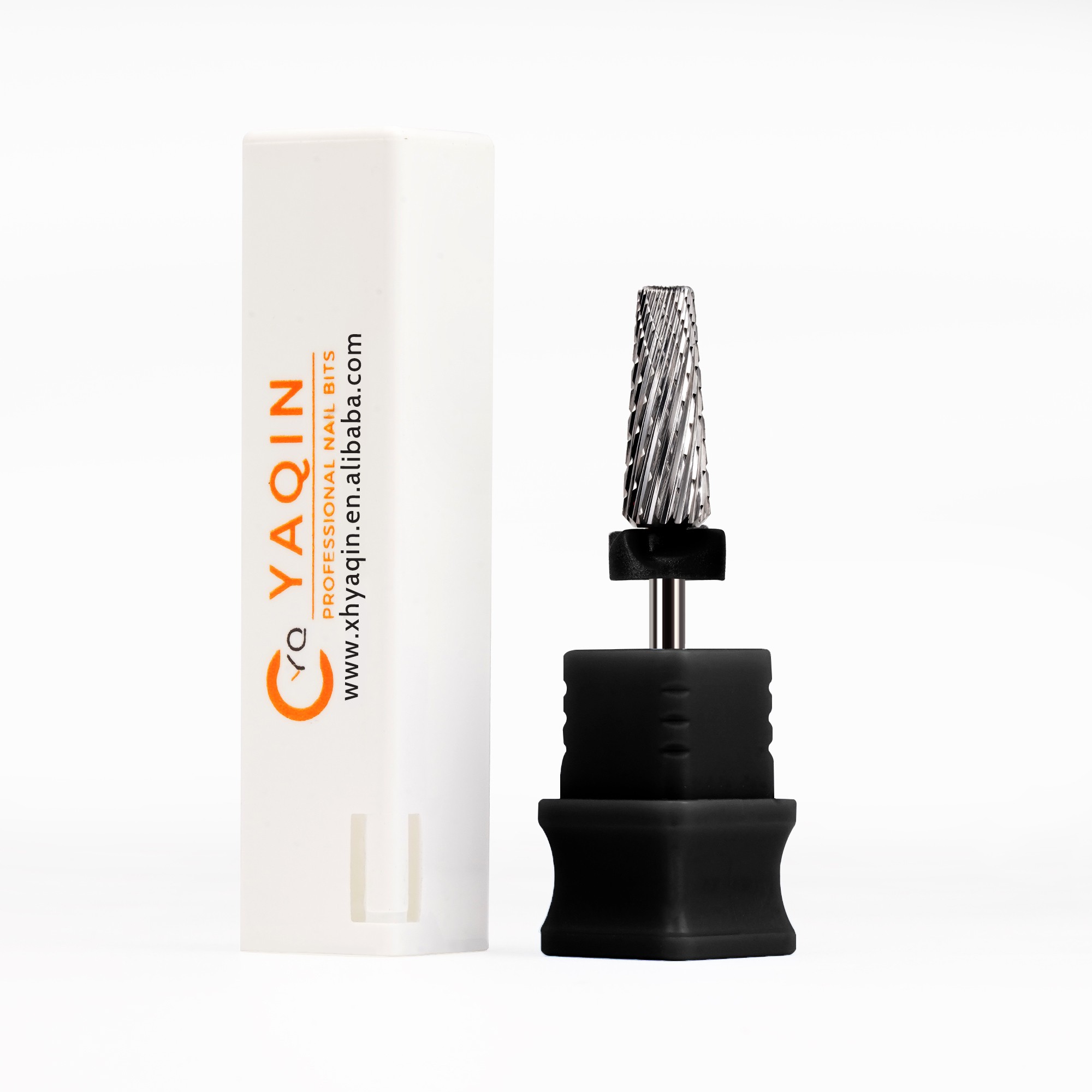
The same principle applies to alternatives used for heavier removal work. A tungsten carbide bit, for example, is typically selected for efficient removal of gel systems, product bulk, or tougher surfaces rather than for every close-to-skin task. A smooth-top, slant-tooth design may offer a more controlled profile when matched to the right application. The New Slant Tooth Tungsten Steel Nail Drill Bits Dead Skin Removal 5-in-1 Universal Grinding Nail Polish Head Tool Nail Drill Bits illustrates the kind of specification that should be reviewed beyond a headline: material, tip geometry, dust-ejection behavior, shank compatibility, and the stated boundaries of use all need to be checked before it is treated as interchangeable with a diamond abrasive.
A QC File Should Follow the Product Through Delivery
Traceability is what turns a supplier promise into a manageable quality system. At minimum, cartons and inner packs should support identification of the product model, grit or profile, quantity, production lot, and supplier. A buyer should be able to link the lot to incoming material records, in-process inspection, final inspection, packaging checks, and any complaint investigation. For OEM programs, approved artwork, warning language, and instructions should be controlled versions rather than files exchanged informally by email.
A useful incoming-control plan usually includes visual sampling, dimensional checks, fit testing in a representative handpiece, rotation testing, coating inspection, packaging verification, and document review. Where the product is packed in mixed grit sets, assortment accuracy deserves its own check. A technically sound bit in the wrong labeled compartment can still create a service risk.
Wuxi Yaqin Trading Co., Ltd. describes a QC system that covers raw-material purchasing, production processes, and product packing, alongside ISO9001:2000 quality-management certification and OEM/ODM experience. For procurement teams, the relevant next step is not to treat that statement as a blanket approval. It is to request current, product-specific evidence: inspection criteria, lot records, material information, packaging controls, and confirmation of which destination-market requirements the supplied version is intended to address.
What to Ask Before Approving a Supplier
- What are the shank material, abrasive bonding method, grit designation, and intended use for each profile?
- Which lot-level checks are performed for diameter, runout, coating condition, sharp edges, and packaging accuracy?
- Can the supplier provide applicable chemical-compliance information for the actual destination market?
- What cleaning, disinfection, storage, and replacement guidance accompanies the product?
- How are nonconforming lots isolated, reworked, or rejected, and how is corrective action documented?
- Can the supplier maintain consistent specifications when branding, packaging, or product configuration changes?
The best approval decision is rarely based on one document or one attractive sample. A dependable diamond nail drill bit should be supported by a controlled specification, demonstrable consistency, appropriate market documentation, practical hygiene guidance, and traceability that still works after the goods leave the factory. If a supplier cannot explain how those pieces connect, the risk is not hidden in the grit size. It is built into the supply chain.
News List
- Preventing Gouges and Uneven Filing With Small Barrel Nail Drill BitsSep 20, 2026
- How Diameter and Grit Affect Small Barrel Nail Drill Bit PerformanceSep 20, 2026
- Can Hytos Nail Drill Bits Be Used Safely on Natural Nails and Gel Polish?Sep 20, 2026
- How to Verify Fit Between Hytos Nail Drill Bits and an E-File HandpieceSep 20, 2026
- Safe Speed Settings for Umbrella Nail Drill Bits Around the Nail FoldSep 20, 2026
- Umbrella vs Flame Nail Drill Bits: Which Shape Offers Better Cuticle Control?Sep 20, 2026
Best-Selling Products
 Cross Cut Safety Stainless Steel Tungsten Carbide Nail Drill Bits Salon Foot Use XF-C Grit for Removing Nails
 First-rate Quality Tungsten Carbide Nail Drill Bits Best Coating Manicure Remove Gel Nails Accessories
 Professional Advanced Safety Cuticle Bits Two-Way Rotate 3/32'' Carbide Tungsten 5 in 1 Nail Drill Bits
 Wholesale 5 in 1 Electric Manicure Nail Drill Bits Various Coating Cone Cuticle Bit with Rotary Cross Cut for Nail Art
 New Slant Tooth Tungsten Steel Nail Drill Bits Dead Skin Removal 5-in-1 Universal Grinding Nail Polish Head Tool Nail Drill Bits
 4.0mm Small 5 in 1 Integrated Sharpe Tungsten Nail Drill Bit Straight Teeth Gel Polish Removal
 Flame Sharp XF F M C XC Silver Safety Professional Corn Tungsten Carbide Nail Bit for Drill Machine Accessories
 Factory Direct 5 in 1 Tungsten Carbide Nail Drill Bits 6.8MM Cross Cut Safety Manicure 5 in 1 Nail Drill Bits
Please give us a message