
Are ceramic nail drill bits less likely to overheat during gel removal
Are ceramic nail drill bits less likely to overheat during gel removal
Yes, a ceramic nail drill bit can be less likely to feel excessively hot during gel removal, but the material alone does not prevent overheating. Heat is created by friction: the bit contacts the gel surface, the e-file rotates, and pressure is applied. Ceramic can help manage that friction in a way many technicians find more comfortable, especially during controlled removal of gel polish or builder gel. Still, an unsuitable grit, too much pressure, a clogged cutting surface, or poor hand movement can make any bit feel hot.
The useful question is not simply whether ceramic is “cooler” than every other material. It is whether the bit, grit, speed, and technique suit the coating being removed. A well-chosen ceramic bit can reduce the chance of heat discomfort, but it cannot compensate for an overloaded tool or rushed filing.
Why a ceramic nail drill bit may feel cooler
Ceramic bits are made from a hard, non-metallic material with cutting teeth or flutes formed into the surface. During gel removal, those flutes are intended to shave away product in small amounts rather than relying on heavy pressure to grind through it. When the bit removes material efficiently, the technician can use a lighter touch. Less pressure usually means less friction at the nail surface.
Ceramic also does not conduct heat in the same way as metal. A metal bit can transfer heat through its body more readily, while ceramic tends to pass less heat back toward the handpiece. That can make a ceramic nail drill bit feel less hot in use. However, the client’s sensation comes mainly from heat produced at the point where the bit meets the enhancement. If the bit stays in one place too long, any material can generate uncomfortable warmth.
This difference is most noticeable when removing a moderate layer of soft gel, gel polish, or builder gel with steady movement. It is less decisive when removing very hard gel, thick acrylic, or a heavily built extension. In those cases, cutting efficiency and correct grit often matter more than the bit material.
What actually causes heat during gel removal
Heat complaints are often blamed on the bit when the real issue is a combination of operating conditions. Looking at those conditions makes it easier to decide whether ceramic is the right choice.
- Too much downward pressure: Pressing a bit into the product increases friction. The bit should remove gel with a light, controlled contact rather than force.
- Holding the bit in one area: Even a fine bit can create heat if it pauses over the same spot. Continuous, overlapping passes distribute the work across the nail.
- Incorrect speed: A speed that is too low can encourage pressing; a speed that is too high for the operator’s control can cause skipping, dragging, or excessive surface contact.
- Wrong grit for the job: A fine grit used on a thick, hard enhancement can be slow and frustrating. A coarse grit used too aggressively near the natural nail can remove product too quickly.
- Loaded or worn cutting flutes: Gel dust and product residue reduce cutting action. Instead of cutting cleanly, the bit may rub, which raises heat and makes removal less predictable.
- Damaged or poorly fitted equipment: Bit wobble, a worn handpiece, or an incorrectly inserted shank affects control and can create uneven contact.
In practice, a client who reports “burning” may be reacting to a brief friction spike, not necessarily to a hot bit overall. Stop immediately, lift away, reassess the pressure and speed, and continue only when the contact feels controlled. Trying to finish a pass through discomfort is not an efficient technique.
Ceramic versus carbide for removing gel
Ceramic and tungsten carbide bits are both common choices in professional nail services, but they are not interchangeable in every situation. Ceramic is often selected for its smooth feel, visible light-colored surface, and useful performance on gel systems. Carbide is valued for fast, durable cutting, particularly on dense enhancements. The better option depends on the service.
The claim that ceramic never heats up is a common mistake. Another is assuming carbide is automatically harsh. A sharp, clean carbide bit used with a light touch may remove product faster and with less heat than a clogged ceramic bit that requires repeated pressing. Material influences the working feel, but the removal system should be judged as a whole.
Choose the grit before focusing on the color or material
Grit controls how aggressively the bit removes product. A ceramic bit may be coarse, medium, fine, or extra fine, and each grade changes the appropriate use. Coarser cuts are usually reserved for reducing bulk product. Medium cuts are a practical middle ground for many gel-removal services. Fine cuts allow more controlled refinement and are better suited to thinner residual product or work nearer to the natural nail.
A useful removal approach is to reduce the enhancement in stages rather than trying to strip everything with one bit. Start by taking down the bulk of a thick coating with a suitable removal bit, then switch to a finer option before the natural nail is exposed. Leaving a thin layer of compatible product when performing a structured gel rebalance can also avoid unnecessary contact with the natural nail.
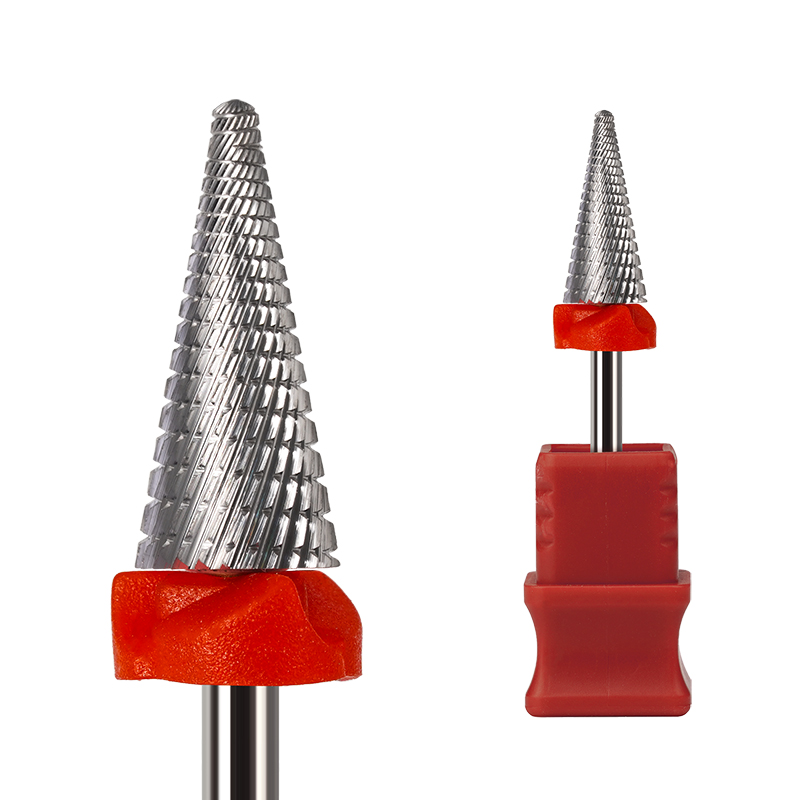
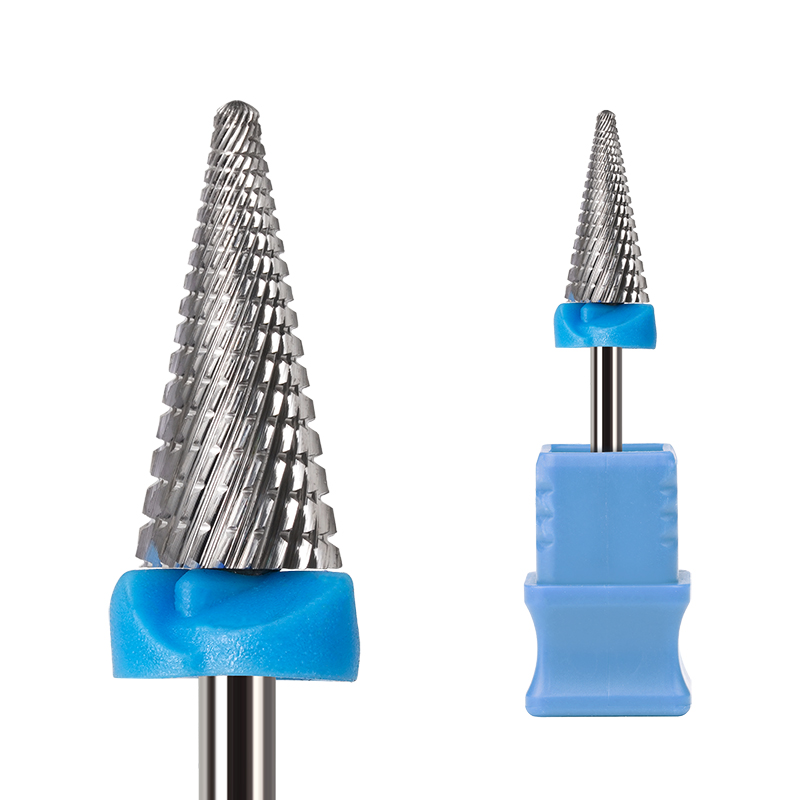
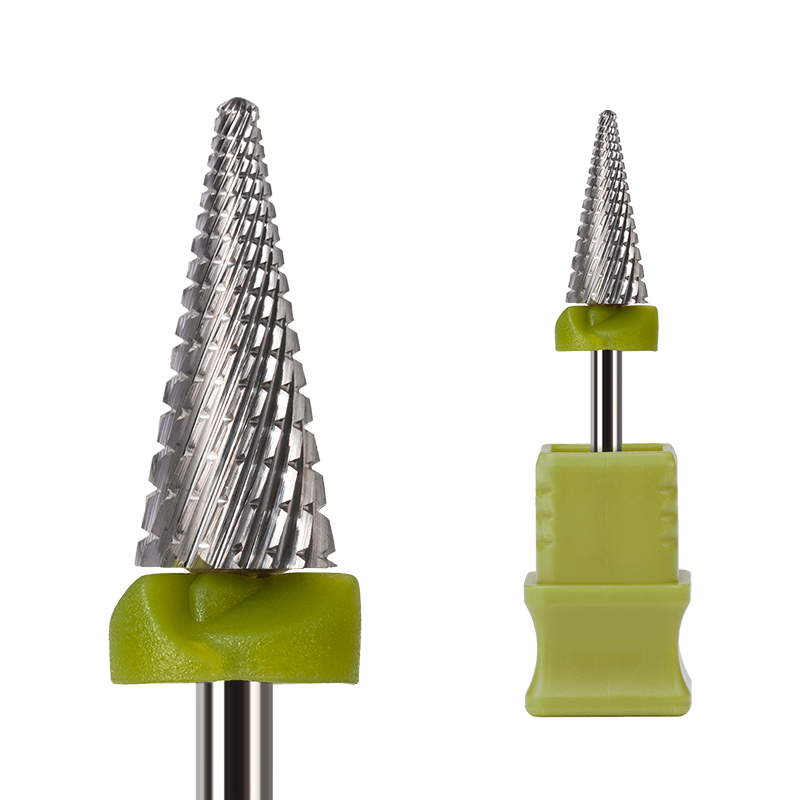
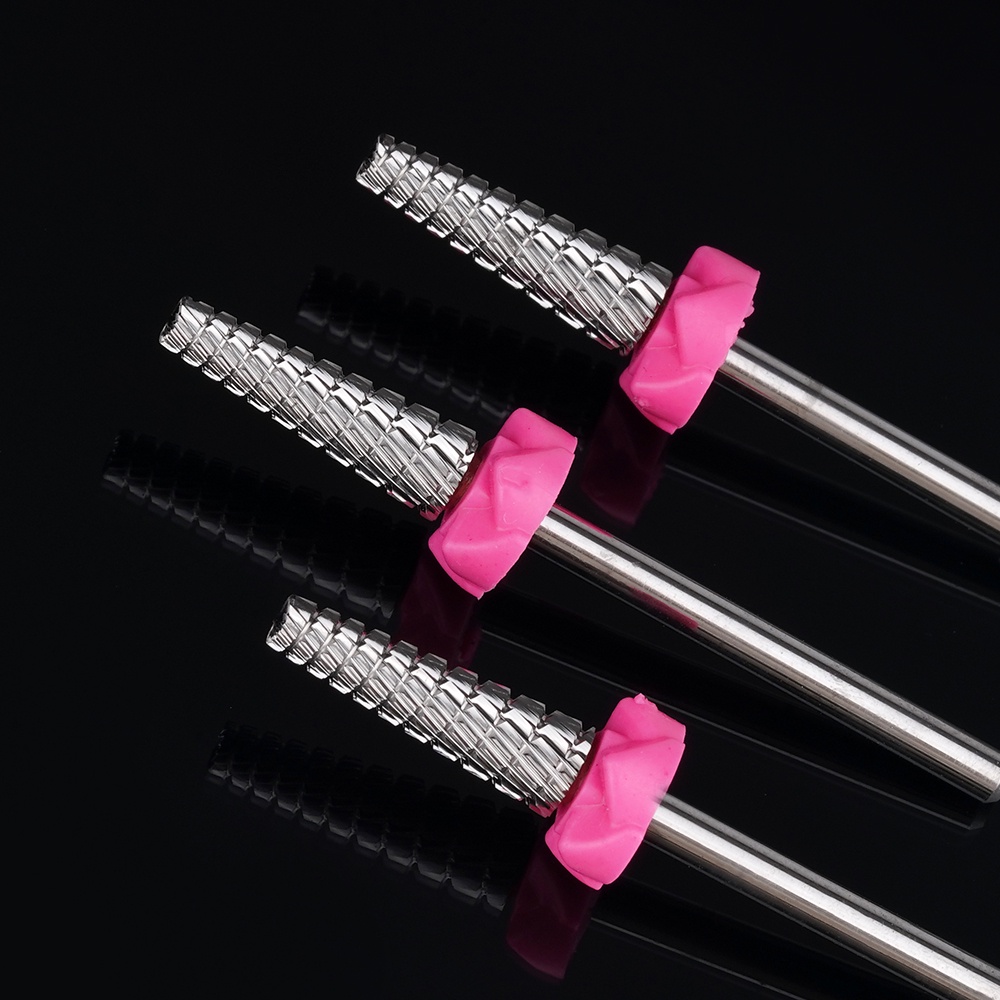
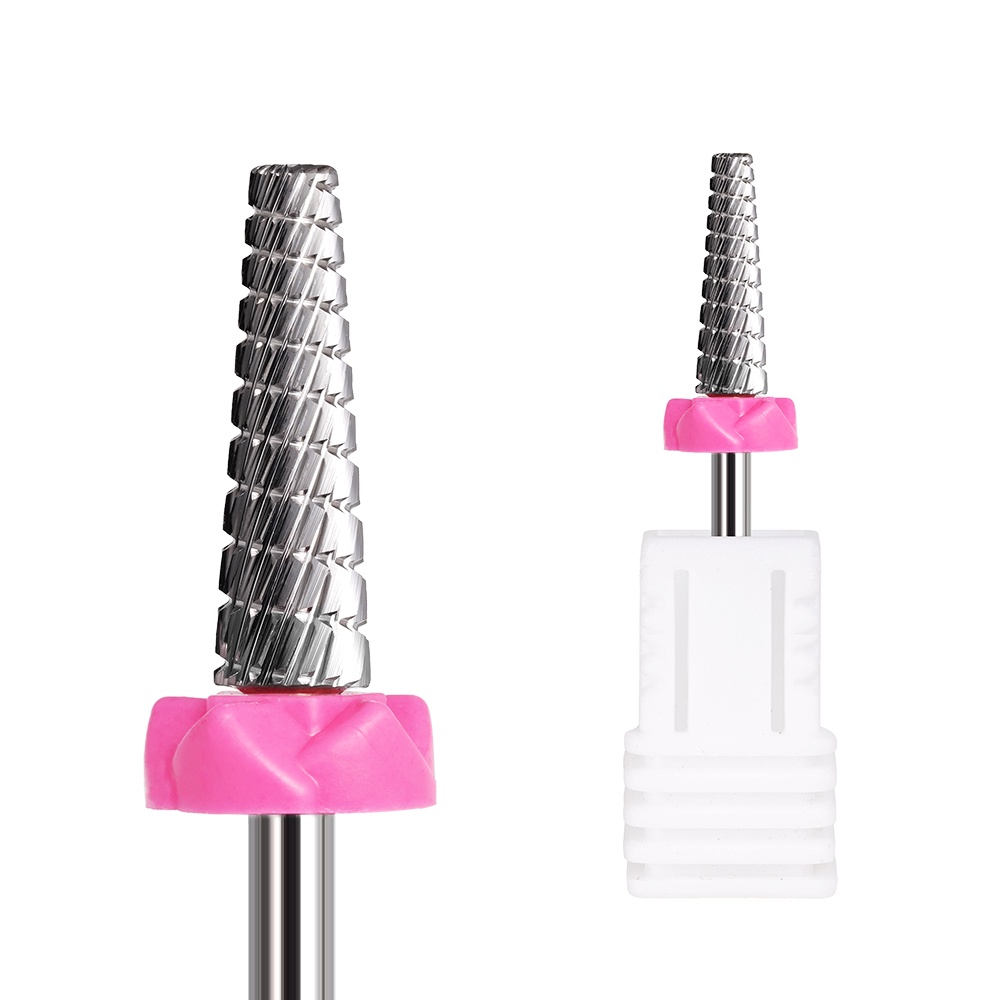
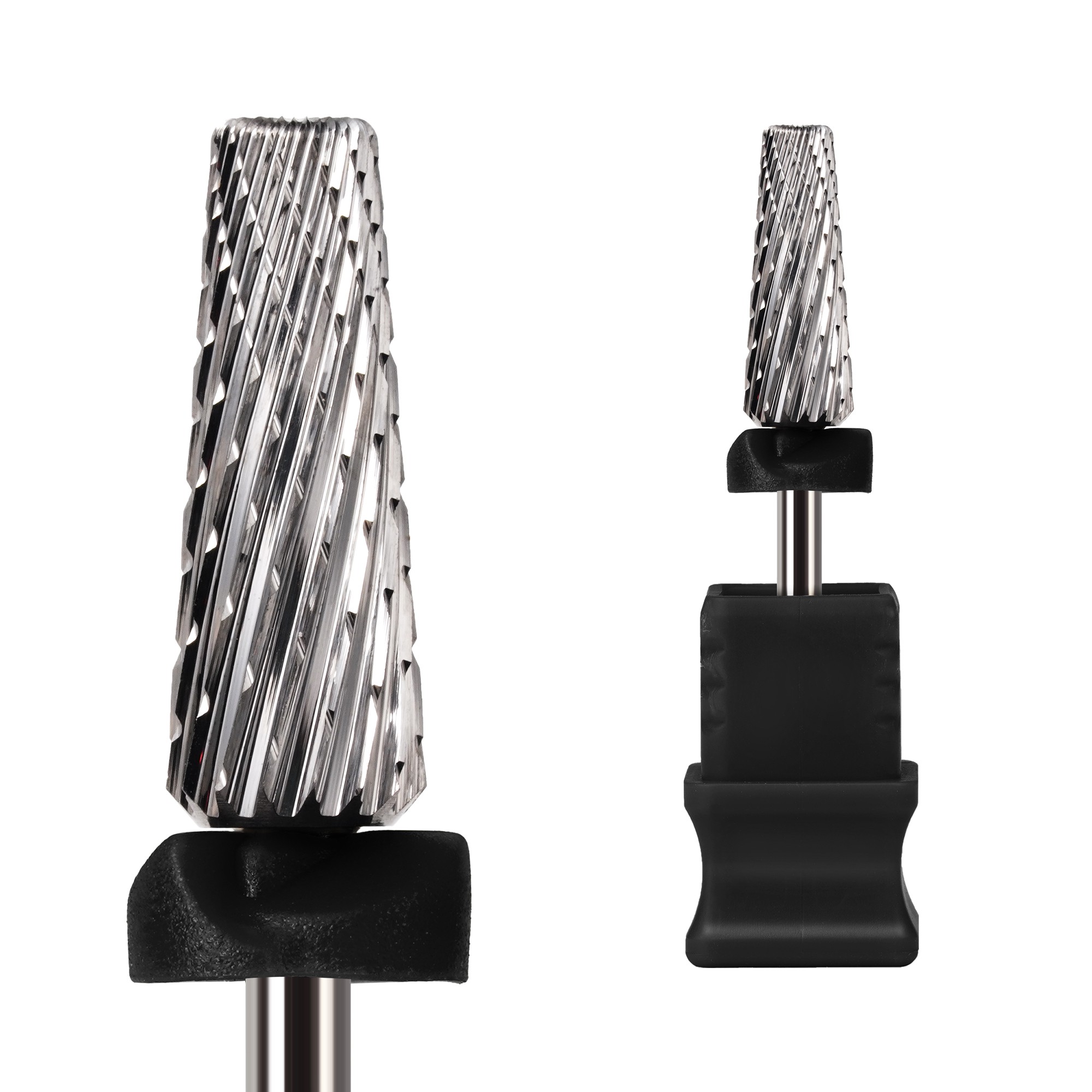
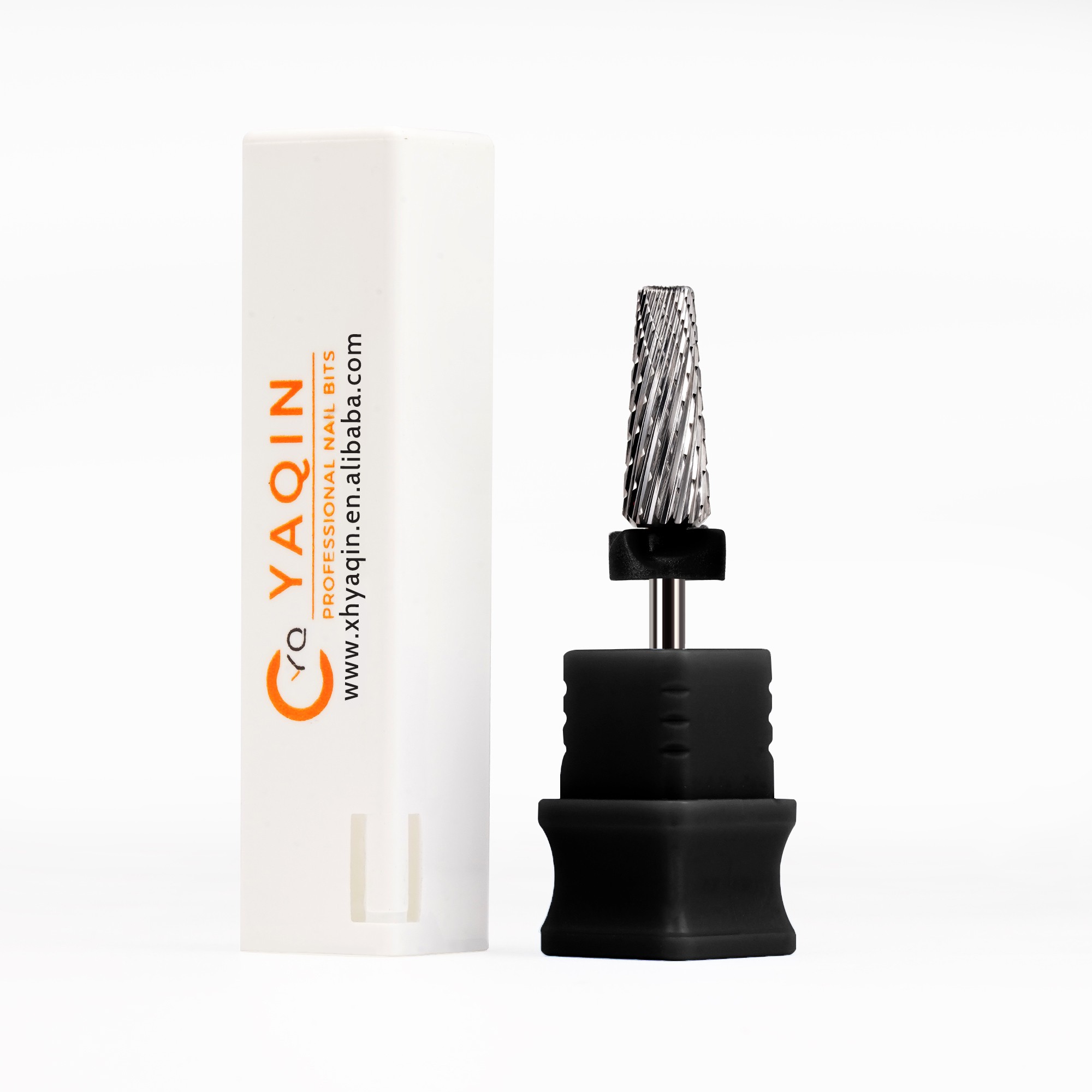
For example, a salon may keep a ceramic bit available for routine gel reduction and use a carbide option when hard gel, extensions, or acrylic require more efficient bulk removal. For edge refinement or controlled work near surrounding skin, a rounded safety profile is often more relevant than choosing ceramic over carbide. A tungsten-carbide option such as 5.0mm Corn Bullet Shape Universal Carbide Cuticle Dc Nail Bits is designed for gel, acrylic, and enhancement removal while its rounded pointed head is intended to help reduce accidental contact damage around the nail. It should be selected for the task it is designed to perform, rather than treated as a substitute for a ceramic bit in every step.
Technique determines whether the nail feels comfortable
Good heat management starts before the e-file touches the product. Check that the bit is clean, undamaged, and fully seated in the handpiece. Select a rotation direction that carries dust away from the working edge and supports a stable hand position. The technician should support the client’s finger, stabilize the working hand, and use the broad side of the barrel or safety bit where appropriate instead of digging with a narrow edge.
Keep the bit moving in smooth passes. The goal is to skim product evenly, not to create a deep channel. When approaching the apex or a thinner area of enhancement, reduce pressure and reassess how much material remains. Product thickness is not always uniform, especially after weeks of wear, so using the same force across the entire nail is unreliable.
Speed should support cutting, not replace technique. Manufacturers may provide speed ranges for different grits, but the appropriate setting also depends on the e-file, bit diameter, product density, and the user’s level of control. For tungsten-carbide salon bits, coarse cuts are commonly used at higher operating speeds than fine cuts; this reflects the difference in removal purpose, not a rule to increase speed whenever removal feels slow. If a bit is not cutting well, first check for loading, wear, wrong grit, or excess product thickness before simply increasing RPM.
When ceramic is not the best answer
A ceramic nail drill bit may not be the most efficient first choice for every removal job. Very thick acrylic, dense hard gel, and heavily reinforced extensions can require a robust carbide bit that removes bulk product efficiently. Choosing a bit that is underpowered for the material can lead to extra passes and extra pressure, which undermines the heat-control benefit the user expected from ceramic.
Ceramic can also chip if dropped or knocked against a hard surface. Inspect it before each use. Any visible damage, rough edge, or unexpected vibration is a reason to replace the bit. A damaged bit is harder to control and should not be used near the natural nail or skin.
Newer technicians often benefit from a medium or fine ceramic option for controlled gel reduction, but the bit does not make aggressive technique safe. Training in e-file angles, hand support, rotation direction, and product recognition remains essential. A client’s natural nail should never be treated as the final layer to remove with a high-speed bit.
A practical way to decide
If the main concern is heat during routine gel removal, choose a quality ceramic bit in an appropriate grit, keep it clean, and use light, moving contact. That combination is likely to feel smoother than forcing a dull or poorly matched bit through the coating. If the service involves a thick hard enhancement, use an efficient bulk-removal bit first, then change to a finer tool for the last layer and perimeter work.
For salon purchasing, inspect more than the material label. Confirm the shank compatibility, grit consistency, flute quality, balance, and whether the supplier has quality controls covering raw materials, production, and packing. For regular restocking or private-label requirements, manufacturers with documented quality-management processes and OEM/ODM capability can provide more dependable consistency across batches. The most comfortable gel removal comes from a well-made bit used for its intended purpose, not from a single material claim.
News List
- Preventing Gouges and Uneven Filing With Small Barrel Nail Drill BitsSep 20, 2026
- How Diameter and Grit Affect Small Barrel Nail Drill Bit PerformanceSep 20, 2026
- Can Hytos Nail Drill Bits Be Used Safely on Natural Nails and Gel Polish?Sep 20, 2026
- How to Verify Fit Between Hytos Nail Drill Bits and an E-File HandpieceSep 20, 2026
- Safe Speed Settings for Umbrella Nail Drill Bits Around the Nail FoldSep 20, 2026
- Umbrella vs Flame Nail Drill Bits: Which Shape Offers Better Cuticle Control?Sep 20, 2026
Best-Selling Products
 Cross Cut Safety Stainless Steel Tungsten Carbide Nail Drill Bits Salon Foot Use XF-C Grit for Removing Nails
 First-rate Quality Tungsten Carbide Nail Drill Bits Best Coating Manicure Remove Gel Nails Accessories
 Professional Advanced Safety Cuticle Bits Two-Way Rotate 3/32'' Carbide Tungsten 5 in 1 Nail Drill Bits
 Wholesale 5 in 1 Electric Manicure Nail Drill Bits Various Coating Cone Cuticle Bit with Rotary Cross Cut for Nail Art
 New Slant Tooth Tungsten Steel Nail Drill Bits Dead Skin Removal 5-in-1 Universal Grinding Nail Polish Head Tool Nail Drill Bits
 4.0mm Small 5 in 1 Integrated Sharpe Tungsten Nail Drill Bit Straight Teeth Gel Polish Removal
 Flame Sharp XF F M C XC Silver Safety Professional Corn Tungsten Carbide Nail Bit for Drill Machine Accessories
 Factory Direct 5 in 1 Tungsten Carbide Nail Drill Bits 6.8MM Cross Cut Safety Manicure 5 in 1 Nail Drill Bits
Please give us a message