
What to verify with a nail drill bit manufacturer before bulk ordering
What to verify with a nail drill bit manufacturer before bulk ordering
For a bulk purchase, the lowest quoted unit price is rarely the lowest real cost. A nail drill bit that wears early, runs off-center, removes product unevenly, or arrives with inconsistent labeling can create returns, rework, and damage to the buyer’s brand. Before committing to volume, assess whether a Nail Drill Bit Manufacturer can reproduce the same cutting performance and finish across the full order, not merely supply an attractive sample.
The practical question is simple: can the supplier document what will be made, control the variables that affect use, and resolve an issue without shifting the cost back to the buyer? The following checks help turn that question into a workable sourcing process.
Start with the bit’s intended job, not the catalog image
“Nail drill bit” covers tools with very different purposes. A barrel bit for rapid product removal, a tapered bit for sidewalls, a flame bit for cuticle-area work, and a safety bit with a rounded or flat protective end should not be evaluated by the same criteria. Before requesting a quotation, define the work the bit must perform: removing hard gel, refining acrylic, cleaning under the nail, smoothing product near the cuticle, or preparing a natural nail.
This matters because geometry determines both efficiency and risk. A coarse cutting surface may shorten removal time on thick enhancement material, but it can be unsuitable near natural nails or sensitive skin. A fine or safety-focused profile can offer more control, but may be too slow for heavy salon turnover. If the intended end user is a professional technician, sustained cutting performance and predictable handling generally matter more than a wide range of decorative finishes. For a DIY-oriented range, clearer use instructions and forgiving safety geometry may deserve more attention.
Send the manufacturer a written specification with the bit shape, working length, shank diameter, grit or cut type, intended material, finish, color requirements, and packaging format. “Carbide nail bit, pink, good quality” leaves too much room for interpretation. The same product name can hide meaningful differences in flute depth, tip finishing, coating, and overall balance.
Verify material claims and construction details
Material is often stated broadly as tungsten steel or tungsten carbide, yet procurement decisions should go beyond the label. For carbide bits, ask the supplier to identify the material used for the working head and the shank, as well as the joining method. The concern is not academic: poor material selection or weak bonding can affect sharpness retention, resistance to breakage, and stability during repeated use.
A manufacturer should be able to explain its normal incoming-material control and how it keeps lots consistent. It is also reasonable to request samples from the proposed production configuration rather than accepting a generic display sample. The sample should have the same cut pattern, color treatment, packaging, and marking planned for the order.
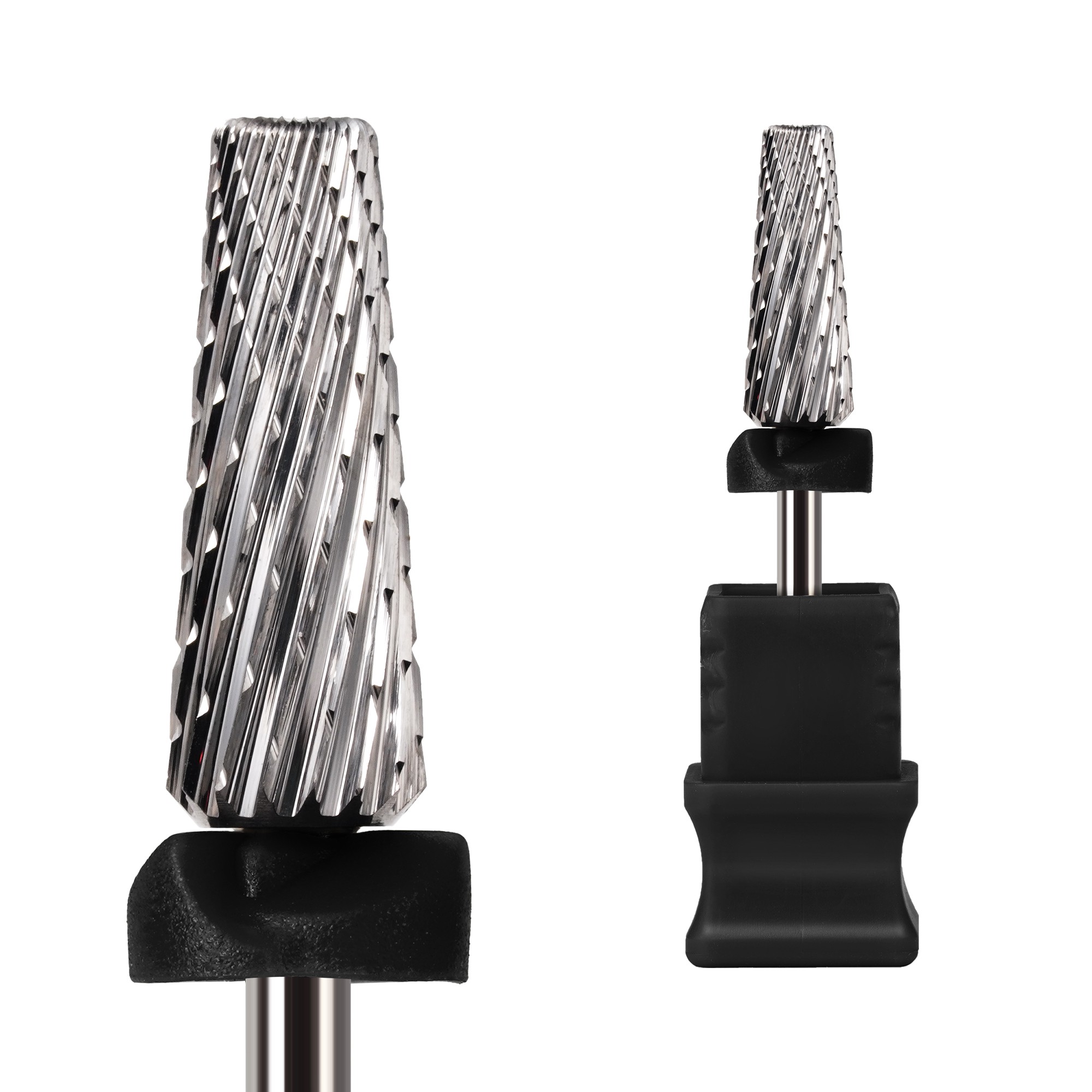
Inspect the working surfaces closely. Cutting edges should look clean and uniform rather than crushed, patchy, or heavily burred. On helical or cross-cut designs, flute spacing and direction should be consistent. Uneven teeth can create an irregular removal feel, reduce efficiency, and make dust discharge less controlled. A protective tip should also be genuinely smooth, with no sharp transition at the edge.
Do not treat a coating or colored label as proof of better performance. A finish may help distinguish a product line or support a private-label presentation, but the cutting geometry, material quality, and manufacturing consistency remain the foundation of usable value.
Test for concentricity, vibration, and heat in realistic use
For electric nail drill accessories, a bit that appears acceptable when stationary may still perform poorly in a handpiece. Runout, often felt as wobble or vibration, affects technician control and can make precise work uncomfortable. It can also cause one side of the cutter to wear faster than the other.
Ask how the supplier checks shank straightness and finished concentricity. Then fit samples to the type of electric file commonly used in the target market and operate them through normal speed ranges. The test should include actual gel or enhancement removal, not only free spinning in the air. Observe whether the bit tracks smoothly, clears debris effectively, and remains controllable as it works.
Heat should be judged in context. Aggressive pressure, unsuitable speed, or a bit used for the wrong material can create heat even with a well-made tool. However, if a sample becomes difficult to control or generates excessive friction under ordinary technique, the shape, cut pattern, or finish may not suit the claimed application. A supplier that can discuss recommended use by bit type is usually easier to work with than one that offers only generic assurances.
Evaluate cutting performance against the product range you will sell
Testing only one bit may be enough for an initial sourcing screen, but it is not enough for a mixed bulk order. A coherent range needs a clear distinction between removal bits, refining bits, cuticle-area tools, and safety options. Otherwise, buyers may carry products that overlap in appearance while failing to cover the actual workflow of nail technicians.
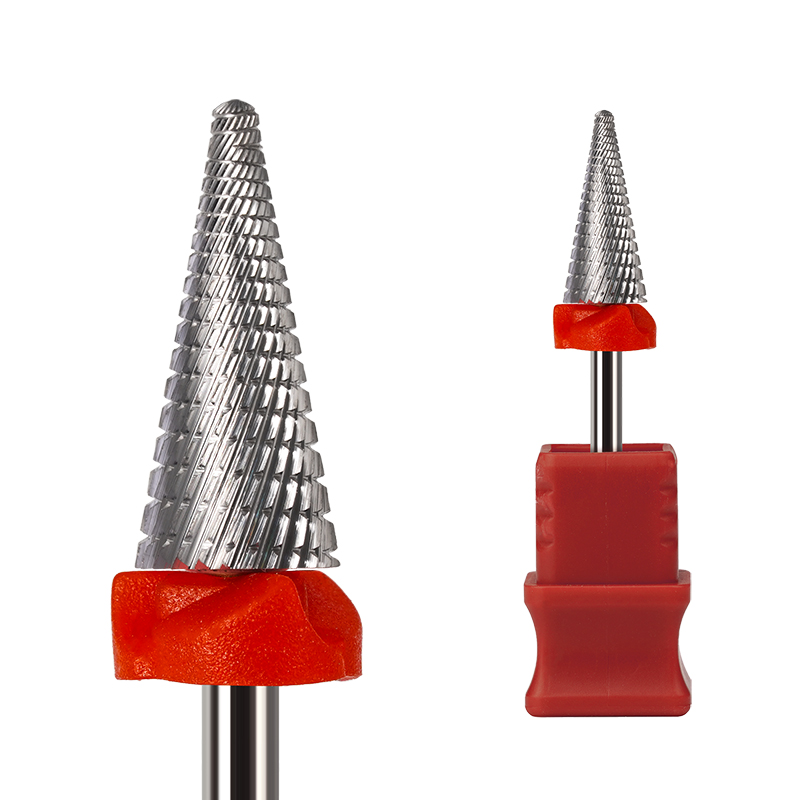
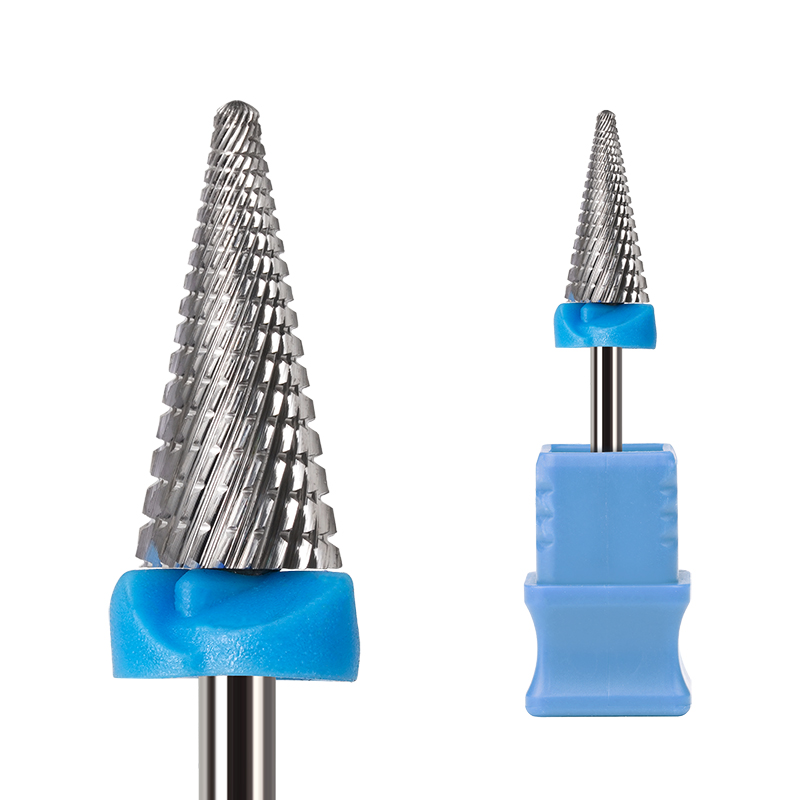
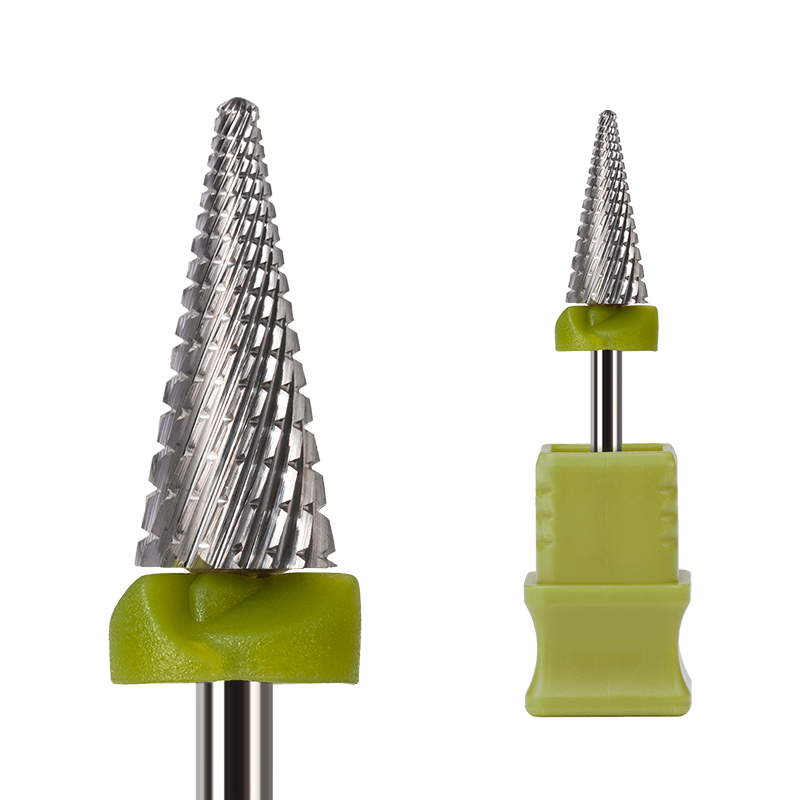
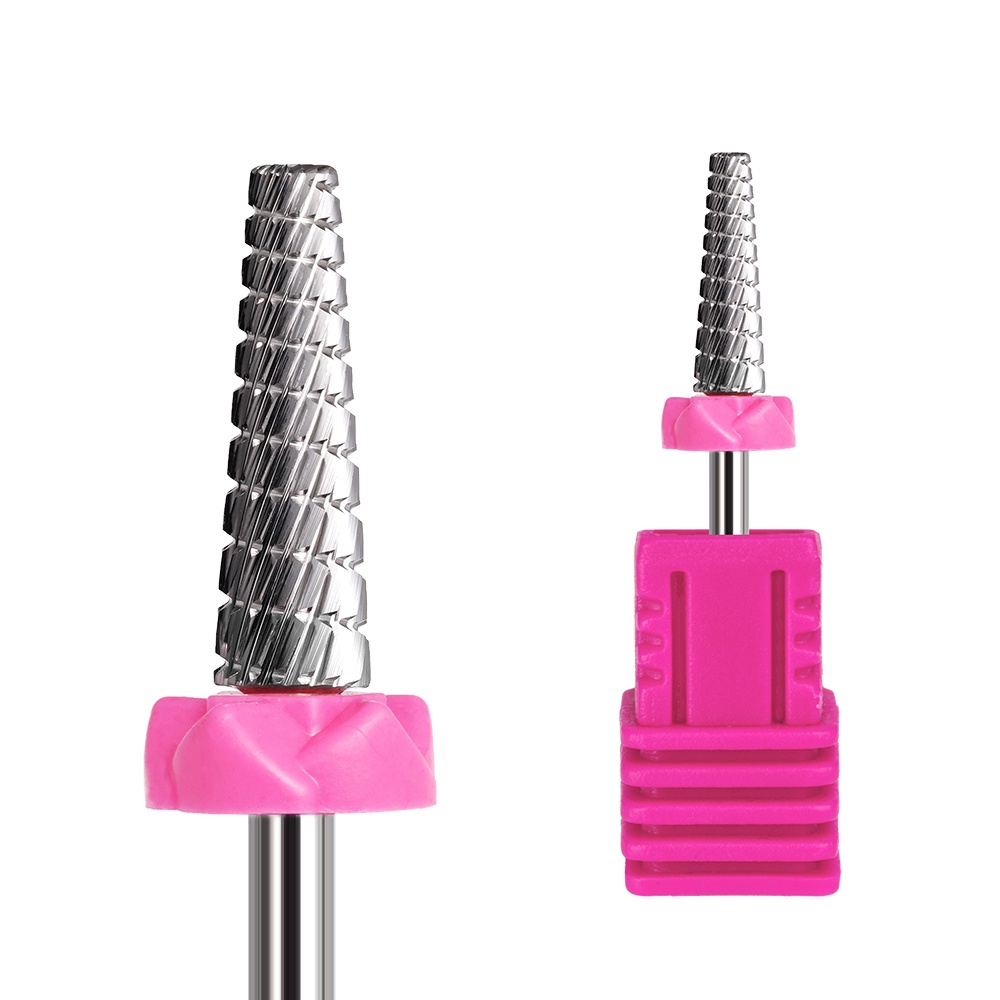
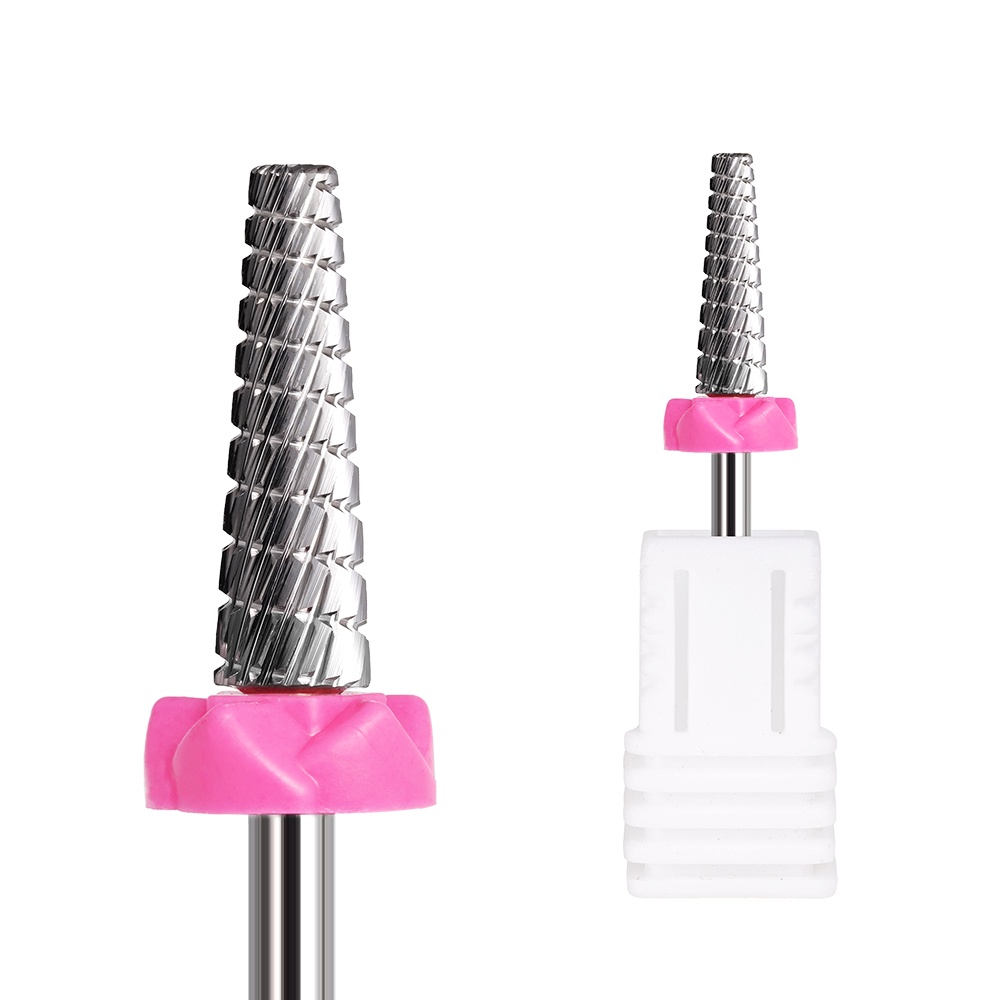
A 5-in-1 carbide bit is a useful example of where the details need to match the claim. It may combine cutting zones intended for faster product removal and more controlled work closer to the nail area. That can reduce tool changes for certain users, but it does not make the bit appropriate for every task or every skill level. Confirm the cut zones, tip profile, and suitable materials rather than relying on the “5-in-1” description alone.
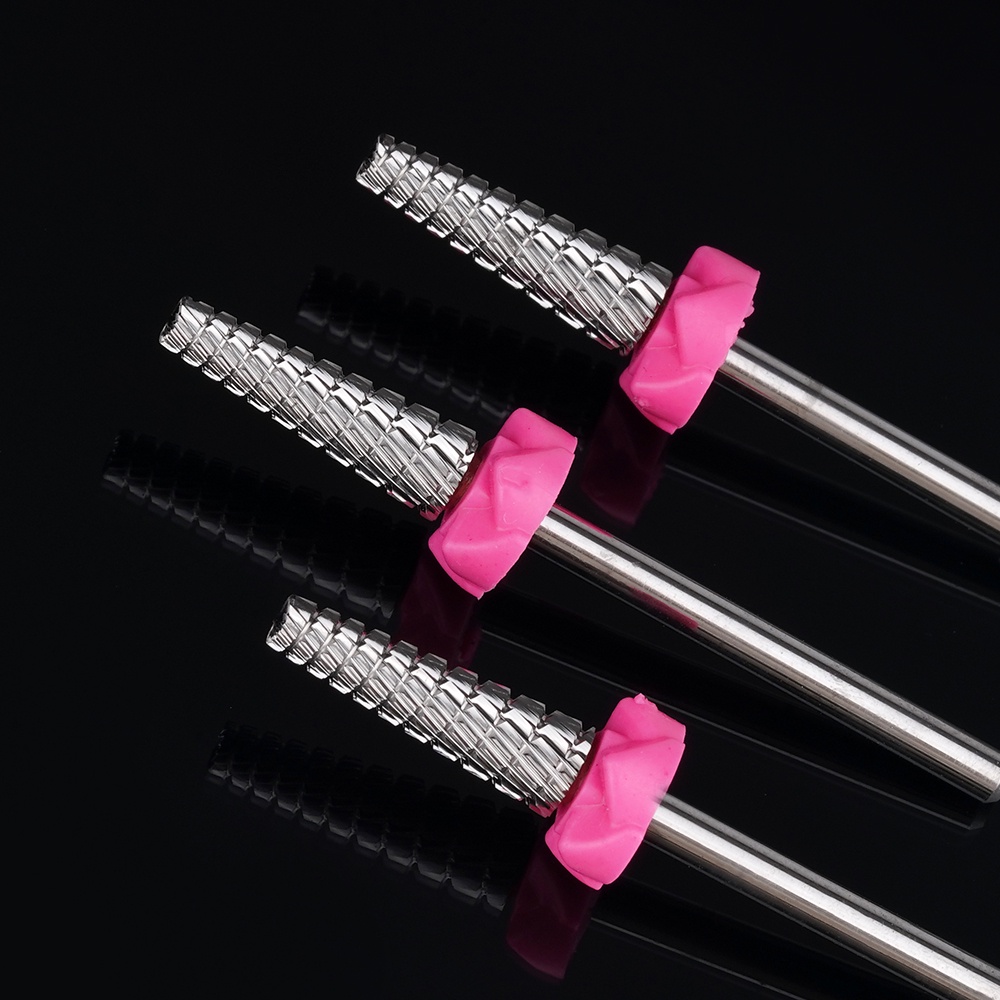
For example, the Quick Nail Polish Remover No Vibration Your Hands Pink Label Helical Teeth 5-in-1 Universal Tungsten Carbide Nail Drill Bits is positioned for hard and soft gel removal, with a helical cutting design and a smooth flat tip. When reviewing a product of this type, buyers should still test whether the dust exits in a controlled direction, whether the grinding surface stays consistent, and whether the safety feature remains effective after repeated cleaning and use. Product claims are a starting point for verification, not a substitute for it.
Put quality control into an agreed inspection standard
“Strict QC” is meaningful only when both parties know what gets checked and what happens when a batch fails. Ask the manufacturer to describe inspection points from raw materials through production and packing. For nail bits, the final checks should cover dimensions, shank fit, appearance, cutting-surface defects, color or coating consistency where applicable, correct assortment, and packaging accuracy.
More importantly, agree on acceptance criteria before production begins. Decide which defects are unacceptable, which can be sorted, how samples will be approved, and how nonconforming goods will be handled. This reduces arguments caused by subjective phrases such as “minor defect” or “commercially acceptable.”
For buyers building a branded assortment, packaging control deserves the same attention as the bit itself. A correct bit in the wrong sleeve, mislabeled with the wrong grit, can become an end-user safety and customer-service issue. Review individual sleeves, barcode placement, retail display requirements, inner packs, carton marks, and count tolerances before mass packing starts.
Check customization capability without making the order unmanageable
OEM and ODM capability is valuable when it supports a clear commercial need: private-label packaging, a selected color system, a curated grit range, or a product configuration tailored to a particular market. It becomes a cost problem when every SKU has a different finish, sleeve, insert, and carton requirement before demand is proven.
Ask the supplier which elements are standard and which require dedicated production arrangements. Clarify artwork approval, sample lead time, minimum order quantities by design, packaging setup requirements, and the consequences of changing an approved specification. This conversation helps distinguish genuine manufacturing flexibility from a catalog reseller promising options it cannot consistently deliver.
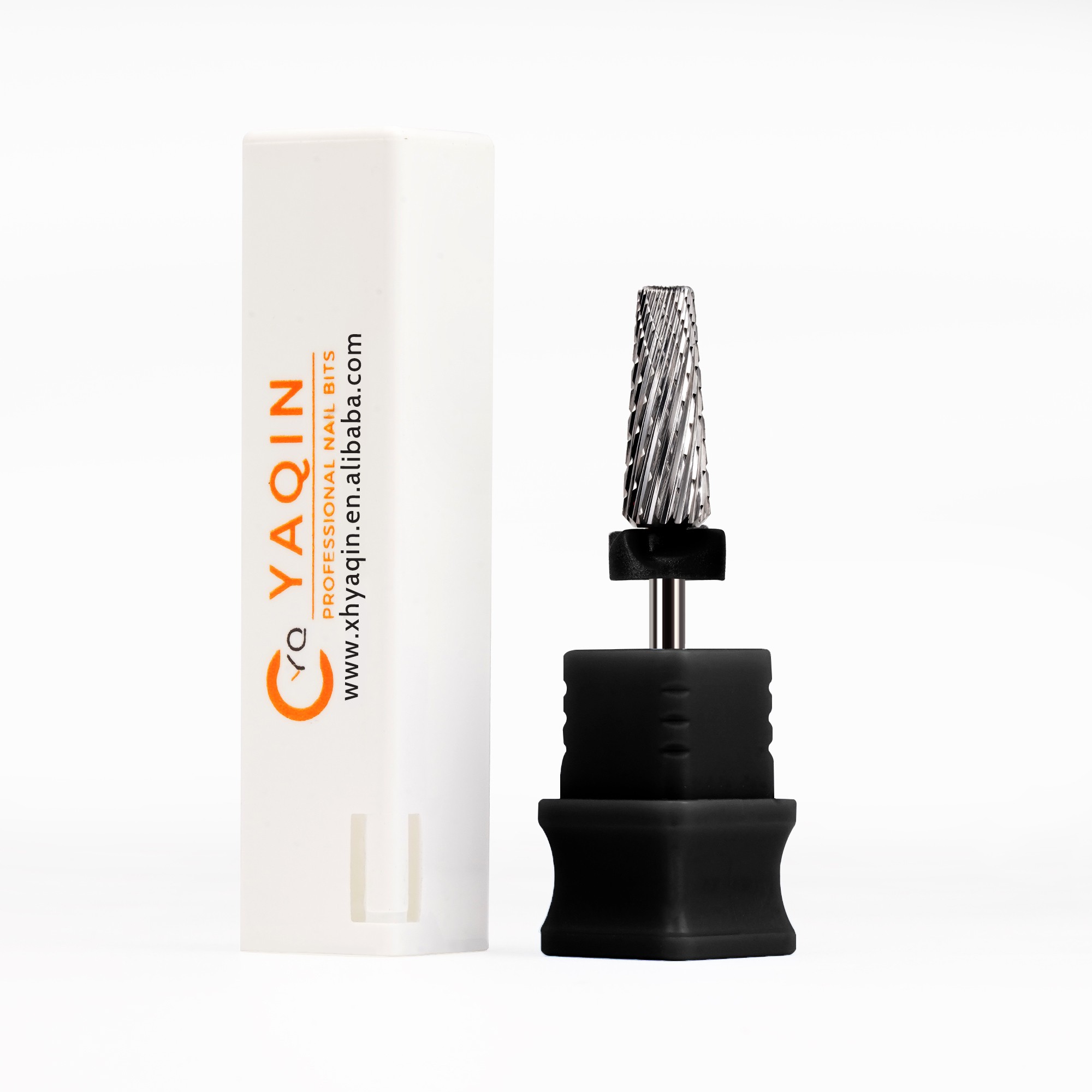
Wuxi Yaqin Trading Co., Ltd. describes its business as combining abrasive-product production and export support, with quality control covering material purchasing, production, and packaging. Its ISO9001:2000 quality management certification and one-stop production-to-delivery service are relevant starting points for buyers who need both product control and export coordination. The procurement decision should still rest on the agreed product specification, approved samples, inspection process, and delivery terms for the particular order.
Compare total landed cost, not the quote alone
Price comparisons become misleading when quotations are built on different assumptions. One supplier may quote a simple bulk pack while another includes retail sleeves, barcode labels, color sorting, and export-ready inner boxes. A lower ex-factory figure can disappear after repacking, replacing defective pieces, or managing mixed goods at destination.
Build a comparison sheet that separates the unit price from packaging, customization, sampling, inspection, freight terms, payment terms, and expected replacement handling. Also consider the commercial cost of a short shipment or a delayed launch. For repeat programs, stable lead times and consistent reproduction often create more value than a small initial price reduction.
It is sensible to start a new manufacturer relationship with a controlled trial order, especially for a broad assortment. Test both the product and the supplier’s execution: communication accuracy, sample matching, document quality, packing discipline, and response to questions. A trial order that exposes inconsistency is less expensive than discovering it after a full retail rollout.
Confirm delivery ownership before issuing the purchase order
Bulk orders fail operationally when responsibility between factory, trading partner, freight provider, and buyer is unclear. Confirm production lead time, sample approval timing, booking requirements, carton dimensions and weights, shipping documents, and the point at which responsibility transfers under the agreed trade terms. Keep the purchase order aligned with the quotation, approved artwork, product specification, and inspection criteria.
The final pre-order check should be a short, written confirmation of what will be made, how it will be inspected, how it will be packed, and when it will be ready. That discipline is more useful than another round of general promises. A dependable supplier relationship begins when both sides can describe the same finished product in enough detail that there is little room for interpretation.
News List
- Preventing Gouges and Uneven Filing With Small Barrel Nail Drill BitsSep 20, 2026
- How Diameter and Grit Affect Small Barrel Nail Drill Bit PerformanceSep 20, 2026
- Can Hytos Nail Drill Bits Be Used Safely on Natural Nails and Gel Polish?Sep 20, 2026
- How to Verify Fit Between Hytos Nail Drill Bits and an E-File HandpieceSep 20, 2026
- Safe Speed Settings for Umbrella Nail Drill Bits Around the Nail FoldSep 20, 2026
- Umbrella vs Flame Nail Drill Bits: Which Shape Offers Better Cuticle Control?Sep 20, 2026
Best-Selling Products
 Cross Cut Safety Stainless Steel Tungsten Carbide Nail Drill Bits Salon Foot Use XF-C Grit for Removing Nails
 First-rate Quality Tungsten Carbide Nail Drill Bits Best Coating Manicure Remove Gel Nails Accessories
 Professional Advanced Safety Cuticle Bits Two-Way Rotate 3/32'' Carbide Tungsten 5 in 1 Nail Drill Bits
 Wholesale 5 in 1 Electric Manicure Nail Drill Bits Various Coating Cone Cuticle Bit with Rotary Cross Cut for Nail Art
 New Slant Tooth Tungsten Steel Nail Drill Bits Dead Skin Removal 5-in-1 Universal Grinding Nail Polish Head Tool Nail Drill Bits
 4.0mm Small 5 in 1 Integrated Sharpe Tungsten Nail Drill Bit Straight Teeth Gel Polish Removal
 Flame Sharp XF F M C XC Silver Safety Professional Corn Tungsten Carbide Nail Bit for Drill Machine Accessories
 Factory Direct 5 in 1 Tungsten Carbide Nail Drill Bits 6.8MM Cross Cut Safety Manicure 5 in 1 Nail Drill Bits
Please give us a message