
What surfaces can a Quartz Nail Drill Bit safely work on?
What surfaces can a Quartz Nail Drill Bit safely work on?
A Quartz Nail Drill Bit can safely work on several nail-related surfaces, but its safe range is defined by the bit’s abrasive texture, grit, shape, and the amount of pressure used. It is generally suited to controlled surface refinement rather than aggressive bulk removal. Common appropriate surfaces include cured gel polish, builder gel, soft gel overlays, acrylic enhancements, poly gel, and the outer surface of natural nails when only light preparation or smoothing is needed.
The word quartz often describes the abrasive finish or mineral-like coating of a nail bit rather than a universal cutting standard. Two bits sold under the same description can feel very different: one may have a fine, smooth surface intended for buffing, while another may be coarser and designed to break through product layers. The material being contacted therefore matters, but the bit’s actual texture and profile matter just as much.
Natural Nail Plates: Safe Only for Light Surface Work
A fine quartz bit can be used on the natural nail plate for gentle tasks such as removing residual shine, blending a slight uneven area, or refining a small amount of lifted product near an enhancement. It should skim the surface rather than stay in one place. The purpose is to create an even, clean surface, not to reduce the thickness of the natural nail.
Natural nails are not uniform. A flexible, thin, peeling, or previously over-filed nail plate needs considerably less contact than a dense, healthy nail. Even a fine abrasive can create heat and friction when it is held still, run too fast, or pressed down. A smooth-looking nail after filing is not always an intact nail; excessive filing can remove compact keratin layers and leave a pale, tender, or overly flexible surface.
Quartz bits are most appropriate on natural nails when the work is limited to:
- lightly removing surface gloss before an overlay, where the product system calls for mechanical preparation;
- blending a faint product edge after controlled removal of gel or acrylic;
- smoothing a small rough area at the free edge, provided the bit shape does not catch the sidewall;
- refining the surface of a repaired nail after the enhancement material, rather than the natural plate, has been leveled.
They are not the right tool for thinning a thick natural nail, correcting structural curvature, or removing substantial length. Those jobs call for an assessment of the nail condition and a tool selected for the actual task. A coarse quartz surface does not become safe on a natural nail simply because the contact time is short.
Cured Gel Polish and Base-Coat Residue
Quartz bits are commonly used on cured gel polish, especially for breaking the sealed top layer before removal, reducing color layers, or clearing small areas of remaining base coat. Gel polish is usually softer than acrylic and can soften quickly under friction. For that reason, a fine or medium texture, low pressure, and continuous movement are more important than high speed.
The most useful distinction is between color gel and the last thin layer near the natural nail. Color gel often appears opaque and produces colored dust, while a base coat can become translucent, patchy, or visually similar to the nail underneath. Continuing to file because the surface still looks glossy can remove the remaining protective layer and reach the natural nail unexpectedly. When only a thin residue remains, a hand file, buffer, or gentler finishing tool may offer better feedback than a powered bit.
A quartz bit can also be used to refine a cured builder-gel overlay. It is suitable for smoothing a ridge, evening out a transition, or reducing a small high spot before applying another layer. It should not be used to flatten the entire nail indiscriminately. Builder gel supports a shape; removing too much from the apex or stress area can leave the overlay weaker even when its surface looks neat.
Soft Gel Tips and Gel Extensions
Soft gel tips and gel extensions are compatible with quartz abrasives when the goal is surface preparation, shortening a small amount of product, or blending the transition near the cuticle area. Since soft gel can generate heat quickly, contact should be brief and moving. A rounded or safety-style profile is useful near curved zones because it reduces the chance of a sharp working edge digging into the surrounding skin.
Surface preparation before color application is a separate operation from removal. A fine quartz bit can lightly remove shine from a gel tip to improve mechanical grip for color or design work. It should leave an evenly matte surface, not visible grooves. Deep scratches can show through translucent finishes and may create channels that collect product unevenly.
For extension removal, first reduce the bulk of the artificial material without approaching the natural nail too closely. As the layer becomes thin, the resistance changes: the bit cuts less predictably, dust output decreases, and heat may be felt sooner. That transition is a signal to change to a gentler abrasive or finish the remaining layer by hand.
Acrylic and Poly Gel Enhancements
Acrylic and poly gel are firmer surfaces and can tolerate more abrasion than gel polish, but suitability still depends on the intended work. Quartz nail drill bits work well for smoothing surface scratches, refining the product around a fill line, softening a bulky transition, and preparing an enhancement for a new overlay. They can also remove limited material from the top of an enhancement where a fine finish is required.
They are less efficient for rapidly debulking a thick acrylic extension. A quartz-coated bit tends to abrade rather than cut through dense artificial material. It may load with dust, require repeated passes, and generate friction before much product is removed. A carbide or other cutting-style bit is often selected for bulk reduction, followed by a finer abrasive for refinement. Using the right category at each stage reduces unnecessary heat and avoids a rough finish caused by forcing a finishing bit through heavy material.
The difference can be seen in the dust. Fine, consistent dust with a controlled matte track suggests that the abrasive is working normally. Clumping, melting-like residue, or a sudden glossy streak suggests product buildup, excess heat, or a bit that is no longer cutting cleanly. Cleaning the bit and reassessing the contact pressure is preferable to pressing harder.
Hard Gel, Dip Powder, and Mixed Enhancement Layers
Hard gel and dip powder systems can be harder than standard gel polish and may contain layers with different resistance. A quartz bit can safely refine their outer surface and soften product lines, particularly where detail matters more than speed. It is useful for controlled finishing around sidewalls, the cuticle margin, and the C-curve when the profile allows access without scraping the skin.
Mixed layers require extra attention because the surface does not always reveal what lies beneath. A nail may contain a hard gel overlay above an acrylic base, or color gel above a soft gel tip. The first material may file smoothly, then the bit can suddenly meet a softer or thinner layer. The same speed and pressure that felt controlled a moment earlier can become too aggressive. A gradual approach, short passes, and regular visual checks prevent a surface change from becoming an over-filing error.
Areas Around the Nail That Require Restraint
A Quartz Nail Drill Bit is not intended for direct work on living skin, open areas, irritated cuticles, or damaged nail folds. A narrow bit can be useful near the cuticle line when it is contacting cured product, but it should not be used as a substitute for cuticle nippers or skin-care tools. The closer the work is to the proximal nail fold and lateral sidewalls, the more the bit shape matters. Rounded contours are more forgiving than pointed or sharply edged profiles, although no profile makes uncontrolled contact safe.
Underside work also deserves restraint. A bit can refine cured extension material beneath a free edge, but the natural hyponychium and surrounding skin are sensitive. Product should be clearly visible before contact. Filing by feel in an obscured area increases the chance of heat, abrasion, or catching a thin free edge.
Surface Suitability at a Glance
Grit, Shape, and Machine Setup Change the Answer
Calling a bit “quartz” does not identify its safe surface by itself. Fine grit is appropriate for smoothing and surface preparation; medium grit is better suited to product refinement; coarse grit is reserved for artificial material where fast reduction is genuinely needed. A coarse abrasive near a natural nail or a thin residual layer removes the safety margin quickly.
Shape changes the contact pattern. A barrel-shaped bit covers broad, flat enhancement surfaces efficiently but can strike sidewalls if angled carelessly. A tapered form reaches closer to cuticle areas but concentrates contact over a smaller zone. An umbrella-shaped round head is designed to follow curved product surfaces and soften steps without presenting an aggressively sharp point. This matters when refining gel or artificial material around the C-curve, where a flat profile can leave uneven marks.
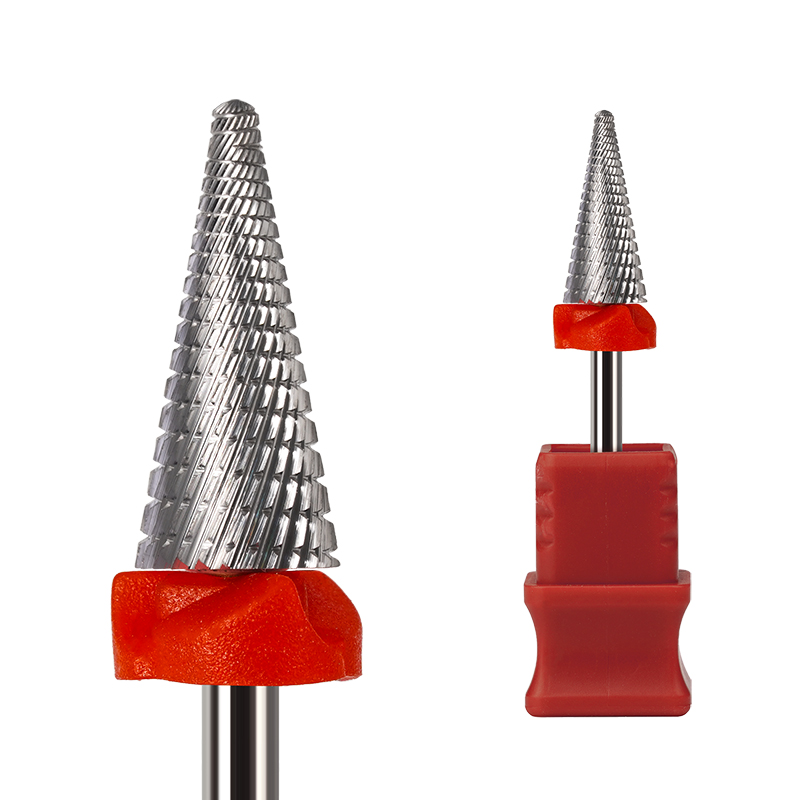
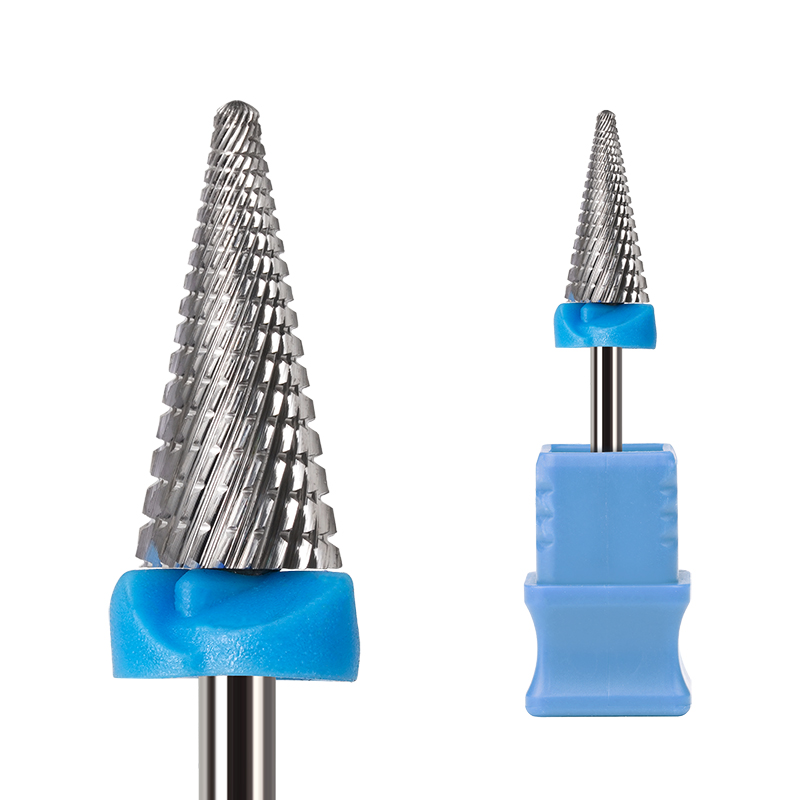
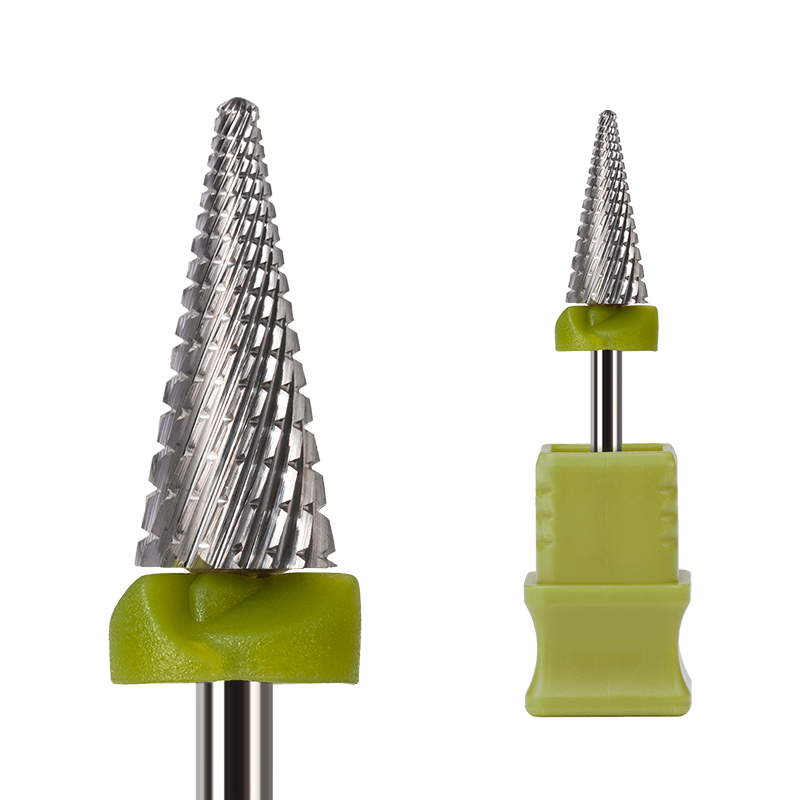
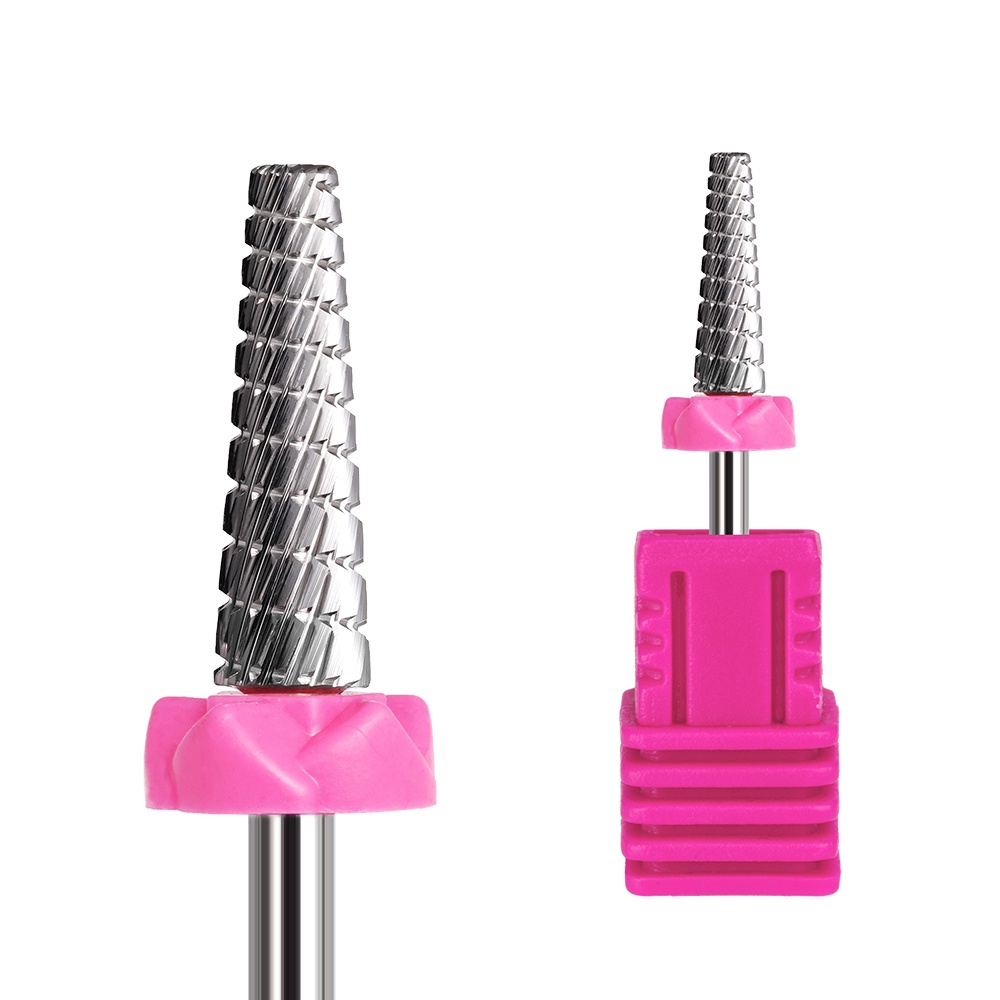
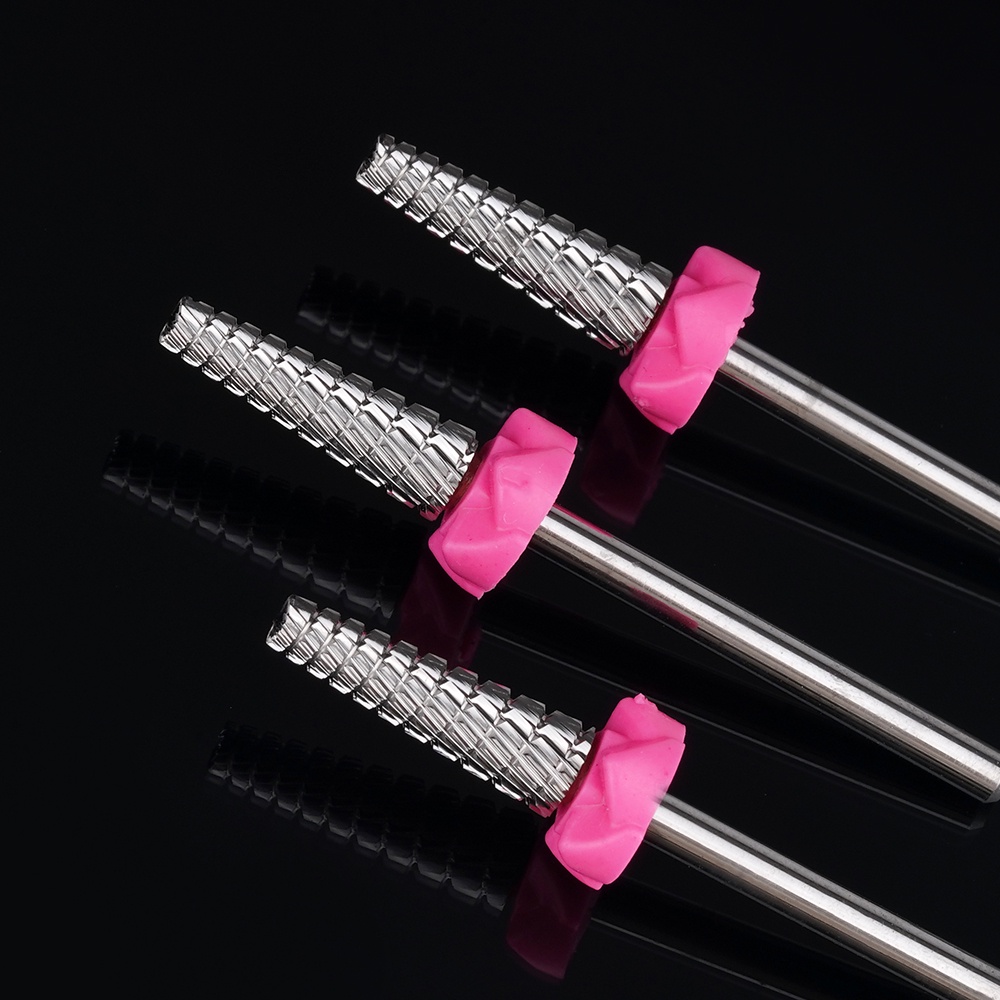
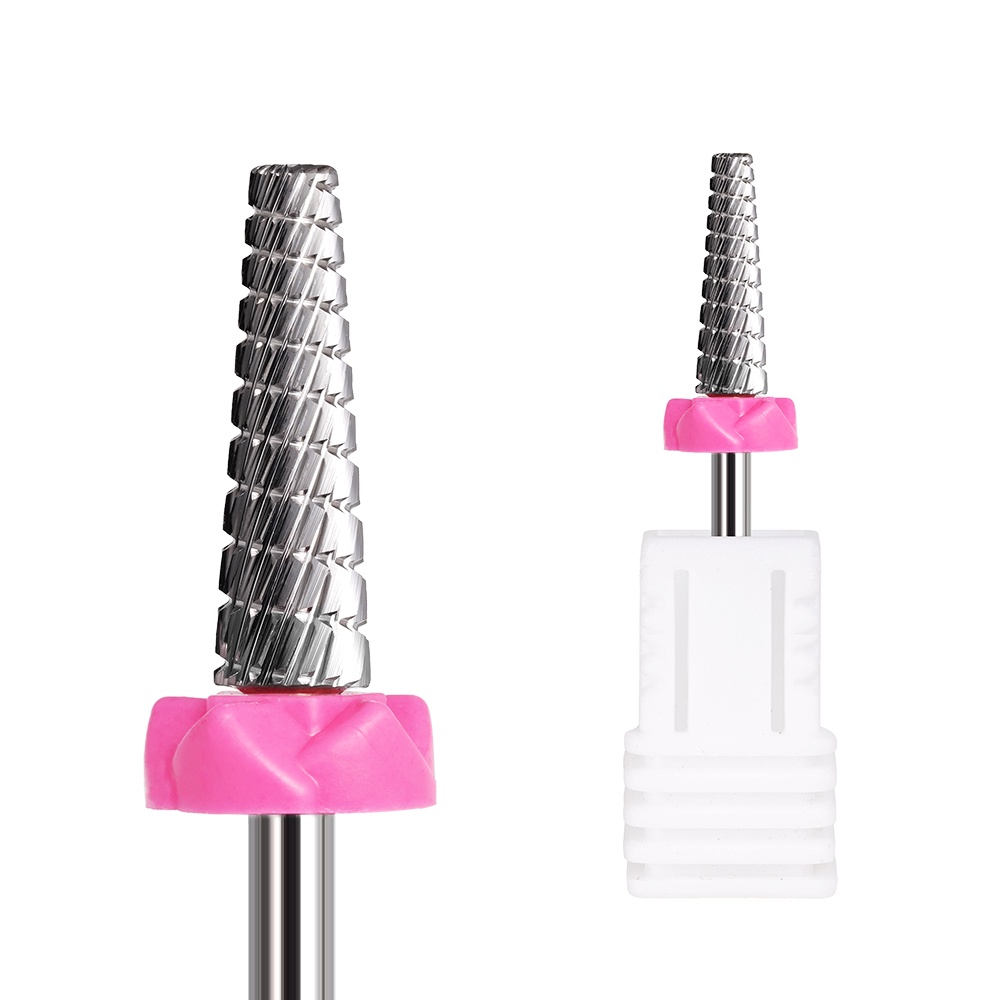
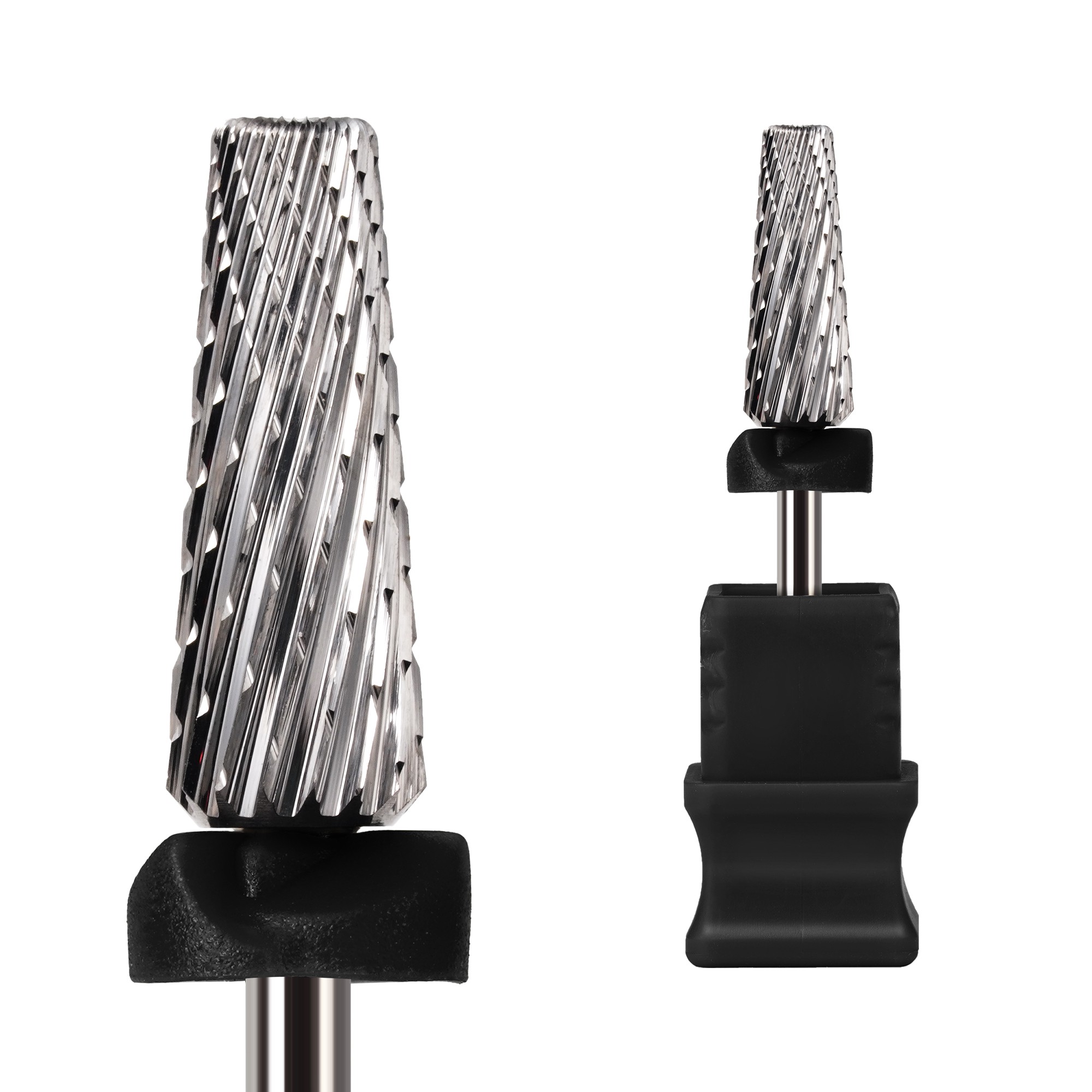
For jobs that require removal of firmer artificial material before detailed smoothing, a tool such as High Quality Nail Art Tools Nail Drill Bit Steel Grinding Tungsten Carbide Nail Drill Bits Sets Manicure Pedicure represents a different working category. A tungsten steel grinding head is intended for controlled shaping, artificial-nail reduction, and removal of gel layers. Its cutting behavior should not be assumed to match a quartz abrasive bit, even when both tools are used within the same service.
Machine condition also affects the surface result. A bit seated incorrectly, a worn chuck, or noticeable vibration causes the abrasive to skip rather than glide. Skipping creates random pressure peaks and makes fine work near a natural nail less predictable. The bit should be fully inserted according to the drill’s design, secure in the chuck, and visually clean before use. A clogged abrasive surface can polish instead of abrade, prompting excessive pressure and heat.
Reading the Surface While Filing
The safest approach is to read the material continuously. Cured product produces a distinct dust pattern and maintains a relatively stable resistance. The natural nail plate has a different appearance and responds differently under light abrasion. When the boundary is uncertain, stop rather than trying to confirm it with another pass. Product remaining in a small area can be refined later; a thinned natural nail needs time to grow out.
Heat, stinging, sudden sensitivity, a burning smell, or a bit that drags are immediate signals to lift away. These signs do not always mean the machine speed alone is wrong. They can result from a dirty bit, repeated passes over the same point, a loaded abrasive, incorrect angle, or a surface that has become thinner than expected. Correcting the cause is more useful than simply reducing speed while continuing the same motion.
A quartz bit is therefore best viewed as a finishing and controlled-preparation tool for nail surfaces, especially cured gel systems and the outer layers of enhancements. It is safe when its grit and shape match the material, the working area remains visible, and the contact stays light. Its limits become clear at thin natural nail, exposed skin, heavy acrylic removal, and any area where the underlying layer cannot be identified with confidence.
News List
- Preventing Gouges and Uneven Filing With Small Barrel Nail Drill BitsSep 20, 2026
- How Diameter and Grit Affect Small Barrel Nail Drill Bit PerformanceSep 20, 2026
- Can Hytos Nail Drill Bits Be Used Safely on Natural Nails and Gel Polish?Sep 20, 2026
- How to Verify Fit Between Hytos Nail Drill Bits and an E-File HandpieceSep 20, 2026
- Safe Speed Settings for Umbrella Nail Drill Bits Around the Nail FoldSep 20, 2026
- Umbrella vs Flame Nail Drill Bits: Which Shape Offers Better Cuticle Control?Sep 20, 2026
Best-Selling Products
 Cross Cut Safety Stainless Steel Tungsten Carbide Nail Drill Bits Salon Foot Use XF-C Grit for Removing Nails
 First-rate Quality Tungsten Carbide Nail Drill Bits Best Coating Manicure Remove Gel Nails Accessories
 Professional Advanced Safety Cuticle Bits Two-Way Rotate 3/32'' Carbide Tungsten 5 in 1 Nail Drill Bits
 Wholesale 5 in 1 Electric Manicure Nail Drill Bits Various Coating Cone Cuticle Bit with Rotary Cross Cut for Nail Art
 New Slant Tooth Tungsten Steel Nail Drill Bits Dead Skin Removal 5-in-1 Universal Grinding Nail Polish Head Tool Nail Drill Bits
 4.0mm Small 5 in 1 Integrated Sharpe Tungsten Nail Drill Bit Straight Teeth Gel Polish Removal
 Flame Sharp XF F M C XC Silver Safety Professional Corn Tungsten Carbide Nail Bit for Drill Machine Accessories
 Factory Direct 5 in 1 Tungsten Carbide Nail Drill Bits 6.8MM Cross Cut Safety Manicure 5 in 1 Nail Drill Bits
Please give us a message