
What Drives the Cost of Carbide Tornado Nail Drill Bits in Bulk Orders?
What Drives the Cost of Carbide Tornado Nail Drill Bits in Bulk Orders?
Bulk pricing for a carbide tornado nail drill bit is shaped by much more than the number of pieces in a purchase order. Quantity matters, but it does not erase the cost differences created by carbide grade, flute geometry, machining consistency, coating, packaging, and the inspection standard agreed with the supplier.
For procurement teams, the practical question is rarely “Which supplier has the lowest quoted unit price?” It is whether the quoted bit will maintain cutting performance across repeated salon use, fit the intended e-file machines, arrive in saleable condition, and produce a predictable replacement rate after distribution. A lower initial price can become expensive when bits dull quickly, wobble at speed, clog with product dust, or generate avoidable complaints from professional users.
Carbide Material Grade Sets the Cost Floor
A tornado-style nail bit is normally selected for rapid removal of hard gel, builder gel, acrylic, base layers, or product buildup. Its performance depends heavily on the carbide body, commonly described as tungsten carbide or tungsten steel in commercial specifications. These descriptions alone are not enough for purchasing comparison.
The cost of the raw material is influenced by carbide composition, particle structure, sintering quality, density, and the balance between hardness and toughness. A bit intended for repeated professional use needs enough hardness to retain sharp cutting edges, while also needing sufficient toughness to reduce the risk of chipping or breakage under lateral pressure. Material that is overly brittle may look sharp when new but can lose cutting quality abruptly after impact or improper handling.
Buyers should therefore avoid treating all “carbide” claims as equivalent. When quotations differ substantially, ask suppliers to clarify the base material, intended working application, and quality checks for cracking, porosity, and edge defects. It is also useful to compare samples after the same type of work, such as removing hard gel from multiple sets, rather than judging only by appearance on arrival.
For bulk orders, a stable material specification matters more than an unusually attractive first sample. A supplier may be able to produce a strong sample batch while using inconsistent carbide inputs for later production. Purchase specifications should identify the approved material level and the performance expectations associated with it.
Tornado Flute Geometry Is a Manufacturing Cost, Not Just a Visual Feature
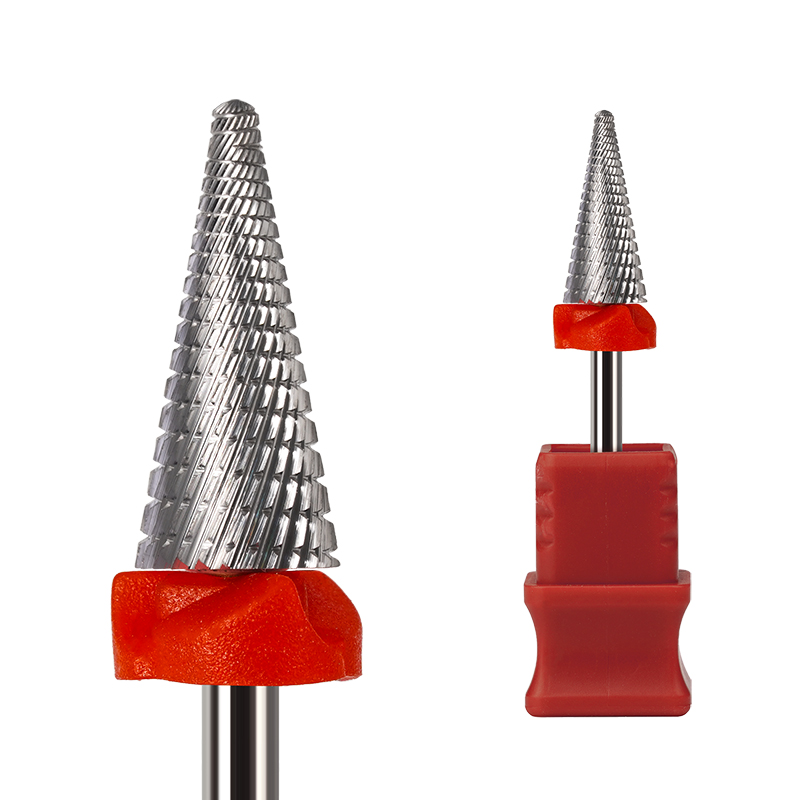
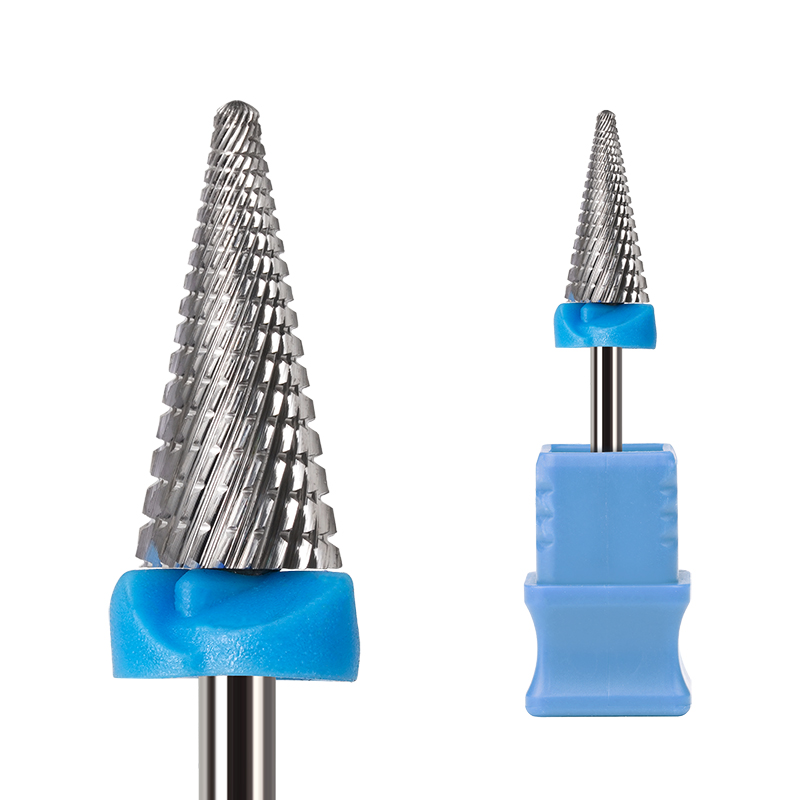
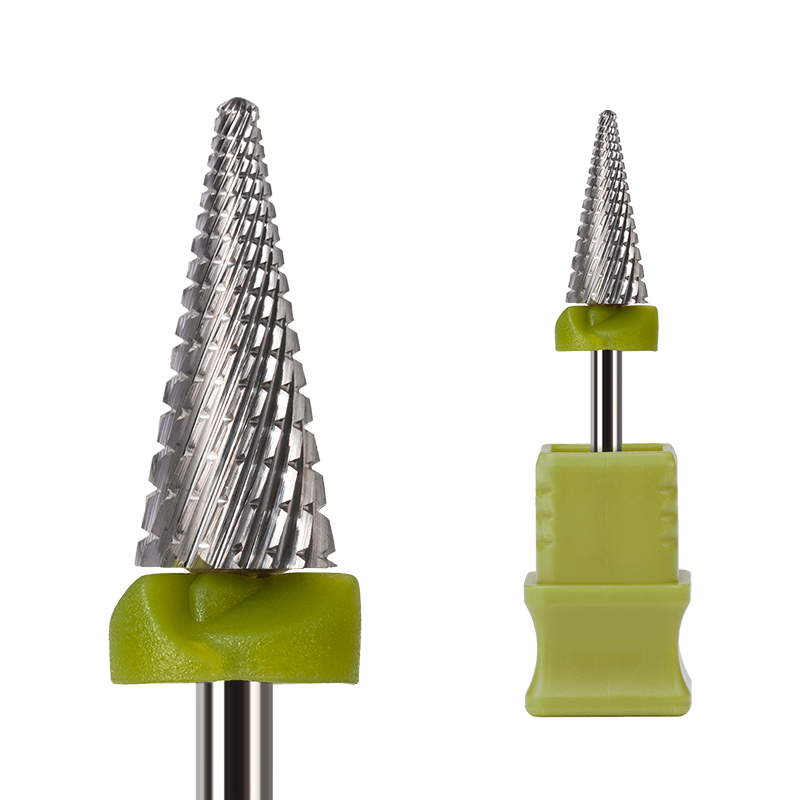
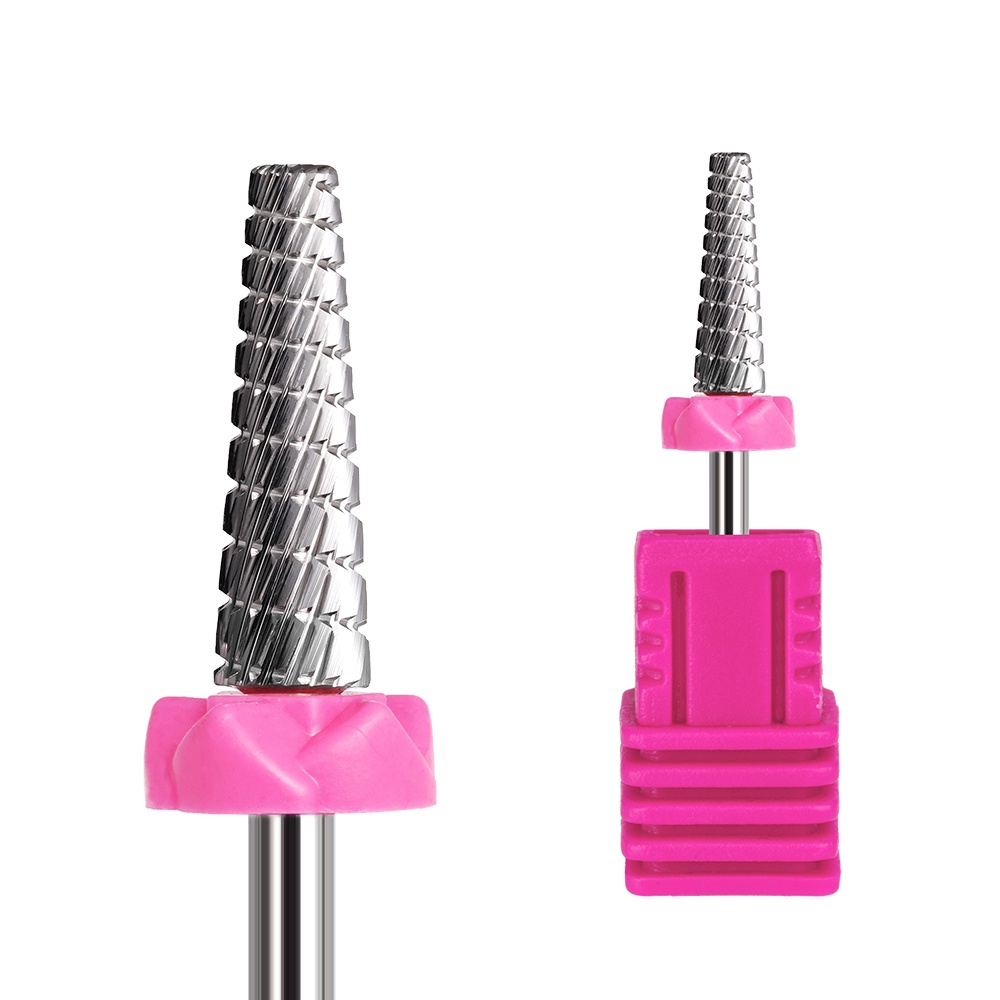
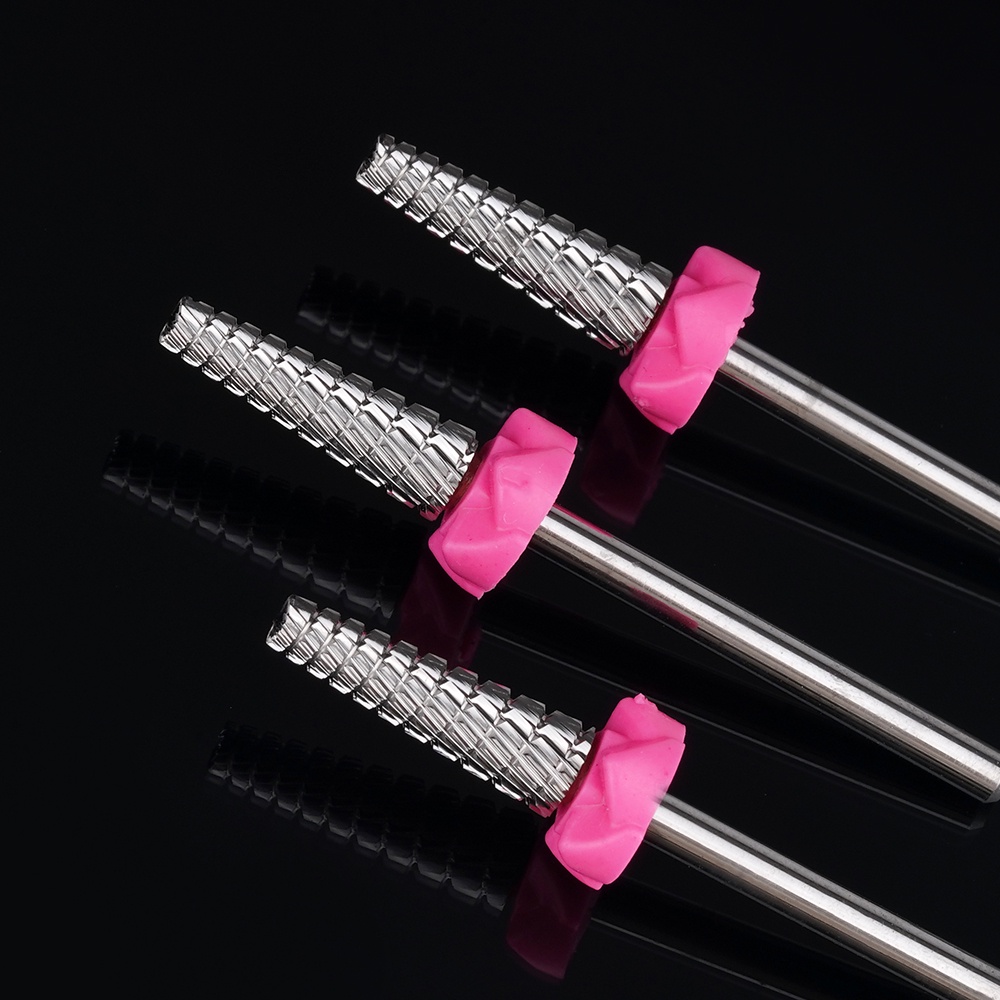
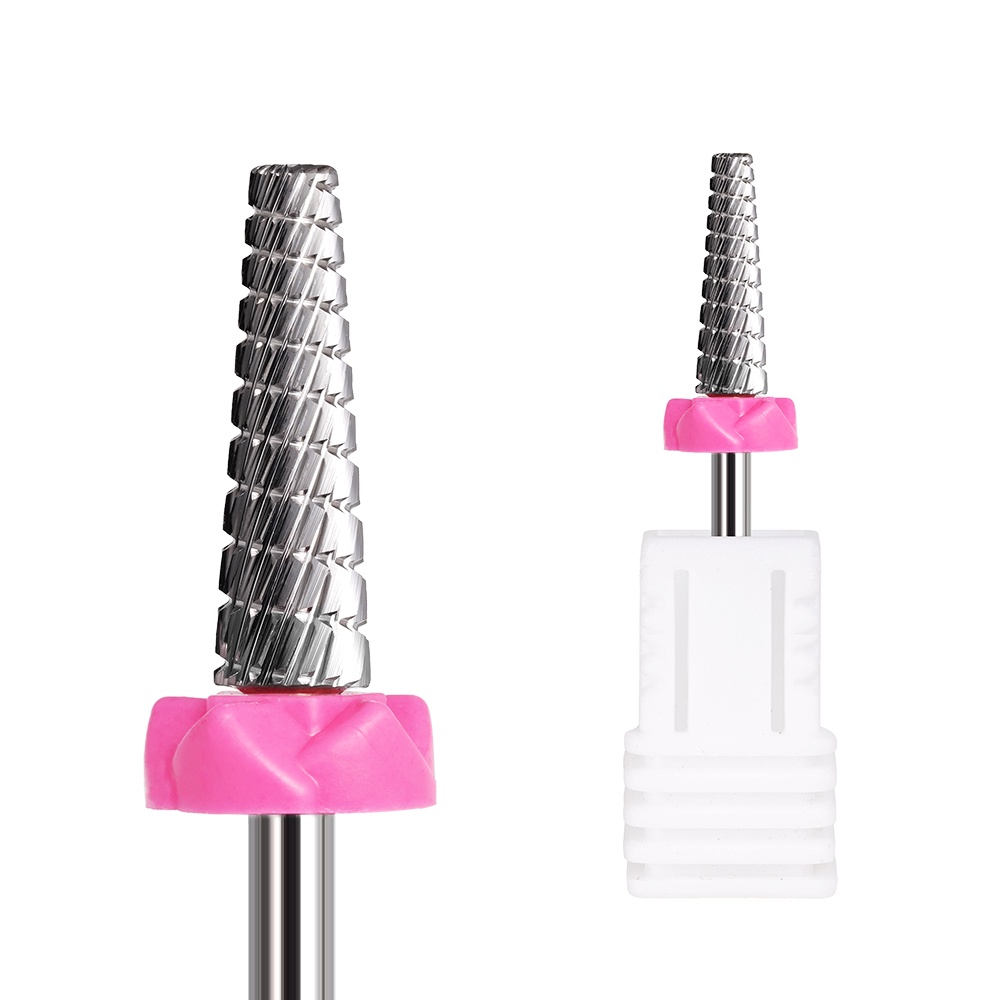
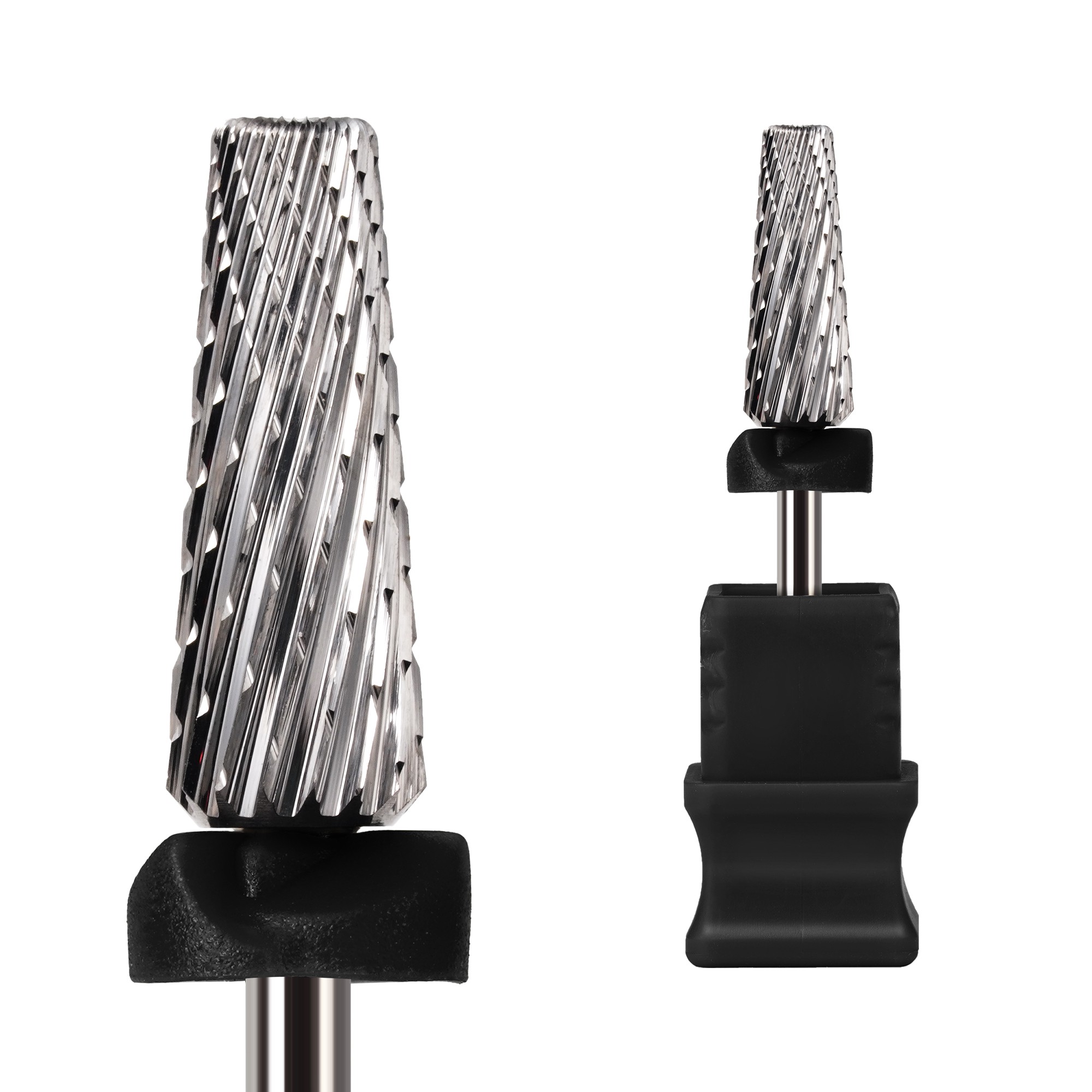
The “tornado” pattern usually refers to a spiral or crossed flute arrangement designed to remove material efficiently and move dust away from the working area. The geometry affects cutting aggressiveness, heat behavior, dust discharge, vibration, and the amount of control available to a nail technician.
Producing this geometry consistently requires precision grinding. The flute depth, helix direction, tooth spacing, cutting-edge sharpness, and transition between the working area and tip all need to remain within a controlled range. A poorly machined spiral may remove product unevenly, load up with debris, pull at the surface, or feel unstable during use. These defects may not be obvious in a catalog photograph, but they become obvious once the bit is used at operating speed.
More complex flute patterns generally require more machining time and tighter process control. This is one reason that a carbide nail drill bit tornado with clean, repeatable cutting surfaces can cost more than a simpler carbide barrel bit. The added cost is justified only when the geometry supports the end use. A distributor selling mainly to entry-level home users may not need the same flute design as a professional supplier serving high-volume salons.
Cut direction also requires attention. Some tornado bits are designed for right-handed use, some for left-handed use, and some use a dual-cut configuration. Combining all options under one generic item code can create ordering mistakes. If a buyer needs several directions or grit levels, the quotation should separate the variants and specify whether each requires its own production setup, packaging, or minimum order quantity.
Tip Shape and Safety Features Change the Value Equation
The tip is a small part of the bit, but it can materially affect both cost and market suitability. Flat-top, safety-top, rounded-top, cone, and flame shapes address different removal and preparation tasks. Professional users often evaluate tip design in terms of control near the cuticle area and the risk of accidental skin contact.
A smooth, accurately finished flat tip may require additional grinding and inspection compared with a sharper or less refined edge. That added work can increase the unit price, but it can also reduce complaint risk in channels where technicians expect a safer removal tool. The buyer should decide whether the target market values speed, versatility, or a more forgiving contact profile.
For example, a 4XC configuration is commonly positioned for heavier product removal rather than delicate finishing. A product such as Golden Flat Tip Carbide 4XC Nail Drill Bit Gel Remover Skewed Tooth illustrates why the whole geometry needs to be evaluated together: the coarse cutting profile, flat safety-oriented tip, skewed teeth, and dust-ejection behavior contribute to the commercial position of the bit. Comparing it only by length or outer diameter would miss the features that determine whether it is appropriate for hard-gel removal.
Procurement teams should avoid assuming that a coarser bit is automatically a better value because it removes material faster. In the wrong hands, an aggressive bit can increase the chance of excessive filing or surface damage. The right cost target depends on the user skill level, product category, and the instructions that will accompany the item.
Coatings Can Add Cost, but They Do Not Replace Good Carbide
Gold, rainbow, black, and other surface finishes are often offered for carbide nail bits. Some coatings are selected for appearance and shelf differentiation; others are intended to improve surface behavior, reduce friction, support cleaning, or extend useful cutting life. The commercial benefit depends on the coating type and how well it adheres to the underlying bit.
A coating should not be treated as proof of superior quality by itself. If the carbide body is weak, the cutting edges are inconsistent, or the bit is poorly balanced, a premium-looking finish will not correct those basic problems. Conversely, an uncoated bit with good material and accurate flute grinding may be the better procurement choice for a value-focused professional line.
When evaluating coated options, buyers should ask what purpose the coating serves in the proposed range. The supplier should be able to distinguish between a decorative finish and a functional treatment. Samples should be checked after cleaning and repeated use for peeling, discoloration, rough areas, or coating buildup in the flutes. This is particularly relevant for bulk programs where different colors may be used to distinguish grit grades or product families.
Shank Accuracy and Balance Are Easy to Overlook
Most professional nail drill bits are supplied with a standard-size shank intended to fit compatible electric nail drill handpieces. Even where the nominal shank size is familiar, dimensional control still matters. A shank that is undersized can slip or create vibration; one that is oversized may not fit the intended handpiece. Poor concentricity can make an otherwise sharp bit uncomfortable or unsafe to use at higher speeds.
These issues are often caused by inadequate machining control, insufficient inspection, or handling damage before packing. They can create expensive downstream problems because the distributor may face returns from users who assume the handpiece is defective.
For repeat orders, buyers should include practical acceptance criteria: shank dimension tolerance, straightness, runout expectations, fit checks with the intended handpiece type, and visual standards for burrs or scratches. Requiring an appropriate sample approval before mass production helps ensure that the supplier’s “standard shank” matches the buyer’s actual product requirement.
Quality Control Adds Cost Where It Prevents Variability
Bulk buyers are not purchasing a single drill bit. They are purchasing consistency across hundreds or thousands of units. Quality control costs arise from raw-material checks, in-process inspection, finished-product examination, sorting, cleaning, and packing verification. Suppliers with tighter controls may quote a higher price because they reject defects that a lower-cost supplier might allow into the shipment.
The most useful inspection points for a carbide tornado bit include:
- Consistency of flute pattern, cutting teeth, and tip finish across the batch.
- Absence of visible cracks, chips, corrosion marks, and loose coating.
- Shank dimensions and fit with the buyer’s specified e-file system.
- Concentricity and smooth rotation under operating conditions.
- Correct grit designation, cut direction, color coding, and labeling.
- Clean, dry, damage-resistant packaging suitable for the planned sales channel.
Inspection requirements should be defined before pricing is finalized. A supplier cannot reasonably quote the same price for a basic visual check and for a program that includes detailed dimensional checks, sampling plans, private-label verification, and final carton inspection. Procurement teams should also distinguish between defects that affect function and minor cosmetic variation that does not. Overly broad rejection criteria can increase cost without improving the user experience.
Packaging and Private Label Work Can Distort Unit-Price Comparisons
A bulk bit supplied in a simple protective sleeve carries a different cost structure from a retail-ready item with individual blister packaging, printed labels, barcode stickers, color identification, instruction cards, and branded cartons. Packaging is particularly important for carbide bits because the cutting edges and shank can be damaged when units contact each other during transport.
Private-label projects add several cost layers: artwork preparation, print setup, color matching, label application, packaging assembly, and sometimes separate inventory management for custom components. These expenses may be charged as one-time setup fees, built into the unit price, or spread across the order quantity. A quote that appears lower can conceal exclusions for packaging design, revised artwork, or custom cartons.
Buyers should request a clear cost breakdown that separates the bare bit, coating, individual packaging, branded materials, inner-box quantity, master-carton configuration, and any tooling or setup charge. This makes it easier to compare two suppliers that use different quoting formats and prevents unexpected changes when moving from sample approval to production.
Order Size Helps, but MOQ Structure Matters More Than Many Buyers Expect
Higher volume can reduce the per-piece cost because setup, inspection, packaging preparation, and export handling are spread across more units. The saving is not always linear. A supplier may offer a meaningful reduction at a production threshold, then only a modest difference between larger quantities once material and machining dominate the cost.
The composition of the order also matters. A single large order of one grit, one cut direction, one coating, and one package format is operationally simpler than the same total quantity divided among many variations. A broad assortment can be commercially necessary, but each variation may trigger separate setup, sorting, label, or packaging work.
Rather than asking only for the best price at a round quantity, ask for tiered quotations based on the actual assortment plan. For example, compare the cost of one universal removal bit against a range that includes coarse, medium, fine, left-hand, right-hand, and retail-packaged versions. This reveals whether a wider range is financially justified or whether the first order should focus on the highest-turning configurations.
Compare Landed Cost and Failure Cost, Not Factory Price Alone
The quoted factory price is only one part of procurement cost. Freight mode, export packing, import handling, local labeling, warehouse labor, and expected replacement or return rates all affect the final economics. A low-price shipment that arrives with damaged packaging or inconsistent grit identification can consume the apparent saving quickly.
For a professional product line, the more useful calculation is cost per acceptable service cycle. A bit that remains sharp and stable through repeated removal work may carry a higher purchase price but lower the replacement burden for salons and distributors. This does not require an exact universal lifespan claim; it requires a controlled comparison between samples under the intended use conditions.
Before committing to a bulk order, build the specification around the task the bit must perform, then compare suppliers against that same specification. Confirm the carbide grade expectation, flute direction and geometry, tip style, coating purpose, shank tolerance, inspection level, packaging format, and order mix. Once these items are aligned, price differences become much easier to explain, and the selected carbide nail drill bit tornado is more likely to meet both margin requirements and end-user expectations.
News List
- Preventing Gouges and Uneven Filing With Small Barrel Nail Drill BitsSep 20, 2026
- How Diameter and Grit Affect Small Barrel Nail Drill Bit PerformanceSep 20, 2026
- Can Hytos Nail Drill Bits Be Used Safely on Natural Nails and Gel Polish?Sep 20, 2026
- How to Verify Fit Between Hytos Nail Drill Bits and an E-File HandpieceSep 20, 2026
- Safe Speed Settings for Umbrella Nail Drill Bits Around the Nail FoldSep 20, 2026
- Umbrella vs Flame Nail Drill Bits: Which Shape Offers Better Cuticle Control?Sep 20, 2026
Best-Selling Products
 Cross Cut Safety Stainless Steel Tungsten Carbide Nail Drill Bits Salon Foot Use XF-C Grit for Removing Nails
 First-rate Quality Tungsten Carbide Nail Drill Bits Best Coating Manicure Remove Gel Nails Accessories
 Professional Advanced Safety Cuticle Bits Two-Way Rotate 3/32'' Carbide Tungsten 5 in 1 Nail Drill Bits
 Wholesale 5 in 1 Electric Manicure Nail Drill Bits Various Coating Cone Cuticle Bit with Rotary Cross Cut for Nail Art
 New Slant Tooth Tungsten Steel Nail Drill Bits Dead Skin Removal 5-in-1 Universal Grinding Nail Polish Head Tool Nail Drill Bits
 4.0mm Small 5 in 1 Integrated Sharpe Tungsten Nail Drill Bit Straight Teeth Gel Polish Removal
 Flame Sharp XF F M C XC Silver Safety Professional Corn Tungsten Carbide Nail Bit for Drill Machine Accessories
 Factory Direct 5 in 1 Tungsten Carbide Nail Drill Bits 6.8MM Cross Cut Safety Manicure 5 in 1 Nail Drill Bits
Please give us a message