
Nail Filing Attachments for Aged Skin and Nails: A Safer Service Protocol
Nail Filing Attachments for Aged Skin and Nails: A Safer Service Protocol
Nail Filing Attachments for Aged Skin and Nails: A Safer Service Protocol
Providing nail care for older clients requires a gentler approach, especially when skin is thinner and nails are brittle, ridged, sensitive, or affected by long-term health changes.
For operators, the safest overall judgment is simple: attachment selection, speed, pressure, and hygiene matter more than completing every visible cosmetic correction.
Clients searching for and nail filing additions for aged skin and nails usually need practical guidance on preventing heat, thinning, discomfort, and accidental contact with fragile surrounding tissue.
This protocol focuses on service decisions that nail technicians can apply immediately, from consultation and preparation through controlled filing, finishing, cleaning, and client aftercare communication.
Why Older Nails Require a Different Filing Strategy
Aged nails often grow more slowly, become thicker or more brittle, and develop longitudinal ridges that make their surface appear uneven under polish or enhancement products.
At the same time, the nail plate may have less flexibility. Excessive filing can turn a manageable ridge into splitting, peeling, tenderness, or visible plate thinning.
Periungual skin may also become dry, thin, or easily irritated. This changes the operator's margin for error when working near sidewalls, cuticles, and hyponychium areas.
Medication, circulation concerns, arthritis, diabetes, and reduced sensation can further affect service planning. A technician should never assume that a client will immediately feel minor overheating.
The aim is not to make every nail perfectly smooth. The aim is to create a clean, comfortable, stable result without removing more material than necessary.
That principle helps operators avoid a common mistake: using an aggressive attachment because the nail looks thick, when the plate underneath may still be fragile.
Visual thickness alone does not indicate how much filing a nail can tolerate. Observe flexibility, edge condition, color variation, previous product damage, and the client’s response.
Start With a Brief Safety Assessment
Before selecting an abrasive attachment, inspect the nail plate and surrounding skin in strong, even lighting. Look for cracking, lifting, inflammation, unusual discoloration, or tenderness.
Ask whether the client has experienced recent pain, numbness, skin tears, fungal treatment, diabetic foot concerns, circulation problems, or reactions to previous nail services.
Do not diagnose medical conditions. However, operators should pause the service and recommend medical advice when signs suggest infection, unexplained injury, severe thickening, or abnormal detachment.
Use the consultation to identify the desired result. Some clients want shorter natural nails, while others need gel removal, light smoothing, or conservative preparation for polish.
Confirm whether the client can comfortably hold their hand or foot in position. Arthritis and joint stiffness may require more frequent pauses and more supportive positioning.
Document relevant observations according to salon policy. Consistent records help the operator recognize changing conditions and maintain a reliable service approach over repeat appointments.
A clear assessment also supports informed consent. Explain that the service will prioritize comfort and nail preservation, even if this means leaving some ridging or thickness unchanged.
Choose Attachments by Task, Not by Maximum Removal Speed
The safest attachment is the least aggressive tool that can complete the required task efficiently. Attachment geometry, abrasive grit, material, and rotational control must work together.
For natural aged nails, begin with fine hand filing or a fine, smooth electric-file attachment whenever possible. Reserve more aggressive tools for limited, clearly appropriate removal tasks.
Fine abrasives are generally better for refining shape, softening a free edge, and reducing small rough areas. They give the operator more feedback and reduce sudden material loss.
Medium abrasives may be appropriate for controlled gel refinement, but they should not become the default choice simply because an older client has visibly thicker nails.
Coarse attachments are rarely appropriate on a fragile natural nail plate. If product removal requires them, use minimal pressure, short contact periods, and maintain constant movement.
Rounded or safety-oriented head shapes can provide better control near delicate contours. They may reduce sharp edge contact, but they do not replace correct angle and speed.
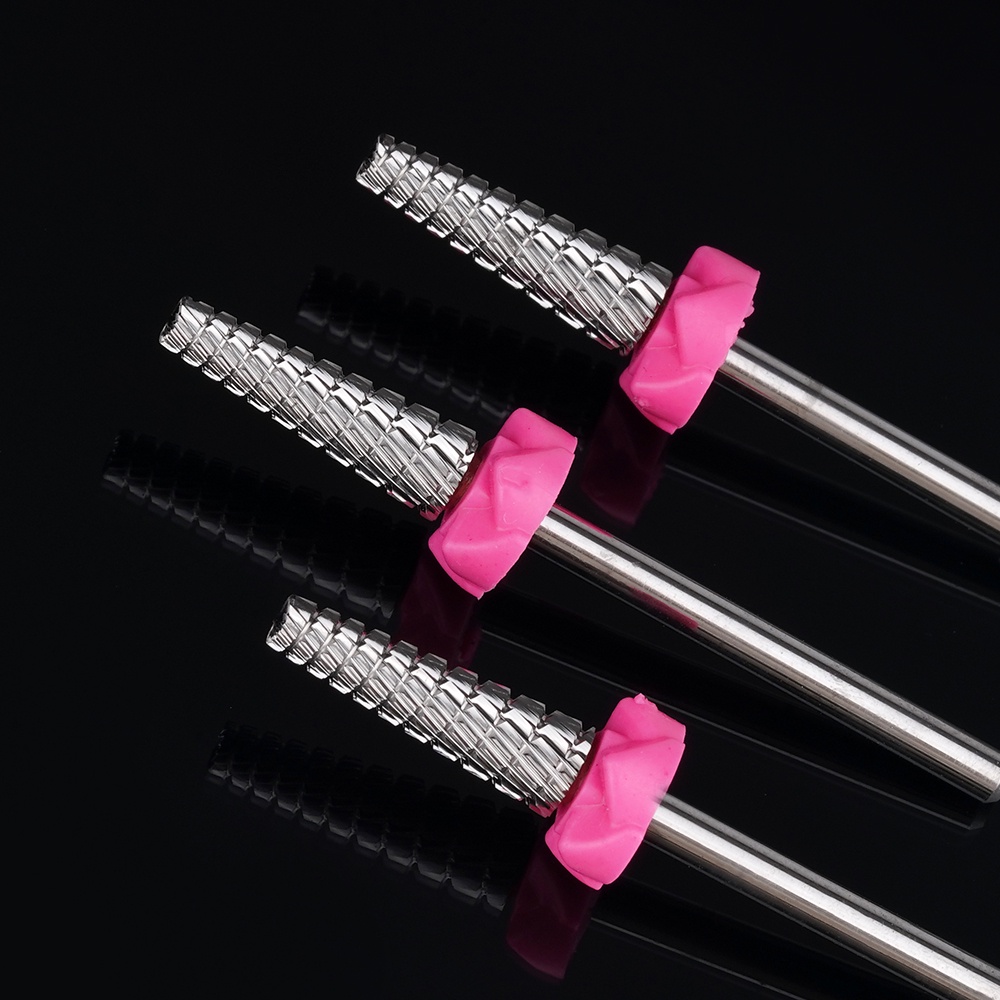
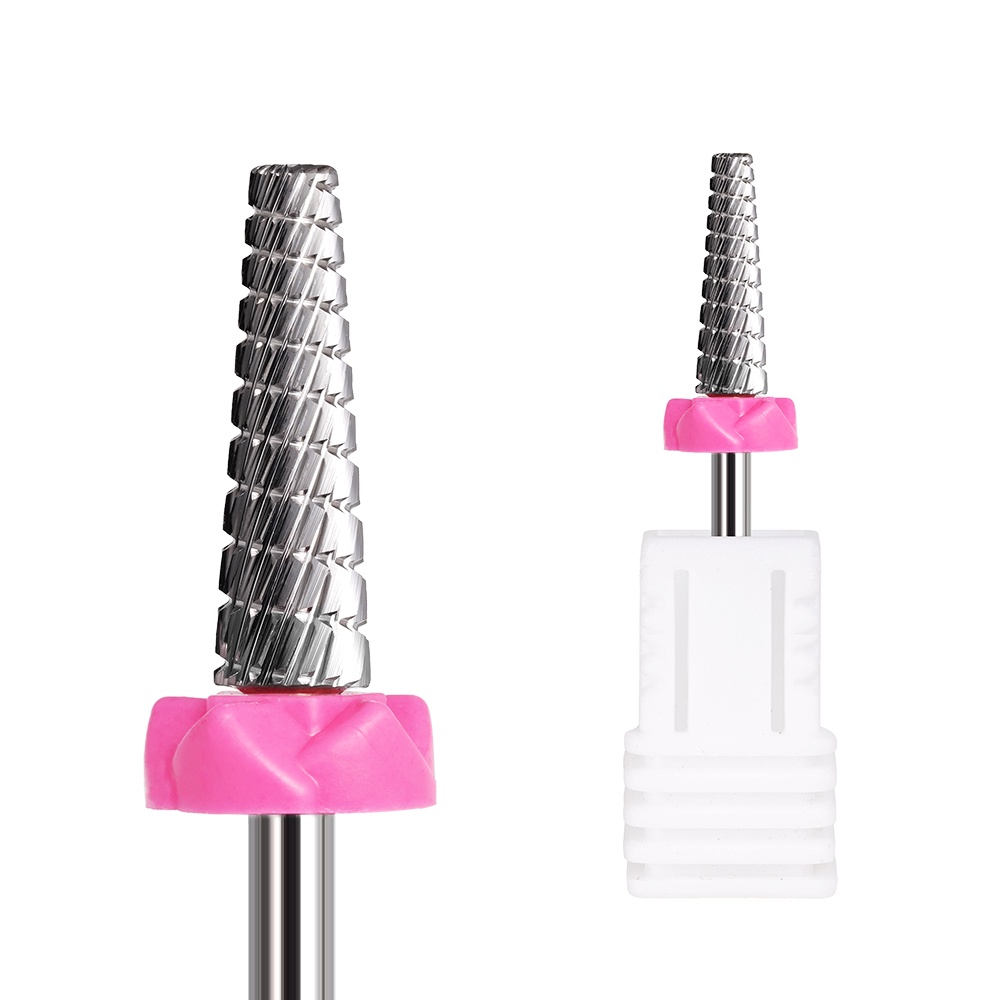
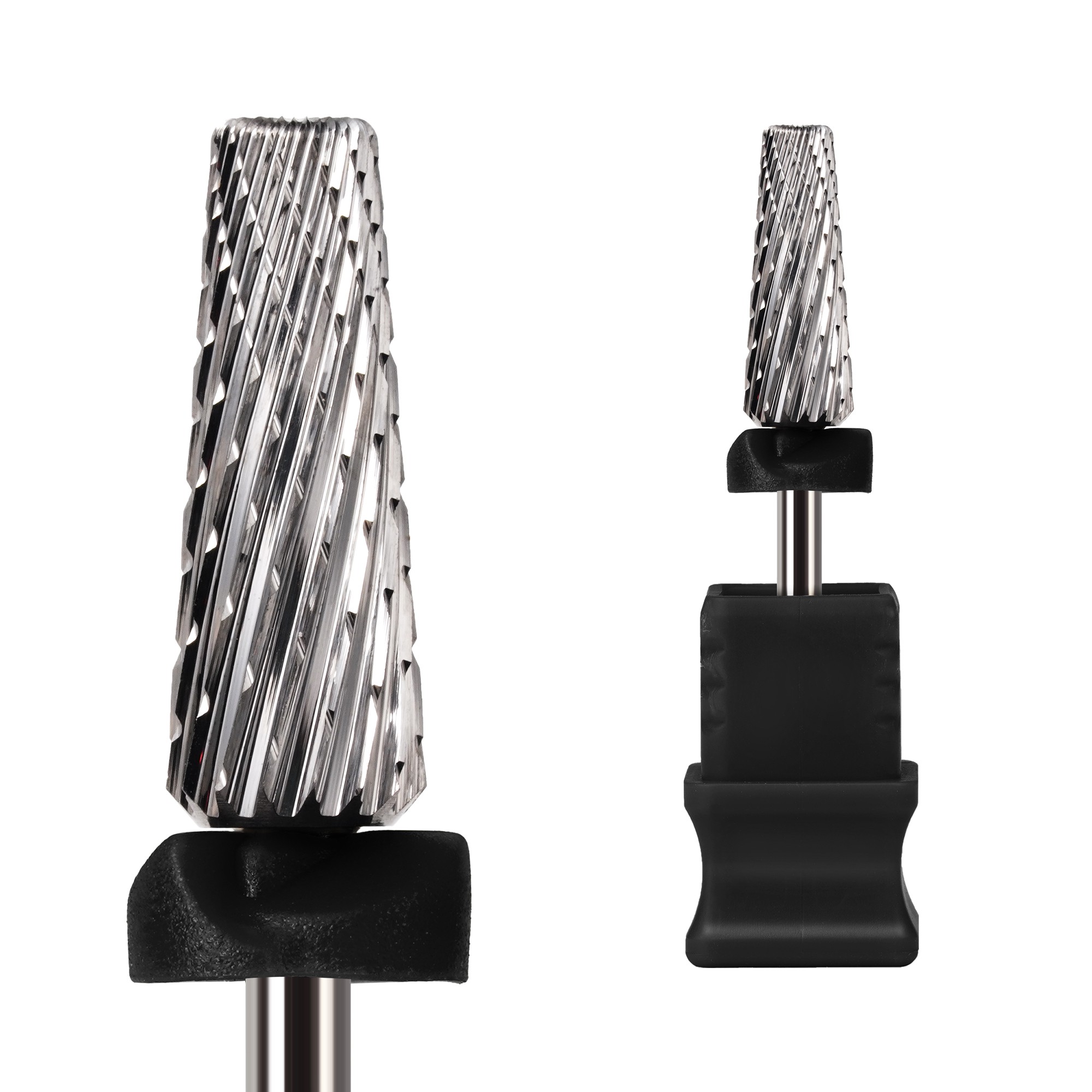
For detail work on enhancements, the Little Umbrella Tungsten Steel Grinding Head can be considered for controlled shaping and product removal.
Its umbrella round-head profile can support precise work when used correctly. Operators should still select a suitable grit and avoid using any tungsten steel attachment directly on compromised natural nails.
Tungsten steel offers high wear resistance, heat tolerance, and corrosion resistance. These qualities support durability, but a durable tool still requires conservative technique on sensitive clients.
Control Speed, Pressure, and Contact Time
Heat buildup is one of the most common preventable service problems. It is usually caused by high speed, heavy pressure, dull abrasives, repeated passes, or holding one position.
Use the lowest effective speed for the task. A slower setting gives more time to observe the nail response and helps prevent rapid friction against thin material.
Keep the attachment moving across the working area. Continuous movement reduces localized heat and helps distribute abrasion evenly instead of creating grooves or weak points.
Let the abrasive do the work. Heavy pressure does not make filing safer or more professional; it often increases friction, removes material unevenly, and reduces operator precision.
Work in short passes, then pause to inspect. Check surface temperature with appropriate caution, observe the plate, and ask the client whether they feel warmth or sensitivity.
Do not rely only on client feedback. Reduced sensation, politeness, or delayed discomfort can prevent a client from reporting heat until irritation has already occurred.
Maintain a shallow, controlled approach angle. Digging an attachment into the nail surface can create pressure points, rings of fire, deep scratches, and uneven thinning.
When removing gel or enhancement material, leave a thin protective layer rather than filing down to the natural plate when the remaining product cannot be safely distinguished.
A Step-by-Step Filing Protocol for Fragile Nails
Begin by cleansing the working area and ensuring the nail is dry enough for accurate assessment. Moisture can temporarily change texture and make surface weaknesses harder to identify.
Trim only when necessary and use a controlled tool appropriate to the nail condition. Brittle nails may split if clipped too aggressively or if the free edge is unsupported.
Shape the free edge before surface refinement. This sequence prevents unnecessary repeated work and allows the technician to identify cracks or weaknesses at the nail corners early.
Use a fine attachment or hand file to smooth the edge with light, directional strokes. Avoid repeated sawing motions that can increase lamellar splitting in brittle nails.
If ridges need softening, use only enough abrasion to reduce sharpness or improve polish adhesion. Do not attempt to level deep ridges completely across the entire plate.
For gel removal, reduce bulk product gradually. Keep the attachment parallel to the product surface, avoid sidewall pressure, and stop before reaching the natural nail.
Brush away dust frequently. Dust removal improves visibility, prevents the operator from filing blind, and makes it easier to identify product boundaries, grooves, and emerging heat marks.
Reassess after each nail rather than repeating identical settings automatically. Nail condition can vary significantly between fingers, between hands, and from one appointment to another.
Finish with a soft buffer only when needed. Excessive buffing can create a temporary shine while weakening an already dry plate and making future splitting more likely.
Apply suitable finishing products according to the service plan. A conditioning oil may support comfort around dry skin, but it should not be used to conceal filing damage.
Protect the Skin Around the Nail
Older skin can tear more easily, particularly around the lateral folds and proximal nail fold. Filing equipment should be kept away from skin unless the task specifically requires trained precision.
Stabilize the client’s finger or toe gently. Secure support improves control, but gripping too tightly can cause discomfort in clients with joint pain or sensitive circulation.
Use a clear visual line to the sidewalls before approaching them. Avoid working by feel alone, especially when dust, product residue, or poor lighting obscures the boundary.
Do not use a filing attachment to remove adhered cuticle from delicate skin. Use appropriate softening, gentle manual techniques, and only remove nonliving tissue when clearly identifiable.
When working near the hyponychium, reduce speed and pressure further. This tissue can be particularly sensitive and may be vulnerable when nails are lifted, overgrown, or very short.
Stop immediately if skin becomes red, shiny, broken, or painful. Continuing to “finish the area” can turn a minor irritation into an injury requiring recovery time.
Operators should also avoid creating false smoothness through aggressive sidewall filing. Preserving the nail’s natural protective structure is more valuable than producing an overly narrow appearance.
Hygiene, Maintenance, and Attachment Replacement
Older clients may have a higher risk of complications from minor skin damage. Strong hygiene practices are therefore part of the filing protocol, not a separate administrative task.
Clean and disinfect reusable attachments according to local regulations and manufacturer instructions. Remove visible debris first, because disinfectant cannot reliably act through retained filing dust or residue.
Use single-use abrasives where required and discard them after each client. Do not reuse disposable sanding bands or files simply because they appear visually clean.
Inspect attachments before every service. Replace tools with clogged surfaces, bent shafts, corrosion, chipped cutting areas, or signs that they require increased pressure to work.
A dull attachment can be more hazardous than a fresh one because the operator may compensate with speed or force. That creates excess friction and weakens fine control.
Store attachments in a clean, dry, organized container after processing. Separation by grit and use type reduces selection errors and helps protect finished tools from contamination.
For salons using the Little Umbrella Tungsten Steel Grinding Head regularly, establish a simple inspection schedule. Even heat-resistant, corrosion-resistant tools must be retired when performance changes.
Communicate Clearly During the Service
Older clients benefit when operators explain what they are doing in plain language. Short explanations can reduce anxiety and encourage clients to report warmth, pressure, or discomfort early.
Ask specific questions rather than general ones. “Does this feel warm?” or “Is this area sensitive?” usually produces more useful feedback than asking whether everything is okay.
Build pauses into the service instead of treating them as interruptions. Brief checks protect the nail, accommodate physical comfort, and allow the client to adjust hand or foot position.
Avoid promising that every ridge, thick edge, or enhancement layer can be removed in one visit. Conservative improvement is usually safer and more sustainable than aggressive correction.
Explain aftercare when relevant. Clients should know to report persistent soreness, redness, swelling, unusual separation, or changes that develop after the appointment.
For recurring clients, note which attachment types, speeds, and products were comfortable. This creates a personalized protocol and reduces uncertainty at future appointments.
Common Filing Mistakes That Increase Risk
One frequent mistake is treating aged nails exactly like strong, flexible nails. The same attachment and speed may produce a very different result on a dry or brittle plate.
Another error is chasing visual perfection. Deep ridges and natural irregularities are not necessarily service failures, especially when reducing them would compromise nail strength.
Using excessive speed to save time can lead to heat spikes. Faster work is not efficient when it causes discomfort, requires repair, or reduces client confidence.
Operators should not assume that a rounded attachment is automatically harmless. Every rotating tool can cause damage when used with poor visibility, excessive pressure, or incorrect technique.
Ignoring changes in one nail is also risky. A single nail that is unusually tender, lifted, discolored, or fragile may require a different approach or referral.
Finally, avoid using product-removal tools as universal preparation tools. Separate the tasks of shortening, smoothing, enhancement removal, and skin care so each receives appropriate control.
Build a Safer, Repeatable Service Standard
A safer service for aged skin and nails begins with a conservative mindset. Operators should preserve the natural plate, minimize heat, protect surrounding skin, and reassess continuously.
Choose attachments based on the exact task, use fine abrasives whenever practical, and treat speed, pressure, and contact time as essential safety controls.
Effective nail filing additions for aged skin and nails are not defined by how quickly they remove material. Their value comes from precision, predictability, hygiene, and operator control.
When technicians combine suitable tools with careful observation and clear client communication, they can deliver comfortable, polished results while respecting the realities of aging nails and skin.
News List
- Preventing Gouges and Uneven Filing With Small Barrel Nail Drill BitsSep 20, 2026
- How Diameter and Grit Affect Small Barrel Nail Drill Bit PerformanceSep 20, 2026
- Can Hytos Nail Drill Bits Be Used Safely on Natural Nails and Gel Polish?Sep 20, 2026
- How to Verify Fit Between Hytos Nail Drill Bits and an E-File HandpieceSep 20, 2026
- Safe Speed Settings for Umbrella Nail Drill Bits Around the Nail FoldSep 20, 2026
- Umbrella vs Flame Nail Drill Bits: Which Shape Offers Better Cuticle Control?Sep 20, 2026
Best-Selling Products
 Cross Cut Safety Stainless Steel Tungsten Carbide Nail Drill Bits Salon Foot Use XF-C Grit for Removing Nails
 First-rate Quality Tungsten Carbide Nail Drill Bits Best Coating Manicure Remove Gel Nails Accessories
 Professional Advanced Safety Cuticle Bits Two-Way Rotate 3/32'' Carbide Tungsten 5 in 1 Nail Drill Bits
 Wholesale 5 in 1 Electric Manicure Nail Drill Bits Various Coating Cone Cuticle Bit with Rotary Cross Cut for Nail Art
 New Slant Tooth Tungsten Steel Nail Drill Bits Dead Skin Removal 5-in-1 Universal Grinding Nail Polish Head Tool Nail Drill Bits
 4.0mm Small 5 in 1 Integrated Sharpe Tungsten Nail Drill Bit Straight Teeth Gel Polish Removal
 Flame Sharp XF F M C XC Silver Safety Professional Corn Tungsten Carbide Nail Bit for Drill Machine Accessories
 Factory Direct 5 in 1 Tungsten Carbide Nail Drill Bits 6.8MM Cross Cut Safety Manicure 5 in 1 Nail Drill Bits
Please give us a message