
Wholesale Electric Nail Files: A Buyer’s Checklist for Bulk Orders and Warranty Risk
Wholesale Electric Nail Files: A Buyer’s Checklist for Bulk Orders and Warranty Risk
A wholesale electric nail file order can look attractive on a unit-price sheet and still become expensive after delivery. The usual failure points are not limited to motor performance: inconsistent handpieces, overheating under salon use, mismatched accessories, weak packaging, unclear responsibility for damaged units, and warranty terms that sound generous but are difficult to use in practice.
For a procurement team, the practical question is whether the supplier can deliver a repeatable product and a workable after-sales process across the full order, not whether one sample performs well on a short bench test. A lower quoted price may be justified when the product is intended for occasional home use. It is much harder to justify when the buyer is supplying professional nail salons, distributors, private-label retailers, or training organizations that will absorb the cost of returns and complaints.
Start with the intended workload, not the advertised RPM
Electric nail files are often compared by maximum rotational speed, but maximum RPM alone says little about how the unit behaves during normal service. A professional user may operate a file repeatedly through the day for gel removal, acrylic reduction, cuticle preparation, and finishing. Under that workload, buyers need to know whether the handpiece maintains usable torque, whether vibration increases after extended operation, and whether heat becomes uncomfortable for the operator or client.
Before requesting a quotation, define the operating profile in commercial terms. Is the product for entry-level retail customers who will use it intermittently? Is it for salon technicians who need a compact but reliable unit for regular appointments? Or is it for a distributor whose customer base expects a more durable machine and readily available replacement parts? These are different product positions, even if their catalogs show similar RPM figures.
- Specify the expected user type: consumer, student, independent technician, or high-volume salon.
- State the main services the file must support, such as natural nail preparation, gel polish removal, acrylic removal, or extension refinement.
- Ask for the continuous-use expectation rather than relying only on a peak speed claim.
- Clarify whether forward/reverse rotation, a foot pedal, rechargeable operation, or a display are required for the intended market.
- Confirm which accessories are supplied in every retail unit and which are optional.
A supplier may offer several models built around a similar control box or handpiece platform. This can be useful for a buyer building a tiered assortment, but it also creates a risk: a specification change in one component can affect multiple SKUs. The purchase order should identify the approved configuration precisely, including color, plug type, battery arrangement where applicable, speed control, handpiece style, included bits, adapters, labels, manuals, and carton contents.
Bulk consistency matters more than a good pre-production sample
A sample can establish that a design is possible. It does not prove that the production run will be consistent. This distinction is especially important with a wholesale electric nail file because the product combines mechanical movement, electronics, plastic or metal housings, cables, and consumable accessories. Variation in any of these elements can change the user experience.
Buyers should ask how the supplier controls incoming components, assembly, functional testing, and final packing. The answer should be specific enough to translate into inspection points. “Quality checked before shipment” is not a process description. A more useful discussion identifies what is tested, at which stage, how nonconforming units are isolated, and what records can accompany the order.
For the main machine, the inspection plan should cover basic operation in both directions, speed adjustment response, handpiece connection, abnormal noise, vibration, heat after a defined run period, charging or power operation as relevant, and the fit of supplied accessories. Cosmetic inspection should not be ignored. Scratched displays, inconsistent plating, loose switches, unstable stands, and poor cable finishing may not stop the unit from turning, but they can create immediate retail returns.
Packaging deserves the same attention. Electric files are vulnerable to transit damage when the handpiece, control unit, charger, and bit set move inside the box. The outer carton may arrive intact while the handpiece has suffered internal impact or an accessory has scratched the surface. Ask for packing details early: inner tray or foam arrangement, accessory compartments, master carton quantity, carton dimensions, product and carton labeling, and any drop-test or transport-validation practice the supplier can document.
If the order will be sold under a private label, approve the packaging artwork and a packed sample before mass production. A print proof is not enough. The buyer needs to see whether the manual, charger, warranty card, labels, and accessories fit the actual retail box without crowding, loose movement, or mismatched branding.
Evaluate the bit ecosystem with the machine
The electric file is only part of the working system. The bit selection determines what technicians can safely and efficiently do with the machine. Procurement often treats bits as inexpensive add-ons, then discovers that an unsuitable starter set leads to poor performance complaints attributed to the file itself.
First, establish the shank compatibility and tolerances required by the handpiece. Then map the bit assortment to the intended work. Coarse abrasive bits may be appropriate for rapid removal of hard gel or acrylic material in trained hands, while finer bits are more suitable for controlled refining and work closer to the natural nail. Product descriptions should not imply that every bit is appropriate for every user or every treatment.
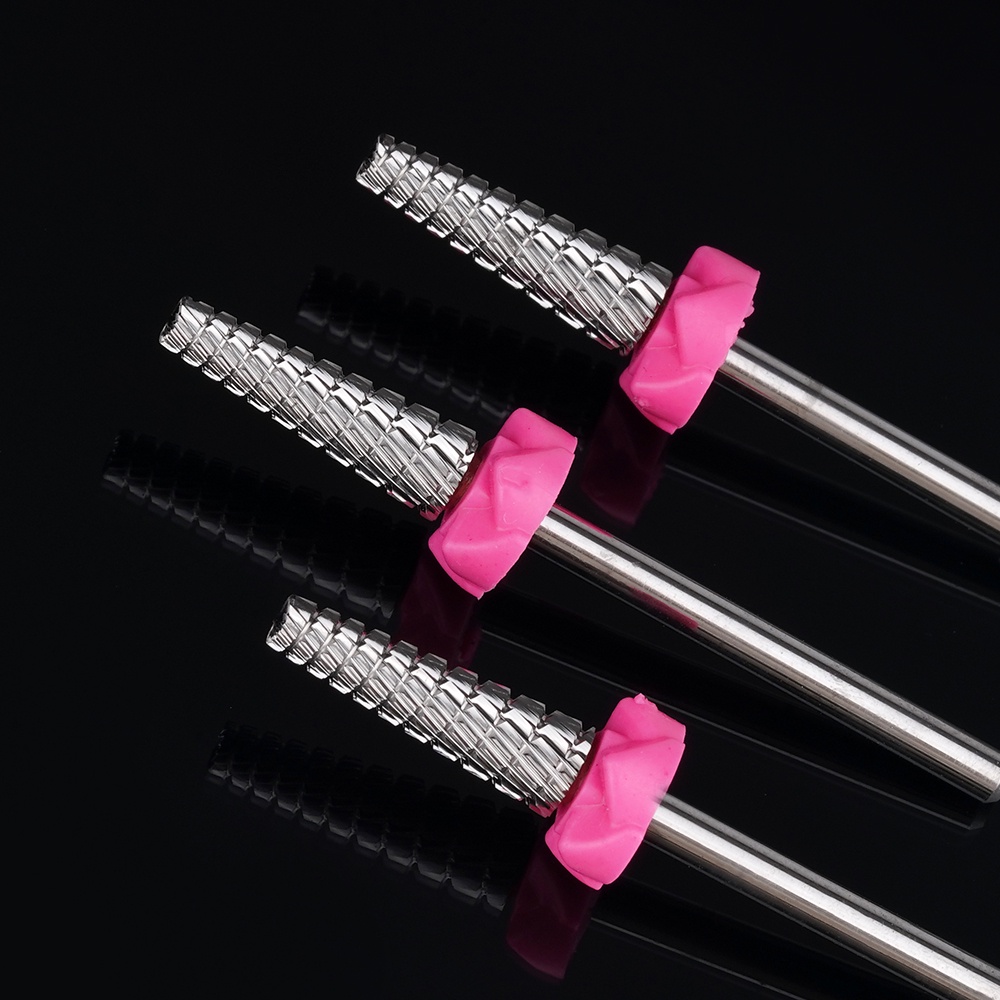
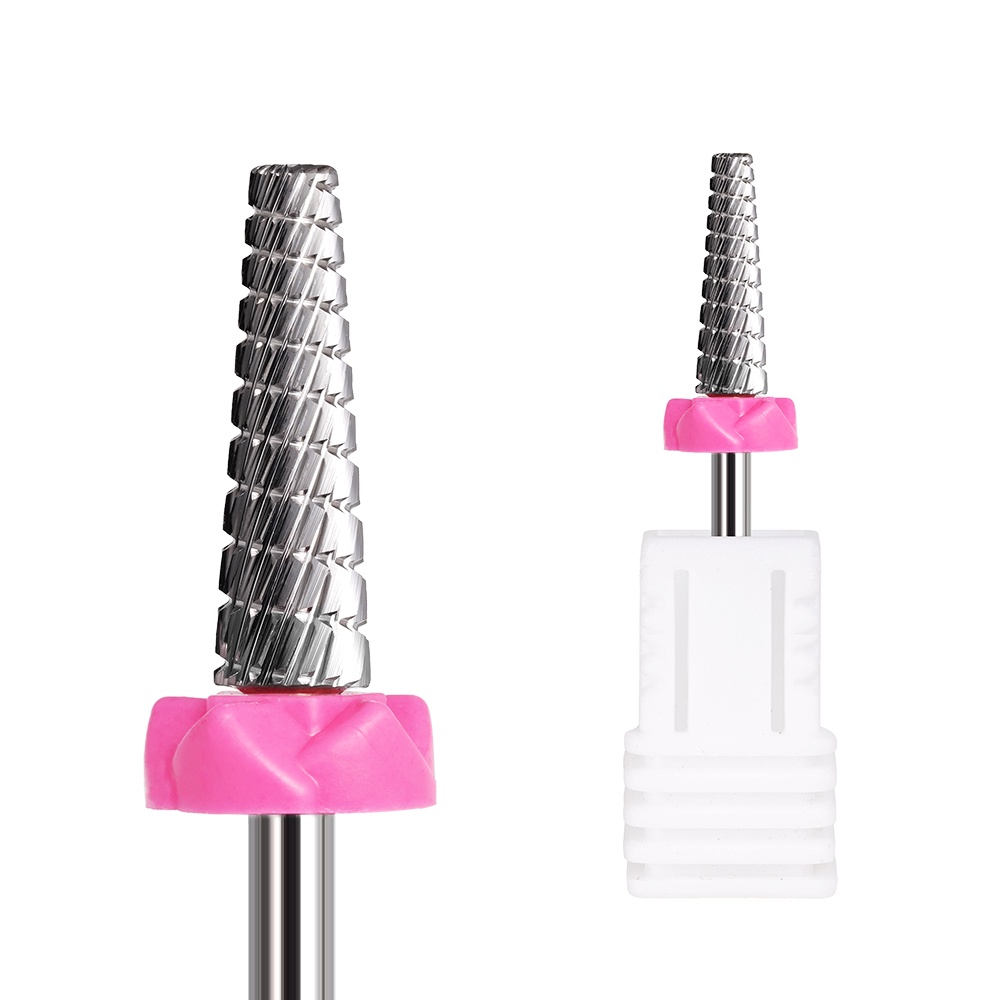
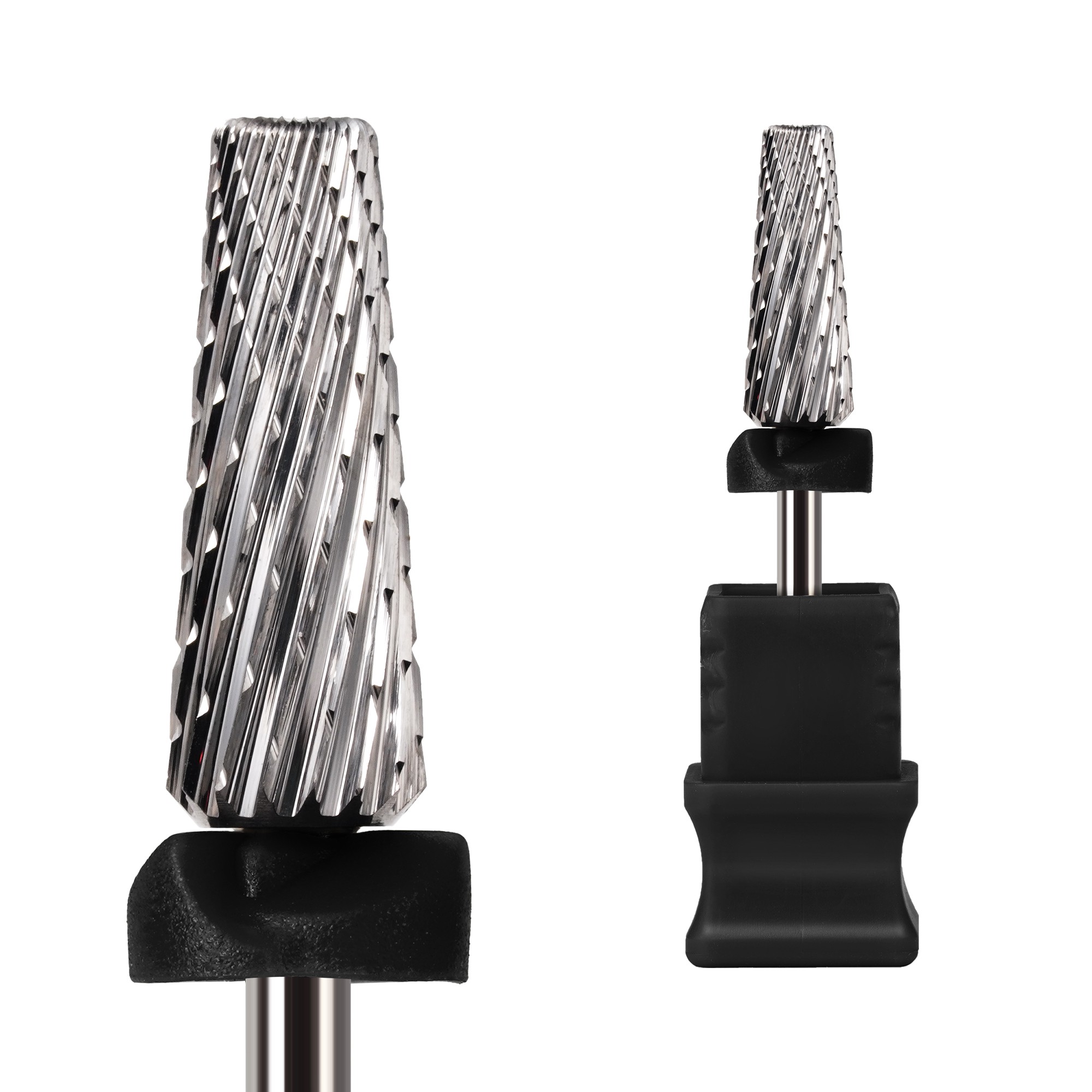
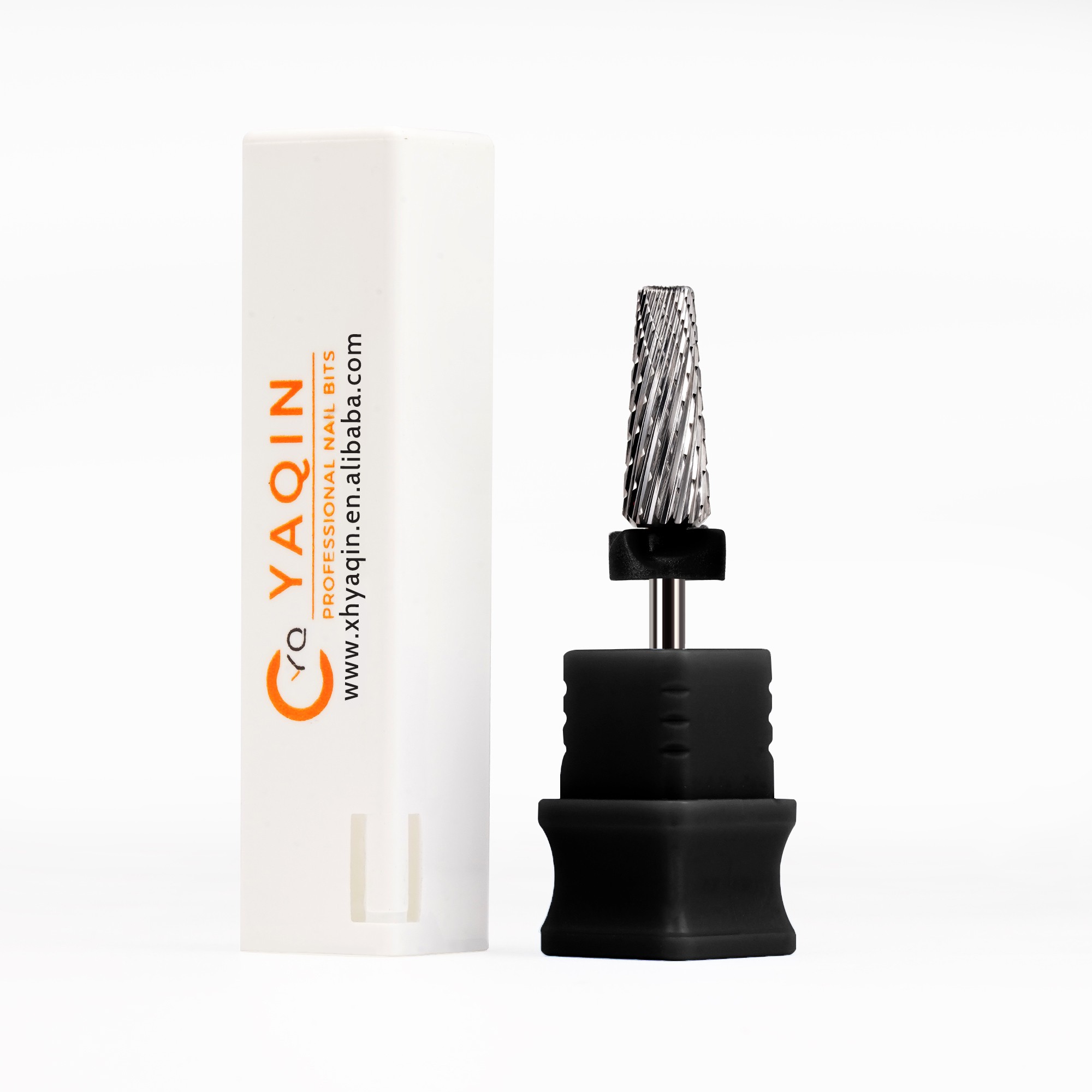
For example, a tungsten-carbide bit with a rounded, safety-oriented head profile may be a sensible option for salons that need controlled removal and edge refinement. The 5.0mm Corn Bullet Shape Universal Carbide Cuticle Dc Nail Bits is positioned for removal of gel polish, acrylics, extension gels, and hard gel, with recommended speed ranges varying by grit. That illustrates why procurement specifications should connect grit, intended task, and operating speed rather than listing a generic “bit set” as one line item.
Request clear identification of each supplied bit: material, shape, grit or cut type, shank size, intended application, and quantity per unit. If the order includes abrasive bands or sanding caps, define the matching mandrel and replacement-pack format. A distributor that cannot replenish the compatible consumables may eventually lose replacement sales and create unnecessary demand for product support.
Safety language also needs restraint. A rounded or pointed-round head can reduce the likelihood of catching surrounding skin compared with a more aggressive profile, but no bit design removes the need for suitable technique, speed selection, sanitation practice, and user training. Overstated safety claims can create a commercial and reputational problem if retail packaging is read as a guarantee.
Turn warranty language into a costed operating process
Warranty risk is where many bulk orders become difficult. A supplier may state a warranty period, but the commercial value of that statement depends on exclusions, evidence requirements, replacement timing, shipping responsibility, and whether parts can be supplied separately. A warranty that requires every end user to return a low-value handpiece overseas is rarely practical for a distributor.
Rather than asking only, “How long is the warranty?” ask how a claim moves from complaint to resolution. The purchase agreement should establish the defect categories covered, the proof required, the response timeline, and the remedy for each category. For example, an electrical failure on arrival may be handled differently from wear caused by improper use, accidental damage, or consumable-bit degradation.
It is often commercially sensible to negotiate a modest quantity of spare parts or service replacements with the original bulk order. The right quantity depends on product value, shipment size, market location, and the buyer’s own service model. The purpose is not to assume failure; it is to avoid turning a manageable local replacement into a slow and costly international claim.
Traceability supports this process. Batch numbers, production dates, and serial labels allow buyers and suppliers to identify whether a complaint is isolated or related to a particular run. Without traceability, every warranty discussion becomes anecdotal, and the buyer has little basis for deciding whether to pause sales, inspect inventory, or request corrective action.
Separate compliance documents from product suitability
Electrical and consumer-product requirements differ by destination and sales channel. A factory document, test report, or certificate may be relevant, but it does not automatically mean the exact shipped model, plug, charger, labeling, and packaging are appropriate for every market. Procurement should identify the destination requirements before production and ask the supplier to match documents to the final configuration.
This is particularly important when a file is sold with a mains adapter or rechargeable battery. Plug format, input and output ratings, labeling, disposal instructions, manuals, and retail warnings may all affect market readiness. A model approved for one region should not be assumed suitable for another merely because the core unit looks identical.
Buyers should also make sure that documentation names the correct manufacturer or responsible entity where required and corresponds to the actual product version. Last-minute substitutions of adapters, batteries, chargers, or housings can undermine an otherwise complete compliance file. Locking the approved bill of materials before production is a more reliable control than trying to reconstruct the final configuration after the goods have shipped.
Compare quotations on landed risk, not just ex-factory price
The lowest unit price can conceal costs that surface later: rejected units, missing accessories, relabeling, replacement freight, distributor service labor, slow response to claims, and unsellable inventory after a packaging or plug error. Procurement teams should compare suppliers using a shared request-for-quotation format so that apparent price differences are meaningful.
That format should require a clear breakdown of product configuration, included bits, power accessories, packaging, branding work, minimum order quantity, sample cost, tooling or artwork charges where applicable, lead time, spare-part options, inspection arrangements, warranty terms, and shipping terms. When every supplier responds to the same scope, omissions become visible before a purchase order is issued.
There is also a cost difference between a supplier that can support a stable OEM or ODM specification and one that only offers catalog products with frequent component substitutions. Custom branding is not automatically valuable, but controlled customization can be important when packaging, manuals, colorways, accessory sets, and service parts must remain consistent across repeat orders.
Use the first order to validate the supplier’s service model
A first bulk order should establish more than sales potential. It should test whether the supplier can manage approvals, production communication, quality records, packing accuracy, and claims handling in a way that can scale. The buyer should retain the approved sample, final artwork, specification sheet, packing list, inspection criteria, and agreed warranty procedure as part of the supplier file.
Before placing a repeat order, review the practical results: complaint types, return rate, parts consumed, packaging damage, accessory shortages, and time needed to resolve faults. This review may show that a slightly higher-cost configuration, stronger inner packaging, or a different starter-bit mix produces a lower total ownership cost.
For wholesale electric nail file sourcing, the most defensible purchase decision is rarely based on a single feature or a single quoted figure. It comes from matching the file and bit system to the intended workload, documenting what must remain consistent across the batch, and agreeing in advance on how defects will be handled once the goods are in the buyer’s market.
News List
- Preventing Gouges and Uneven Filing With Small Barrel Nail Drill BitsSep 20, 2026
- How Diameter and Grit Affect Small Barrel Nail Drill Bit PerformanceSep 20, 2026
- Can Hytos Nail Drill Bits Be Used Safely on Natural Nails and Gel Polish?Sep 20, 2026
- How to Verify Fit Between Hytos Nail Drill Bits and an E-File HandpieceSep 20, 2026
- Safe Speed Settings for Umbrella Nail Drill Bits Around the Nail FoldSep 20, 2026
- Umbrella vs Flame Nail Drill Bits: Which Shape Offers Better Cuticle Control?Sep 20, 2026
Best-Selling Products
 Cross Cut Safety Stainless Steel Tungsten Carbide Nail Drill Bits Salon Foot Use XF-C Grit for Removing Nails
 First-rate Quality Tungsten Carbide Nail Drill Bits Best Coating Manicure Remove Gel Nails Accessories
 Professional Advanced Safety Cuticle Bits Two-Way Rotate 3/32'' Carbide Tungsten 5 in 1 Nail Drill Bits
 Wholesale 5 in 1 Electric Manicure Nail Drill Bits Various Coating Cone Cuticle Bit with Rotary Cross Cut for Nail Art
 New Slant Tooth Tungsten Steel Nail Drill Bits Dead Skin Removal 5-in-1 Universal Grinding Nail Polish Head Tool Nail Drill Bits
 4.0mm Small 5 in 1 Integrated Sharpe Tungsten Nail Drill Bit Straight Teeth Gel Polish Removal
 Flame Sharp XF F M C XC Silver Safety Professional Corn Tungsten Carbide Nail Bit for Drill Machine Accessories
 Factory Direct 5 in 1 Tungsten Carbide Nail Drill Bits 6.8MM Cross Cut Safety Manicure 5 in 1 Nail Drill Bits
Please give us a message