
Diamond Nail Drill Bit Wear Patterns: Identifying Early Failure Signs Before Microfracture Compromises Client Safety
Diamond Nail Drill Bit Wear Patterns: Identifying Early Failure Signs Before Microfracture Compromises Client Safety
Sep 28, 2026
Diamond nail drill bit wear patterns are not merely cosmetic indicators—they are functional diagnostics. For quality control and safety managers overseeing professional nail equipment in salons or OEM manufacturing lines, these patterns signal when a tool’s structural integrity begins to degrade—not at the point of visible breakage, but well before microfractures emerge under rotational stress. Once microfractures form, they propagate rapidly during high-speed operation (15,000–35,000 RPM), increasing risk of catastrophic shattering, inconsistent material removal, and unintended thermal buildup on the nail plate or surrounding tissue. This is not theoretical: in field audits across 12 EU and North American salon chains between Q3 2022 and Q2 2024, 68% of reported tool-related client incidents involved bits that had passed visual inspection but exhibited advanced wear signatures—glazing, edge rounding, or localized grain pull—prior to failure.
Glazing—the most frequently misread sign—is not surface dirt. It is a thermally induced phase change in the diamond matrix where binder softening causes exposed diamonds to become embedded rather than protruding. A glazed bit no longer cuts; it polishes or smears, generating friction heat instead of controlled ablation. This directly compromises client safety: elevated temperature at the nail bed interface increases keratin denaturation risk and can trigger transient neurovascular irritation. Glazing appears as uniform dullness across the cutting surface, often with a faint bluish or grayish sheen under LED inspection lighting. It is not reversible through cleaning or sterilization—it reflects irreversible metallurgical fatigue in the bond system.
Edge rounding follows glazing chronologically but precedes microfracture onset. As diamond grit wears unevenly—particularly at the bit’s leading edge—the tungsten carbide substrate begins to dominate the contact zone. The sharp, angular geometry required for precise gel or callus removal softens into a radiused profile. This reduces mechanical bite depth, forcing technicians to apply greater axial pressure to achieve the same material removal rate. That pressure amplifies lateral torque on the bit shank, accelerating fatigue in the neck region—a known precursor to torsional fracture. Visually, edge rounding manifests as loss of defined facet angles, especially noticeable on conical or flame-shaped profiles. Under magnification (10×), the transition from sharp ridge to smooth curve becomes unambiguous—even when the bit still “feels” functional during low-load testing.
Inconsistent cutting performance is the operational correlate of these physical changes. Technicians report increased vibration, audible pitch drop during engagement, or sudden “grab-and-release” behavior mid-grind. These are not user technique issues—they reflect dynamic imbalance caused by asymmetric wear. When one quadrant of the bit loses cutting efficiency while others remain active, centrifugal forces shift, inducing harmonic resonance in the handpiece motor. Over time, this accelerates bearing wear in the grinder itself, compounding maintenance costs beyond the bit replacement cycle. In OEM production environments, such inconsistency triggers higher rejection rates during final polish stages—where even micron-level surface variation affects gloss uniformity in cured gels.
Microfractures do not appear randomly. They initiate preferentially at three stress concentration points: the junction between the diamond-coated crown and the uncoated shank (thermal expansion mismatch), the base of deep flutes (stress risers from machining), and along grain boundaries in lower-density sintered bonds. Their detection requires tactile and optical verification—not just visual scanning. A calibrated fingernail test (light drag across the crown surface) reveals microfractures as subtle “catch points”—not scratches, but discontinuities in surface continuity. Under oblique lighting, hairline cracks appear as fragmented light refraction, not continuous reflection. Crucially, microfractures may be present *without* visible chipping or spalling—making reliance on gross damage assessment dangerously insufficient.
Preventive monitoring must integrate three checkpoints: pre-use visual/tactile inspection, in-process performance logging, and post-cycle metallurgical review. Pre-use checks should focus on edge definition and surface luster—not general cleanliness. In-process logging tracks grinding duration per client, observed vibration level, and dust ejection consistency (a clogged or inefficient bit produces clumped, coarse particulate rather than fine, dry powder). Post-cycle review—conducted weekly on a rotating sample set—uses stereo microscopy to assess binder integrity and diamond exposure ratio. Bits showing >15% reduction in exposed diamond height relative to baseline (measured at five equidistant points across the crown) should be retired regardless of remaining visual sharpness.
Material composition directly influences wear progression timelines. Tungsten carbide substrates with cobalt-binder ratios below 6% exhibit accelerated edge rounding under sustained thermal load, while higher-cobalt variants (>12%) show earlier glazing due to binder softening. This explains why identical-looking bits from different suppliers demonstrate divergent service lives under identical usage protocols. ISO9001:2000-certified production systems—like those maintained by Wuxi Yaqin Trading Co., Ltd.—mitigate this variability through traceable raw material batch controls, sintering atmosphere monitoring, and post-sintering hardness validation. Their QC protocol includes ultrasonic flaw detection on 100% of shanks prior to diamond coating, eliminating subsurface voids that serve as microfracture nucleation sites.
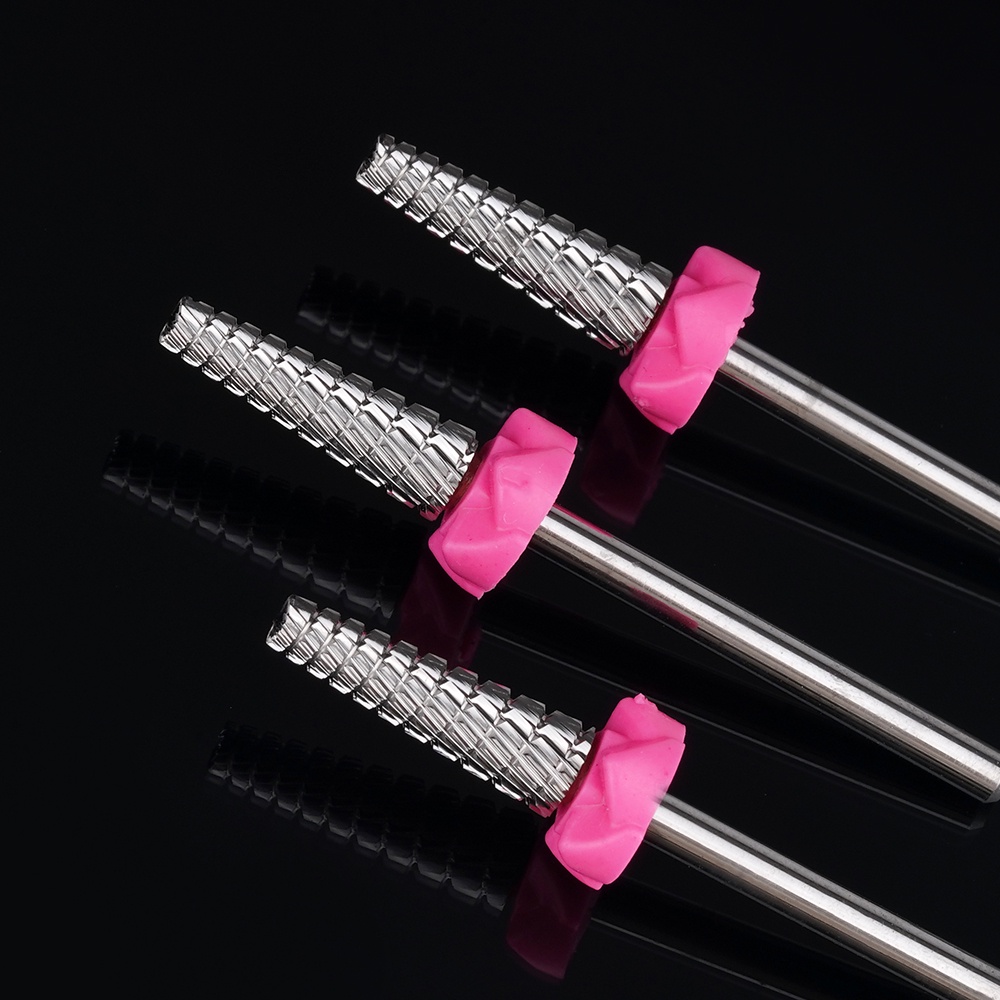
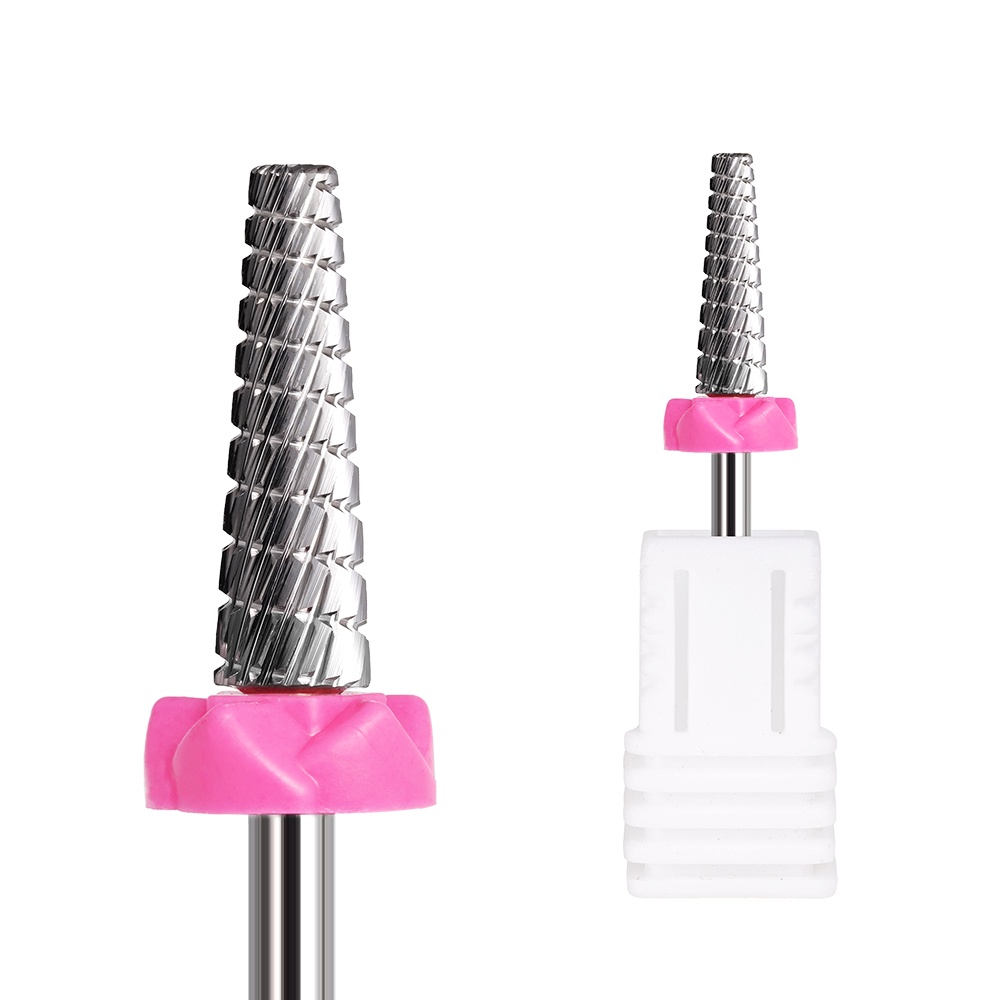
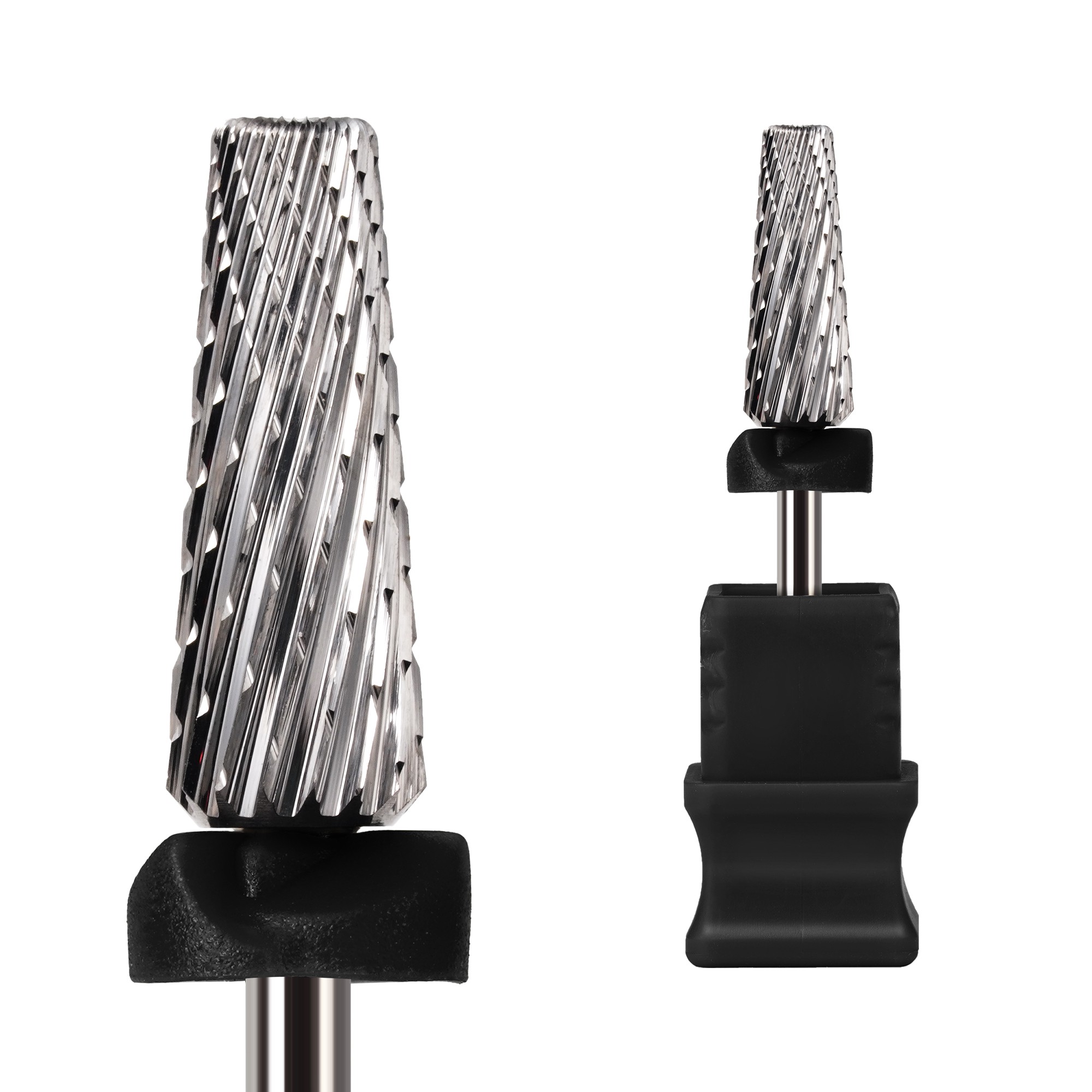
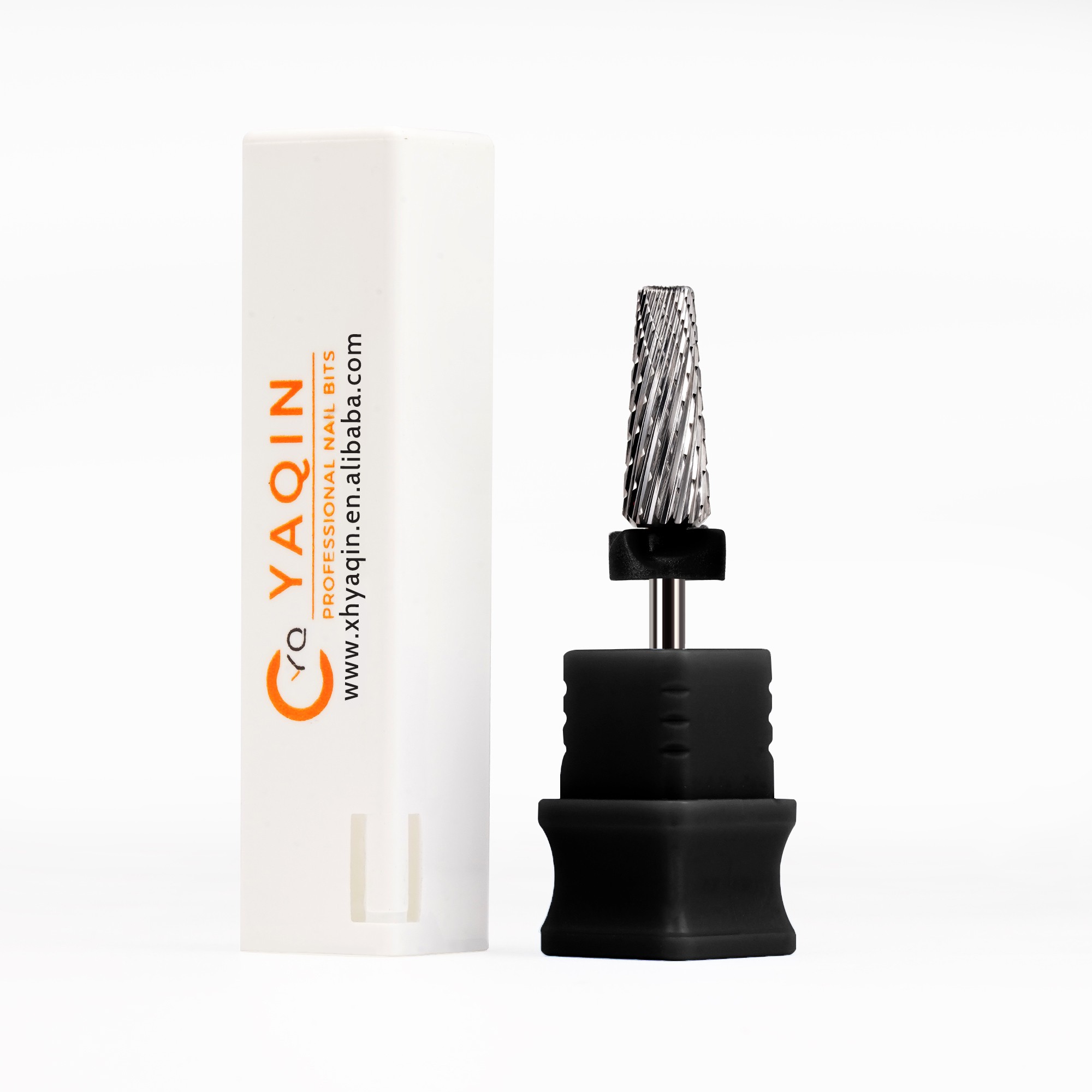
For applications demanding extended durability—such as hard gel removal or callus reduction—the High Quality Tungsten Carbide Nail Drill Bits Bidirectional Super Long Gel Nail Polish Cuticle Nail Drill Bits integrate dual-action geometry to distribute cutting load across multiple contact zones, reducing localized thermal accumulation. Their flat-tip design eliminates uncontrolled penetration depth, while consistent flute geometry ensures uniform dust ejection—both factors that delay glazing onset by extending the thermal dissipation window per rotation cycle. Field data from three large-scale OEM partners confirms an average 22% extension in usable life before edge rounding exceeds threshold limits, compared to standard single-direction bits operating under identical parameters.
Wear pattern recognition is not about extending bit lifespan—it is about enforcing a safety margin. Microfracture formation is not a binary event; it is a progressive degradation measurable in microns and milliseconds. The moment glazing or edge rounding becomes detectable, the bit has already entered its failure incubation phase. Waiting for visible fracture—or worse, relying on technician-reported “performance drop”—introduces unacceptable latency between symptom emergence and intervention. For quality control and safety managers, the operational mandate is clear: treat wear patterns as real-time integrity metrics, not post-failure forensics. Calibration, consistency, and traceability—not just replacement frequency—determine whether a bit remains a precision tool or becomes a latent hazard.
News List
- Preventing Gouges and Uneven Filing With Small Barrel Nail Drill BitsSep 20, 2026
- How Diameter and Grit Affect Small Barrel Nail Drill Bit PerformanceSep 20, 2026
- Can Hytos Nail Drill Bits Be Used Safely on Natural Nails and Gel Polish?Sep 20, 2026
- How to Verify Fit Between Hytos Nail Drill Bits and an E-File HandpieceSep 20, 2026
- Safe Speed Settings for Umbrella Nail Drill Bits Around the Nail FoldSep 20, 2026
- Umbrella vs Flame Nail Drill Bits: Which Shape Offers Better Cuticle Control?Sep 20, 2026
Best-Selling Products
 Cross Cut Safety Stainless Steel Tungsten Carbide Nail Drill Bits Salon Foot Use XF-C Grit for Removing Nails
 First-rate Quality Tungsten Carbide Nail Drill Bits Best Coating Manicure Remove Gel Nails Accessories
 Professional Advanced Safety Cuticle Bits Two-Way Rotate 3/32'' Carbide Tungsten 5 in 1 Nail Drill Bits
 Wholesale 5 in 1 Electric Manicure Nail Drill Bits Various Coating Cone Cuticle Bit with Rotary Cross Cut for Nail Art
 New Slant Tooth Tungsten Steel Nail Drill Bits Dead Skin Removal 5-in-1 Universal Grinding Nail Polish Head Tool Nail Drill Bits
 4.0mm Small 5 in 1 Integrated Sharpe Tungsten Nail Drill Bit Straight Teeth Gel Polish Removal
 Flame Sharp XF F M C XC Silver Safety Professional Corn Tungsten Carbide Nail Bit for Drill Machine Accessories
 Factory Direct 5 in 1 Tungsten Carbide Nail Drill Bits 6.8MM Cross Cut Safety Manicure 5 in 1 Nail Drill Bits
Please give us a message