
Are China nail drill bit suppliers consistent enough for repeat orders
Are China nail drill bit suppliers consistent enough for repeat orders
For buyers planning repeat orders, choosing a reliable China Nail Drill Bit supplier is not just about price, but about stable quality, delivery consistency, and long-term service. With strict QC, ISO-certified management, and proven OEM/ODM experience across global markets, the right manufacturing partner can reduce sourcing risks and support scalable business growth.
The short answer is yes, some China nail drill bit suppliers are consistent enough for repeat orders—but many are not consistent in the way serious buyers actually need. That distinction matters. In this category, “consistent” does not simply mean that samples look good or that the first order arrives on time. It means the supplier can reproduce the same cutting performance, grit feel, concentricity, shank tolerance, coating or carbide quality, packaging standard, and delivery rhythm across multiple production cycles.
For enterprise buyers, that is where the sourcing decision becomes strategic. Nail drill bits are small products, but the risk profile is not small. Minor variation in geometry, durability, sharpness, corrosion resistance, or balance can create customer complaints, higher return rates, inconsistent salon performance, and private-label damage. Repeat-order reliability is therefore less about whether a factory can manufacture a bit, and more about whether it can control process variation over time.
Why repeat-order consistency is harder than many buyers assume
In the light industrial and beauty tools sector, nail drill bits sit in a category where appearance is easy to copy, but process control is harder to replicate. A supplier may send an acceptable first batch by allocating extra inspection attention, using better raw materials for samples, or prioritizing a new customer’s first shipment. Problems often show up on the third or fifth order, when production pressure rises, raw material lots change, or subcontracting starts.
That is why experienced importers rarely judge a China Nail Drill Bit source on sample quality alone. They look for process stability under normal operating conditions. The important question is not “Can this supplier make a good sample?” but “Can this supplier deliver the same result when volumes increase, specifications expand, and timelines tighten?”
In practice, consistency risk usually comes from five areas:
- raw material variation, especially in carbide or tungsten steel quality;
- tooling wear and grinding precision during production;
- insufficient control of grit specification and cutting pattern;
- packaging and labeling errors in mixed-SKU orders;
- production scheduling instability during peak export periods.
Any buyer planning repeat programs for salon chains, distributors, e-commerce brands, or OEM lines should test suppliers against these risks before scaling.
What “consistency” should mean in commercial terms
Buyers often discuss consistency in vague terms, but decision-making improves when it is broken into measurable business outcomes.
For repeat orders, supplier consistency should mean:
- the same specification performs the same way across batches;
- defect rates remain controlled without constant buyer intervention;
- lead times are predictable enough to support inventory planning;
- OEM packaging and branding are reproduced without avoidable errors;
- communication remains responsive after the first few orders, not only before payment;
- quality issues, when they occur, are traceable and resolved systematically.
For management teams, this matters because inconsistent low-cost supply is often more expensive than stable mid-cost supply. A cheaper unit price can be erased by rework, claims, platform penalties, customer churn, emergency freight, or excess safety stock.
Where Chinese suppliers are strong—and where buyers still need caution
China remains competitive in nail drill bits because of its manufacturing ecosystem, export experience, and flexibility in OEM/ODM production. Buyers can usually access a wide range of shapes, grit options, barrel types, ceramic and carbide variants, packaging customization, and lower minimum order quantities than in many alternative sourcing markets.
For repeat-order programs, Chinese suppliers are often strongest in three areas:
- scalable production once a stable specification is locked;
- private-label customization for established importers and beauty brands;
- cost control across mixed product portfolios.
But caution is still necessary because the supplier landscape is uneven. Some companies are true manufacturers with internal QC systems, while others are trading firms relying on different workshops for different product lines. That does not automatically make trading companies unreliable—some are highly effective supply-chain managers—but it does change how repeat-order consistency should be assessed. If the supply base is fragmented behind the scenes, product stability depends on supplier control, not just on quotation speed or catalog breadth.
The real screening criteria for repeat-order buyers
Enterprise buyers should go beyond standard due diligence and evaluate the operating discipline behind the quotation. Several factors are more predictive of repeat-order reliability than the usual sales presentation.
1. Raw material control
For carbide and tungsten steel bits, raw material consistency is fundamental. Ask how the supplier controls incoming material lots and whether there is a stable sourcing channel for the core material. If the answer is vague, batch variation risk is higher. Material changes can affect cutting efficiency, wear resistance, heat generation, and service life.
2. Production traceability
A supplier suitable for repeat orders should be able to trace a batch by production date, order number, and inspection record. If a complaint arises, the ability to isolate the cause is far more important than broad promises about “best quality.”
3. Dimensional and performance tolerance management
Precision matters in nail drill bits more than many first-time buyers expect. Small deviations in shank size, head geometry, flute sharpness, or grit profile may not be visible in photos, but they affect vibration, machine compatibility, and technician control. Ask what inspection points are monitored routinely and whether those checks happen in-process or only before packing.
4. Mixed-order packaging accuracy
Repeat buyers often place assorted orders across coarse, medium, and fine grit options, private labels, or different shapes. Packaging mistakes are common in this category and can create hidden warehouse costs. A factory with a strict final packing QC process is generally more dependable than one focused only on unit production.
5. Change management
A strong supplier should handle version control when packaging, logo artwork, barcodes, insert cards, or technical specs change. Many repeat-order failures are not manufacturing failures at all; they are execution failures caused by uncontrolled updates.
How product type affects consistency risk
Not all nail drill bits are equally easy to source consistently. Simpler, lower-precision consumables are generally easier to standardize than premium multifunctional bits designed for different gel removal and prep stages.
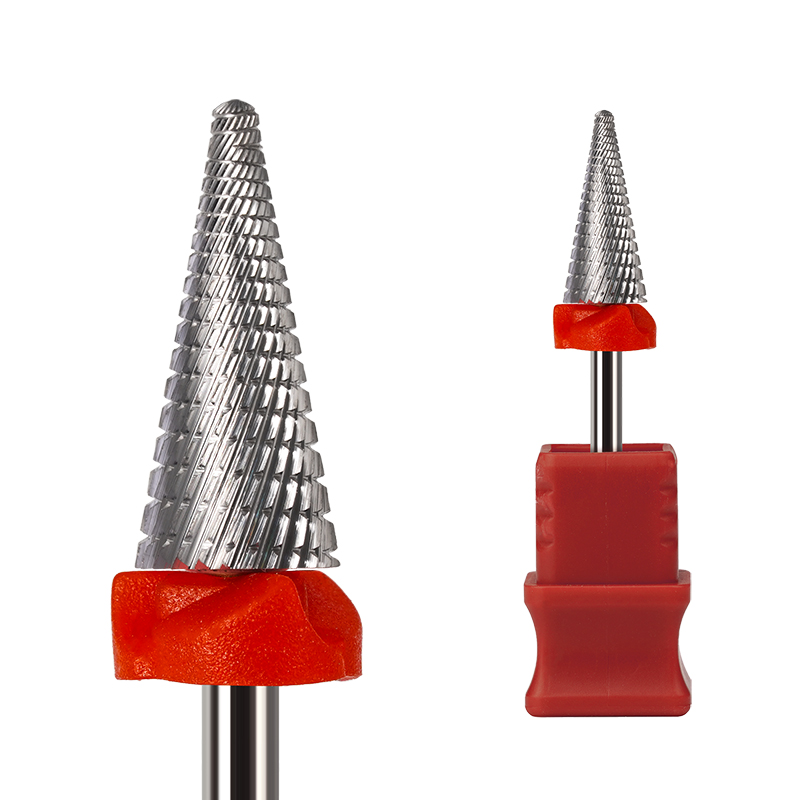
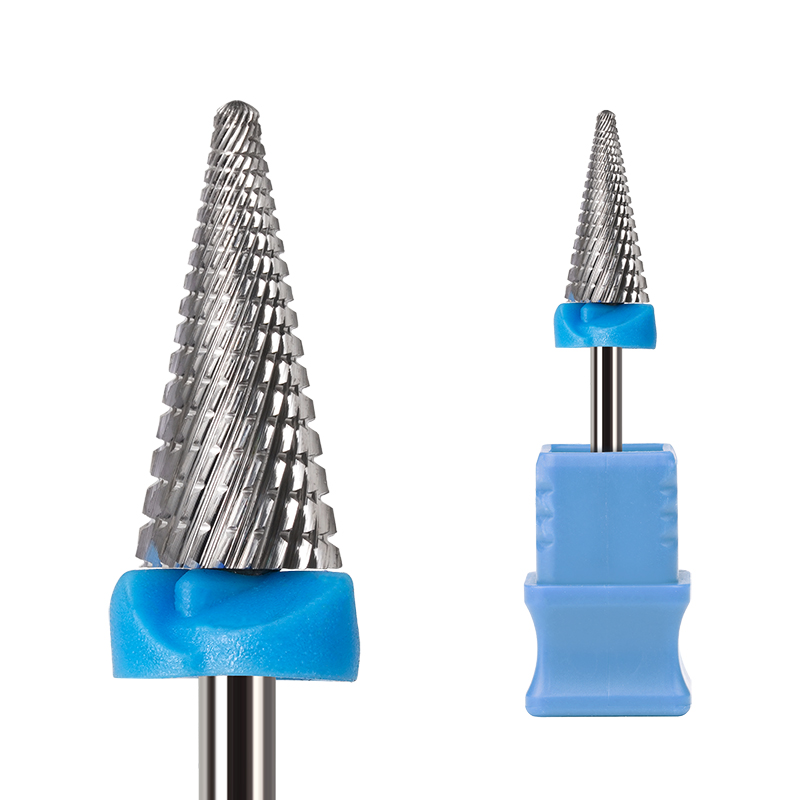
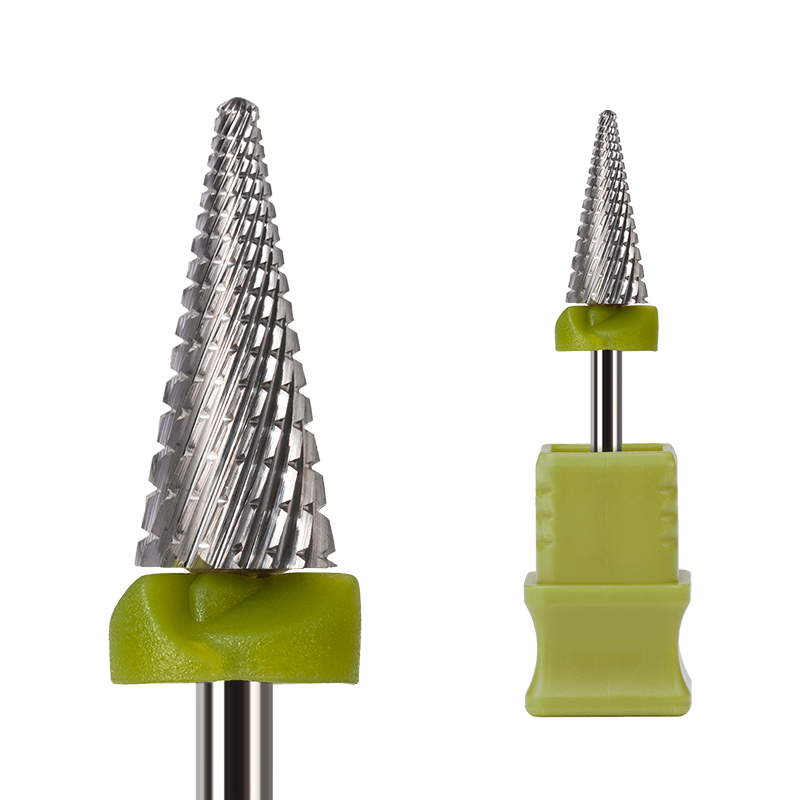
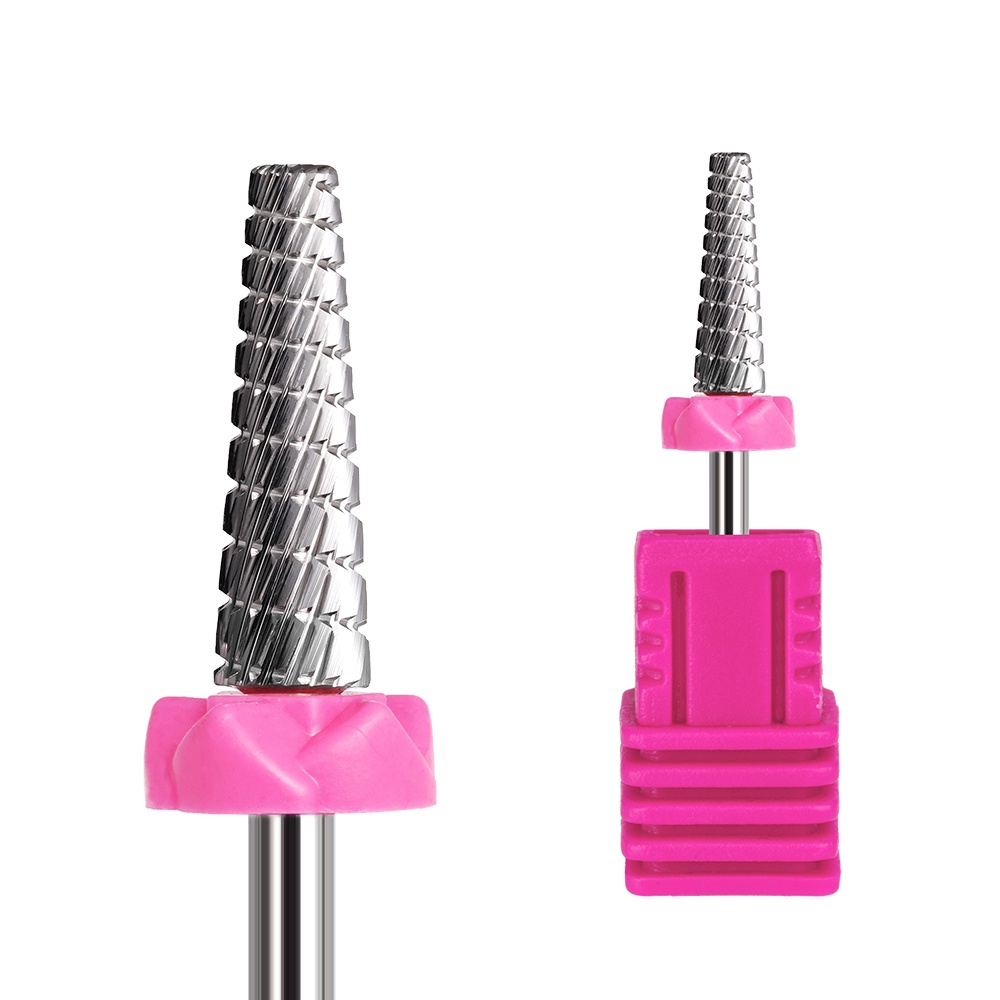
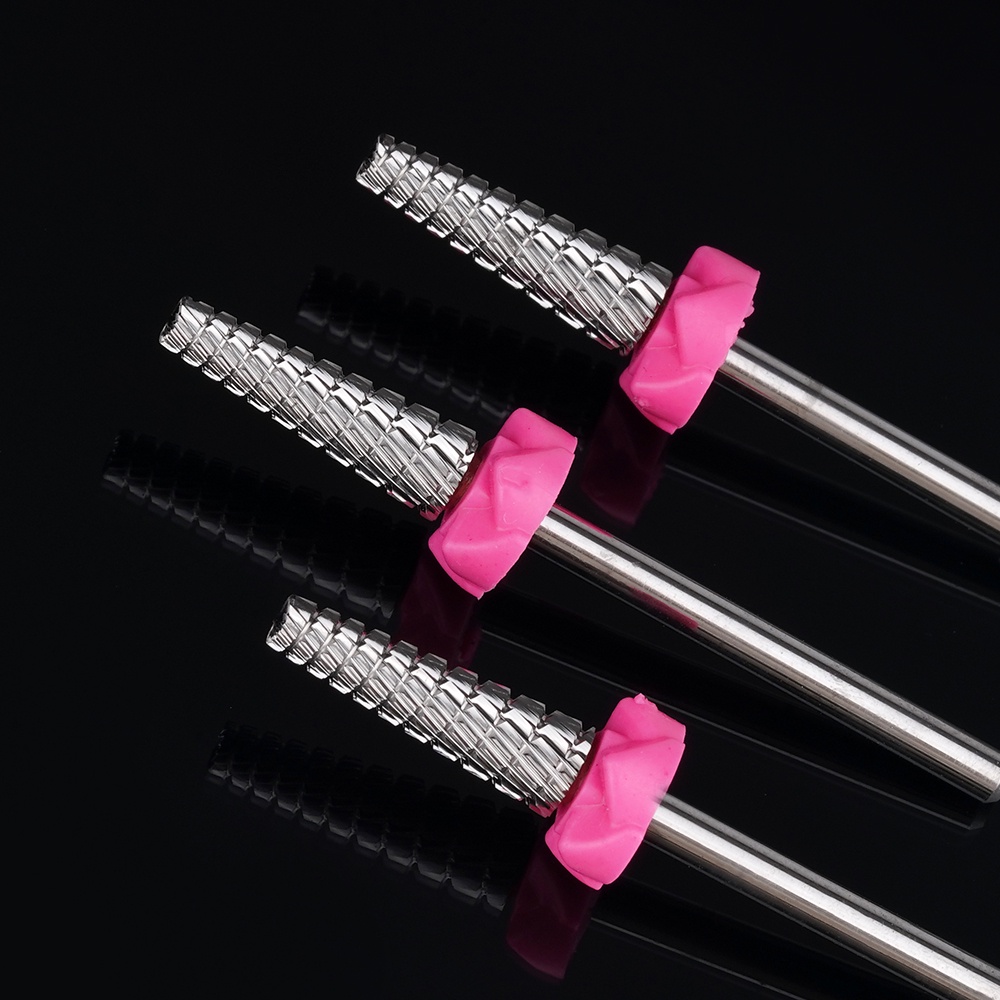
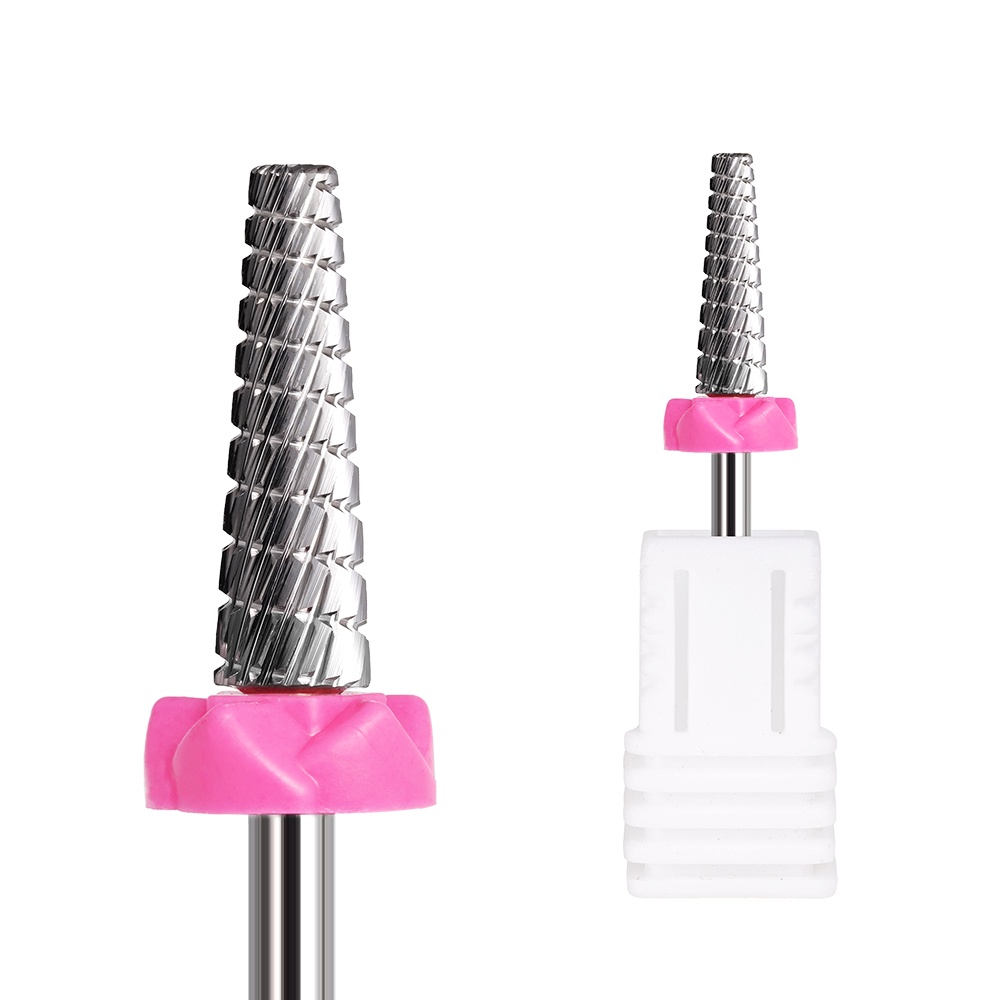
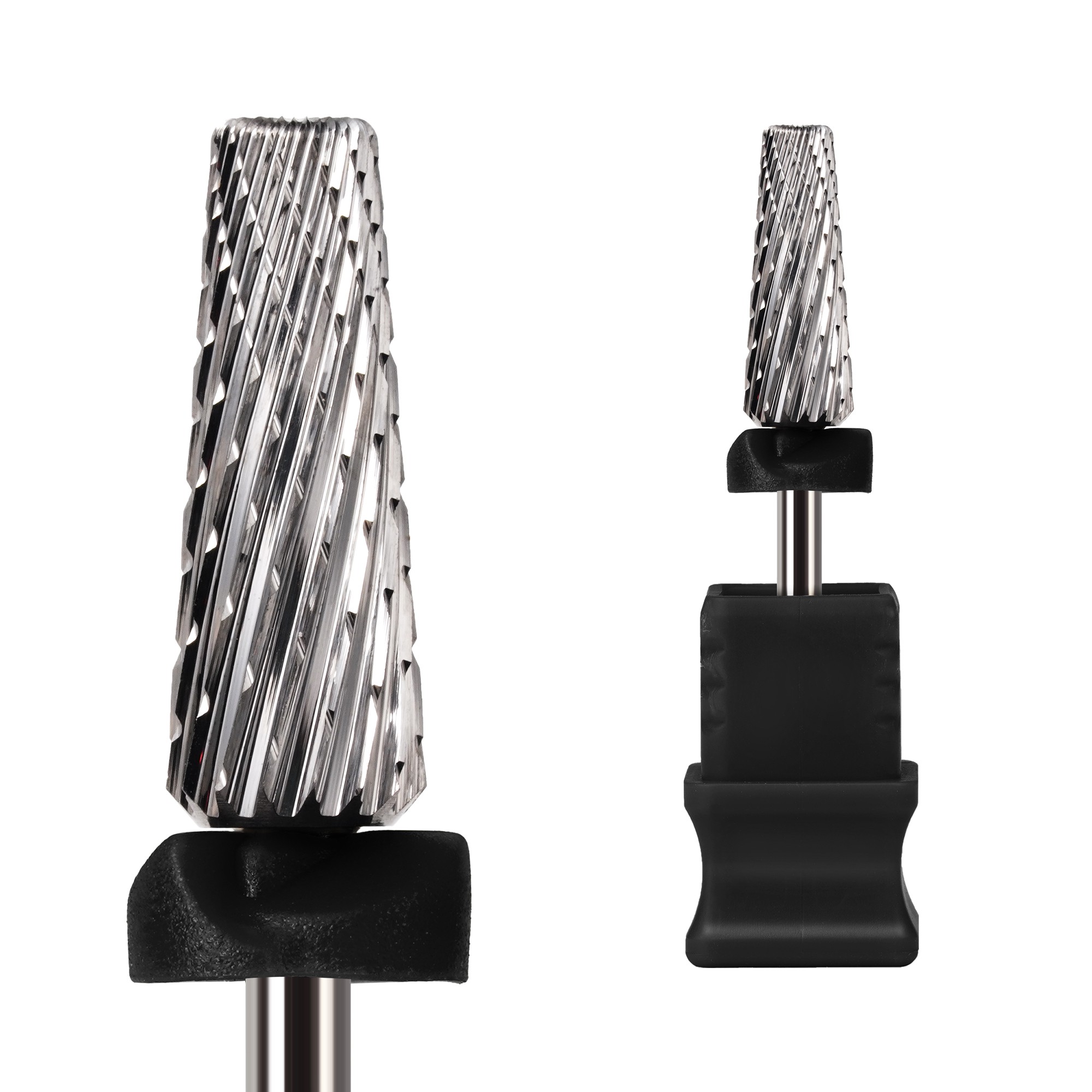
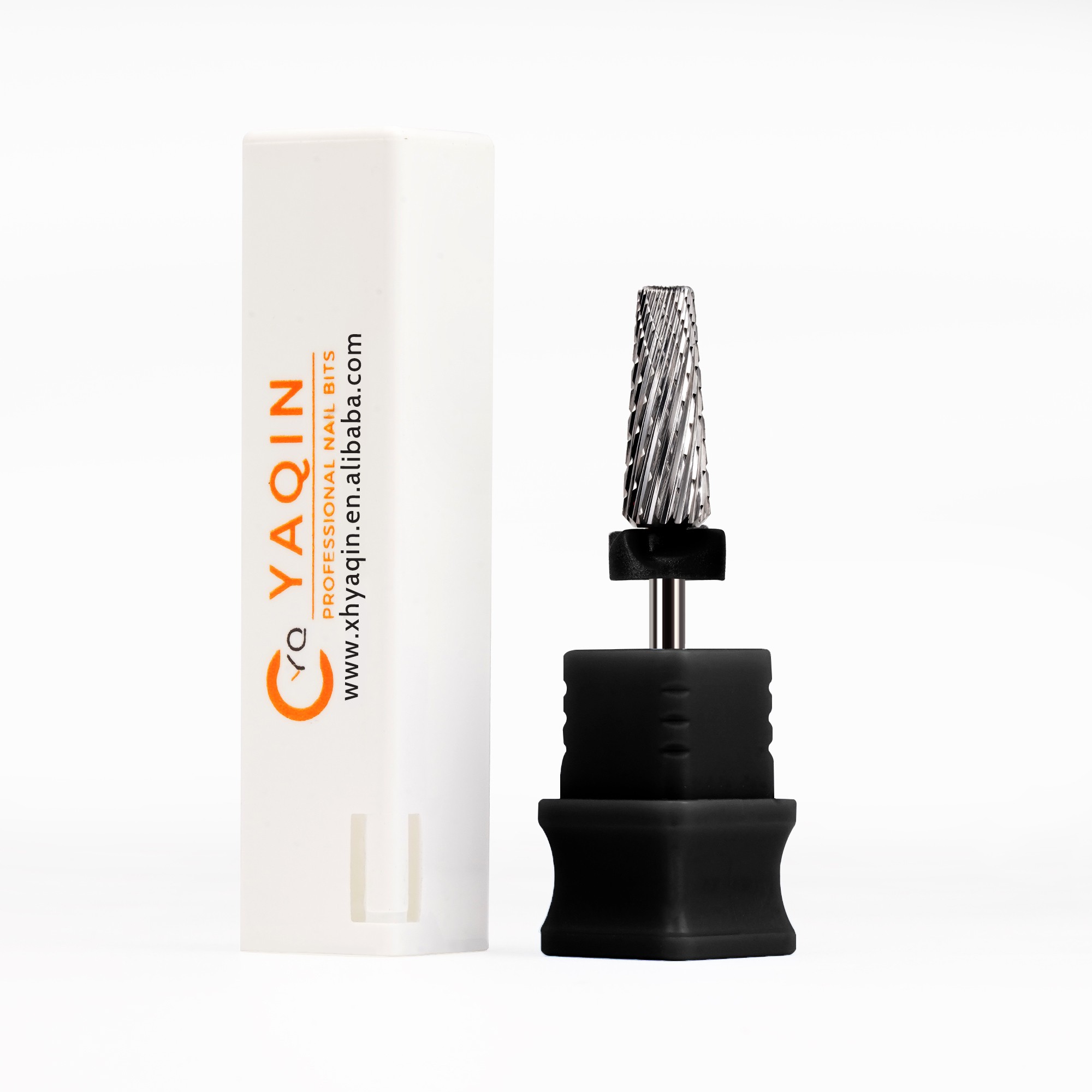
For example, a multifunction carbide bit intended for quick and safe gel removal, smooth nail prep, and reduced heat perception places more pressure on grinding precision and material quality than a basic entry-level bit. A product such as High Quality Carbide Nail Drill Bits Super Long 5 in 1 Electric Manicure Grinding Burr SC Barrel Tungsten Carbide Bit for Nail illustrates the kind of specification where buyers should pay close attention to repeatability. When a supplier offers coarse, medium, and fine grit options, corrosion resistance, precision cutting, and durability claims, the key issue is whether those features remain stable from batch to batch, not whether they can be described in a catalog.
In categories like this, buyers should verify whether recommended operating ranges are tied to actual product performance documentation. If a bit is positioned for hard gel removal at 15,000–20,000 RPM and softer removal applications at lower speeds, consistency in geometry and cutting behavior becomes commercially important. Otherwise, end users may experience uneven removal speed, heat issues, or premature wear.
Signs a supplier is likely to support long-term repeat orders
Reliable suppliers usually reveal themselves through operating habits rather than aggressive selling. Buyers should look for evidence such as:
- clear documentation on inspection and packing procedures;
- willingness to confirm critical specs in writing before production;
- stable communication from the same account and technical contacts;
- real export familiarity with destination markets such as the US, Canada, Germany, the UK, Italy, and Poland;
- structured OEM/ODM handling rather than informal customization promises;
- quality management systems such as ISO9001 certification, while understanding certification alone is not proof of product quality.
Suppliers with broad multi-country export experience often understand a practical reality that newer exporters may not: repeat orders are won through predictability. Importers do not want to renegotiate quality every shipment. They want a process that works without constant escalation.
This is one reason some buyers prefer working with suppliers that combine manufacturing oversight with export coordination, especially when they maintain strict QC from raw material purchasing through production and final packing. In such cases, the value is not the certificate itself, but the operating discipline behind it.
Common buyer mistakes when evaluating consistency
The most common sourcing errors are surprisingly basic.
One is overreliance on the cheapest quotation. In nail drill bits, a low price can reflect acceptable efficiency—or hidden shortcuts. Without understanding material grade, production control, and rejection handling, buyers may compare quotes that are not technically equivalent.
Another is approving samples without a golden sample process. A repeat-order program should define a signed reference sample, a written specification sheet, packaging reference, and acceptance criteria. If this is missing, later disputes become subjective.
A third mistake is ignoring post-order service responsiveness. Some suppliers are highly responsive before deposit payment and much slower once production starts. For repeat-order business, service consistency matters almost as much as product consistency.
There is also a frequent misunderstanding around OEM/ODM. Buyers assume customization means control. In reality, customization often increases error risk unless artwork approval, package version control, and SKU mapping are tightly managed.
A practical way to test supplier consistency before committing volume
For decision-makers, the best approach is staged validation rather than a one-order gamble.
Start with a qualification order that includes multiple SKUs, not just one hero item. Include at least one variable that tests execution discipline, such as mixed grit options, custom labels, or inner-box assortment requirements. Then review the order not only for product quality, but for packaging accuracy, lead-time adherence, and issue response speed.
The second order is even more important than the first. It should be placed under normal lead time, not special expedited treatment. If performance remains stable, buyers gain a more realistic view of repeat-order capability.
Where commercially feasible, buyers should track:
- defect rate by batch;
- on-time shipment rate;
- labeling and packing error frequency;
- response time to corrective actions;
- price stability across comparable material conditions.
This converts supplier evaluation from opinion to operational evidence.
Should buyers rely on one supplier or build a backup?
For most enterprise importers, sole sourcing is only justified when the primary supplier has demonstrated stable quality, acceptable cost, proven communication, and enough production resilience to support business growth. Even then, maintaining a qualified secondary source is prudent.
The beauty tools category is vulnerable to shipping disruptions, raw material fluctuations, and seasonal production congestion. A backup supplier does not need to take equal volume, but it should be qualified early enough to prevent emergency onboarding later.
That said, splitting volume too early can also weaken consistency if the product requires tight standardization. For branded nail drill bit programs, one validated supplier often produces more stable market feedback than several partially controlled suppliers.
What a good sourcing decision looks like
A good sourcing decision is not finding a supplier that never makes mistakes. It is finding one that operates predictably, documents specifications carefully, controls quality systematically, and handles problems without denial or confusion.
In the China Nail Drill Bit market, buyers can absolutely find suppliers capable of repeat-order consistency. The stronger candidates are usually those with disciplined QC systems, export experience across mature markets, and enough technical understanding to manage both standard and OEM/ODM programs. When evaluating higher-performance items—including multifunction carbide options like High Quality Carbide Nail Drill Bits Super Long 5 in 1 Electric Manicure Grinding Burr SC Barrel Tungsten Carbide Bit for Nail—the decision should focus on process repeatability, not product description.
For enterprise buyers, the commercial question is not whether China can supply nail drill bits consistently. It can. The real question is whether a specific supplier has the systems, discipline, and transparency to make consistency routine rather than occasional. That is the threshold repeat-order programs should be built on.
News List
- Is It Better to Source All Nail Drill Bits From One Factory?Aug 24, 2026
- How to Spot Fake Diamond Coating on Nail Drill BitsAug 24, 2026
- Are Silicone Nail Drill Bits Reusable After Sterilization?Aug 24, 2026
- Essential tools for manicures that make beginner work more consistentAug 24, 2026
- Which must-have items for nail technicians improve service speed mostAug 24, 2026
- How gel removal bits affect speed and heat during soak-off removalAug 24, 2026
Best-Selling Products
 Cross Cut Safety Stainless Steel Tungsten Carbide Nail Drill Bits Salon Foot Use XF-C Grit for Removing Nails
 First-rate Quality Tungsten Carbide Nail Drill Bits Best Coating Manicure Remove Gel Nails Accessories
 Professional Advanced Safety Cuticle Bits Two-Way Rotate 3/32'' Carbide Tungsten 5 in 1 Nail Drill Bits
 Wholesale 5 in 1 Electric Manicure Nail Drill Bits Various Coating Cone Cuticle Bit with Rotary Cross Cut for Nail Art
 New Slant Tooth Tungsten Steel Nail Drill Bits Dead Skin Removal 5-in-1 Universal Grinding Nail Polish Head Tool Nail Drill Bits
 4.0mm Small 5 in 1 Integrated Sharpe Tungsten Nail Drill Bit Straight Teeth Gel Polish Removal
 Flame Sharp XF F M C XC Silver Safety Professional Corn Tungsten Carbide Nail Bit for Drill Machine Accessories
 Factory Direct 5 in 1 Tungsten Carbide Nail Drill Bits 6.8MM Cross Cut Safety Manicure 5 in 1 Nail Drill Bits
Please give us a message