
What makes a reliable nail drill bit manufacturer for salon brands
What makes a reliable nail drill bit manufacturer for salon brands
Reliability in a Nail Drill Bit Manufacturer shows up long before the first shipment arrives. It starts in material choice, continues through machining accuracy, and becomes visible again in packaging consistency, traceability, and the way technical questions are answered. Salon brands usually feel the difference only after launch: bits that cut too aggressively, uneven grit that leaves heat marks, shafts that wobble in the handpiece, or coatings that look premium in photos but wear off too quickly in actual service. At that stage, changing supply is expensive, especially when packaging, private labeling, and SKU planning are already in motion.
A dependable factory is usually careful about the substrate itself. For nail drill bits, tungsten carbide remains a common benchmark for high-wear cutting applications because hardness and edge retention matter more than appearance. If a manufacturer cannot explain the difference between body material, coating layer, flute geometry, shank tolerance, and intended use, the product range may be assembled around catalog language rather than process control. That becomes risky for salon brands that need a stable result across coarse removal, cuticle work, surface refinement, and finishing.
Material and geometry reveal whether the product is engineered or merely sourced
One of the quickest ways to assess a factory is to ask how bit performance is defined internally. A serious answer usually refers to hardness stability, concentricity, cutting balance, groove design, and burr removal after machining. A weak answer stays at the level of “good quality” or “durable material.” Nail bits are small parts, but small errors are amplified at high rotational speed. Even slight inconsistency in flute depth or head symmetry can change vibration, heat generation, and control during filing.
For salon brands, geometry matters as much as raw material. Barrel, cone, safety top, under-nail, and 5-in-1 profiles each create a different contact pattern. The manufacturer should be able to match shape to actual salon use rather than pushing one universal pattern across every SKU. A reliable Nail Drill Bit Manufacturer usually distinguishes between stock items that are cosmetically varied and functional items that require separate process validation because the flute angle, taper, and head diameter alter performance in use.
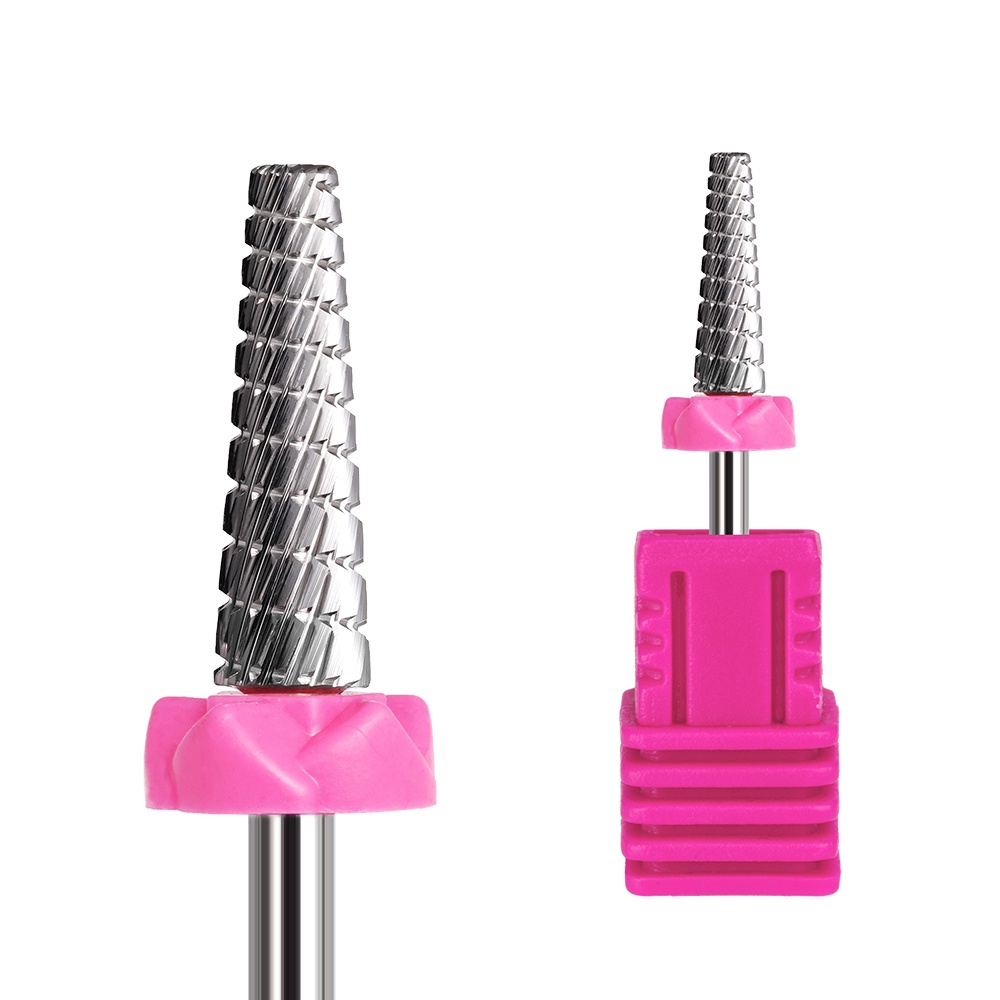
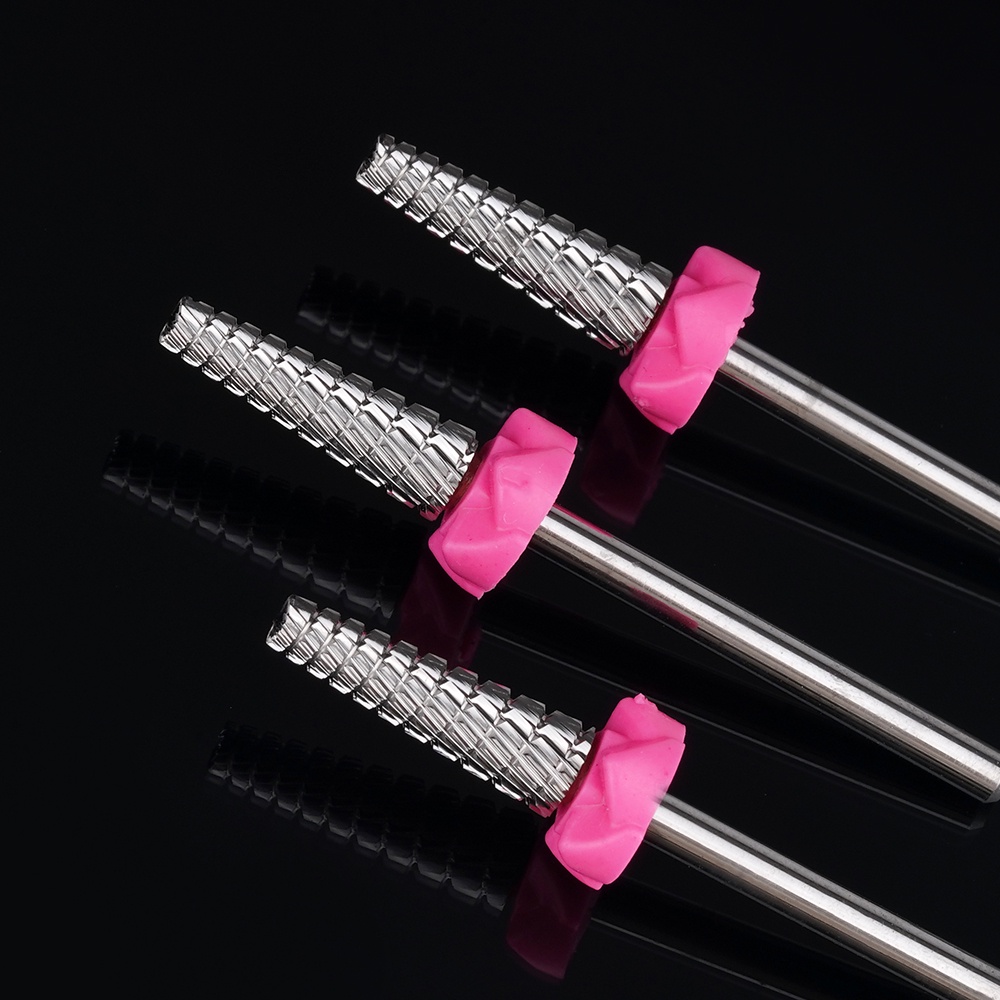
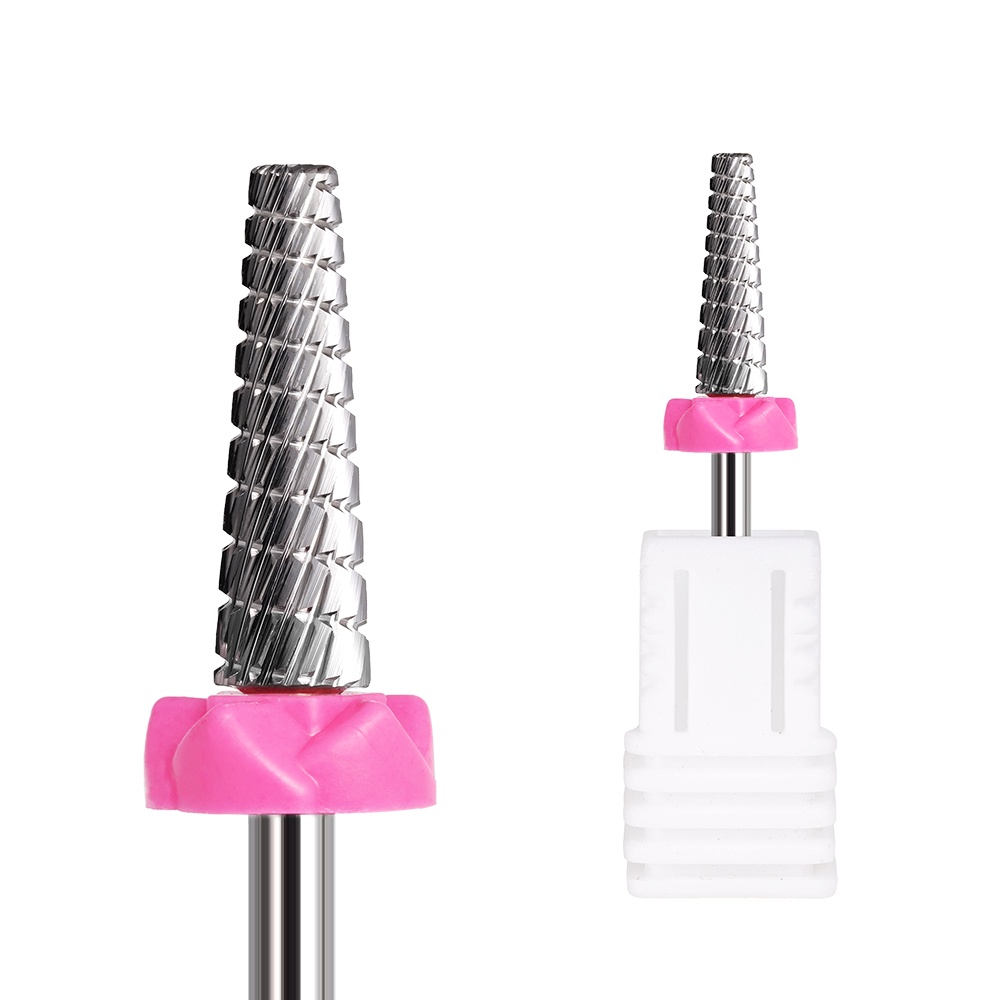
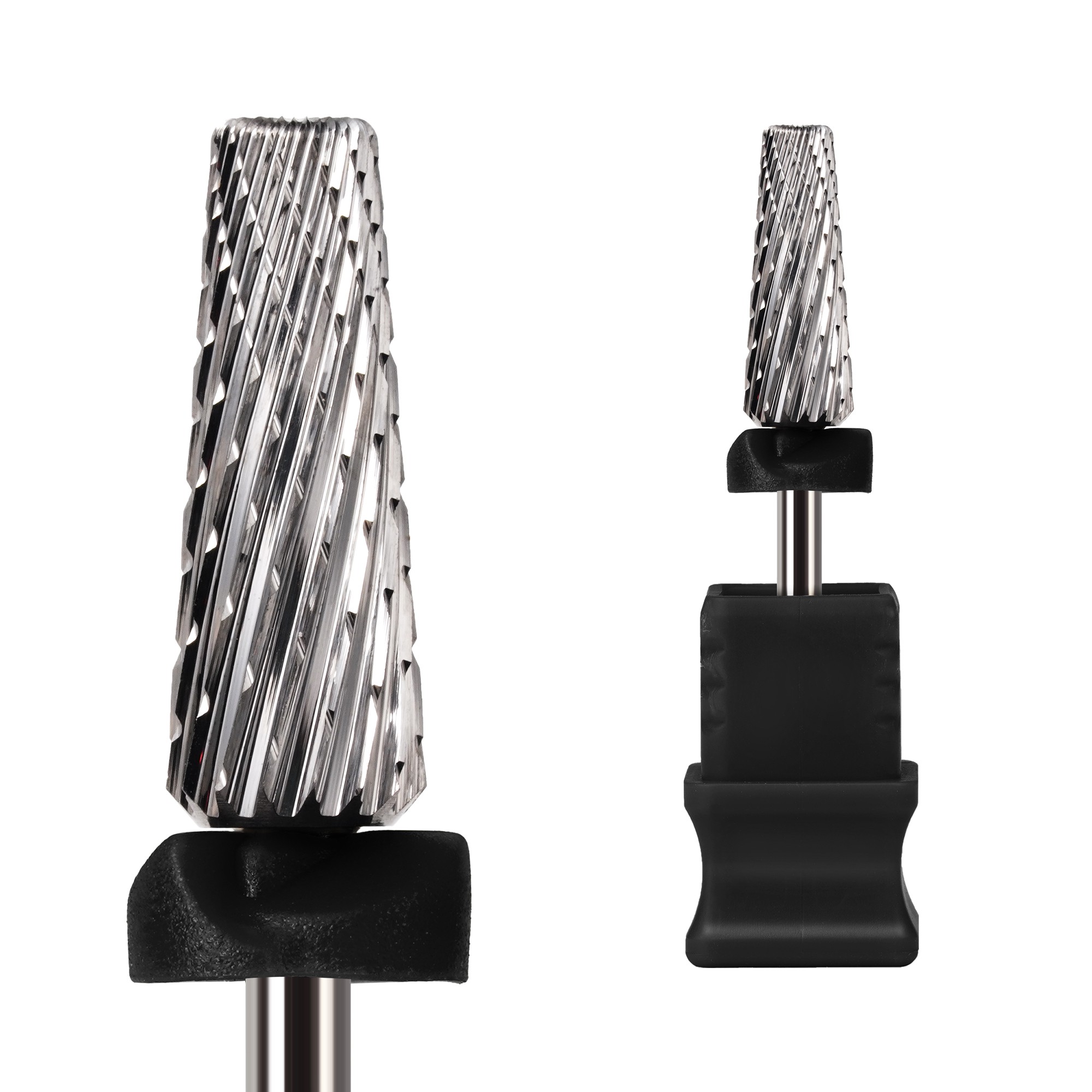
A practical sample to inspect is 5 In 1 Pro Gold Tungsten Carbide Nail Drill Bit. In this kind of bit, the evaluation should not stop at whether the gold finish looks clean. The more relevant questions are whether the tungsten carbide cutting section keeps a stable edge, whether the transition zones support shaping, smoothing, and polishing without catching, and whether the bit runs quietly with acceptable balance in repeated sessions. If customization such as logo marking or head color is offered, that should be treated as secondary to machining accuracy.
Quality control has to cover process, not only final inspection
Many supply problems come from relying on end-of-line inspection to catch issues that should have been prevented earlier. A more reliable manufacturer controls incoming material, machining parameters, surface treatment, cleaning, assembly, and packing as separate checkpoints. That matters because some defects are difficult to screen out later. A bent shank may be visible, but subtle runout, inconsistent cutting edges, or unstable coating adhesion may only appear after use.
There are several details worth pressing on during evaluation. Ask whether shaft diameter is measured by batch or by piece for critical models. Ask how burrs are removed from the cutting area and how debris is cleaned before packaging. Ask whether left-hand and right-hand versions are segregated in production and labeling. Ask what happens when one cavity, one fixture, or one machine starts drifting out of tolerance. The answers often show whether the factory is organized around prevention or around replacement after complaints.
Packaging standards also say a lot. Individually packed bits are not automatically better, but protective single packing can reduce abrasion, contamination, and mix-ups during export handling. This is especially relevant for coated bits and mixed orders that include multiple head shapes with similar visual appearance. If the manufacturer treats packing only as an outer carton issue, product identification errors become more likely during relabeling or private-label fulfillment.
OEM and ODM capability should be tested through details, not claims
Salon brands frequently need customized grit feel, flute pattern, coating color, logo position, barcode labeling, and kit composition. The issue is not whether a supplier says yes to customization. The issue is whether customization changes the controlled product baseline. Some factories accept every request, then outsource parts of the work or substitute the nearest existing item. That can create a mismatch between approved sample and production lot.
It helps to examine how the factory handles drawings, retained samples, revision control, and approval records. If a logo is laser-marked, is its position standardized so that it does not interfere with cleaning or visual inspection? If a coating color changes, does the process affect edge sharpness or only appearance? If custom packaging is introduced, does the packing station have a method to prevent SKU crossover? These are ordinary operational questions, but they often separate a stable OEM program from a flexible-looking one that becomes unpredictable under schedule pressure.
Another useful sign is whether the supplier can explain what should remain unchanged. In nail drill bits, some customization requests may look harmless while affecting performance. Enlarging the head, altering the taper, or changing the flute depth to match a visual concept may create more friction, more noise, or less control. A reliable manufacturer is usually willing to push back when the requested modification creates avoidable risk.
Export reliability is partly technical and partly administrative
For salon brands shipping into multiple markets, product quality alone is not enough. Reliability also includes documentation accuracy, carton marking consistency, and the ability to keep repeat orders aligned with the approved specification. A technically good batch can still become a commercial problem if labels, HS descriptions, unit counts, or inner-box identifiers are inconsistent.
Transit conditions add another layer. Nail drill bits are compact metal components, but they still need protective handling. Moisture exposure, coating abrasion during vibration, and package collapse in mixed cargo can all create avoidable complaints. A dependable factory usually has a clear packing hierarchy: unit protection, inner-box separation, master carton control, and pallet or outer handling rules where applicable. Even when no damage is visible, poor packing can mix SKUs and undermine traceability once goods reach a warehouse.
Lead time discipline matters most when a launch plan depends on refill continuity. In this category, delays often come from rework, coating bottlenecks, packaging shortages, or private-label approval changes. A trustworthy Nail Drill Bit Manufacturer generally gives realistic timing tied to process steps instead of broad promises. If the schedule suddenly improves without explanation after a technical change request, that can indicate that one of the requested operations was never built into the plan.
Performance in use should be judged under realistic salon conditions
Catalog descriptions can hide operational weaknesses because a bit may look flawless before it is mounted. Actual evaluation should cover fit in the handpiece, startup smoothness, vibration at working speed, heat buildup on continuous contact, dust evacuation through the flute, and cleaning after use. A bit that removes product quickly but loads up with residue or becomes noisy after sterilization cycles may create service inconsistency even if its initial finish is attractive.
Application matching also matters. A coarse carbide bit intended for bulk removal should not be assessed by the same criteria as a finer bit used near natural nail surfaces. When a supplier presents one sample as proof of capability across all product families, the result can be misleading. Reliable manufacturing usually appears as repeatable performance across the intended use range, not as one polished reference sample.
Noise and stability deserve more attention than they usually get. A bit does not need to be silent, but excessive vibration often points to imbalance, poor shaft tolerance, or uneven head machining. That affects comfort, finish quality, and tool control. In categories such as 5-in-1 profiles, smooth transition between functional zones is especially important because the operator may shift pressure and angle frequently in one session.
Common evaluation mistakes create avoidable risk
One common mistake is overvaluing surface appearance. Bright coatings, sharp engraving, and clean blister cards can make a sample look premium while saying very little about the underlying cut quality. Another is approving a sample without freezing the production specification. If dimensions, grit behavior, or packaging details are not recorded clearly, future orders may drift while still being described as the same item.
Short sample testing is another weak point. A bit may perform well in first use and then lose consistency after repeated cleaning, sterilization, or routine wear. If the manufacturer cannot discuss expected wear patterns, cleaning compatibility, or how the edge profile changes over service life, the evaluation is incomplete. This does not require a promise about lifespan; it requires evidence that wear behavior has been considered.
There is also a tendency to treat low unit price as the main control variable. In abrasive and cutting tools, price compression often shows up through lower-grade raw material, looser shaft tolerance, thinner coating, weaker packaging, or reduced inspection frequency. The commercial impact usually appears later as returns, complaints, or reorder hesitation rather than as an obvious defect at goods receipt.
Communication quality often predicts production quality
Technical communication is not a soft factor here. It is one of the clearest operational signals. A reliable supplier usually answers with dimensions, material descriptions, processing notes, tolerance language, and sample confirmation logic. An unreliable one often responds with broad assurances, shifts questions into sales language, or avoids discussing failure modes.
Revision handling is especially revealing. When packaging artwork changes, when a logo position is updated, or when a flute style is modified, there should be a clear link between the latest approved version and the actual build. Confusion at this stage can create mixed inventory that is difficult to quarantine after shipment. The more SKUs a salon brand carries, the more important this becomes.
In the end, reliability is visible in small, disciplined behaviors: consistent machining, accurate labeling, stable repeat orders, controlled customization, and realistic handling of technical limits. Those signals are more useful than polished sales language because they show how the manufacturer works when the order is routine, not when the sample is being presented.
News List
- Is It Better to Source All Nail Drill Bits From One Factory?Aug 24, 2026
- How to Spot Fake Diamond Coating on Nail Drill BitsAug 24, 2026
- Are Silicone Nail Drill Bits Reusable After Sterilization?Aug 24, 2026
- Essential tools for manicures that make beginner work more consistentAug 24, 2026
- Which must-have items for nail technicians improve service speed mostAug 24, 2026
- How gel removal bits affect speed and heat during soak-off removalAug 24, 2026
Best-Selling Products
 Cross Cut Safety Stainless Steel Tungsten Carbide Nail Drill Bits Salon Foot Use XF-C Grit for Removing Nails
 First-rate Quality Tungsten Carbide Nail Drill Bits Best Coating Manicure Remove Gel Nails Accessories
 Professional Advanced Safety Cuticle Bits Two-Way Rotate 3/32'' Carbide Tungsten 5 in 1 Nail Drill Bits
 Wholesale 5 in 1 Electric Manicure Nail Drill Bits Various Coating Cone Cuticle Bit with Rotary Cross Cut for Nail Art
 New Slant Tooth Tungsten Steel Nail Drill Bits Dead Skin Removal 5-in-1 Universal Grinding Nail Polish Head Tool Nail Drill Bits
 4.0mm Small 5 in 1 Integrated Sharpe Tungsten Nail Drill Bit Straight Teeth Gel Polish Removal
 Flame Sharp XF F M C XC Silver Safety Professional Corn Tungsten Carbide Nail Bit for Drill Machine Accessories
 Factory Direct 5 in 1 Tungsten Carbide Nail Drill Bits 6.8MM Cross Cut Safety Manicure 5 in 1 Nail Drill Bits
Please give us a message