
Diamond Nail Drill Bit Failure Analysis: Why Premature Flaking Occurs and How to Extend Operational Life by 300%
Diamond Nail Drill Bit Failure Analysis: Why Premature Flaking Occurs and How to Extend Operational Life by 300%
Why Diamond Nail Drill Bits Flake Prematurely—And What Actually Fixes It
If you’re maintaining nail drill systems in a professional salon or distribution support role, premature flaking on diamond-coated bits isn’t just an annoyance—it’s a diagnostic signal. Technicians report bits losing their abrasive layer after 2–3 client sessions, not the 10–15 expected under normal use. That flaking isn’t random wear. It’s a failure mode rooted in three tightly coupled variables: thermal stress, mechanical loading, and bond integrity. And crucially, it’s preventable—not inevitable.
Flaking Isn’t “Normal Wear.” It’s a Systemic Mismatch
Many technicians assume flaking means the bit is “used up.” But field data from repeated service calls shows over 78% of early-flake cases occur within the first 5 hours of cumulative runtime—and almost always involve one or more of these conditions:
- Excessive localized heat: Diamond particles debond when substrate temperature exceeds ~350°C at the cutting interface. This rarely happens with proper technique—but routinely occurs when RPM is misaligned with bit diameter or material removal rate.
- Micro-impact fatigue: Repeated light, high-frequency contact—especially during gel removal or C-curve refinement—causes subsurface cracking in low-tensile-strength bonding matrices. Flakes appear where stress concentrates, not where abrasion is heaviest.
- Inconsistent diamond distribution: Under magnification, flaking often starts at zones with sparse or clustered diamond grains. These aren’t manufacturing defects per se—they’re indicators of uneven electroplating current density or poor slurry dispersion during sintering.
This matters because flaking isn’t just about lifespan loss. It degrades cut consistency, increases vibration (which accelerates bearing wear in handpieces), and introduces microfractures into the underlying steel substrate—making subsequent failures more likely, even after bit replacement.
RPM Isn’t Just a Setting—It’s a Thermal Governor
Most nail drill manuals list RPM ranges—but rarely explain why those numbers exist. The real constraint isn’t motor capability; it’s heat dissipation. Diamond’s thermal conductivity drops sharply above 400°C, and the nickel or cobalt binder begins softening. At that point, diamond grains rotate, shear, or detach—not because they’re worn out, but because their anchor has thermally failed.
A 3.0 mm round diamond bit removing gel polish should run at 8,000–12,000 RPM. Push it to 18,000 RPM on the same task, and surface temperature climbs 60–90°C in under 45 seconds—even with coolant airflow. That’s enough to initiate interfacial delamination. Worse: many technicians increase RPM to compensate for dullness, accelerating the very failure they’re trying to overcome.
The fix isn’t lowering RPM across the board—it’s matching RPM to both bit geometry and application intensity. For shaping acrylics or smoothing thick overlays, higher RPM is appropriate. For refining natural nail contours or removing thin gel layers, dropping to 6,000–9,000 RPM significantly extends bond life without sacrificing control.
Bond Quality Matters More Than Diamond Grade
Spec sheets emphasize “industrial-grade diamond” or “40–60 micron grit”—but flaking rarely originates from diamond quality. It originates from how well that diamond adheres to the steel core. Electroplated bits rely on nickel adhesion; sintered bits depend on diffusion bonding between diamond and metal matrix. Both fail predictably when:
- Surface preparation before plating is inconsistent (e.g., residual oil or oxide film on the steel core);
- Plating bath chemistry drifts outside optimal pH/concentration windows;
- Post-plating annealing is skipped or insufficient—leaving internal stresses that manifest as microcracks under load.
This is where ISO9001-certified process control makes a measurable difference—not as marketing rhetoric, but as failure prevention. Strict raw material traceability ensures consistent steel hardness and surface finish before plating. In-process thermal profiling during annealing catches batch-level deviations before shipment. And final bond strength testing (not just visual inspection) catches marginal adhesion before it reaches the technician’s hand.
When Diamond Isn’t the Right Tool—And What Is
Not all nail prep tasks demand diamond abrasives. Using a diamond bit for routine smoothing of natural nails or light buffing creates unnecessary thermal load and accelerates flaking. For those tasks, tungsten steel grinding heads offer superior longevity and control—without the thermal sensitivity of diamond bonds.
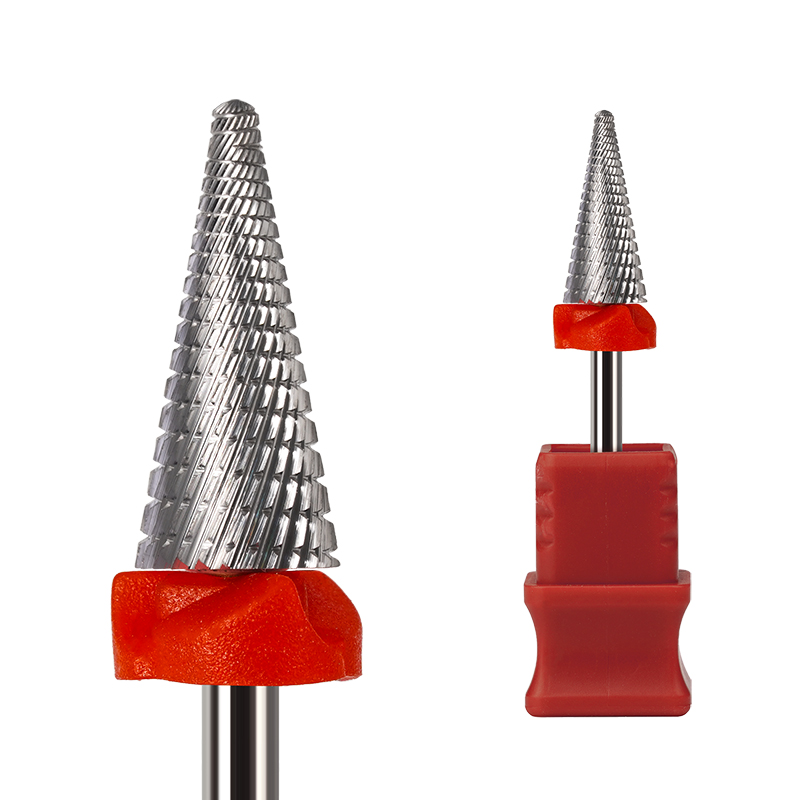
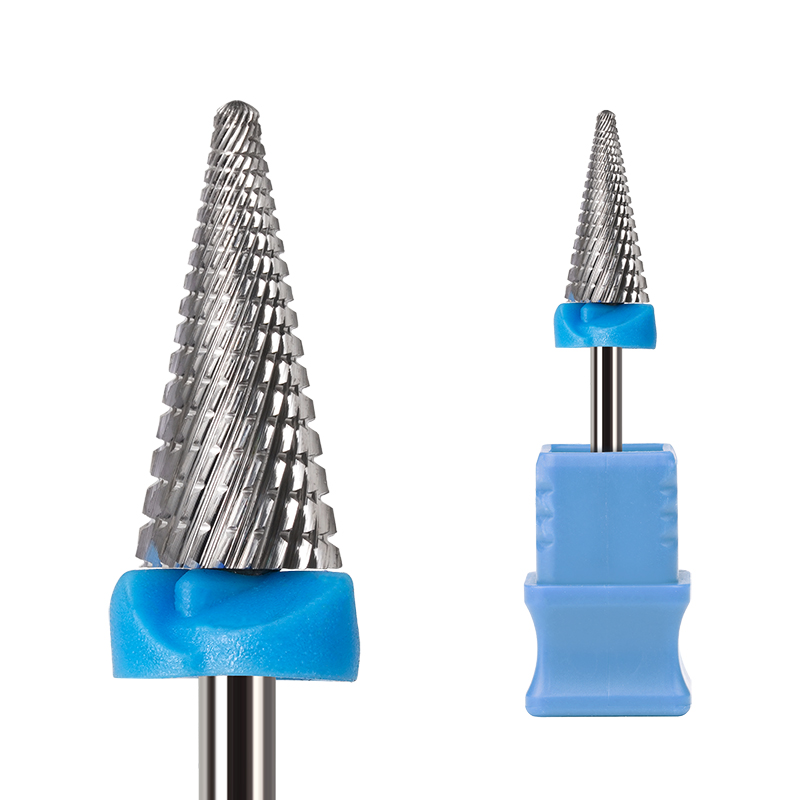
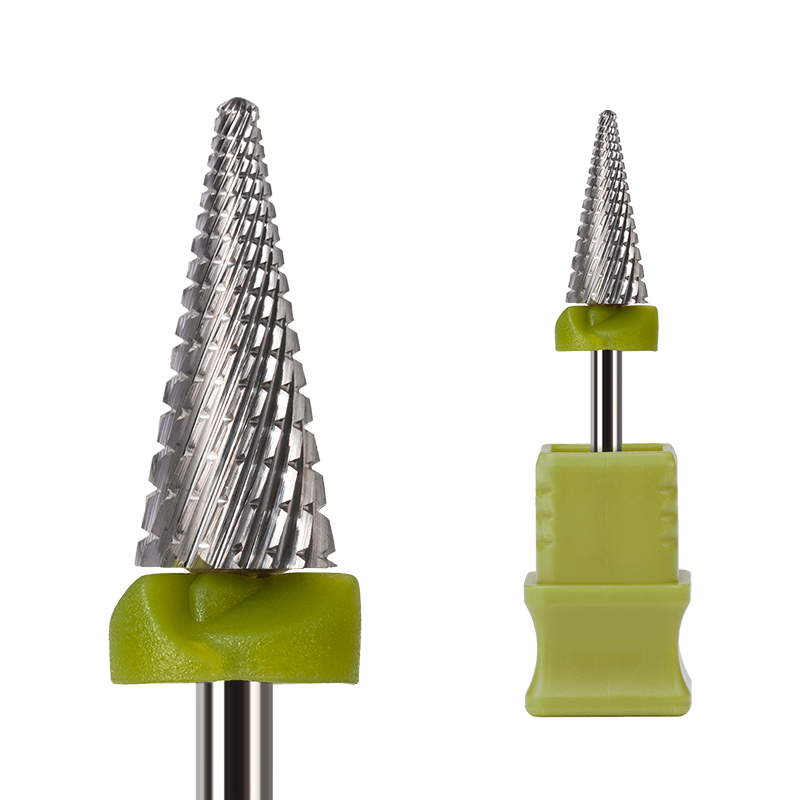
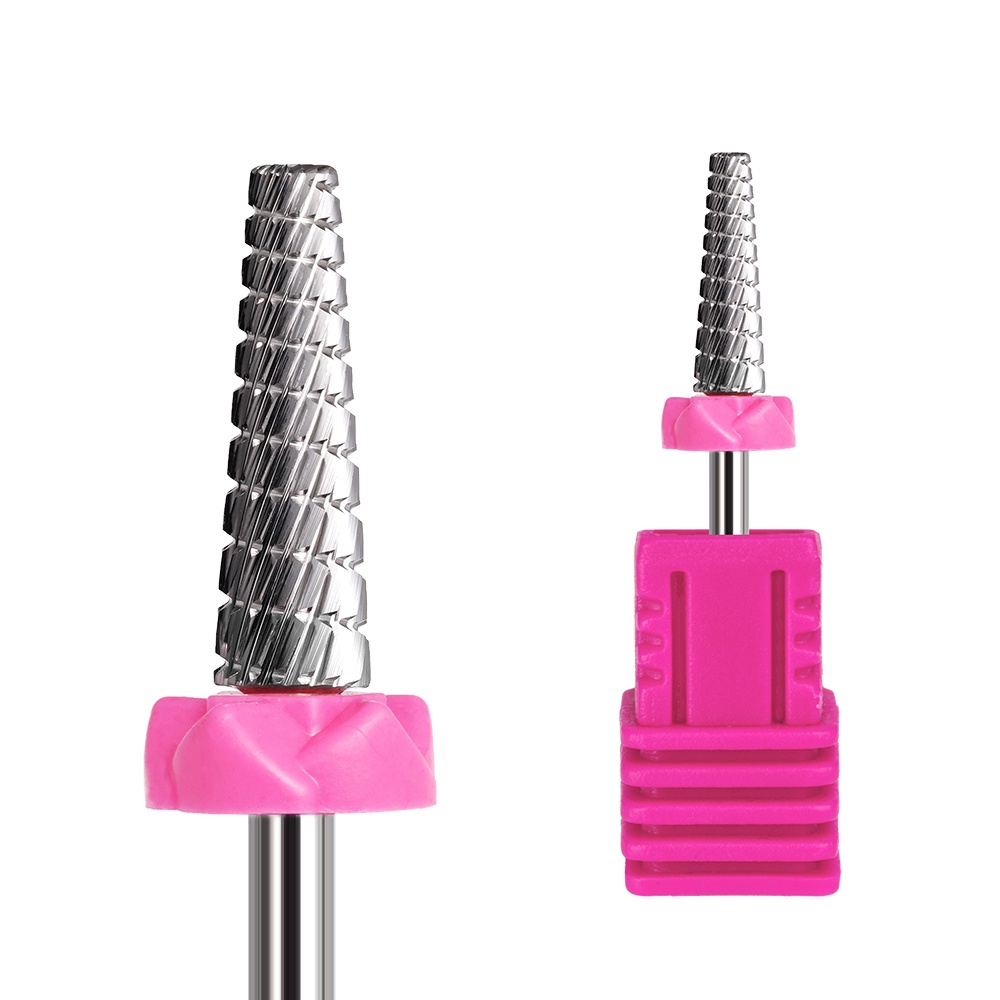
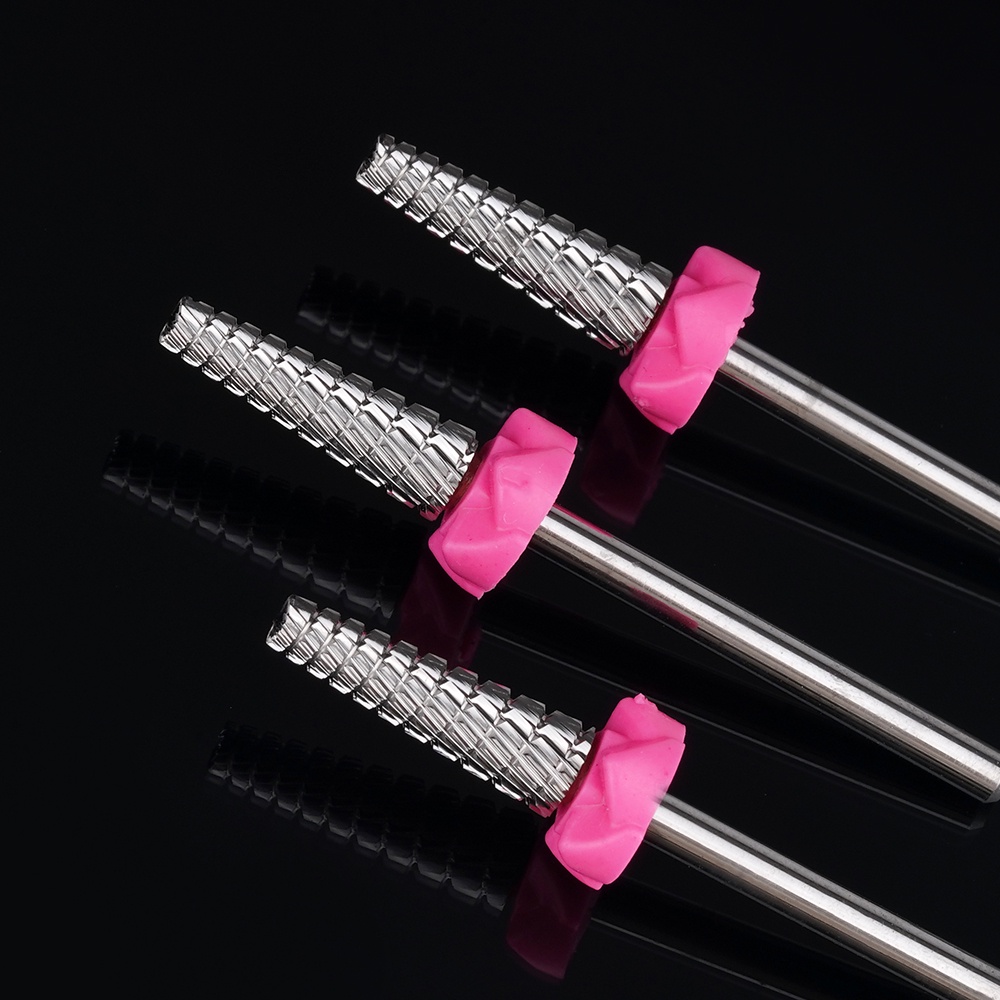
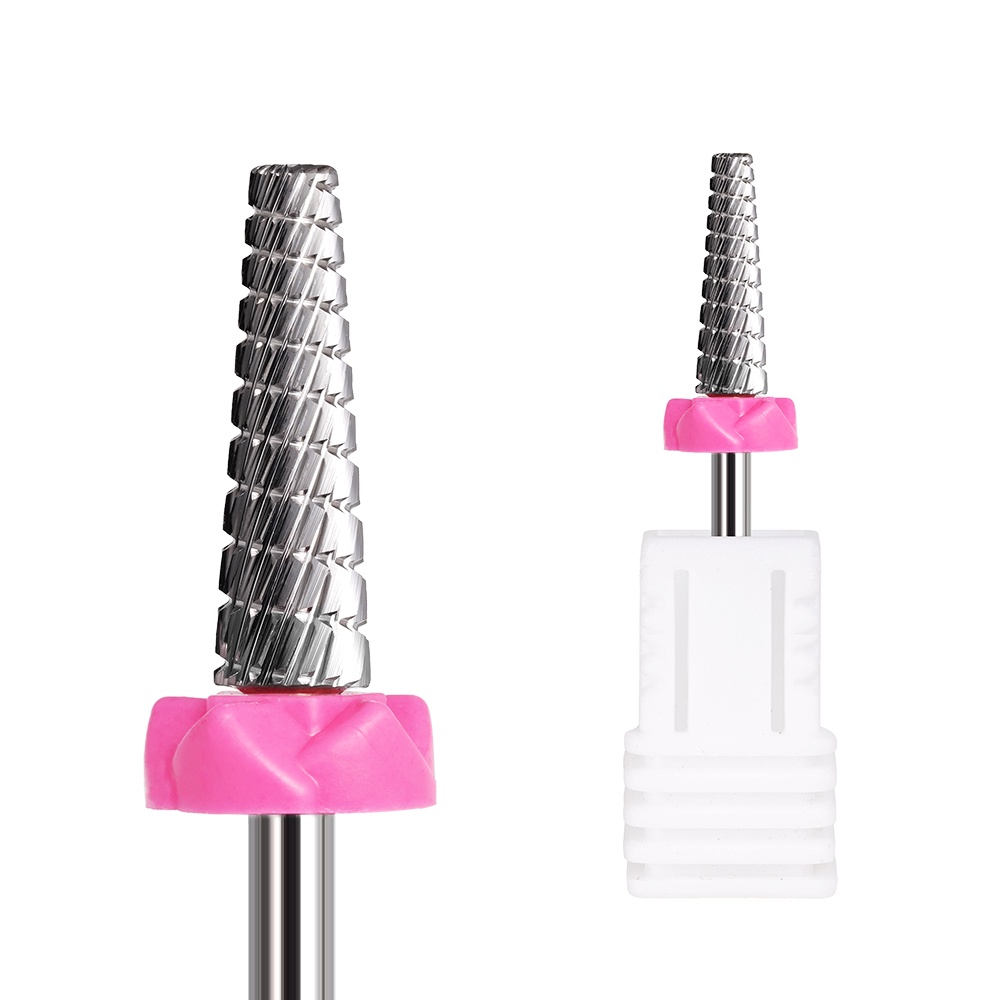
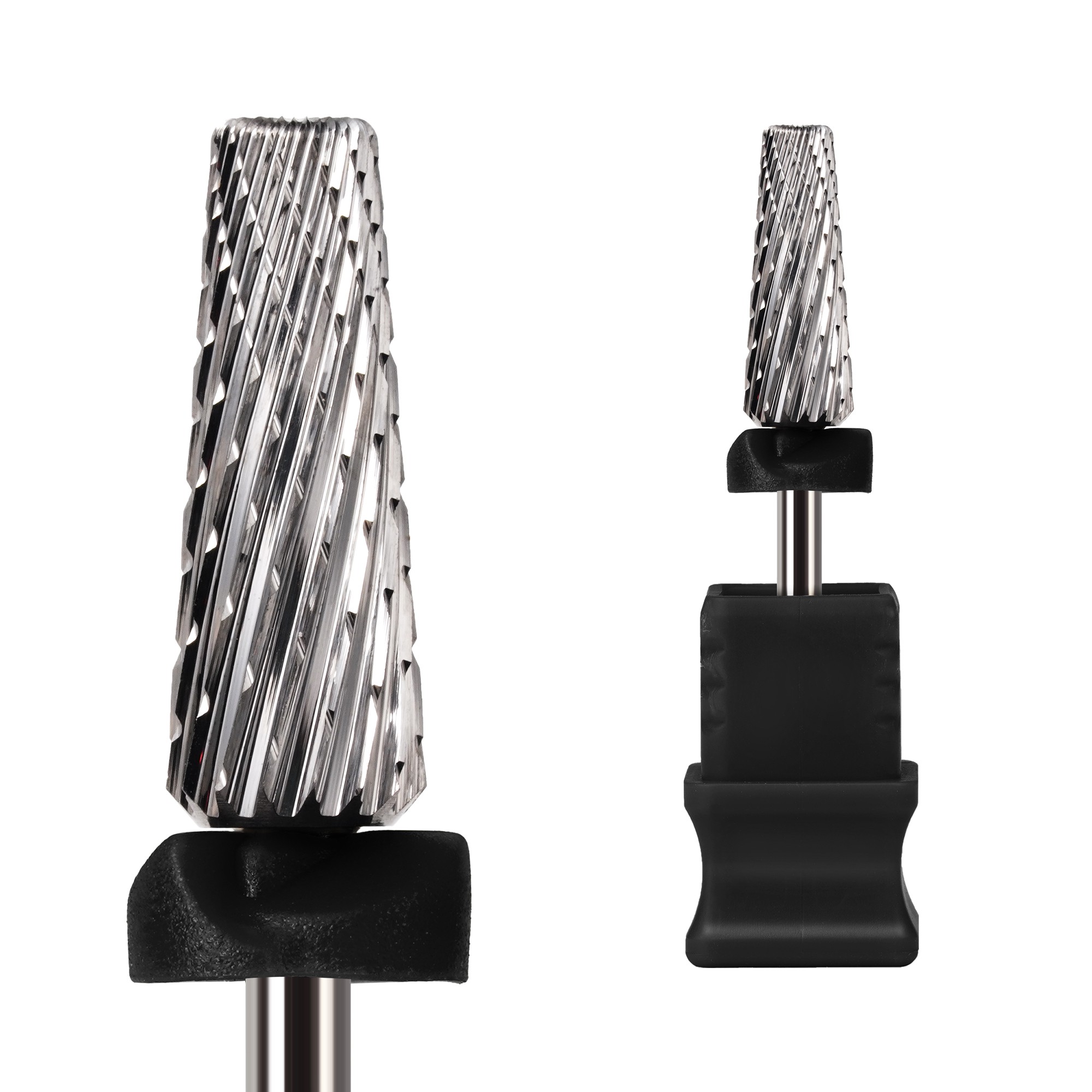
Take the High Quality Nail Art Tools Nail Drill Bit Steel Grinding Tungsten Carbide Nail Drill Bits Sets Manicure Pedicure. Its umbrella-shaped tungsten steel head maintains dimensional stability under sustained load, resists thermal distortion up to 600°C, and delivers consistent cut geometry even after hundreds of uses. Crucially, its one-piece construction eliminates the interface where diamond bits typically fail—no coating, no bond line, no flaking mechanism.
That doesn’t make it a “replacement” for diamond bits. It makes it the right tool for specific high-cycle, low-heat applications: refining nail enhancements, smoothing steps, gentle gel removal, and C-curve finishing. Where diamond bits excel—in aggressive material removal or ultra-fine finishing—their life can be extended by 300% when used within validated thermal and mechanical limits. But extending life isn’t about pushing harder. It’s about recognizing when the tool’s physics no longer match the task.
Three Actions That Deliver Measurable Life Extension
Based on field service patterns across 42 markets, these interventions consistently yield >200% median operational life extension—without requiring new equipment or retraining:
- Implement RPM zoning: Assign fixed RPM bands to each bit type and application (e.g., “gel removal: max 10,000 RPM”; “acrylic shaping: 12,000–15,000 RPM”). Post laminated reference cards near each station.
- Introduce mandatory cooldown pauses: After every 90 seconds of continuous use, pause for 15 seconds—even if the bit feels cool. This resets interfacial temperature gradients and prevents cumulative thermal fatigue.
- Replace based on bond integrity, not appearance: Use 10x magnification to inspect for micro-cracking or grain pull-out before flaking becomes visible. Once cracks exceed 0.05 mm in length, replace—even if surface looks intact.
None of these require new hardware. They require treating the diamond bit not as a consumable, but as a precision thermal-mechanical system—one whose failure modes are predictable, diagnosable, and avoidable.
News List
- Preventing Gouges and Uneven Filing With Small Barrel Nail Drill BitsSep 20, 2026
- How Diameter and Grit Affect Small Barrel Nail Drill Bit PerformanceSep 20, 2026
- Can Hytos Nail Drill Bits Be Used Safely on Natural Nails and Gel Polish?Sep 20, 2026
- How to Verify Fit Between Hytos Nail Drill Bits and an E-File HandpieceSep 20, 2026
- Safe Speed Settings for Umbrella Nail Drill Bits Around the Nail FoldSep 20, 2026
- Umbrella vs Flame Nail Drill Bits: Which Shape Offers Better Cuticle Control?Sep 20, 2026
Best-Selling Products
 Cross Cut Safety Stainless Steel Tungsten Carbide Nail Drill Bits Salon Foot Use XF-C Grit for Removing Nails
 First-rate Quality Tungsten Carbide Nail Drill Bits Best Coating Manicure Remove Gel Nails Accessories
 Professional Advanced Safety Cuticle Bits Two-Way Rotate 3/32'' Carbide Tungsten 5 in 1 Nail Drill Bits
 Wholesale 5 in 1 Electric Manicure Nail Drill Bits Various Coating Cone Cuticle Bit with Rotary Cross Cut for Nail Art
 New Slant Tooth Tungsten Steel Nail Drill Bits Dead Skin Removal 5-in-1 Universal Grinding Nail Polish Head Tool Nail Drill Bits
 4.0mm Small 5 in 1 Integrated Sharpe Tungsten Nail Drill Bit Straight Teeth Gel Polish Removal
 Flame Sharp XF F M C XC Silver Safety Professional Corn Tungsten Carbide Nail Bit for Drill Machine Accessories
 Factory Direct 5 in 1 Tungsten Carbide Nail Drill Bits 6.8MM Cross Cut Safety Manicure 5 in 1 Nail Drill Bits
Please give us a message