
What makes a nail drill bit manufacturer suitable for private labels
What makes a nail drill bit manufacturer suitable for private labels
A private-label nail drill bit program succeeds or fails long before the first branded carton reaches a salon distributor. The manufacturer has to deliver repeatable cutting performance, stable specifications, packaging discipline, and enough commercial flexibility to let the brand build a coherent range. A low unit price may help an initial quotation, but it does not protect the buyer when grit consistency shifts between batches, labels are applied incorrectly, or a fast-moving SKU cannot be replenished on time.
For this category, a suitable Nail Drill Bit Manufacturer is one that can turn a brand’s product brief into a controlled, repeatable supply program. That is more demanding than simply producing a carbide bit with a logo on the box. Private labels need clear ownership of specifications, reliable quality checkpoints, practical minimum order quantities, and a process for managing changes before they become customer complaints.
Private label suitability starts with specification control
Nail drill bits can look nearly identical in a product photo while behaving very differently in use. For a private label, that difference becomes a brand issue. Nail technicians assess bits by removal speed, vibration, heat generation, smoothness near the cuticle, durability, and how predictable the bit feels on different materials. A catalog image cannot establish those qualities.
The first question for a prospective manufacturer is therefore not “What styles do you have?” It is “Can you document and hold the specification we intend to sell?” A useful specification should cover more than shank size and overall shape. It should identify the material, head dimensions, flute or cross-cut geometry, grit grade, direction of cut, surface finish, tip design, color treatment where relevant, and the intended application.
This is particularly important with coarse, medium, and fine variants. Those descriptions are commercial labels, not universal performance standards. One supplier’s medium bit may remove product more aggressively than another supplier’s medium bit. A private-label buyer should agree on physical samples and retain approved references for each sellable SKU. Future production can then be compared against an agreed benchmark rather than an ambiguous product name.
A manufacturer suited to private-label work should also be comfortable discussing the limits of a product claim. For example, a rounded safety tip may help reduce accidental contact risk near skin, but it does not make an aggressive grit appropriate for every user or service. A bit marketed to beginners should be matched with an appropriate geometry, grit selection, and clear use guidance. Responsible suppliers do not solve every positioning question by adding “professional quality” to packaging.
Quality control must extend beyond the finished bit
Carbide and tungsten steel nail bits depend on controlled raw materials and machining quality. Private-label buyers should ask how incoming material is checked, how production batches are identified, and what inspections are performed before packing. The answer should be concrete enough to show where defects are caught.
For this product category, inspection usually needs to address several practical points:
- Dimensional consistency, including head profile and shank fit.
- Sharpness and uniformity of cutting surfaces across the batch.
- Surface defects, burrs, rough edges, cracks, and plating or coating irregularities where applicable.
- Correct grit, direction, and model identification.
- Protection during packing so cutting edges and safety tips are not damaged in transit.
Sampling only at the final packing stage is a weak control point. By then, a machining issue may already affect a large quantity of goods. Buyers do not need to dictate a factory’s internal process, but they should understand whether checks occur at raw-material receipt, during machining, after finishing, and before shipment. A documented inspection flow is more useful than a broad assurance that every item is “100% checked.”
Traceability matters when a private-label assortment includes multiple grits, colors, and packaging versions. If a distributor reports that a carton contains the wrong cut direction or an unexpectedly aggressive bit, the supplier should be able to identify the production and packing batch. Without that ability, correcting the immediate issue and preventing a recurrence both become expensive.
Quality assurance also includes packaging execution. A technically sound bit can still create returns if the protective cap does not stay in place, the label omits grit identification, the barcode is wrong, or individual units arrive mixed across variants. For brands selling through marketplaces, distributors, or salon supply channels, these small operational failures can be more disruptive than a minor cosmetic defect.
Customization should be operational, not merely visual
Many manufacturers can add a logo to an existing package. That is useful, but it is the lowest level of private-label capability. A stronger partner can manage the practical decisions behind a differentiated range: which shapes to launch, how to distinguish grits at a glance, which claims are supportable, how components will be packed, and which specifications must stay fixed for repeat orders.
The buyer should separate customization into three levels before requesting quotations. The first is branding: logo, labels, colors, inserts, and outer cartons. The second is assortment design: the selection of bit shapes, grits, widths, and safety profiles that form the collection. The third is product-level development: altered geometry, material choices, special packaging components, or dedicated tooling. Each level carries different cost, lead-time, and minimum-order implications.
Confusion often begins when a buyer asks for “customized bits” but has only finalized the visual identity. A manufacturer may quote based on stock items and standard caps, while the buyer assumes that custom color rings, special blister cards, and exclusive dimensions are included. The resulting quotation may appear attractive until the brand moves from concept approval to production detail.
A productive sourcing discussion identifies which elements are essential at launch and which can remain standard. A new brand may gain more commercial value from distinct, accurate grit labeling and sturdy retail-ready packaging than from a costly custom shape. An established distributor with proven demand may reasonably invest more in exclusive combinations or presentation.
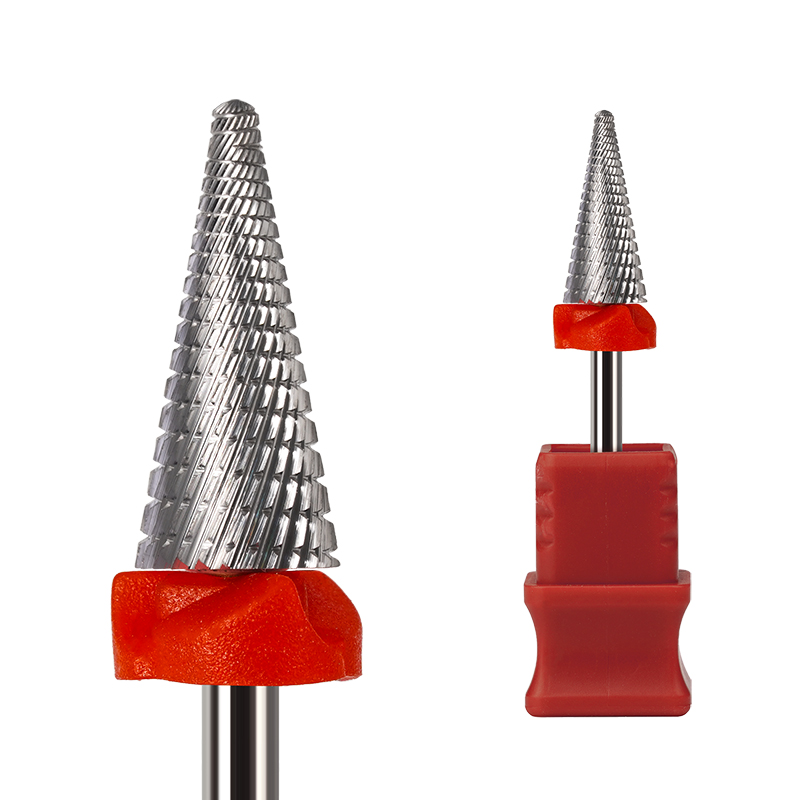
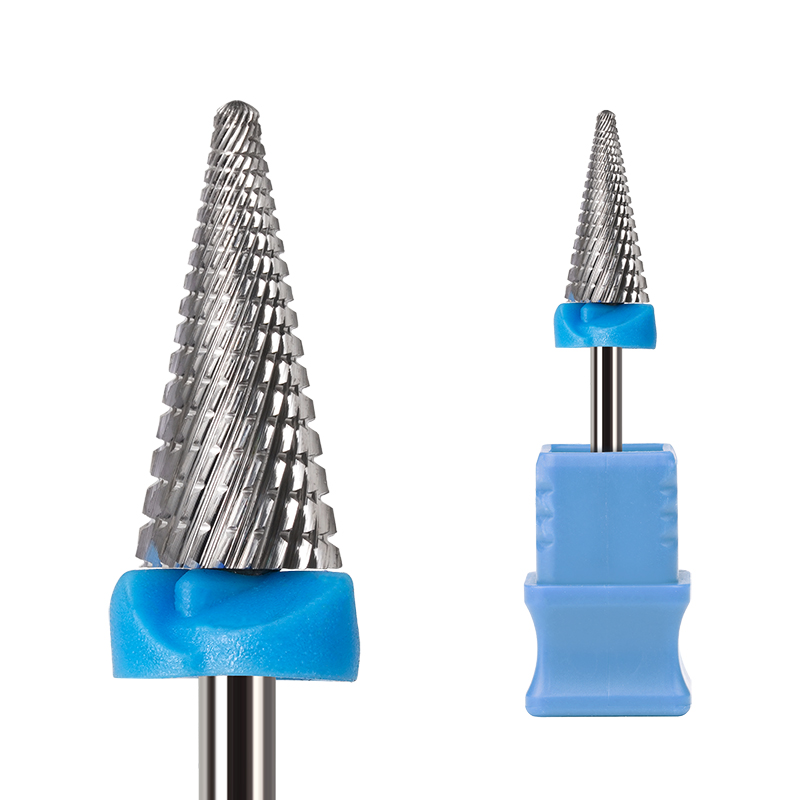
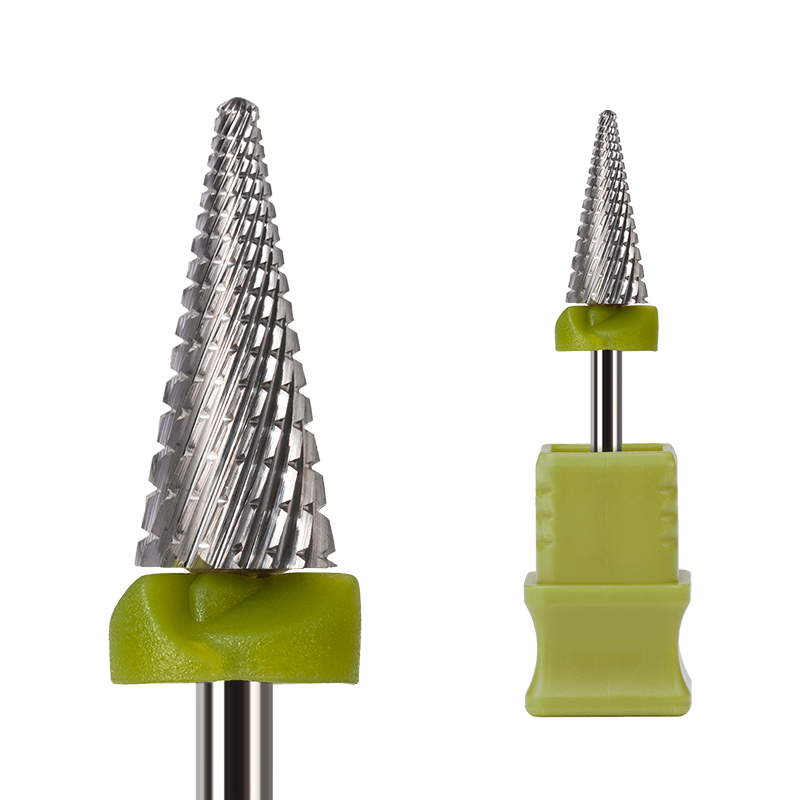
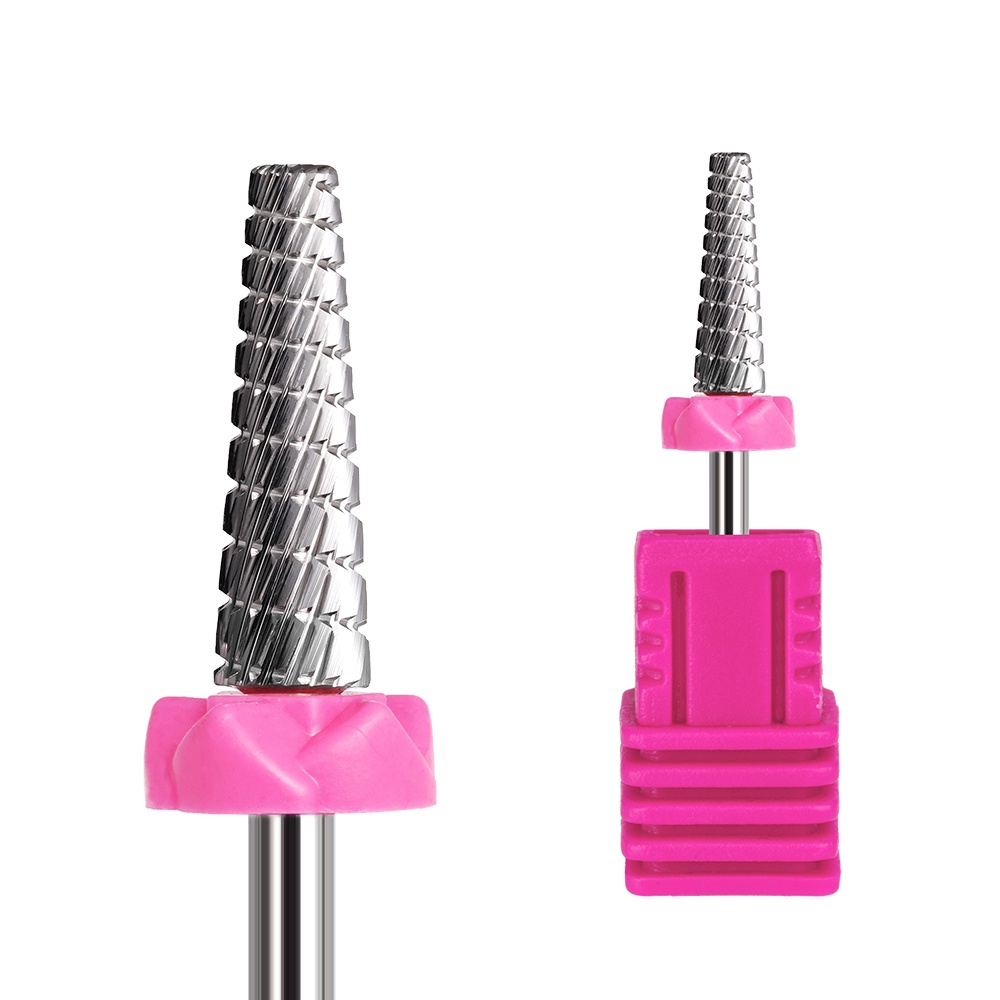
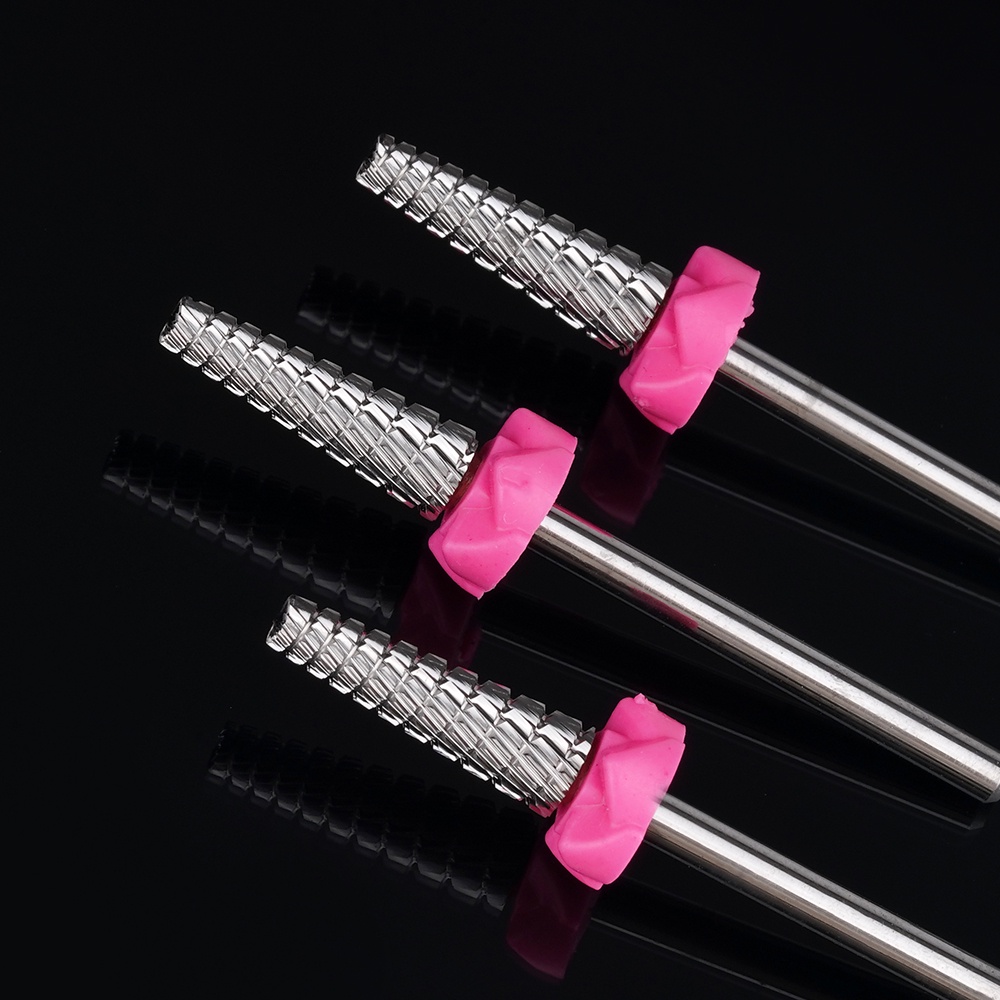
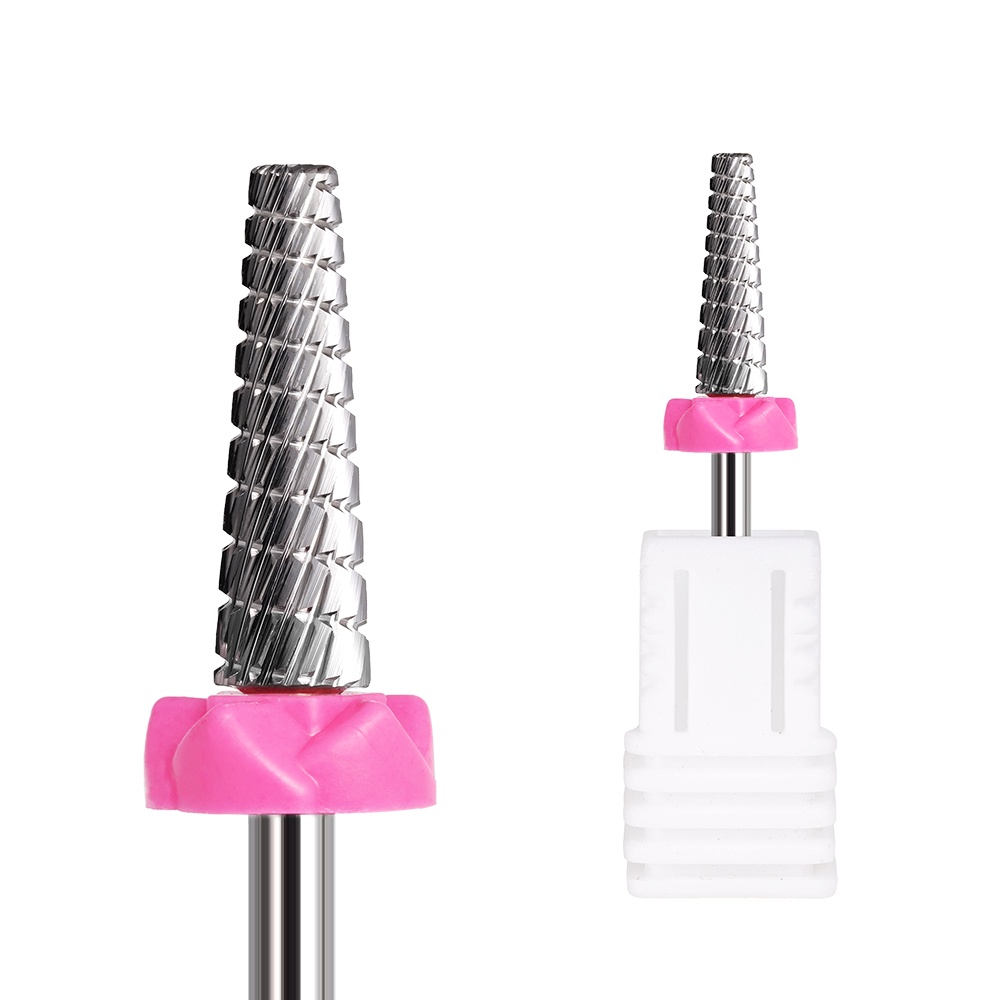
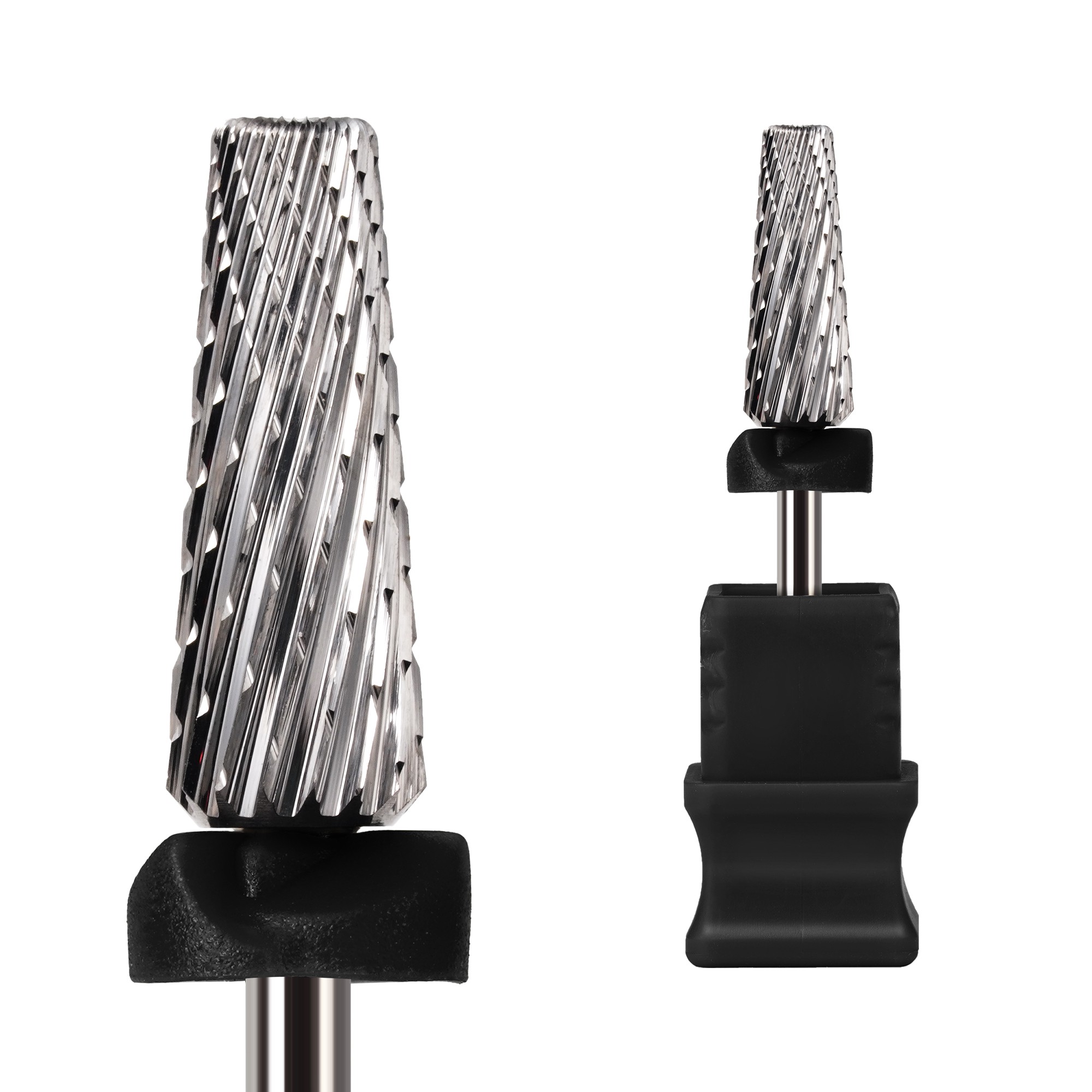
As an example, a 5-in-1 cross-cut carbide design can be positioned around fast gel removal and a smoother preparation workflow, but its commercial fit depends on the brand’s user base. A range intended for trained nail professionals may prioritize material-removal efficiency, while a mixed retail and beginner audience may need a more conservative safety profile and clearer selection logic. A product such as Factory Direct 5 in 1 Tungsten Carbide Nail Drill Bits 6.8MM Cross Cut Safety Manicure 5 in 1 Nail Drill Bits illustrates why the buyer should specify coarse, medium, or fine options separately rather than treat one head shape as a universal solution.
Production capacity is only useful when it is planning capacity
Private-label purchasing is rarely a single order. The real test comes when the first shipment sells through, a seasonal promotion creates an unexpected reorder, or the brand expands from a few core bits into a broader collection. A suitable manufacturer should be able to explain normal production timing, packaging lead time, material availability, and the conditions that affect replenishment.
Buyers should avoid treating stated capacity as a guarantee of their own supply. A factory can have substantial equipment and still be constrained by approved material availability, custom packaging lead time, production scheduling, or peak-season export handling. The more customized the program, the more important it is to define a reorder process before the initial purchase order is placed.
Useful questions include whether repeat orders can use retained artwork and packaging files, whether approved samples are kept, whether production records are tied to a specific specification revision, and what happens when a raw material or packaging component changes. These are routine operational questions, yet they are often omitted from early supplier discussions because the focus stays on first-order pricing.
For a brand with uncertain demand, a phased approach is often safer than building a broad range immediately. Start with a controlled set of high-clarity SKUs, confirm which profiles and grit combinations generate repeat orders, then add variations. This reduces the risk of holding visually attractive but slow-moving stock and gives both buyer and supplier a clearer basis for future production planning.
Cost should be evaluated as landed, usable inventory
The lowest quoted ex-factory price can be misleading in private-label nail bits. Unit cost is only one part of the commercial equation. Buyers should compare quotations on the same basis: product specification, number of variants, individual protection, branding method, inner packing, master carton configuration, inspection expectations, and delivery terms.
Changes in these details can alter both the purchase cost and the rate at which inventory can actually be sold. A cheaper bit packed without adequate protection may create damaged stock. A generic label can force manual relabeling at the destination. An incomplete product identification system can increase warehouse errors when coarse, medium, fine, narrow, and wide variants share a similar appearance.
There is also a cost to poor consistency. If a professional user receives a replacement bit that cuts noticeably differently from the previous unit, the private label absorbs the reputational damage even when the factory has technically met a loose description. For this reason, buyers should consider whether a supplier’s pricing leaves room for the controls required by the brand. Extremely low pricing may reflect efficient production, but it can also signal that specification discipline, inspection, or packaging protection has been minimized.
Requesting a sample is sensible, but sample approval alone is not enough. The sample should be reviewed against the intended use case. For tungsten carbide bits, that may include the selected gel systems, the expected operating speed range, the user’s skill level, and the desired balance between removal speed and surface control. A manufacturer may recommend different ranges for hard gel, soft gel, and base gel removal; the brand should ensure that its instructions and positioning do not encourage unsuitable use.
Export experience reduces avoidable friction
Private-label programs often involve artwork approval, multilingual packaging, carton marks, barcodes, product declarations, and shipment coordination. A manufacturer with established export workflows is more likely to recognize that a shipment is not complete merely because the goods have been produced. Documents, packing accuracy, and communication around revisions all affect whether inventory can move smoothly through the buyer’s channel.
This does not remove the buyer’s responsibility for market-specific requirements. The brand owner should determine the claims, labeling, and product information required in its sales markets. The supplier’s role is to provide accurate product and material information, maintain production consistency, and flag when a requested claim or packaging change cannot be supported by the agreed product specification.
Before selecting a supplier, decision-makers should test communication with a small number of detailed questions rather than rely on a polished catalog. Ask for a specification sheet, a description of quality checkpoints, packaging options with associated minimums, a clear quotation basis, and the process for approving revised artwork or a repeat order. The quality of the response often reveals whether the manufacturer is prepared for a private-label relationship or simply for transactional spot orders.
The right partner does not need to offer unlimited customization from day one. It needs to be able to make commitments that are specific, documented, and repeatable: the agreed bit construction, the approved grit behavior, the packaging format, the inspection standard, and the reorder path. Those controls give a private label a firmer foundation than a low opening quotation ever can.
News List
- What makes a nail drill bit manufacturer suitable for private labelsSep 20, 2026
- What factory capabilities matter for custom nail drill bit ordersSep 20, 2026
- YAQIN at CIBE Guangzhou 2026 | China International Beauty ExpoAug 31, 2026
- YAQIN at Beauty Fair 2026 Brazil | Professional Nail Drill Bits | Booth CM-21AAug 31, 2026
- How to Evaluate a Nail Drill Bit Supplier on MOQ, Consistency, and OEM SupportAug 26, 2026
- How to Evaluate a Nail Drill Bit Supplier for Consistency, Lead Time, and OEM SupportAug 26, 2026
Best-Selling Products
 Cross Cut Safety Stainless Steel Tungsten Carbide Nail Drill Bits Salon Foot Use XF-C Grit for Removing Nails
 First-rate Quality Tungsten Carbide Nail Drill Bits Best Coating Manicure Remove Gel Nails Accessories
 Professional Advanced Safety Cuticle Bits Two-Way Rotate 3/32'' Carbide Tungsten 5 in 1 Nail Drill Bits
 Wholesale 5 in 1 Electric Manicure Nail Drill Bits Various Coating Cone Cuticle Bit with Rotary Cross Cut for Nail Art
 New Slant Tooth Tungsten Steel Nail Drill Bits Dead Skin Removal 5-in-1 Universal Grinding Nail Polish Head Tool Nail Drill Bits
 4.0mm Small 5 in 1 Integrated Sharpe Tungsten Nail Drill Bit Straight Teeth Gel Polish Removal
 Flame Sharp XF F M C XC Silver Safety Professional Corn Tungsten Carbide Nail Bit for Drill Machine Accessories
 Factory Direct 5 in 1 Tungsten Carbide Nail Drill Bits 6.8MM Cross Cut Safety Manicure 5 in 1 Nail Drill Bits
Please give us a message