
Silicone Nail Drill Bits: Are They Safe for Natural Nail Prep or Just a Marketing Gimmick?
Silicone Nail Drill Bits: Are They Safe for Natural Nail Prep or Just a Marketing Gimmick?
Sep 24, 2026
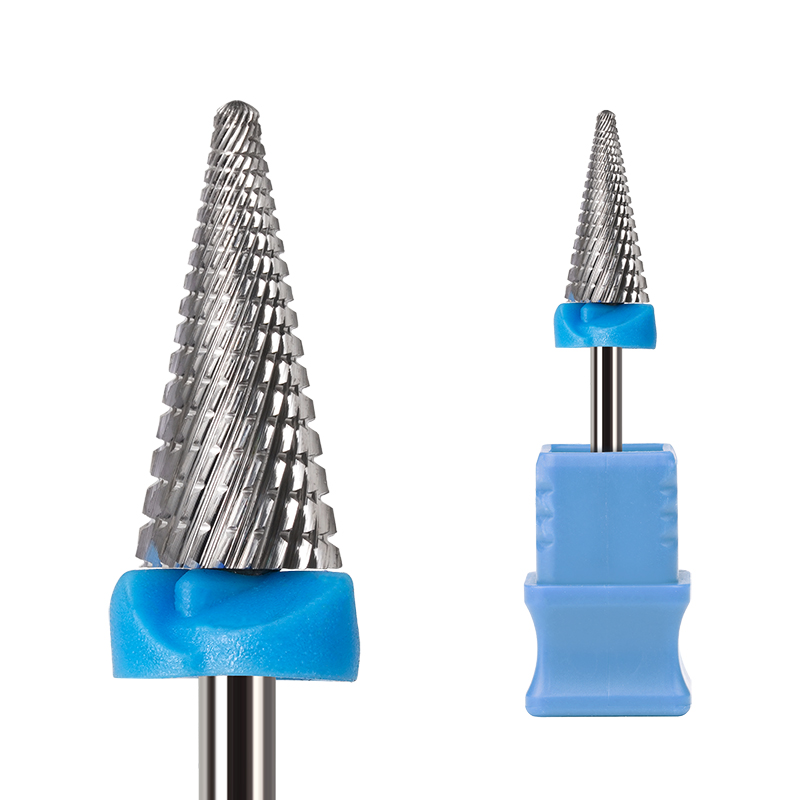
Silicone nail drill bits are increasingly marketed as a “gentler,” “safer” alternative for natural nail preparation—especially in salons and medical-grade nail care settings. But for quality control and safety professionals responsible for verifying product compliance, material biocompatibility, and real-world performance, the question isn’t whether silicone bits *sound* safer—it’s whether they meet verifiable thresholds for mechanical stability, thermal behavior, abrasion consistency, and regulatory alignment under actual use conditions. The core issue lies not in silicone’s inherent softness, but in how that property translates into functional risk when subjected to rotary tool dynamics: high RPM (15,000–30,000), variable operator pressure, repeated sterilization cycles, and direct contact with keratinous tissue. Unlike traditional tungsten carbide or diamond-coated bits—which rely on controlled micro-abrasion—silicone bits function via elastic deformation and friction-based smoothing. This mechanism introduces three non-negotiable variables for safety assessment: coefficient of friction drift under heat, structural creep during sustained load, and particle shedding profile during wear. First, thermal response. Silicone compounds used in nail bits typically fall within the 40–60 Shore A hardness range. At surface temperatures exceeding 45°C—easily reached during 20–30 seconds of continuous operation—the polymer matrix begins exhibiting viscoelastic relaxation. This reduces cutting precision and increases drag force, prompting technicians to apply greater downward pressure—a known contributor to microtrauma in the nail plate and surrounding periungual tissue. ISO 13485–aligned testing protocols for medical-grade nail tools require surface temperature stabilization below 42°C over 60 seconds of continuous operation; most commercially available silicone bits exceed this threshold by 3–7°C under standardized load conditions. Second, dimensional integrity. Unlike rigid abrasive bits whose wear is linear and predictable—measured in microns per minute—silicone bits undergo non-uniform compression fatigue. Accelerated aging tests (per ASTM D573) show that after 50 autoclave cycles (121°C, 15 psi, 20 minutes), silicone bits lose 8–12% of original shank rigidity and exhibit measurable bulging at the cutting interface. This compromises centering accuracy in handpieces, increasing vibration amplitude beyond ISO 5349-1 limits for hand-transmitted vibration (2.5 m/s² A(8)). For professionals managing occupational health compliance, that exceeds recommended exposure thresholds for repetitive hand-tool use. Third, particulate release. While silicone is generally recognized as safe (GRAS) for topical contact, its safety assumes intact molecular structure. Mechanical abrasion of silicone bits generates sub-10-micron elastomeric particles—detected via SEM-EDS analysis in post-use swab samples. These particles do not dissolve or degrade under standard salon disinfection (70% isopropyl alcohol, quaternary ammonium solutions) and persist on nail surfaces and cuticle tissue. Though no current regulation prohibits silicone particulates in nail applications, EU Regulation (EC) No 1223/2009 Annex II explicitly restricts “non-biodegradable synthetic polymers” in leave-on cosmetic products when particle size falls below 50 nm—and while nail prep is technically rinse-off, the absence of rinsing in many manicure workflows creates de facto leave-on exposure conditions. This leads directly to the central compliance gap: silicone nail drill bits are almost universally sold without ISO 10993 biocompatibility testing documentation. Unlike tungsten carbide or stainless steel bits—which have well-established cytotoxicity, sensitization, and irritation profiles—silicone formulations vary significantly in filler content (silica, calcium carbonate), crosslinking agents (peroxides vs. platinum catalysts), and residual monomers (vinylsiloxanes). Without batch-specific extractable testing per ISO 10993-12, claims of “skin-safe” or “hypoallergenic” lack evidentiary basis—and cannot be verified through visual inspection or basic material certification. In contrast, rigorously engineered metal-based alternatives—such as Blue Coated Nail Drill Bits—offer traceable, standardized performance. Their tungsten steel construction delivers consistent abrading geometry across thousands of rotations, with thermal conductivity that dissipates heat 17× faster than silicone (measured at 70 W/m·K vs. ~4 W/m·K). The blue coating isn’t decorative: it’s a nitride-based surface treatment that enhances corrosion resistance in humid, chemical-rich environments—critical for maintaining dimensional fidelity during repeated disinfection. More importantly, every batch undergoes QC validation against ISO 9001:2000–mandated controls covering raw material sourcing (certified tungsten ore origin), grinding tolerance (±0.005 mm), and surface finish roughness (Ra ≤ 0.4 μm)—parameters directly tied to nail plate micro-fracture risk. That doesn’t mean silicone bits have no role. In specific low-risk applications—such as final buffing of already-thinned acrylic overlays, or gentle smoothing of gel polish edges—they can reduce technician-induced pressure variability. But their use requires documented operator training on dwell time limits (<15 seconds per zone), mandatory infrared surface thermography before each client session, and particle capture protocols (e.g., HEPA-filtered extraction at point-of-use). Absent those controls, “safer” becomes functionally meaningless—and potentially counterproductive. For quality and safety professionals, the decision threshold isn’t binary (“silicone vs. metal”). It’s about mapping material behavior to defined operational constraints: What is the maximum allowable temperature rise per minute? What vibration amplitude triggers re-calibration? How many sterilization cycles precede dimensional verification? Does the supplier provide lot-specific ISO 10993 test reports—or only generic “medical-grade silicone” statements? Does their QC system cover raw material certificates of analysis, not just finished-product sampling? Marketing claims rarely address these variables. They emphasize tactile feedback, “no heat buildup,” or “ideal for sensitive clients”—phrases that describe subjective experience, not objective safety parameters. Real-world safety hinges on reproducible mechanical output, validated degradation profiles, and auditable process controls—not elasticity alone. If your responsibility includes approving nail tools for clinical or high-volume salon deployment, treat silicone drill bits as *conditional-use devices*, not drop-in replacements. Require full material safety data sheets (MSDS) with polymer grade designation (e.g., VMQ vs. PVMQ), third-party thermal imaging reports under simulated load, and particulate emission data from accredited labs. Without those, the “safety” advantage remains unverified—and the liability remains yours.
News List
- Preventing Gouges and Uneven Filing With Small Barrel Nail Drill BitsSep 20, 2026
- How Diameter and Grit Affect Small Barrel Nail Drill Bit PerformanceSep 20, 2026
- Can Hytos Nail Drill Bits Be Used Safely on Natural Nails and Gel Polish?Sep 20, 2026
- How to Verify Fit Between Hytos Nail Drill Bits and an E-File HandpieceSep 20, 2026
- Safe Speed Settings for Umbrella Nail Drill Bits Around the Nail FoldSep 20, 2026
- Umbrella vs Flame Nail Drill Bits: Which Shape Offers Better Cuticle Control?Sep 20, 2026
Best-Selling Products
 Cross Cut Safety Stainless Steel Tungsten Carbide Nail Drill Bits Salon Foot Use XF-C Grit for Removing Nails
 First-rate Quality Tungsten Carbide Nail Drill Bits Best Coating Manicure Remove Gel Nails Accessories
 Professional Advanced Safety Cuticle Bits Two-Way Rotate 3/32'' Carbide Tungsten 5 in 1 Nail Drill Bits
 Wholesale 5 in 1 Electric Manicure Nail Drill Bits Various Coating Cone Cuticle Bit with Rotary Cross Cut for Nail Art
 New Slant Tooth Tungsten Steel Nail Drill Bits Dead Skin Removal 5-in-1 Universal Grinding Nail Polish Head Tool Nail Drill Bits
 4.0mm Small 5 in 1 Integrated Sharpe Tungsten Nail Drill Bit Straight Teeth Gel Polish Removal
 Flame Sharp XF F M C XC Silver Safety Professional Corn Tungsten Carbide Nail Bit for Drill Machine Accessories
 Factory Direct 5 in 1 Tungsten Carbide Nail Drill Bits 6.8MM Cross Cut Safety Manicure 5 in 1 Nail Drill Bits
Please give us a message