
How to reduce irritation when filing aged skin and fragile nails
How to reduce irritation when filing aged skin and fragile nails
Aged skin and fragile nails call for a lower-force, lower-friction approach than routine manicure work. The visible goal may still be a neat cuticle line, a smooth free edge, or clean gel removal, but the working margin is smaller: thin nail plates can split under vibration, dry periungual skin can tear with minimal traction, and a small amount of excess heat can turn a routine service into an uncomfortable one.
For operators, the practical rule is simple: reduce the amount of material removed at each pass, and stop treating every surface as though it can tolerate the same abrasive, pressure, or speed. A smoother result usually comes from controlled preparation and frequent reassessment, not from making the tool work harder.
Start by separating skin work from product removal
“Filing” can describe several different tasks, and they should not be handled with one setting or one bit. Removing gel product, refining a nail edge, lifting non-living cuticle from the nail plate, and smoothing dry skin around the sidewalls all demand different contact pressure and tool choice.
For aged clients, dry skin around the nail often looks thicker than it really is. It may be flaky, raised, or pale, but that does not mean it should be aggressively abraded. The surface can be fragile beneath the dry layer. Filing until the area looks perfectly uniform may remove protective tissue, create micro-tears, and leave the client with soreness that appears later rather than during the service.
Use a soft brush, a compatible cuticle product, and gentle mechanical cleaning before deciding whether any filing is needed. When a dry edge remains, work only on detached or clearly non-living material. Keep the abrasive moving and use a light touch. If the skin becomes pink, shiny, tender, or warm, the operator has already reached the limit of useful work.
This distinction also prevents a common mistake: using a powerful product-removal bit to “clean up” the skin because it is already fitted to the e-file. A rounded tip reduces the chance of a puncture, but it does not make a carbide bit appropriate for routine live-skin exfoliation.
Assess the nail plate before choosing grit
Fragile nails are not always simply thin. Some peel in layers at the free edge; some bend easily but are otherwise intact; others have longitudinal ridges and uneven thickness. These conditions change how the nail responds to filing. A nail that is splitting may need its free edge shortened and sealed with a fine abrasive, while a flexible nail may be damaged more by repeated back-and-forth motion than by the initial shaping pass.
Before working, look for signs that call for restraint:
- White, chalky, or visibly thinned areas after product removal.
- Peeling layers at the edge or near the stress area.
- Cracks, lifted nail plate, bruising, or unexplained discoloration.
- Redness, swelling, broken skin, or sensitivity around the nail folds.
- A client who reports pain from light contact or heat during prior services.
When these signs are present, reduce the scope of the service. Do not try to restore a perfectly even surface by continued buffing. A thin nail plate can look smoother after aggressive refinement, yet be weaker and more sensitive afterward. For many fragile nails, leaving minor ridges is preferable to removing more keratin than the plate can spare.
For hand filing, select a fine grit for shaping and use long, controlled strokes in one direction where possible. Sawing rapidly across a weakened free edge can encourage delamination. Keep the file clean. A loaded file cuts inconsistently, which often causes the operator to add pressure without realizing it.
Control heat, pressure, and dwell time with an e-file
Mechanical filing can be useful when gel must be reduced efficiently, but e-file safety depends on the complete setup: bit geometry, grit, speed, handpiece stability, direction of rotation, and how long the bit remains in one area. Lower RPM alone does not guarantee a gentle service. A dull bit, poor angle, or excessive pressure at low speed can still drag and generate discomfort.
For aged skin and nails, aim to remove bulk product in stages. Take down the outer product layer first, then reassess the thickness remaining over the natural nail. Avoid chasing every trace of base product if doing so would require direct, repeated contact with a vulnerable plate. In many removal services, a very thin, even layer is safer to grow out or to cover during a suitable reapplication than a nail plate that has been over-filed.
Keep the bit in motion with a floating, gliding contact rather than pressing into the surface. The operator should be able to see the product changing as it is removed. If dust suddenly becomes very fine, the color changes unexpectedly, or the surface turns patchy, pause and check whether the natural nail is being reached.
Heat is a particularly important warning signal. It can result from a fixed contact point, a clogged cutting surface, an unstable grip, or working against the bit’s intended cutting direction. Ask the client to report warmth immediately and respond at once by lifting away. Do not assume that a client with reduced sensitivity will reliably notice discomfort early.
Match bit design to the task, not to the fastest possible removal
Coarse carbide bits can be efficient for hard gel reduction, but their role is bulk removal on product, not detail work near delicate skin or refinement directly on a thin natural nail. Fine or medium options are generally easier to control when approaching the remaining product layer, although the correct selection still depends on the product’s hardness and the operator’s technique.
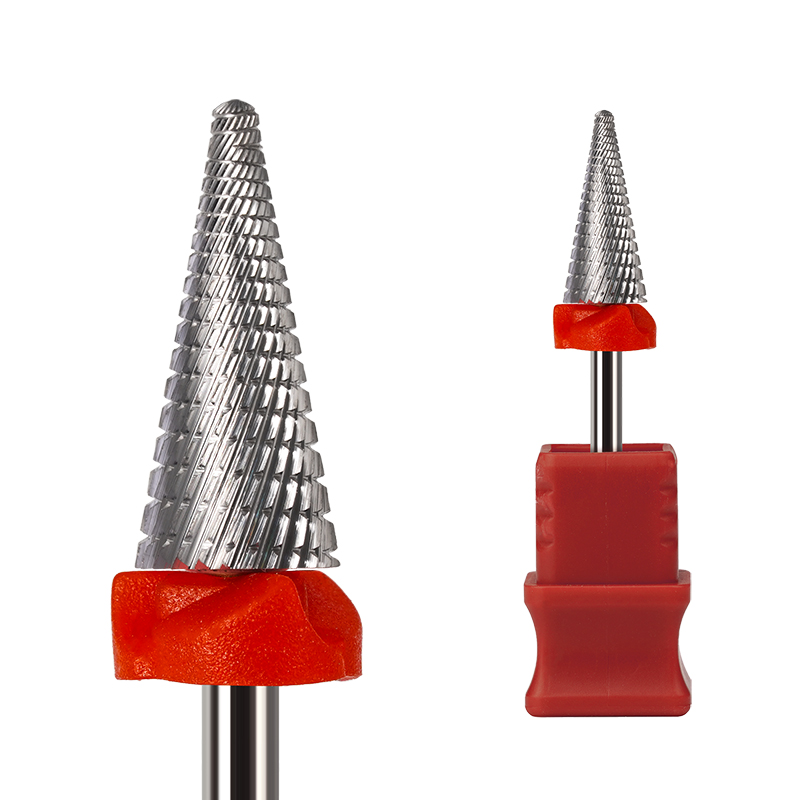
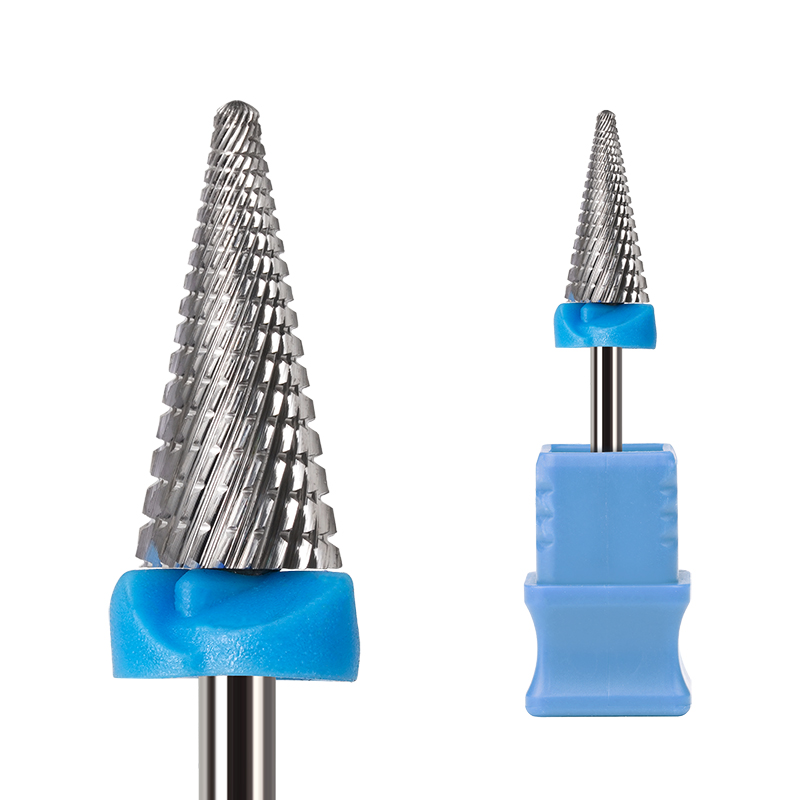
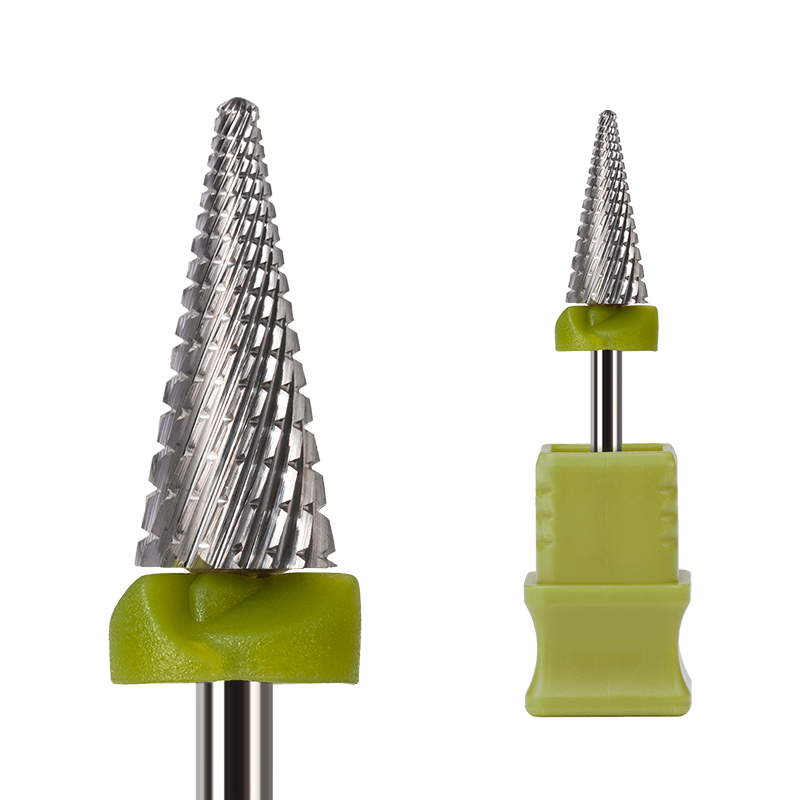
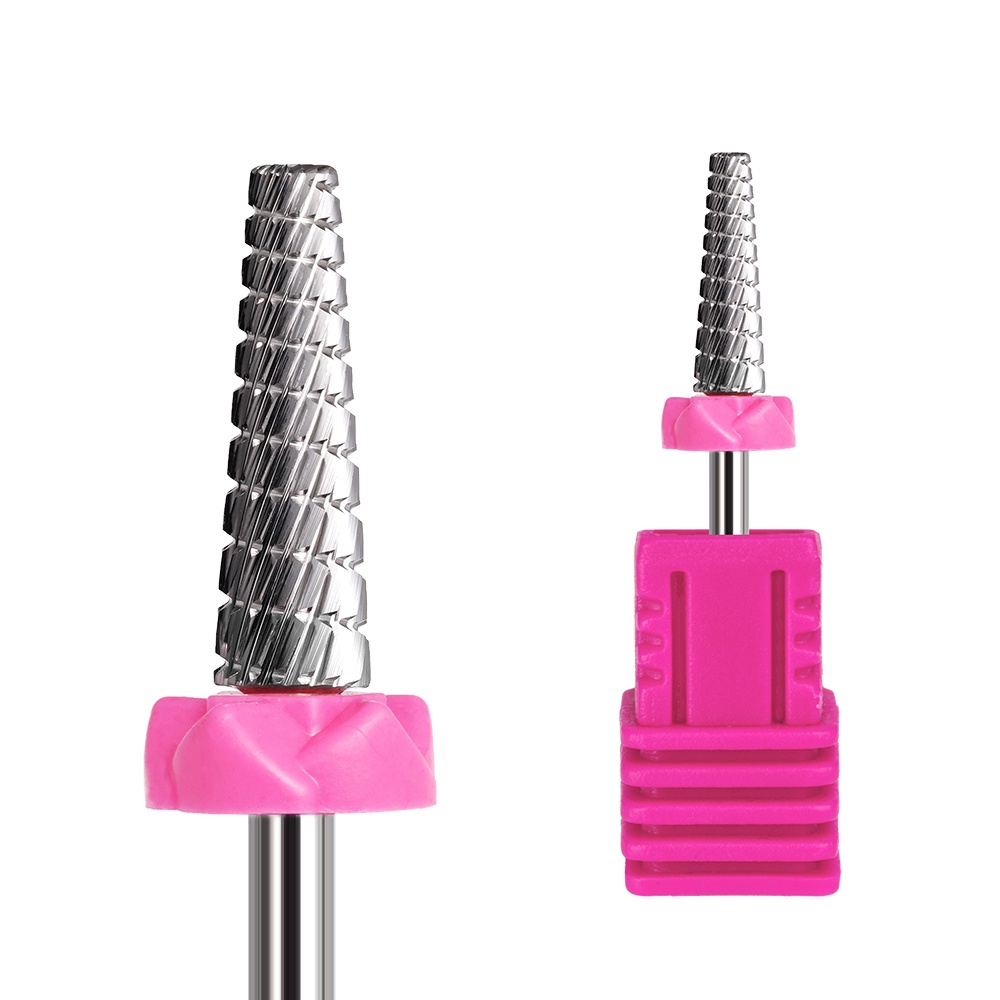
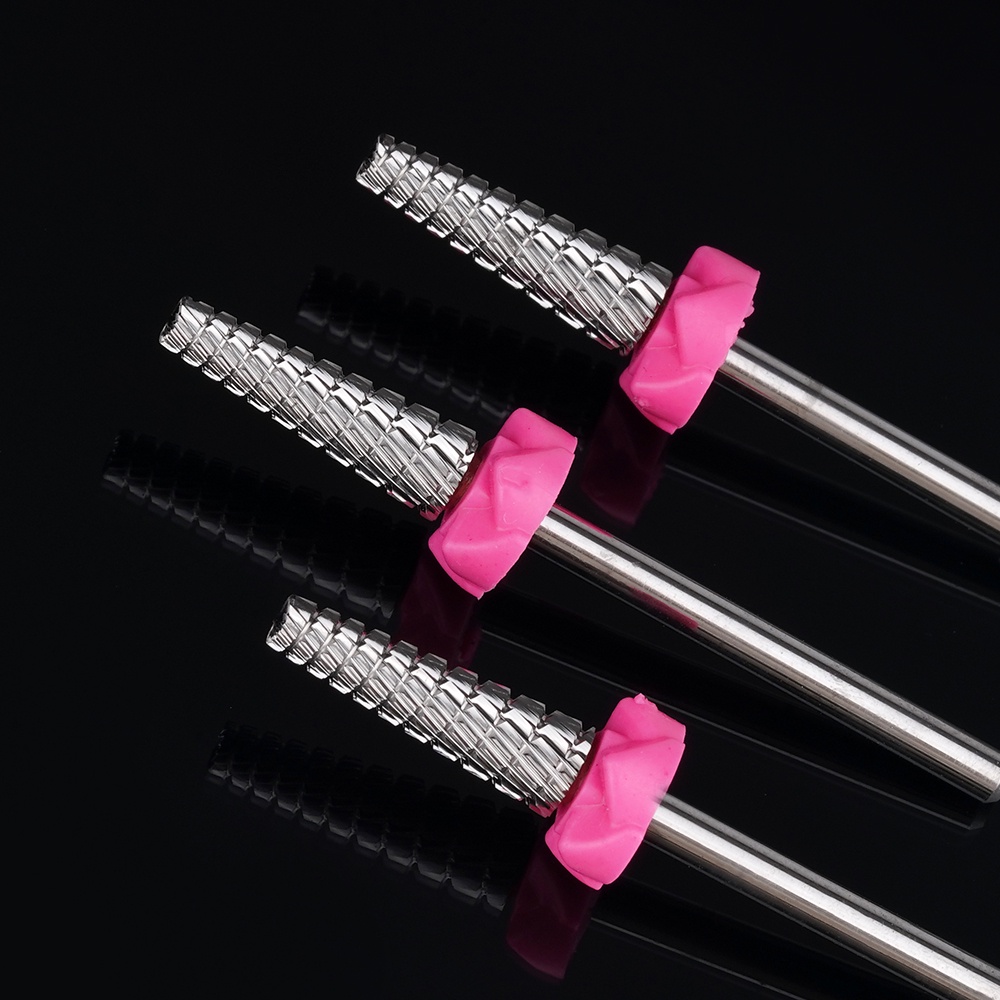
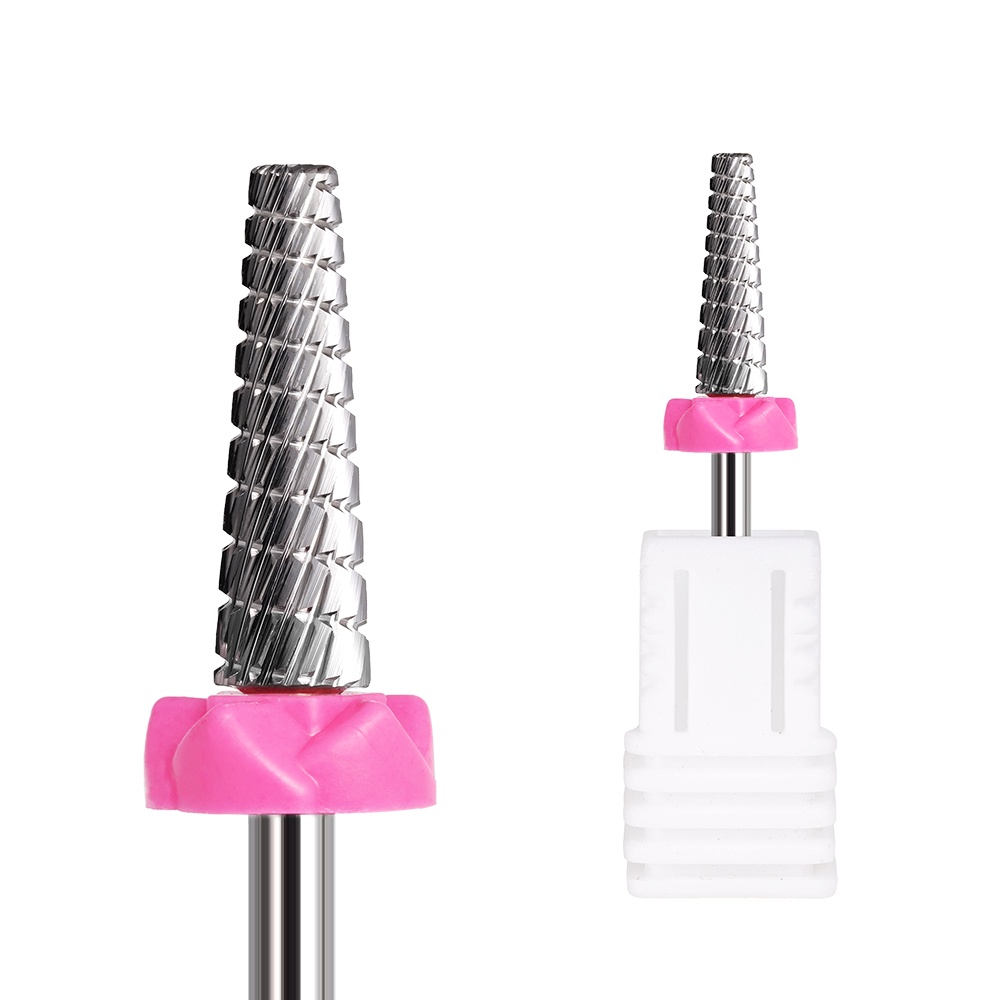
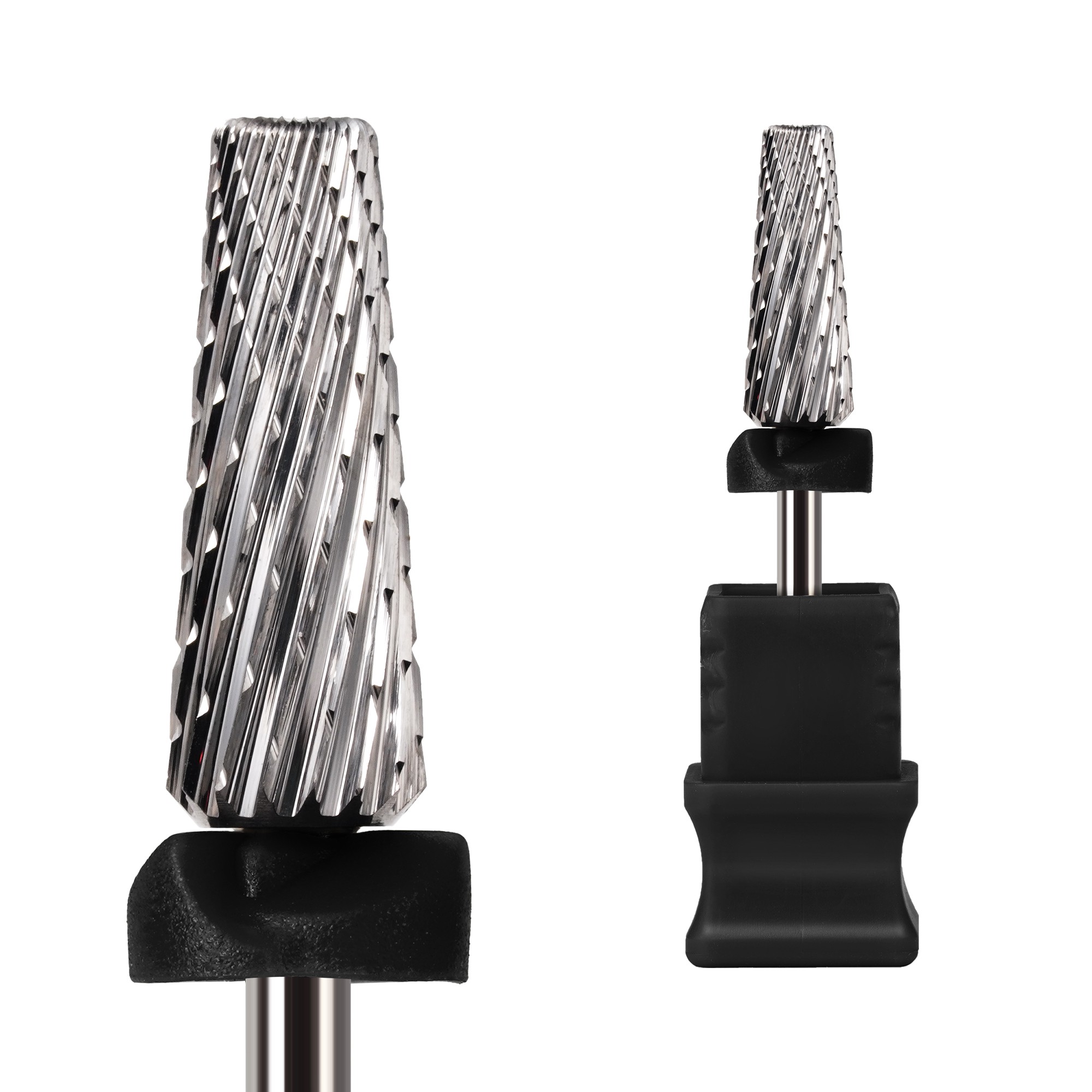
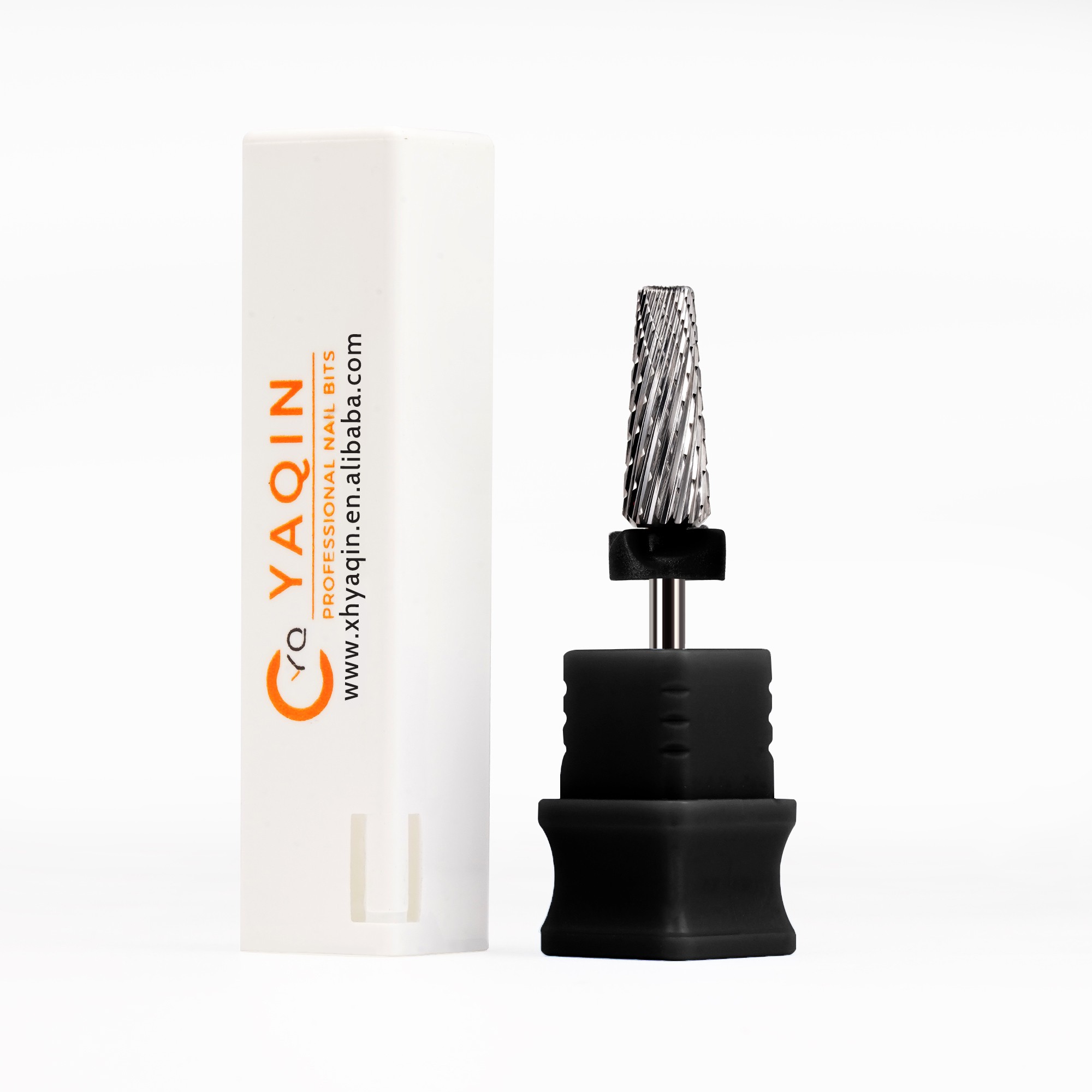
A multi-function carbide bit with a rounded safety top can be practical for gel removal and nail preparation when used within its limits. For example, the 5 in 1 Tungsten Carbide Nail Drill Bits Cross Cut Safety Manicure 5 in 1 Bit Set offers coarse, medium, and fine specifications, along with narrow and wide forms. The narrow version can help maintain visibility around sidewalls, while a wider contact area may suit controlled reduction across a broad gel surface. Neither format should be used as a substitute for careful cuticle work.
Where the product is hard gel, removal settings in the 15,000 to 20,000 RPM range may be appropriate for experienced operation and bulk product removal. Soft gel and base gel generally require less aggressive conditions, commonly in the 10,000 to 15,000 RPM range. These ranges are starting points for product work rather than instructions to use the highest setting available. The handpiece, bit condition, product thickness, and client comfort should determine the final setting.
Use the lightest workable abrasive around the nail folds
Cuticle-area preparation often creates more irritation than gel removal because the operator is working close to folds of skin, sidewalls, and the proximal nail area. The goal is to remove loose residue and create a clean surface for product adhesion, not to create a deep, sharply defined trench around the cuticle.
Select a gentle detail abrasive or manual tool designed for the area, and keep contact brief. Support the client’s finger securely so that involuntary movement does not turn a light pass into a scrape. Work in short sections and inspect after each one. The moment the skin is clean and loose material is gone, move on.
It is also useful to reduce visual pressure. Under bright task lighting, dry skin and fine ridges can appear more dramatic than they do in normal use. Trying to erase every texture variation is often what leads to over-preparation. A clean, comfortable finish with intact skin is a better outcome than an overly polished nail fold that feels sore the next day.
Build hygiene into the irritation-control routine
Irritation is not caused only by abrasion. Residual dust, poorly cleaned tools, and products left in skin folds can make already-sensitive tissue feel worse. Remove filing dust before applying liquids or coatings, especially around the sidewalls. Dust can hold moisture and product residue against the skin, and it can obscure small abrasions that should change the service plan.
Use tools that can be properly cleaned and disinfected according to their material and local professional requirements. Inspect bits for packed debris, corrosion, damaged teeth, or loss of cutting performance. A worn abrasive may tempt the user to increase pressure; a damaged one can cut unpredictably. Protective caps are useful for storage, but they should not conceal a bit that has not been cleaned and dried before being put away.
Fresh disposable files and buffers are particularly helpful where nail plates are thin or splitting. Their cutting behavior is more predictable, and using a clean surface helps prevent debris from being dragged across delicate skin.
Know when to stop and change the plan
Some conditions cannot be solved by gentler filing. Stop work on the affected area when there is pain, bleeding, persistent redness, visible separation of the nail plate, or a suspicious change in color or texture. Do not file through an uncertain area to make it look more even. Cosmetic refinement should wait until the nail and surrounding skin are suitable for it.
For routine services, document practical observations such as sensitivity to heat, areas of recurrent peeling, and whether a client tolerated prior removal well. This is more useful than applying one standard protocol to every mature client. Nail condition can vary from finger to finger and can change between appointments.
The most reliable and nail filing additions for aged skin and nails are therefore not aggressive accessories or higher speeds. They are fine abrasives, clean and well-maintained tools, a stable hand position, restrained product removal, and a willingness to leave harmless imperfections alone. That approach protects comfort during the service and preserves more of the nail plate for the next one.
News List
- Preventing Gouges and Uneven Filing With Small Barrel Nail Drill BitsSep 20, 2026
- How Diameter and Grit Affect Small Barrel Nail Drill Bit PerformanceSep 20, 2026
- Can Hytos Nail Drill Bits Be Used Safely on Natural Nails and Gel Polish?Sep 20, 2026
- How to Verify Fit Between Hytos Nail Drill Bits and an E-File HandpieceSep 20, 2026
- Safe Speed Settings for Umbrella Nail Drill Bits Around the Nail FoldSep 20, 2026
- Umbrella vs Flame Nail Drill Bits: Which Shape Offers Better Cuticle Control?Sep 20, 2026
Best-Selling Products
 Cross Cut Safety Stainless Steel Tungsten Carbide Nail Drill Bits Salon Foot Use XF-C Grit for Removing Nails
 First-rate Quality Tungsten Carbide Nail Drill Bits Best Coating Manicure Remove Gel Nails Accessories
 Professional Advanced Safety Cuticle Bits Two-Way Rotate 3/32'' Carbide Tungsten 5 in 1 Nail Drill Bits
 Wholesale 5 in 1 Electric Manicure Nail Drill Bits Various Coating Cone Cuticle Bit with Rotary Cross Cut for Nail Art
 New Slant Tooth Tungsten Steel Nail Drill Bits Dead Skin Removal 5-in-1 Universal Grinding Nail Polish Head Tool Nail Drill Bits
 4.0mm Small 5 in 1 Integrated Sharpe Tungsten Nail Drill Bit Straight Teeth Gel Polish Removal
 Flame Sharp XF F M C XC Silver Safety Professional Corn Tungsten Carbide Nail Bit for Drill Machine Accessories
 Factory Direct 5 in 1 Tungsten Carbide Nail Drill Bits 6.8MM Cross Cut Safety Manicure 5 in 1 Nail Drill Bits
Please give us a message